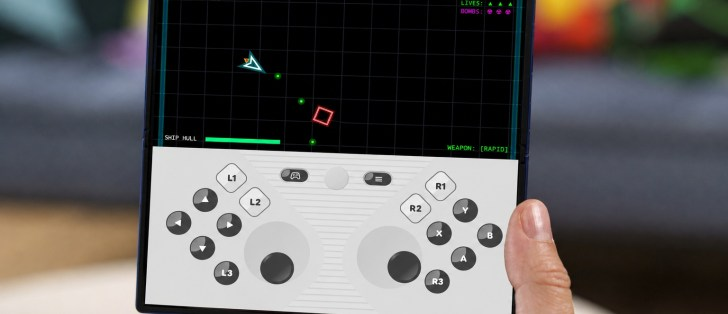
Android 17 foldable gaming mode is one of the most interesting gaming-focused features Google has prepared for foldable phones. The new mode uses the large inner screen of a foldable device in a smarter way by placing the game on the top half of the display and a virtual controller on the bottom half.
The feature is designed to solve one of the biggest problems with gaming on foldable phones. Foldables offer larger screens than regular smartphones, but gaming on the full display can be awkward. Touch controls can cover the action, stretch too far across the panel or feel uncomfortable during long sessions. Android 17’s new gaming mode attempts to fix that by creating a dedicated controller area below the game.
When enabled, the screen is split into a 50/50 layout. The upper half shows the game, while the lower half becomes a customizable virtual gamepad. The controller works at the system level by emulating physical gamepad inputs, which means supported games can treat it like a connected controller.
For players, this could make foldable phones feel closer to compact handheld gaming devices. For manufacturers, it creates a new way to market foldables beyond productivity, multitasking and media consumption. For game developers, the biggest advantage is that games with controller support may work without needing special coding for the virtual gamepad.
How Android 17 Foldable Gaming Mode Works
Android 17 foldable gaming mode works by dividing the unfolded screen into two separate zones. The game runs in the top half, while the lower half displays a virtual gamepad.
This is different from standard touchscreen controls, where buttons are usually placed over the game itself. In many mobile games, on-screen controls can block important parts of the action. With foldable gaming mode, the game view stays clean because the controls sit below it.
The virtual controller emulates physical controller inputs at the operating system level. That is important because it means the game does not simply receive random screen taps. Instead, it receives the kind of input it would expect from a physical gamepad.
Any game that already supports physical controllers could potentially work with the feature, provided the game can adapt to the 50/50 screen layout. The adaptive requirement matters because the game must be able to resize properly when only the top half of the display is used.
This approach makes the feature more practical. Developers may not need to build a separate foldable controller layout from scratch. If their game supports controllers and adapts well to different screen sizes, Android can handle much of the experience.
A 50/50 Split for Game and Controller
The current version of foldable gaming mode uses a 50/50 split. That means half of the unfolded display is used for the game and half is used for the virtual controller.
This layout makes sense for the first version because it is simple and predictable. The game gets a dedicated area. The controller gets a dedicated area. Neither overlaps the other.
However, the fixed split may not be perfect for every game. Some games may benefit from a larger gameplay window and a smaller controller area. Others may need larger buttons for comfort. At the moment, the game-to-controller ratio is not adjustable.
That could change in the future. Since foldable gaming mode is part of Android’s platform-level work and is expected to be available through AOSP, device makers may be able to customize the experience for their own foldable hardware.
Samsung, Google, OnePlus, Honor, Xiaomi and other foldable makers could eventually adapt the feature differently depending on screen size, hinge design and software priorities.
Supported Virtual Controller Inputs
The virtual gamepad in Android 17 foldable gaming mode includes the standard controls players expect from a controller.
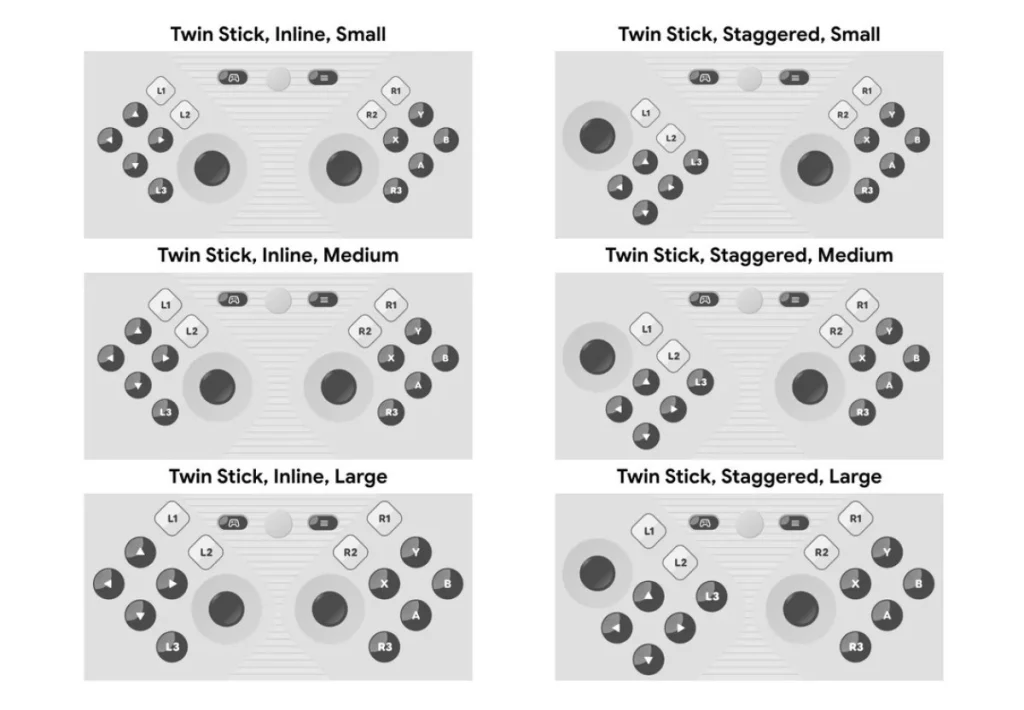
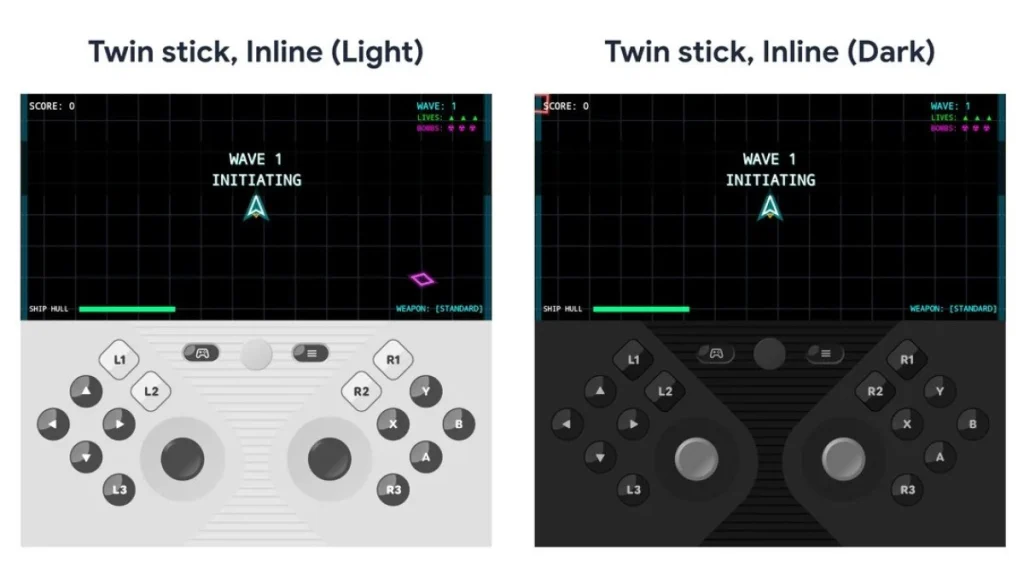
The layout supports a D-pad, left and right thumbsticks, A, B, X and Y action buttons, shoulder inputs and a Start button. It also supports L1, L2, L3, R1, R2 and R3 controls.
This wide input support is important because many controller-compatible games rely on more than basic movement and action buttons. Racing games, shooters, adventure games, platformers and emulators often require shoulder buttons, thumbstick clicks and multiple action inputs.
By supporting a fuller controller layout, Android 17 makes the feature more useful across different genres. It is not limited to simple arcade games. It could work with more advanced titles that already support Bluetooth or USB controllers.
The virtual controller will not fully replace the feel of physical buttons for every player, but it could make foldable gaming more convenient when a physical controller is not available.
Customization Options
Android 17 foldable gaming mode is not just a static controller layout. Google has included several customization options to make the virtual gamepad more comfortable.
Players can choose between inline and staggered twin-stick layouts. The staggered option shifts controls in a way some users may find more natural, especially when holding a foldable device for longer gaming sessions.
Users can also change button size. The controller supports small, medium and large sizing options. This matters because foldable phones vary in size, and players have different hand sizes and preferences.
The virtual gamepad also supports light and dark themes. This helps the controller match different environments and makes the experience easier on the eyes during night gaming.
There is also a haptic feedback toggle. Users who want vibration feedback when pressing virtual buttons can enable it, while those who prefer a quieter or battery-saving experience can turn it off.
These customization options show that Google is treating foldable gaming mode as more than a simple experiment. Even before release, the feature already includes important comfort settings.
Automatic Gamepad Hiding
Google has also designed foldable gaming mode to stay out of the way when it is not needed. Users can hide the virtual gamepad during play or before launching a game.
The mode is also designed to disable itself automatically when a physical controller is connected through Bluetooth or USB. This is useful because players who connect a real controller probably do not want half the foldable screen taken up by a virtual controller.
The feature is also expected to remain hidden for touch-only games. That matters because many Android games are designed specifically around touch input. For those titles, forcing a virtual controller would not improve the experience.
This automatic behavior should make foldable gaming mode feel smarter and less intrusive. It appears only when it can help, and it can get out of the way when a better control method is available.
Why This Matters for Foldable Phones
Foldable phones have always promised more screen space, but gaming has been a complicated part of that promise. A bigger display can make games look better, but it can also make controls harder to reach.
On a regular smartphone, touch controls are placed over the game. On a large foldable screen, those controls can feel stretched, awkward or too far apart. Some players solve this by using a Bluetooth controller, but carrying a separate controller is not always convenient.
Android 17 foldable gaming mode gives foldables a built-in gaming advantage. It turns the lower half of the device into a controller and keeps the gameplay view clear.
This could make foldables more appealing to mobile gamers. Instead of being only productivity devices, foldables could become compact entertainment machines that combine a large display with built-in controls.
It also gives manufacturers a new reason to improve foldable gaming performance, cooling, battery life and display durability.
Why Google Is Adding Gaming Features to Android
Gaming is one of the biggest uses of smartphones, but Android’s core gaming features have often depended on manufacturers. Some gaming phones include special modes, shoulder triggers, performance dashboards or cooling tools, but these features vary widely by brand.
By adding foldable gaming mode to Android itself, Google is creating a more consistent foundation. Device makers can build on it, but the basic capability comes from the operating system.
This is especially important for foldables because the category is still developing. Foldable hardware is expensive, and manufacturers need strong software reasons to justify the format. Gaming could become one of those reasons.
Google’s approach also helps developers. Instead of designing separate control systems for every foldable brand, developers can rely on Android’s system-level controller support where compatible.
This could improve the long-term gaming ecosystem on foldable devices.
What Games Will Work With Foldable Gaming Mode?
Foldable gaming mode is designed to work with games that already support physical controllers. That includes many Android games, cloud gaming apps, console-style mobile titles and some retro game experiences.
However, controller support alone is not the only requirement. The game also needs to be adaptive. That means it must resize properly when Android places it in the top half of the foldable screen.
If a game does not support controllers, the virtual gamepad may not help. If a game does not adapt well to the split layout, the gameplay window may not display correctly.
This means support will vary. Some games may work smoothly from day one. Others may need updates from developers. Some touch-only games may never benefit from the feature because they were designed around direct screen interaction.
Still, the system-level design gives the feature a strong starting point. It should work best with games that already treat physical controllers as a standard input method.
What Developers Need to Know
For developers, the most important point is that the virtual gamepad emulates physical controller inputs. That reduces the need for special work if a game already supports standard controllers.
However, developers should make sure their games are adaptive. A game that looks good only in full-screen mode may not deliver a strong experience in the 50/50 foldable layout. Text size, menus, HUD elements and gameplay camera positioning may need attention.
Developers should also test how their games behave on different foldable screen sizes. Not all foldables have the same aspect ratio, hinge behavior or display dimensions.
Games that support controllers well and scale cleanly could gain a major advantage. They may become more attractive to foldable users looking for console-like mobile gaming without carrying extra accessories.
This could encourage more Android developers to improve controller support in their games.
The AOSP Advantage
One of the most important parts of Android 17 foldable gaming mode is that it is expected to be available through the Android Open Source Project. This means device makers can use the platform feature and adapt it for their own devices.
That could lead to different versions of the same idea. Samsung might tune the experience for Galaxy Z Fold devices. Google could optimize it for Pixel Fold models. Other manufacturers could adjust layouts, add extra options or integrate the feature into their own gaming tools.
The AOSP foundation also means the feature is not limited to one brand. Over time, it could become a common foldable gaming feature across Android devices.
This is good for the ecosystem. A shared foundation makes it easier for developers, while manufacturer customization allows each brand to improve the experience for its own hardware.
How It Compares With Physical Controllers
Foldable gaming mode will not completely replace physical controllers. Real buttons, triggers and sticks still offer better tactile feedback, precision and comfort for many games.
Fast action games, competitive shooters, racing games and fighting games often feel better with physical controls because players can feel button placement without looking. Touchscreen buttons can be less precise because there is no physical edge or click.
However, the advantage of foldable gaming mode is convenience. The controller is always there when the foldable is unfolded. Users do not need to carry extra hardware, charge another accessory or pair a Bluetooth device.
For casual gaming, travel, quick sessions and controller-supported games that do not require extreme precision, the virtual controller could be very useful.
The best way to view it is not as a replacement for physical controllers, but as a built-in option when a physical controller is not available.
Possible Limitations
Android 17 foldable gaming mode has strong potential, but there are limitations.
The current split is fixed at 50/50. Some players may want more space for gameplay and less space for controls. Others may prefer a transparent overlay instead of a separate lower-half controller. These options are not currently part of the base feature.
Touchscreen controls also lack the tactile feel of real buttons. Haptic feedback can help, but it cannot fully match physical controls.
Another limitation is game compatibility. A game must support controllers and adapt properly to the resized layout. Not every Android game will work well.
There is also the issue of foldable comfort. Holding an unfolded phone for gaming can still be awkward depending on device weight, hinge shape and screen size.
Even with these limitations, the feature is a promising foundation for the future of foldable gaming.
Why It Could Help Android Gaming
Android gaming has become more powerful, but the control experience remains inconsistent. Many games rely on touch controls, while others support controllers but assume users will connect separate hardware.
Foldable gaming mode bridges that gap. It gives controller-supported games a built-in control surface on devices that already have extra screen space.
This could encourage more developers to treat controller support seriously. If more foldable users have access to a system-level virtual gamepad, games with controller support may become more attractive.
It could also help cloud gaming services. Many cloud games are built for controllers, and foldable gaming mode may make them easier to play without carrying a separate gamepad.
For Android, this is a step toward making phones more flexible gaming devices.
Foldables Could Finally Use Their Shape Better
One of the biggest criticisms of foldables is that software does not always take full advantage of the hardware. Many apps simply stretch to fill the larger screen. Others run in awkward layouts that do not feel designed for foldables.
Foldable gaming mode is different because it uses the device shape intentionally. The upper half becomes the display. The lower half becomes the controller. The fold itself becomes part of the experience.
This makes foldable phones feel more like purpose-built gaming hardware. It gives the hinge and inner screen a clearer reason to exist beyond multitasking and watching videos.
If manufacturers build on this idea, foldables could become much more interesting for gaming. Future versions could support adjustable splits, game-specific layouts, transparent controls, custom macros or deeper haptic feedback.
Samsung Galaxy Z Fold and Pixel Fold Users Could Benefit
The feature is likely to be especially relevant for book-style foldables such as the Galaxy Z Fold series, Pixel Fold models and similar devices from other Android brands.
These phones already have large internal displays. Android 17 foldable gaming mode gives those displays a new use case. Instead of stretching a game across the full panel, the software can divide the space into a clean play-and-control setup.
Samsung already has strong foldable hardware and software features, while Google controls Android’s core platform. If both companies take advantage of the new mode, the next generation of foldables could become much better for gaming.
However, availability will depend on each device’s Android 17 update schedule and how manufacturers choose to implement the feature.
When Will Foldable Gaming Mode Arrive?
Foldable gaming mode is part of the Android 17 platform release and is expected to become available in the coming months. Google has previewed the feature early to collect feedback from the Android gaming community.
That means users should not expect every Android 17 foldable to have the feature immediately on day one. Rollout timing may depend on Google’s release schedule, device updates and manufacturer customization.
Pixel foldable devices may receive Google’s version earlier, while other brands may add the feature later through their own Android 17 updates.
Users should watch official update notes from their phone maker to know when foldable gaming mode becomes available on their device.
What This Means for the Future of Foldable Gaming
Android 17 foldable gaming mode could be an important turning point for foldable phones. It gives the form factor a gaming identity that regular smartphones cannot easily copy.
A standard phone can show a game and touch controls on one display, but it cannot separate gameplay and controls as naturally as a foldable. A foldable can behave more like a compact gaming handheld, with the display above and controls below.
This does not mean foldables will replace dedicated handheld consoles. Physical controls, larger batteries, cooling systems and gaming-focused hardware still matter. But foldables could become much more capable gaming devices for users who already carry them every day.
The feature also shows that Google is thinking more seriously about foldable-specific software. That is important because hardware alone will not make foldables mainstream. The software must justify the design.
Conclusion
Android 17 foldable gaming mode is a major step for gaming on foldable phones. By splitting the unfolded screen into a gameplay area and a dedicated virtual controller, Google is giving foldables a practical gaming feature that uses their hardware in a smarter way.
The mode supports standard controller inputs, works at the system level, includes customization options, supports haptics and can hide itself when a physical controller is connected. It is designed for games that already support controllers and can adapt to the 50/50 layout.
The feature still has limits. The split ratio is fixed, touchscreen controls cannot fully match physical buttons and not every game will support the experience perfectly. But as a platform-level feature coming through Android 17 and AOSP, it gives device makers and developers a strong foundation.
For foldable phone owners, this could make mobile gaming more comfortable and more useful. For Android, it signals a bigger push toward foldable-first experiences that take advantage of the unique form factor.
Foldable gaming mode may not turn every foldable into a gaming console, but it could make Android foldables feel much closer to the handheld gaming devices many users have been waiting for.
Read Also: Google Wallet Package Tracking Adds Delivery Updates to the App