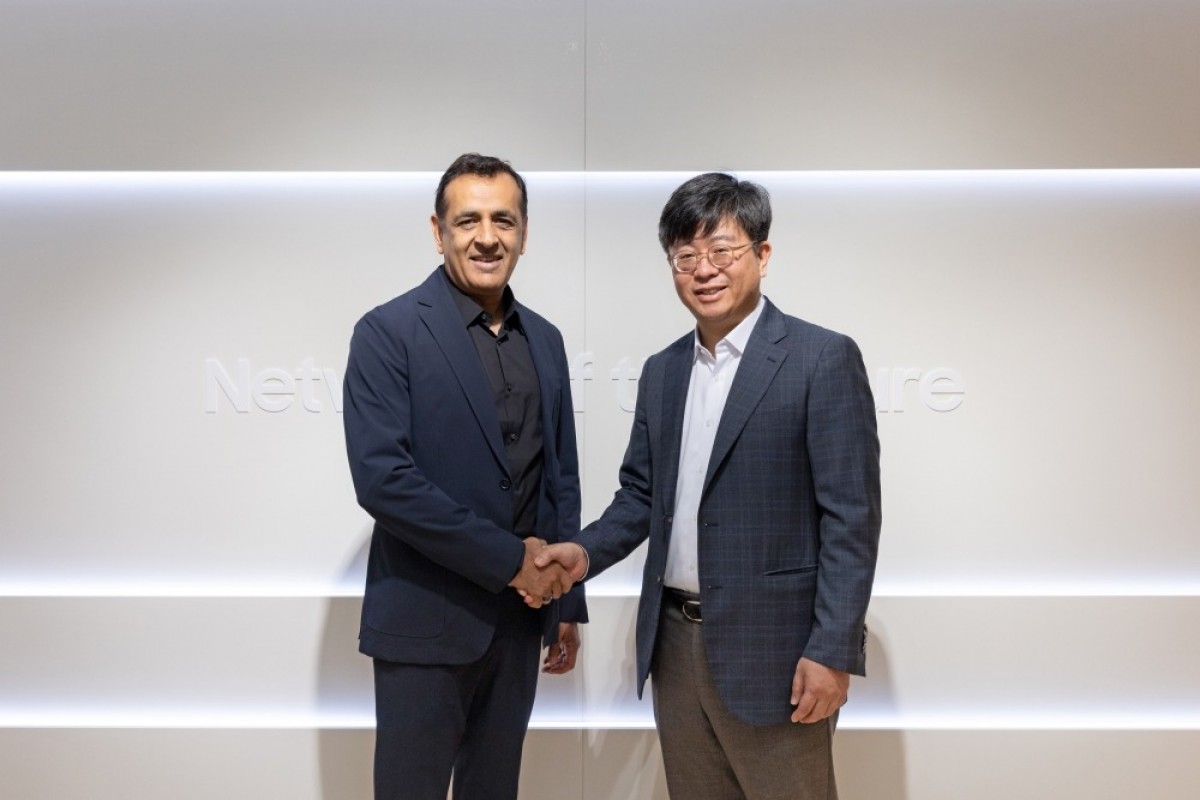
Samsung and Nvidia have announced a strategic partnership to advance AI-powered Radio Access Networks (AI-RAN), a move that aims to enhance the efficiency, scalability, and intelligence of mobile networks. This collaboration leverages Nvidia’s accelerated computing platforms and Samsung’s virtualized RAN (vRAN) solutions to create next-generation mobile network infrastructure that can dynamically optimize performance across different environments.
AI-RAN: A Step Toward Intelligent Mobile Networks
Radio Access Networks (RANs) are the backbone of cellular connectivity, acting as the gateway between mobile devices and network infrastructure. With the evolution of 5G and the push toward 6G, integrating artificial intelligence into RAN architecture is crucial for enhancing network performance, reducing latency, and improving resource utilization.
Samsung and Nvidia’s AI-RAN initiative will introduce AI-driven optimizations in network management, allowing telecom operators to:
- Improve signal processing for higher network efficiency.
- Optimize traffic loads across different regions—rural, suburban, and dense urban environments.
- Enhance network reliability and reduce power consumption through AI automation.
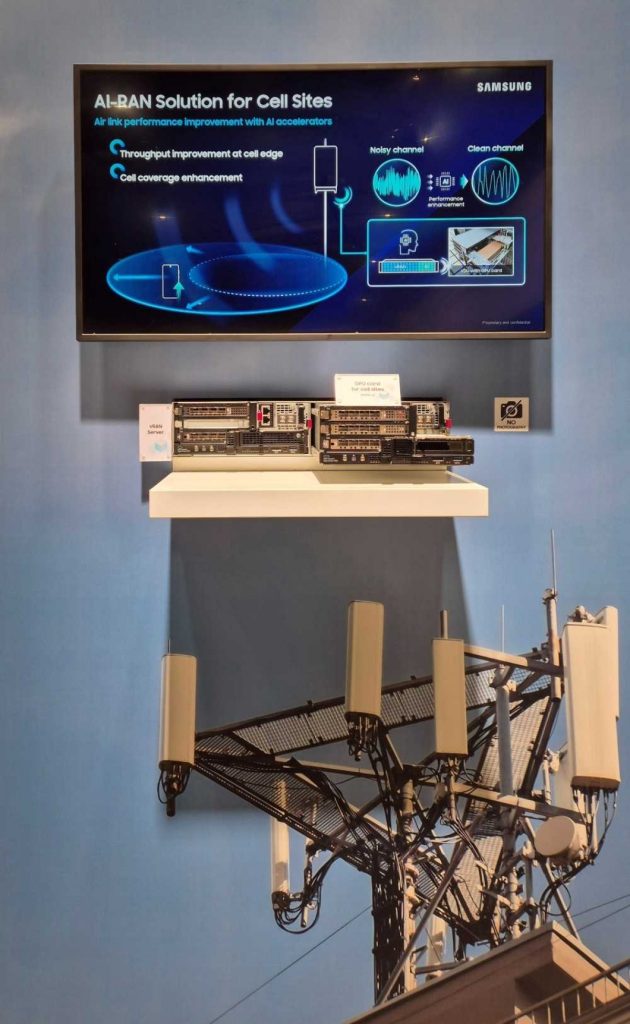
At MWC 2025, Samsung showcased how its vRAN solutions work in real-world scenarios when combined with Nvidia’s AI-accelerated computing. This marks a significant shift toward fully virtualized and intelligent mobile networks.
Nvidia’s Role: AI-Powered Computing for Telecom Networks
Nvidia is bringing its Grace CPU and GPU-based AI platform to the collaboration, integrating high-performance computing into mobile networks.
By utilizing Nvidia’s AI and accelerated computing capabilities, mobile networks can now:
- Process vast amounts of real-time data more efficiently.
- Enable predictive network optimization through machine learning.
- Improve network security and reduce operational costs for telecom operators.
Ronnie Vasishta, Senior Vice President for Telecom at Nvidia, highlighted the transformative potential of AI-RAN, stating that “AI-RAN delivers transformative gains in network utilization, efficiency, and performance while enabling new AI services.”
Samsung’s Vision: AI-Driven Virtualized RAN
Samsung has been at the forefront of vRAN technology, which allows operators to replace traditional hardware-based RAN with software-driven, cloud-based solutions.
According to June Moon, Executive Vice President and Head of R&D, Networks Business at Samsung Electronics, Samsung’s AI-powered vRAN is designed to create a network architecture where AI can thrive.
Samsung’s vRAN solutions combined with Nvidia’s AI-accelerated computing will enable:
- Smart traffic management to reduce congestion.
- AI-powered automation to lower operational expenses.
- Real-time network adaptation for optimal performance.
With AI integration in RAN, operators can dynamically allocate resources based on real-time demand, ensuring seamless connectivity and improved user experiences.
The Future of AI in Telecommunications
Samsung and Nvidia’s AI-RAN initiative represents a paradigm shift in mobile networking. The integration of AI, vRAN, and high-performance computing could redefine the way networks are deployed and managed, leading to:
- More scalable and cost-effective 5G and 6G networks.
- Energy-efficient mobile infrastructure to support sustainability goals.
- Advanced AI-driven services, such as real-time voice translation and predictive analytics for network failures.
As AI continues to reshape the telecommunications landscape, this collaboration between Samsung and Nvidia is setting the stage for the future of intelligent, automated mobile networks.
For more details, visit the official Samsung Newsroom.