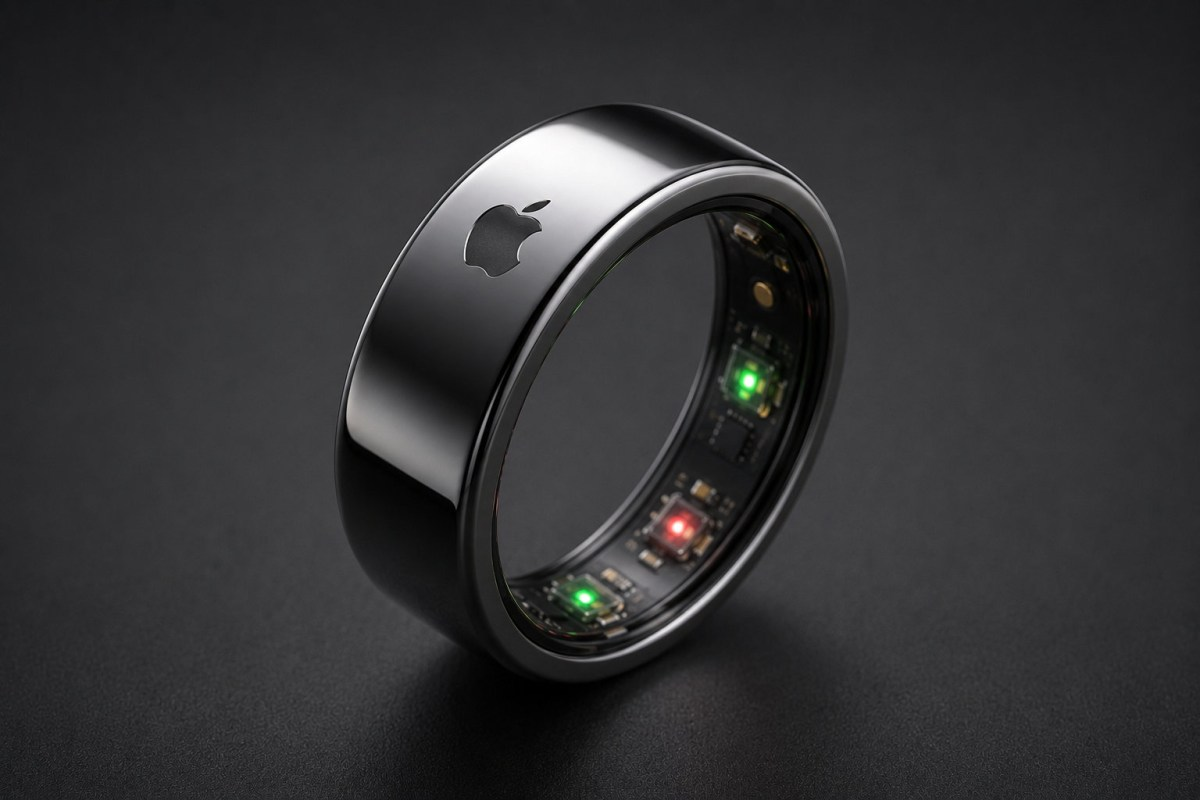
Apple smart ring rumors are back after a new leak claimed the company has started working on a finger-worn wearable that could compete with products such as Samsung Galaxy Ring, Oura Ring and Ultrahuman Ring Air.
The rumored device is being referred to online as “iRing,” although Apple has not confirmed that name or even acknowledged that such a product exists. The company could eventually use a different name, such as Apple Ring, or the project could remain internal and never reach the market.
For now, the report is thin on details. There is no confirmed launch window, no price, no design information and no official feature list. Still, the rumor is important because Apple has been expanding its interest in wearables, health tracking, artificial intelligence and ambient computing.
A smart ring would give Apple another way to collect wellness data, support hands-free controls and strengthen its ecosystem beyond the iPhone, Apple Watch and AirPods.
What the Latest Apple Smart Ring Rumor Claims
The latest rumor claims that Apple has started developing a smart ring. The device is being speculated as “iRing,” but that name should be treated as unofficial.
The leak does not reveal technical specifications. It does not say whether the ring would include heart-rate tracking, sleep tracking, temperature sensing, gesture controls, NFC, Siri integration or Apple Intelligence features.
It also does not confirm whether Apple is preparing a commercial launch or simply testing an internal prototype. Apple often explores many product ideas that never become public devices.
That makes this a very early-stage rumor. The most accurate way to describe the situation is that Apple is reportedly developing or exploring a smart ring, but nothing has been officially announced.
Why Apple Might Want a Smart Ring
A smart ring would make sense for Apple because wearables are already one of the company’s strongest product categories.
The Apple Watch turned Apple into a major health and fitness technology company. AirPods turned wireless audio into an everyday smart accessory. Vision Pro introduced Apple to spatial computing. A ring could become the next smaller wearable in that ecosystem.
Smart rings are useful because they are lighter and less intrusive than smartwatches. Some users do not like sleeping with a watch, but they may be more comfortable wearing a ring overnight. That makes smart rings especially attractive for sleep tracking and continuous wellness monitoring.
A ring also creates new possibilities for gesture control. A user could potentially control an iPhone, Mac, Apple TV, Vision Pro or smart home device through small finger movements.
For Apple, the appeal is clear: a smart ring could become a quiet, always-worn device that supports health, AI and ecosystem control.
How an Apple Ring Could Fit With Apple Watch
One of the biggest questions is how an Apple smart ring would fit beside the Apple Watch.
Apple already sells a powerful wearable that tracks heart rate, workouts, sleep, blood oxygen trends, temperature changes, activity, notifications and safety features. A smart ring would need to avoid feeling like a smaller Apple Watch with fewer features.
The best approach would be to make the ring a companion device rather than a replacement. The Apple Watch could remain the main screen-based wearable, while the ring could focus on passive tracking, sleep, gestures and discreet notifications.
For example, the ring could collect overnight wellness data while the Apple Watch charges. It could also help users who want health insights but do not want to wear a watch all day.
Apple could position the ring as a lighter, more comfortable accessory for people who want continuous tracking without another screen.
Smart Ring Market Is Growing
The smart ring market has become more interesting in recent years. Oura helped popularise the category with a strong focus on sleep, recovery and wellness tracking. Samsung entered the space with the Galaxy Ring, bringing the product category to a much larger consumer electronics audience.
Ultrahuman, RingConn and other companies have also pushed the category forward with different designs, battery-life claims and subscription models.
The appeal of smart rings is simple. They are small, discreet and easy to wear. They can track useful health and activity signals without requiring a screen on the wrist.
Apple entering the category would immediately raise public attention. The company has a huge iPhone user base, a strong health platform and deep software integration across devices.
If Apple releases a smart ring, the category could move from niche wearable to mainstream accessory much faster.
Possible Apple Smart Ring Features
Because Apple has not announced the device, any feature list is speculative. However, based on the current smart ring market and Apple’s existing ecosystem, several features would make sense.
A future Apple smart ring could include sleep tracking, heart-rate monitoring, skin temperature trends, activity tracking and recovery insights. These are common smart ring features and would fit naturally into Apple Health.
Gesture controls could be another major feature. Apple could use the ring to control devices through taps, finger movements or hand gestures. This would be especially useful with Apple Vision Pro, Apple TV, smart home accessories and AirPods.
The ring could also support discreet haptic alerts. Instead of showing notifications on a screen, it could gently vibrate for calls, messages, reminders or health prompts.
NFC or secure authentication could be another possibility, though Apple would likely be careful with privacy and security.
Apple Intelligence Could Make the Ring More Useful
The timing of the rumor is interesting because Apple is also pushing deeper into artificial intelligence.
A smart ring could become part of Apple’s AI future if it works as a sensor and control device. It could collect context, detect movement, support gestures and help Apple devices understand what the user is doing.
For example, a ring could help with hands-free actions, smart home control, fitness insights or device switching. It could also improve interactions with AI features by giving Apple more subtle input signals.
The ring itself would not need to be powerful. Most of the processing could happen on the iPhone, Apple Watch or cloud-assisted Apple systems. The ring would act as a lightweight sensor and input device.
That could make it more useful than a simple fitness tracker.
Apple Vision Pro Connection
A smart ring could also connect with Apple’s spatial computing plans.
Vision Pro already relies on eye tracking, hand tracking and gestures. A ring could improve hand detection, add more precise gesture input or provide haptic feedback inside spatial apps.
This could be especially useful for future Apple smart glasses or lighter mixed-reality devices. A ring could help users control digital interfaces without carrying a controller.
If Apple is serious about ambient computing, a ring could become an important hidden interface. It would not need a screen because it would work with other Apple devices around the user.
That makes the smart ring idea bigger than health tracking alone.
Could Apple Call It iRing?
The name “iRing” is being used in the rumor, but Apple may not choose that name.
Apple has moved away from using the “i” prefix for many newer products. Recent Apple products include Apple Watch, Apple Vision Pro, Apple TV and AirPods, not iWatch or iVision.
Because of that, “Apple Ring” may be more realistic than “iRing” if the device ever launches. Apple could also choose a completely different name that connects to health, gestures or spatial computing.
For now, iRing should be treated as an informal nickname rather than a confirmed product name.
Why Apple May Be Cautious
Apple may be cautious about launching a smart ring because the company already has the Apple Watch.
A ring could overlap with the watch in health and fitness tracking. If users choose the ring instead of the watch, Apple could risk weakening one of its most successful wearable products.
That may explain why Apple has reportedly explored ring ideas for years without launching one. The company must decide whether a ring would expand its wearable market or simply shift some Apple Watch buyers to a cheaper device.
The best solution would be to make the ring complementary. Apple could design it for sleep, recovery, gesture control and discreet tracking, while keeping the Apple Watch as the main wearable for workouts, apps, notifications and display-based features.
Battery Life Could Be a Major Selling Point
Battery life would be one of the most important features of an Apple smart ring.
Smart rings usually last longer than smartwatches because they do not have large displays. Many users expect rings to last several days on a charge.
Apple would need strong battery life to compete with existing smart rings. If the ring needs daily charging, it may lose one of the biggest advantages of the form factor.
A multi-day battery would make the device more useful for sleep tracking and continuous wellness monitoring. It would also reduce friction for users who already charge an iPhone, Apple Watch, AirPods and MacBook.
Privacy Would Be Central
Privacy would be a major part of any Apple smart ring story.
A ring could collect sensitive wellness and activity data. Apple would likely emphasise on-device processing, encrypted health data and user control over what information is shared.
This would fit Apple’s existing health privacy messaging. The company often presents privacy as a key advantage over competitors.
If the ring includes gesture control, location-based actions or biometric authentication, privacy and security would become even more important.
Apple would need to convince users that a tiny always-worn sensor is safe, private and trustworthy.
How Apple Could Compete With Oura and Samsung
Apple would enter a market where Oura already has strong credibility and Samsung has major hardware reach.
Oura is known for sleep, readiness and recovery tracking. Samsung benefits from its Galaxy ecosystem and Android user base. Ultrahuman and other brands compete through fitness insights, battery life and subscription-free features.
Apple’s advantage would be ecosystem integration. An Apple Ring could work deeply with iPhone, Apple Watch, AirPods, Vision Pro, Apple Health, Siri, Apple Fitness+ and Apple Intelligence.
That integration could be the main reason users choose Apple’s ring over rivals. Apple does not need to win only on sensors. It can win by making the ring feel like a natural part of the user’s digital life.
Why This Rumor Matters
This rumor matters because Apple rarely enters a product category without changing consumer expectations.
Before Apple Watch, smartwatches existed but were not mainstream in the same way. Before AirPods, wireless earbuds existed but were not as culturally dominant. If Apple enters smart rings, the category could gain major attention.
It would also show that Apple sees wearables moving beyond the wrist and ear. A ring would give Apple another always-on device that can collect context and support AI-powered experiences.
The rumor also suggests that Apple may be preparing for a future where devices become smaller, more personal and more ambient.
What We Still Do Not Know
There are still many unanswered questions.
We do not know whether Apple’s smart ring is an active product plan or only an internal experiment. We do not know what sensors it may include. We do not know whether it would require an iPhone. We do not know whether it would work with Apple Watch or replace some Watch features.
We also do not know the price, launch date, battery life, materials, sizing system or health features.
That means buyers should not treat the Apple smart ring as an upcoming confirmed product. It is a rumor, and Apple may change or cancel development at any time.
Final Thoughts
The Apple smart ring rumor is exciting because it points to a possible new direction for Apple’s wearable strategy. A ring could give the company a smaller and more discreet device for wellness tracking, gestures, AI features and ecosystem control.
The rumored iRing could compete with Oura Ring, Samsung Galaxy Ring and Ultrahuman Ring Air, but Apple would likely try to stand out through deep iPhone, Apple Health, Apple Watch, AirPods and Vision Pro integration.
For now, there are no confirmed specifications, no official name and no release date. Apple has not announced a smart ring, and the current information comes from a brief leak.
Still, the idea makes sense. Smart rings are growing, AI wearables are becoming more important, and Apple already has the software ecosystem needed to make a small device feel useful.
If Apple eventually launches a smart ring, it could turn one of the smallest wearable categories into one of the most important new battlegrounds in consumer tech.
Read Also: Xbox Prices Are Going Up Again