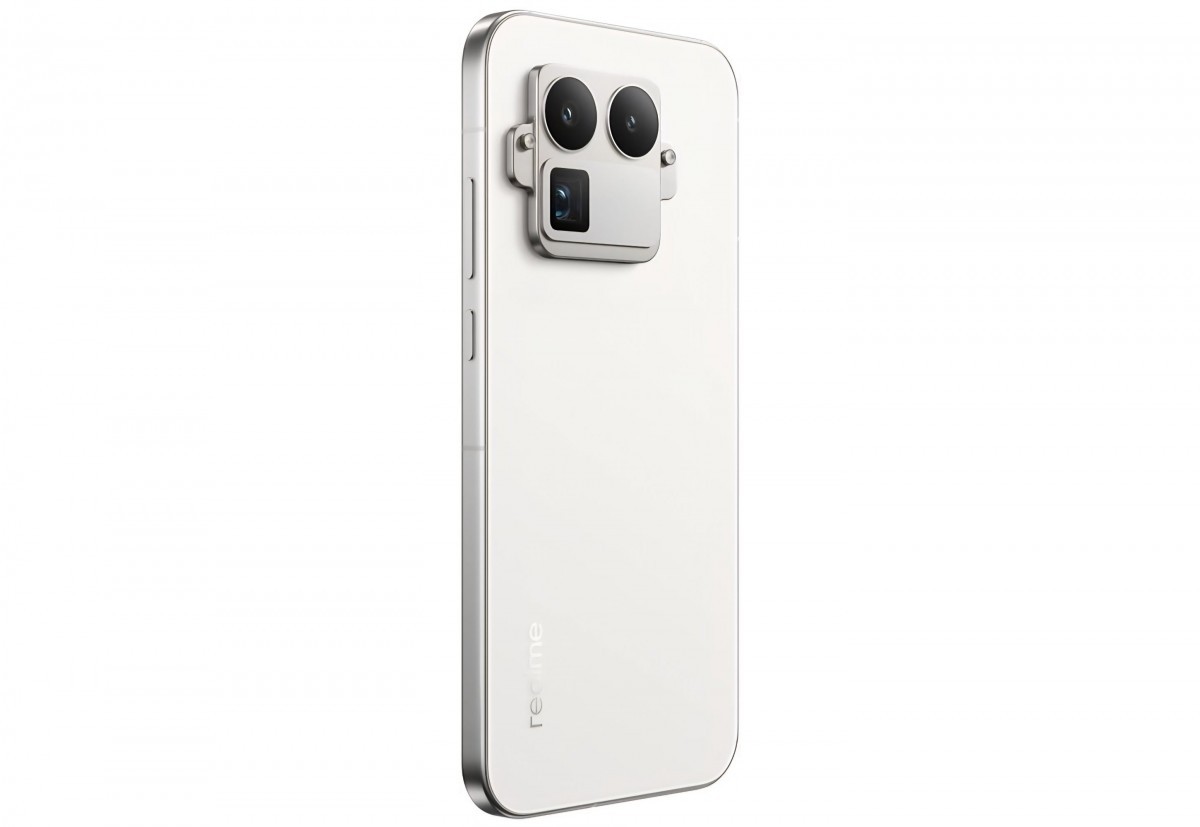
Realme has taken a bold step into the world of artistic mobile photography with the launch of the Realme GT 8 Pro, the first smartphone born from its partnership with iconic camera maker Ricoh. This collaboration focuses on the Ricoh GR brand, a series revered by professional street photographers such as Daido Moriyama. Once known for compact film cameras and later digital models, the GR legacy now arrives on a smartphone built with that same pursuit of creative expression. Realme and Ricoh announced a four-year partnership, and the GT 8 Pro represents the starting point of this long-term vision.
The phone positions itself as the “Best Street Snap Shooter” by blending optical upgrades, film-inspired color profiles, and GR-style shooting modes. Realme wants the GT 8 Pro to stand apart from typical flagship camera phones. Instead of chasing pure hardware stats alone, the brand is emphasizing character, mood, and the distinct aesthetic that made Ricoh GR cameras a cult favorite among street photographers.
A Ricoh GR–Inspired 50MP Main Camera Built for Street Shooting
At the heart of the GT 8 Pro is a 50MP main camera with a 1/1.56-inch sensor and an f/1.8 7P lens coated with five layers of anti-reflective material. This setup is designed to capture clean, contrast-rich images under varied lighting conditions. Two dedicated focal length modes emulate classic GR perspectives: 28mm for spontaneous street moments and 40mm for more intimate, human-centered compositions.
The exclusive Ricoh GR Mode includes five distinct profiles modeled after iconic film looks. These include Positive Film, Negative Film, High-Contrast Black & White, Standard, and Monotone. Each profile supports manual tone adjustments, letting photographers fine-tune shadows, highlights, and mid-tones. A GR-style watermark can also be added for a more authentic aesthetic. These features merge the tactile charm of vintage street photography with the power of modern computational imaging.
A 200MP Telephoto Camera for Versatile Creative Control
The GT 8 Pro pushes beyond street photography with a 200MP telephoto camera featuring a matching 1/1.56-inch sensor. The lens offers a 65mm focal length with 3× optical zoom, 6× lossless zoom, and up to 12× digital zoom. At the short end, this camera works well for portraits. At the long end, it can capture scenes across large venues, including stadiums or concert halls. The large sensor allows more detail retention even when zooming, making the phone versatile for both artistic and everyday shots.
The camera system supports high-end video recording with 4K 120fps output and Dolby Vision. Additional modes include 4K 120fps 10-bit Log for color grading and 8K 30fps for cinematic detail. This video capability caters to creators who need slow-motion, advanced dynamic range, and professional post-production options.
A Strong Ultra-Wide Upgrade and Next-Level Image Processing
Realme also upgraded the ultra-wide camera to a 50MP sensor with a 116° f/2.0 lens. This is a notable jump from the 8MP unit found on the GT7 Pro. The new hardware gives landscape shooters, architectural photographers, and travel content creators more clarity and dynamic range.
Behind the scenes, Realme and Ricoh developed a customized end-to-end camera system. This includes the optical design, the user interface, and the color science. The Qualcomm Snapdragon 8 Elite Gen 5 chipset handles advanced processing tasks such as multi-frame fusion, complex lighting adjustments, and low-light optimization. These enhancements aim to preserve the artistic tone associated with GR cameras while using cutting-edge computational photography.
A Four-Year Partnership That Begins With GT 8 Pro
The Realme GT 8 Pro is only the first chapter in the long-term collaboration between Realme and Ricoh. Both companies describe their partnership as a four-year journey focused on elevating mobile photography to match the creative freedom traditionally associated with compact cameras. Future models are expected to expand on this direction, possibly introducing more GR-inspired tools, accessories, or lens systems.
The phone is already available in China and will expand to global markets next week. Early reviewers have begun testing its camera performance, including experimenting with swappable camera bumps and exploring GR Mode’s film-style workflows. Detailed image evaluations will follow, but the initial impression is clear: Realme wants to make a phone that caters to photographers, not just tech enthusiasts.
With its combination of thoughtful camera design, powerful hardware, and artistic shooting tools, the Realme GT 8 Pro positions itself as one of the most ambitious photography-focused smartphones of the year.