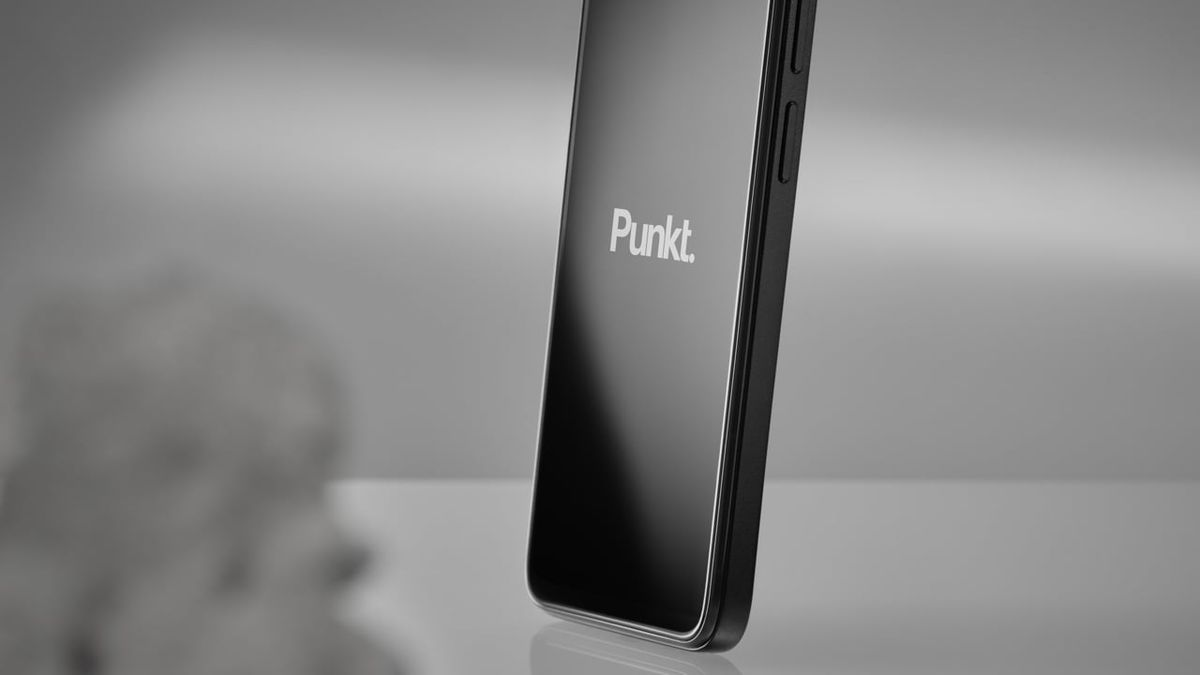
The Punkt. MC03 is now available, bringing another privacy-focused smartphone option to buyers who want more control over their data and less dependence on mainstream mobile ecosystems.
Designed in Switzerland, manufactured in Germany and powered by the Swiss-built AphyOS operating system, the MC03 is being marketed as a “Sovereign Smartphone” for users, professionals and organisations that want a more controlled mobile environment. It is not trying to win the normal flagship phone battle on camera power, processor speed or display brightness. Instead, Punkt. is selling a different idea: a phone built around privacy, data sovereignty, European hardware and long-term device independence.
The phone is available in black and is positioned at a premium price. That immediately creates an important question: is the Punkt. MC03 a serious alternative to mainstream Android phones, or is it a niche device for privacy-conscious users willing to pay more for a different software philosophy?
The answer depends on what the buyer values most.
For people shopping by specifications alone, the MC03 may look expensive. Its MediaTek Dimensity 7300 chip, 8GB of RAM, 256GB of storage, 64MP main camera and 6.67-inch OLED display are respectable, but they do not match the raw hardware value offered by many mainstream Android phones at similar or lower prices.
But for people who care most about privacy, data visibility, European manufacturing, a removable battery and a mobile operating system designed to reduce tracking, the MC03 becomes more interesting.
What Is the Punkt. MC03?
The Punkt. MC03 is a privacy-first smartphone built around AphyOS, an Android Open Source Project-based operating system designed to give users more control over apps, data flows and permissions.
Punkt. describes the device as a sovereign mobile platform. That means the phone is designed around the idea that users should have clearer control over where their data goes, how apps behave and which services are trusted.
This is a different approach from most mainstream smartphones. A typical Android or iPhone experience is built around app ecosystems, cloud accounts, advertising networks, personalisation systems and deep integration with platform services. Many users like that convenience. Others worry that too much of their digital life is being tracked, profiled or monetised.
The MC03 is aimed at the second group.
It is still a smartphone. It has a large OLED display, 5G connectivity, cameras, wireless charging, NFC, Wi-Fi 6, fingerprint unlock and expandable storage. But its main selling point is not entertainment, photography or gaming. Its main selling point is control.
That is why Punkt. is calling it a “Sovereign Smartphone.”
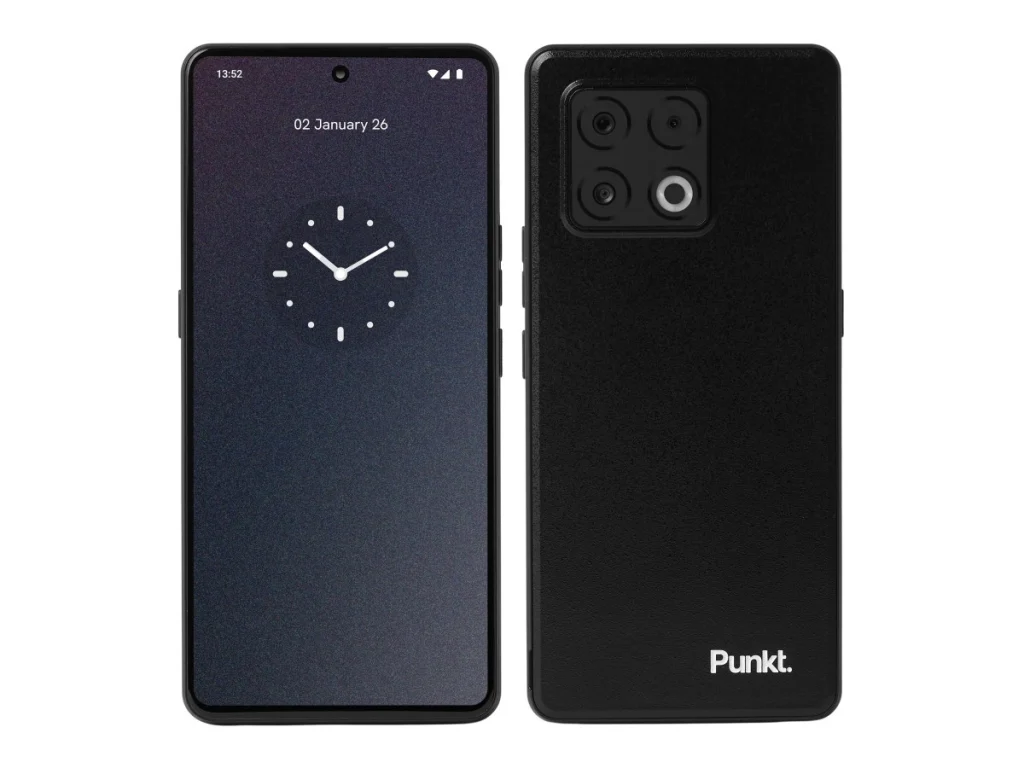
Designed in Switzerland, Built in Germany
One of the MC03’s strongest marketing points is its European identity.
Punkt. says the device is designed in Switzerland and manufactured in Germany. In a market dominated by phones manufactured in Asia, this gives the MC03 a distinctive positioning. It appeals to buyers who care about supply chain transparency, European technology, data governance and long-term device trust.
However, buyers should understand what this does and does not mean.
The phone being manufactured in Germany does not mean every component is European-made. Like most smartphones, it uses global components, including a MediaTek chipset. Modern electronics supply chains are international. Still, final manufacturing and product design in Europe give Punkt. a clearer identity than most privacy-focused niche phones.
This European angle also supports the company’s data-sovereignty message. Punkt. is not only selling hardware. It is selling the idea of a more accountable mobile experience, built around trusted boundaries and less dependence on advertising-driven data models.
For organisations, journalists, professionals, executives and privacy-conscious individuals, that story may matter more than benchmark scores.
The Main Selling Point Is AphyOS
AphyOS is the real reason the Punkt. MC03 exists.
The operating system is based on open-source Android 15 and is designed to reduce tracking, make app-level data use more visible and give users clearer control over permissions. Punkt. says AphyOS does not track, profile or monetise user behaviour.
That is a strong claim, and it is central to the device’s value proposition. The MC03 is not simply a phone with privacy settings added later. It is being positioned as a privacy-first phone from the operating-system level upward.
AphyOS also includes communication and cloud services, including email, messaging, calendar and 5GB of cloud storage. Threema is pre-installed for private messaging, while Digital Nomad VPN is built into the operating system. There is also Data Ledger, which is designed to make app-level data use more visible so users can better understand and control access.
Proton services are also available for users who want to extend their privacy-focused digital environment, although those services may require a separate subscription.
The important update is that Punkt. now says AphyOS is included with the phone and does not require recurring subscription fees for the core sovereign mobile experience. That makes the MC03 easier to understand than earlier reports suggesting a mandatory ongoing OS subscription.
A Privacy Phone for People Who Still Need a Smartphone
Some privacy-focused users prefer so-called “dumb phones” because they reduce distraction and limit app tracking. Punkt. itself is known for minimalist devices that encourage digital balance.
The MC03 is different. It is not a basic phone. It is a full smartphone for people who still need apps, messaging, navigation, browsing and modern connectivity, but want more control over the experience.
That makes it useful for a specific kind of buyer.
A business executive may want a phone with better data boundaries. A journalist may want reduced exposure to tracking. A professional handling sensitive communication may want a device designed around privacy. A user tired of mainstream smartphone ecosystems may want Android flexibility without the usual data trade-offs.
The MC03 is not promising to make anyone invisible online. No smartphone can do that. But it is trying to create a more deliberate mobile environment where users can see and manage data behaviour more clearly.
That is the difference between a privacy-focused smartphone and a normal Android phone with privacy settings switched on.
Hardware Specifications: Solid but Not Spectacular
The Punkt. MC03 has a 6.67-inch Full HD+ flexible OLED display with a 1080 x 2436 resolution and up to 120Hz refresh rate. The screen size and refresh rate are modern, but the listed peak brightness of 550 nits is modest by today’s standards, especially compared with mainstream phones that advertise much higher outdoor brightness.
The phone is powered by the MediaTek Dimensity 7300 processor, paired with 8GB of RAM and 256GB of storage. Storage is expandable via microSD card up to 1TB, which is a welcome feature in a market where many phones have dropped memory-card support.
The camera system includes a 64MP main camera with phase detection autofocus, an 8MP ultra-wide camera with fixed focus and a 2MP macro camera with fixed focus. The front camera is 32MP and also fixed focus.
These camera specs are acceptable, but they are not flagship-level. There is no mention of optical image stabilisation for the main camera, and the fixed-focus ultra-wide and selfie cameras suggest that photography is not the phone’s main priority.
Other features include an in-display fingerprint sensor, dual stereo speakers, dual SIM support with one nano SIM and one eSIM, Bluetooth 5.4, Wi-Fi 6, NFC and multiple global network bands.
The Removable Battery Is a Major Advantage
One of the most interesting hardware features is the removable 5,200mAh battery.
This is rare in modern smartphones. Most current phones have sealed batteries that require professional repair when they degrade. A removable battery can extend the useful life of the device, reduce waste and give users more independence.
For a phone marketed around sovereignty and long-term control, this feature makes sense. A user who wants independence from mainstream ecosystems may also value hardware that is easier to maintain.
The battery supports 30W wired charging and 15W wireless charging. Those speeds are not class-leading, but they are practical enough for everyday use.
The bigger story is not charging speed. It is longevity.
A removable battery means the MC03 could remain useful for longer, especially if replacement batteries are available and affordable over time. That aligns with the phone’s sustainability and durability message.
IP68 Durability Adds Practical Appeal
The MC03 is IP68 certified for dust and water resistance. That gives it an advantage over many repairable or niche privacy phones, which sometimes compromise on durability.
Combining a removable battery with IP68 protection is not easy. Many phones with removable batteries lose out on water resistance, while many waterproof phones are sealed and harder to repair. Punkt.’s ability to offer both helps strengthen the device’s practicality.
The phone is also relatively thick and heavy, measuring 11mm and weighing 240g. That may not appeal to users who prefer slim, lightweight devices. But the extra bulk may be easier to accept if it supports battery removability, durability and long-term construction.
In other words, the MC03 is not designed to be the thinnest or flashiest phone. It is designed to feel more controlled, durable and independent.
Why the Price Will Divide Buyers
The Punkt. MC03 is expensive for its specifications.
At this price level, mainstream Android buyers can find phones with faster processors, brighter displays, better cameras, longer software support from major brands, faster charging and more polished app ecosystems. That makes the MC03 difficult to recommend purely as a hardware purchase.
But Punkt. is not competing mainly on hardware.
The MC03’s price is tied to its software, privacy model, European manufacturing, removable battery and data-sovereignty promise. Buyers are paying for a philosophy as much as a phone.
That will divide opinion.
A performance-focused user may look at the Dimensity 7300 and walk away. A camera-focused user may prefer a Pixel, Galaxy, iPhone, Vivo or Xiaomi flagship. A gamer will likely find better value elsewhere. But a privacy-conscious professional may see the MC03 differently.
The value question is therefore personal: do you want the best specs for the money, or do you want a phone built around privacy and control?
For most mainstream users, the MC03 will feel expensive. For its target audience, the price may be easier to justify.
Who Should Consider the Punkt. MC03?
The Punkt. MC03 is best suited to users who place privacy and control above mainstream convenience.
It may appeal to professionals who handle sensitive information, privacy-conscious consumers, organisations looking for controlled mobile environments, users tired of tracking-based ecosystems and people who want a European-made smartphone with a removable battery.
It may also appeal to users who like Android’s flexibility but want a cleaner, more accountable software environment.
The phone is less suitable for buyers who want the best camera for the money, the fastest gaming performance, the brightest display, the largest app ecosystem or the most mainstream user experience.
The MC03 is not a phone for everyone. It is a phone for people who know exactly why they want it.
AphyOS and the App Question
One of the biggest questions around any privacy-focused Android phone is app compatibility.
Mainstream Android phones usually rely heavily on Google services, including the Play Store, Google Maps, Gmail, Google Photos, Google Drive, Google Pay and background services used by many apps. Privacy-focused Android variants often reduce or remove Google integration, which can improve privacy but create convenience trade-offs.
The MC03’s appeal depends heavily on how well AphyOS balances privacy and usability.
Users will want to know whether their essential apps work properly, whether banking apps are supported, whether notifications are reliable, whether maps and ride-hailing apps function smoothly and whether workplace apps can be installed without issues.
Punkt. says the phone offers the freedom to install apps while maintaining a more controlled environment. Still, buyers should check app compatibility before switching, especially if they depend on specific banking, authentication, transport or work apps.
Privacy-first phones often require more user awareness than mainstream phones. The MC03 may be simple by design, but users should not assume it will behave exactly like a normal Android phone.
Threema, Proton and VPN Integration
The MC03 includes several privacy-oriented services that strengthen its identity.
Threema is pre-installed inside the secure AphyOS environment for private communication. This makes sense because Threema is known for privacy-focused messaging and is often used by users who want an alternative to mainstream messaging apps.
Digital Nomad VPN is built into the operating system, helping users protect connections on public Wi-Fi without relying on a separate third-party VPN app. This is useful for travellers, remote workers and people who often connect through hotels, airports, cafes or shared networks.
Proton services are also available for users who want a broader privacy-focused ecosystem, including tools such as Proton Mail, VPN, Calendar, Drive, Wallet and Pass. However, Proton’s services are separate and may require paid plans depending on what the user wants.
This ecosystem approach is important. Punkt. is not only selling a device. It is trying to create a controlled mobile environment with communication, VPN, cloud and data-visibility tools built into the experience.
Data Ledger: Making App Behaviour More Visible
Data Ledger is one of the most interesting software features mentioned for the MC03.
The idea is to make app-level data use visible, helping users understand how apps access information and permissions. In mainstream smartphone ecosystems, users often grant permissions without fully understanding how apps behave over time. Data Ledger aims to make that behaviour clearer.
This could be useful for people who want to monitor app access more carefully. It may also help organisations that need to manage sensitive data exposure.
However, the usefulness of this feature will depend on execution. It must be easy to understand, not just technically detailed. Many users ignore complex privacy dashboards because they are confusing. If Data Ledger presents information clearly, it could become one of AphyOS’s strongest practical tools.
The privacy market has a common problem: users say they want control, but they do not want endless complexity. Punkt.’s challenge is to make data control understandable without overwhelming people.
How It Compares With Mainstream Android Phones
Compared with mainstream Android phones, the Punkt. MC03 is both less impressive and more interesting.
It is less impressive in raw value. A typical Android phone in this price range may offer a faster chip, better cameras, brighter display, longer mainstream software support, more polished photography features and stronger gaming performance.
But the MC03 is more interesting in its priorities. It offers European manufacturing, a removable battery, IP68 durability, expandable storage, privacy-focused software, built-in VPN features, secure messaging integration and a strong anti-tracking message.
Mainstream Android phones are built for convenience, services and ecosystem engagement. The MC03 is built for control, restraint and privacy.
The better phone depends on the user.
For someone who wants the best camera and app ecosystem, a mainstream flagship is the safer choice. For someone who wants a phone that challenges the data-harvesting model, the MC03 is more distinctive.
How It Compares With Fairphone
The MC03 may also be compared with Fairphone because both devices appeal to buyers who care about sustainability, repairability and alternatives to mainstream smartphone culture.
Fairphone focuses heavily on ethical sourcing, modular repairability, long-term support and sustainability. Punkt. focuses more heavily on privacy, data sovereignty and a controlled mobile software environment.
The MC03 has a removable battery and IP68 rating, which is attractive. However, Fairphone’s repair ecosystem and availability of replacement parts may be stronger and more mature.
The choice between the two depends on priorities. If repairability and ethical hardware are the main concern, Fairphone may be more compelling. If privacy-first software and data control are the main concern, Punkt. may be more appealing.
Both devices show that some smartphone buyers want alternatives to the normal flagship race.
The “Sovereign Smartphone” Label Explained
The phrase “Sovereign Smartphone” may sound like marketing language, but it points to a real trend in technology.
Data sovereignty is becoming more important as governments, companies and individuals worry about where data is stored, who controls it and how it is processed. Cloud services, AI systems, advertising networks and app ecosystems have made personal data more valuable and more exposed.
A sovereign smartphone is a device designed to keep more control in the hands of the user or organisation. That can include reduced tracking, clearer permissions, trusted infrastructure, secure communication and better visibility into app behaviour.
For organisations, this matters because mobile devices are often the weakest link in data security. Employees use phones for email, messaging, documents, authentication, travel, photos and meetings. If those devices leak data or depend on uncontrolled services, risk increases.
For individuals, the appeal is more personal. People may not want their behaviour profiled or monetised. They may want a phone that feels less intrusive.
The MC03 is Punkt.’s attempt to bring this sovereignty idea into a consumer-ready smartphone.
The Biggest Strengths of the Punkt. MC03
The MC03’s biggest strength is its clear identity. Many smartphones feel similar. Punkt.’s phone does not. It is built around a specific philosophy: privacy, control and European manufacturing.
The removable battery is another major strength. In a market where sealed phones dominate, replaceable batteries are valuable for longevity.
The IP68 rating adds confidence. It suggests that repairability and durability do not have to be opposites.
The expandable storage is also welcome. Many users still appreciate microSD support, especially those who store media, documents or offline files.
AphyOS is the headline feature. If it delivers on its promise of reduced tracking, clearer permissions and a more controlled mobile environment, it gives the MC03 a reason to exist beyond hardware specs.
The inclusion of Threema, built-in VPN services and optional Proton integration also strengthens the privacy-first ecosystem.
The Biggest Weaknesses of the Punkt. MC03
The biggest weakness is price-to-spec value.
The Dimensity 7300 is a capable mid-range chip, but it is not a flagship processor. At the MC03’s price, many buyers will expect stronger performance.
The display’s listed peak brightness is also modest compared with modern premium phones. Outdoor visibility may be a concern depending on real-world performance.
The camera system is another weakness on paper. A 64MP main camera can be useful, but the lack of flagship camera hardware, fixed-focus secondary cameras and no clear optical image stabilisation mention may limit photography performance.
The phone is also thick and heavy. Some users may appreciate the durability, but others may find it less comfortable.
The software experience may also require adjustment. A privacy-focused OS can involve app compatibility limitations or a learning curve compared with standard Android and iOS.
In short, the MC03 asks buyers to accept hardware compromises in exchange for privacy and control.
Is the Punkt. MC03 Worth Buying?
The Punkt. MC03 is worth considering if privacy, data control, European manufacturing and long-term device independence are your top priorities.
It is not the best phone for most people. It is not the best gaming phone. It is not the best camera phone. It is not the best hardware value. It is not the safest choice for users who need every mainstream app and service to work exactly as expected.
But it may be one of the more interesting phones for people who want to step away from the normal smartphone model.
The MC03 is for buyers who are willing to pay for a different relationship with their device. Instead of asking, “How fast is it?” they are asking, “Who controls my data?” Instead of asking, “How many camera modes does it have?” they are asking, “Can I trust the software environment?”
That makes it a niche product, but not an irrelevant one.
As privacy, AI and data sovereignty become bigger issues, phones like the Punkt. MC03 may become more important.
Final Verdict
The Punkt. MC03 is a bold and unusual smartphone.
On hardware alone, it is difficult to defend at its price. The specifications are closer to a solid mid-range Android phone than a mainstream flagship. The processor, display brightness and camera setup will not impress buyers who shop by performance charts.
But the MC03 is not trying to win that contest.
Its real argument is about control. It offers AphyOS, European manufacturing, a removable battery, IP68 durability, expandable storage, built-in privacy tools and a clear rejection of tracking-based smartphone economics.
That makes it a specialist device for privacy-conscious users, professionals and organisations that want a more controlled mobile environment.
For mainstream buyers, better value exists elsewhere. For people who want a smartphone designed around data sovereignty rather than attention capture, the Punkt. MC03 is one of the most distinctive launches of the year.
FAQs About the Punkt. MC03
What is the Punkt. MC03?
The Punkt. MC03 is a privacy-focused smartphone designed in Switzerland, manufactured in Germany and powered by AphyOS. Punkt. markets it as a “Sovereign Smartphone” built for users and organisations that want more control over data, apps and mobile privacy.
Is the Punkt. MC03 now available?
Yes. The Punkt. MC03 is now available through Punkt.’s official store. Availability may vary by region, shipping destination and stock, so buyers should check the official store before ordering.
How much does the Punkt. MC03 cost?
The official Punkt. store lists the MC03 at CHF 745 in the version checked. Some European reports have referred to a €745 price. The final amount may depend on region, tax, currency and shipping.
What operating system does the Punkt. MC03 use?
The MC03 runs AphyOS, a privacy-first operating system based on open-source Android 15. AphyOS is built around data control, reduced tracking, app-level visibility and a more controlled mobile experience.
Does AphyOS require a subscription?
Punkt. currently says AphyOS is included with the MC03 and does not require recurring subscription fees for the core sovereign mobile experience. Earlier reports mentioned a subscription model, but the current product positioning says the OS is included in the purchase.
Does the Punkt. MC03 have Google Play Store?
The MC03 is built around AphyOS rather than a standard Google-heavy Android experience. Users should check app compatibility before buying, especially for banking apps, workplace apps, Google-dependent services and local apps they rely on daily.
What processor does the Punkt. MC03 use?
The MC03 uses the MediaTek Dimensity 7300 processor. This is a capable mid-range 5G chipset, but it is not a flagship-class processor compared with the most powerful Snapdragon or Apple chips.
How much RAM and storage does the MC03 have?
The phone has 8GB of RAM and 256GB of internal storage. It also supports expandable storage via microSD card up to 1TB, which is useful for users who want local control over files and media.
Does the Punkt. MC03 have a removable battery?
Yes. The MC03 has a removable 5,200mAh battery. This is one of its strongest hardware features because removable batteries can extend the useful life of a phone and make maintenance easier.
Does the MC03 support wireless charging?
Yes. The Punkt. MC03 supports 30W wired charging and 15W wireless charging. These speeds are practical, though not as fast as some mainstream Android phones.
Is the Punkt. MC03 waterproof?
The MC03 has an IP68 rating for dust and water resistance. That makes it more durable than many niche or repair-focused phones, especially considering that it also has a removable battery.
What cameras does the Punkt. MC03 have?
The MC03 has a triple rear camera system with a 64MP main camera, 8MP ultra-wide camera and 2MP macro camera. It also has a 32MP front camera. The camera setup is serviceable, but photography is not the phone’s main selling point.
Is the Punkt. MC03 a good camera phone?
It is unlikely to compete with leading camera phones from Apple, Samsung, Google, Vivo, Xiaomi or Oppo. The MC03 is mainly a privacy and data-control phone, not a photography flagship.
Who should buy the Punkt. MC03?
The MC03 is best suited to privacy-conscious users, professionals, organisations and buyers who care about European manufacturing, removable batteries and reduced tracking. It is not ideal for gamers, camera enthusiasts or users seeking the best specs for the price.
What are the biggest advantages of the Punkt. MC03?
Its biggest advantages are AphyOS, privacy-focused design, European manufacturing, removable battery, IP68 rating, expandable storage, built-in VPN features, Threema integration and a strong data-sovereignty message.
What are the biggest disadvantages of the Punkt. MC03?
Its main disadvantages are high price for the hardware, mid-range processor, modest display brightness on paper, non-flagship cameras, heavy body and possible app compatibility concerns compared with mainstream Android phones.
Is the Punkt. MC03 better than a normal Android phone?
It depends on what you value. A normal Android phone may offer better hardware, camera quality, app convenience and value. The MC03 offers stronger privacy positioning, data control, European manufacturing and a removable battery. It is better for a specific audience, not for everyone.
Is the Punkt. MC03 good for businesses?
It may appeal to organisations that need better control over mobile data, app permissions and communication tools. However, businesses should test app compatibility, device management options, security requirements and support policies before deploying it widely.
Does the MC03 support Proton services?
Yes. Proton services are available for users who want to extend their privacy-focused digital environment. However, Proton services are optional and may require a separate Proton subscription depending on the services used.
Is the Punkt. MC03 worth the price?
The MC03 is worth the price only if privacy, control, European manufacturing and removable battery design matter more to you than raw specifications. For mainstream buyers, better hardware value is available elsewhere. For privacy-first users, the MC03 is a distinctive option.