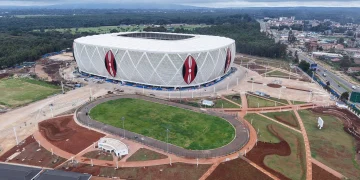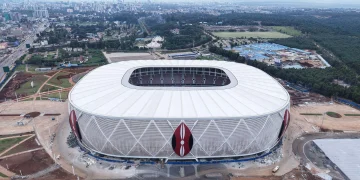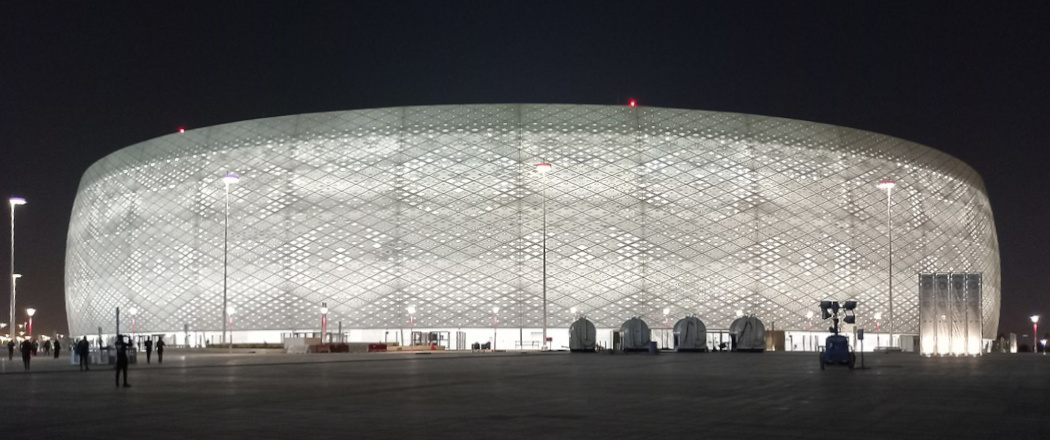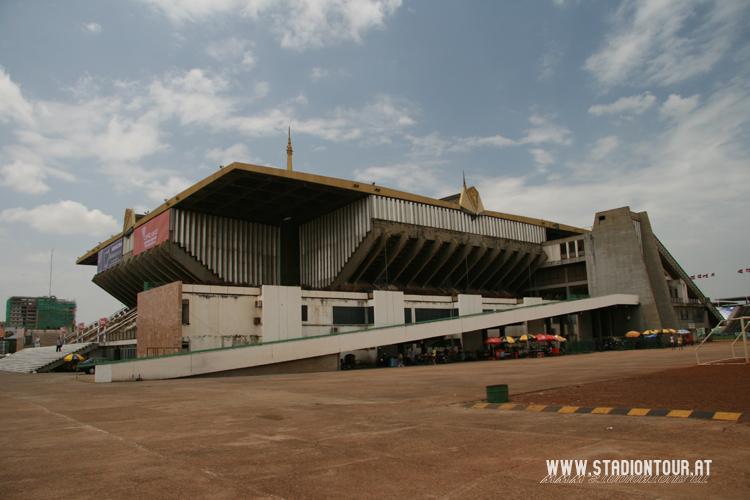
Located in Phnom Penh, Cambodia’s bustling capital, the Phnom Penh National Olympic Stadium stands as a monument to the nation’s sporting legacy. Opened in 1964 and with a capacity of 50,000, this multi-purpose stadium has witnessed historic moments in Cambodian sports, including World Cup qualifiers and Southeast Asian Games matches. Although its role as Cambodia’s national stadium has been somewhat overshadowed by the newly built Morodok Techo National Stadium, it remains a key venue for football, athletics, and cultural events.
History and Architecture
The stadium was designed by Vann Molyvann and constructed between 1963 and 1964. Despite its large capacity, the design incorporated massive earthworks, including 500,000 cubic meters of excavation to create the stadium bowl. The iconic main grandstand features a reinforced concrete structure with a decorative roof, while a national indoor hall, capable of seating 8,000, was also added to the complex.
Though the Phnom Penh National Olympic Stadium was initially built to host the 1963 Southeast Asian Peninsular Games, those games were canceled due to political unrest. The stadium’s first major international competition came in 1965, when it hosted the World Cup qualifiers between North Korea and Australia. Despite being a neutral venue due to political tensions, the matches attracted crowds of 60,000 to 55,000, with a king’s decree instructing half of the crowd to support Australia.
Facilities and Features
In addition to its main football pitch, the Olympic Stadium also boasts athletic tracks and facilities for swimming, volleyball, and diving. The Olympic-size swimming pool was restored in 2017, adding to the venue’s accessibility for the local public. For football, the stadium features an artificial turf pitch, installed in 2015 to accommodate the growing number of matches played here.
Notable renovations were carried out in 2000 by the Taiwanese firm Yuanta Group, refurbishing the stadium and expanding the surrounding area with residential and commercial properties. The 2023 Southeast Asian Games saw the stadium host the Men’s and Women’s football finals, although the main games took place at the Morodok Techo National Stadium.
International Matches
The Phnom Penh National Olympic Stadium continues to be a host for international football events. Some key international matches include:
- March 22, 2017: Cambodia 2–3 India (International Friendly, 50,000 attendees)
- September 11, 2018: Cambodia 1–3 Malaysia (International Friendly, 50,000 attendees)
- May 2, 2023: Cambodia 1–1 Philippines (2023 SEA Games, 30,118 attendees)
- November 10, 2023: Cambodia 1–1 Hong Kong (International Friendly, 30,000 attendees)
The stadium remains a key venue for Cambodia’s national team and continues to host regional tournaments and international friendlies.
Conclusion
Despite being overshadowed by newer venues, Phnom Penh National Olympic Stadium retains its status as a central part of Cambodian sports culture. With a rich history, including World Cup qualifiers and SEA Games tournaments, it continues to serve as a home for local football teams and international competitions. The stadium’s iconic design and legacy as Cambodia’s original national stadium make it an enduring landmark in Phnom Penh.