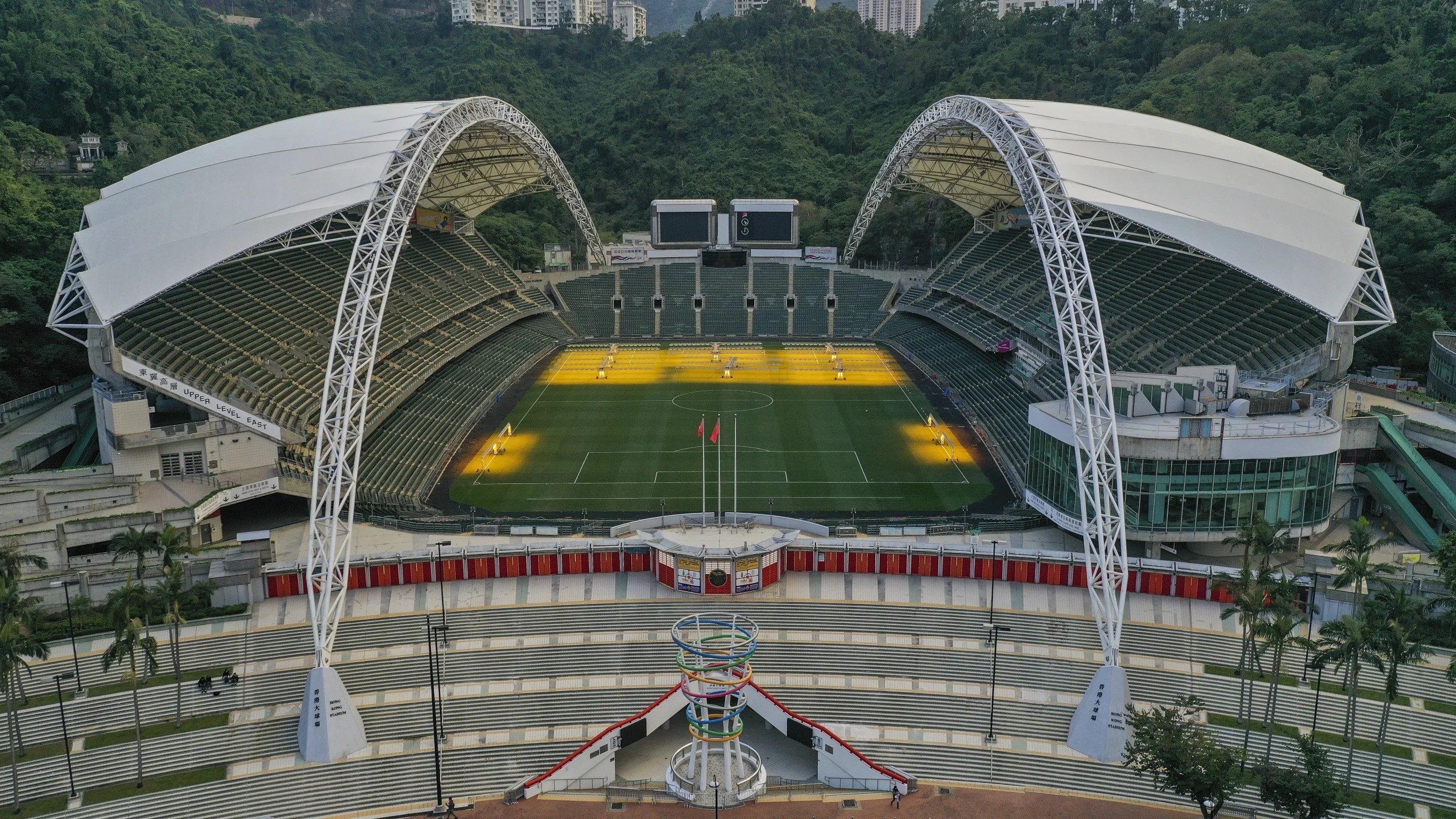
Hong Kong Stadium, located in Causeway Bay, is the city’s premier sports venue. With a capacity of 40,000, it is the largest stadium in Hong Kong and has been an integral part of the city’s sporting history since its inauguration in 1994. Originally known as the Government Stadium, it underwent significant renovations before reopening as Hong Kong Stadium, making it a modern, world-class venue for football, rugby, and various cultural events.
A Rich History of Hosting International Events
Hong Kong Stadium has earned a reputation for hosting prestigious international sports events. Notably, it was the venue for the inaugural AFC Asian Cup and has hosted the AFC Women’s Asian Cup four times. Its versatility extends beyond football, with the Hong Kong Sevens rugby tournament taking place annually from 1982 to 2024. The stadium has also welcomed teams from the Premier League and La Liga, hosting club friendlies and international fixtures, such as matches with Real Madrid, Manchester United, and Barcelona.
Additionally, the stadium played host to historic events like the Bledisloe Cup rugby test match between New Zealand and Australia in 2008, cementing its status as a key venue for major international rugby tournaments.
Football and Rugby at Hong Kong Stadium
Football plays a prominent role at Hong Kong Stadium, with the Hong Kong national football team and local clubs like Kitchee SC using the venue for international matches and domestic competitions. The stadium has witnessed memorable matches such as the 2009 AFC Cup semi-final and East Asian Games football finals. It also hosted the 2018 AFC Championship and regularly stages the Lunar New Year Cup, attracting teams from around the world.
On the rugby front, the Hong Kong Sevens—one of the most famous rugby tournaments globally—has been a fixture at the stadium, bringing thousands of fans to the city each year. The stadium’s adaptability has made it a reliable venue for both football and rugby matches.
The Stadium’s Multi-Purpose Use and Cultural Significance
In addition to sporting events, Hong Kong Stadium has hosted numerous concerts and cultural events, although its role as an entertainment venue has been limited due to noise complaints from surrounding residents. The 1994 Jean-Michel Jarre concert marked the first major event at the newly renovated stadium. However, since 1999, the stadium has not hosted large entertainment events due to local regulations, limiting its use to primarily sports.
Renovations and Improvements
Originally built in 1953 and later renovated in the early 1990s, Hong Kong Stadium underwent significant changes to meet the demands of modern sports. The redevelopment in 1994 included the installation of better seating, floodlights, and VIP facilities. Over the years, it has continuously upgraded its facilities to remain competitive with other major international venues.
In 2015, the turf was replaced, addressing previous issues with pitch quality, a significant improvement praised by players and fans alike.
Stadium Facilities and Capacity
Hong Kong Stadium has a total seating capacity of 40,000, divided across multiple levels:
- Main Level: 18,256 seats
- Upper Levels: 18,507 seats
- Executive Levels: 3,153 seats
- Wheelchair Access: 57 spaces
The stadium is equipped with multiple refreshment kiosks, VIP suites, and facilities for disabled spectators, ensuring it is accessible to all fans. Additionally, its open-air design provides a fantastic viewing experience, though the lack of sound insulation has caused some local noise-related challenges.
Conclusion
Hong Kong Stadium stands as a historical landmark in the city’s sporting landscape. From hosting iconic football and rugby events to being a cultural venue, the stadium has served as a key symbol of Hong Kong’s dynamic sports culture. Despite challenges such as noise complaints, the stadium continues to be the go-to venue for international sports and prestigious competitions. As Hong Kong’s largest sports facility, it remains an essential part of the city’s identity, bridging the past with the future.