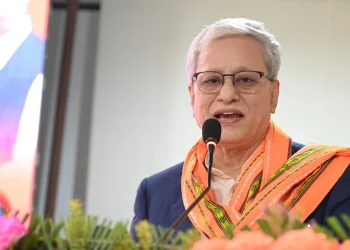
Óscar Arias Sánchez (born September 13, 1940, Heredia, Costa Rica) came from one of the country’s wealthiest coffee-growing families. He studied economics at the University of Costa Rica and later earned a Ph.D. in political science from the University of Essex in England.
In the 1960s, Arias joined the National Liberation Party (Partido Liberación Nacional; PLN), Costa Rica’s main social-democratic party. His early government role came in 1972 when he was appointed minister of planning under President José Figueres Ferrer, a position he held until 1977. By 1979, Arias was elected secretary-general of the PLN, paving his way toward the presidency.
First Presidency (1986–1990): Peace and Diplomacy
Arias won the 1986 general election and assumed the presidency at a time when Central America was engulfed in conflicts, particularly the U.S.-backed Contra war against Nicaragua’s Sandinista government. Although critical of the Sandinistas, Arias refused U.S. pressure to allow Contra fighters to operate from Costa Rican territory.
In February 1987, he proposed a regional peace plan that called for cease-fires, political amnesty, and free elections across Central America. Leaders from Guatemala, El Salvador, Honduras, Nicaragua, and Costa Rica signed the agreement in August 1987. Though never fully implemented, the plan was historic in promoting dialogue over conflict.
That same year, Arias was awarded the 1987 Nobel Peace Prize for his mediation efforts, elevating his international reputation as a peace leader.
Second Presidency (2006–2010): Trade and Regional Mediation
Arias returned to the presidency in 2006, winning a narrow election victory. His second term focused on education, housing, and economic integration. He pledged to sign the Central America–Dominican Republic Free Trade Agreement (CAFTA–DR) with the United States, which Costa Rica had initially resisted. In 2007, Costa Ricans narrowly approved the treaty in the country’s first national referendum.
In 2009, Arias took on an international mediation role during the Honduran political crisis that followed the military ouster of President Manuel Zelaya. Although his proposals failed to resolve the crisis, Arias emphasized demilitarization and condemned excessive military spending in the region.
Legacy and Global Impact
Beyond his presidencies, Arias founded the Arias Foundation for Peace and Human Progress in 1988, using his Nobel Prize winnings to promote peace, democracy, and equality. He has also been active in numerous international organizations dedicated to peace and anti-corruption efforts.
Unlike some of his successors, who were implicated in corruption scandals, Arias remained untainted by controversy. He is remembered as a global statesman, a defender of democracy, and one of Latin America’s most influential leaders of the late 20th century.
Key Facts at a Glance
| Year | Event | Outcome |
|---|---|---|
| 1940 | Born in Heredia, Costa Rica | Wealthy coffee-growing family |
| 1972–77 | Minister of Planning | Served under Pres. José Figueres Ferrer |
| 1979 | Became PLN Secretary-General | Positioned for national leadership |
| 1986–90 | First presidential term | Advocated peace in Central America |
| 1987 | Won Nobel Peace Prize | Recognized for regional peace plan |
| 1988 | Founded Arias Foundation | Promoted peace and human progress |
| 2006–10 | Second presidential term | Advanced CAFTA–DR and mediated crises |
| 2009 | Mediated Honduran crisis | Stressed demilitarization of the region |