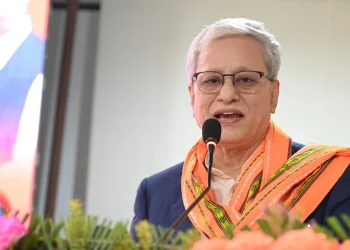
Jean-Bertrand Aristide (born July 15, 1953, Port Salut, Haiti) is a Haitian politician, liberation theologian, and former Roman Catholic priest. Before entering politics, he emerged as a powerful voice for Haiti’s poor during the final years of Jean-Claude Duvalier’s dictatorship.
Educated by the Salesian order, Aristide studied psychology at the State University of Haiti (B.A., 1979) and later earned a master’s degree in biblical theology from the University of Montreal (1985). Returning to Haiti, he became parish priest of St. Jean Bosco in Port-au-Prince, where his fiery sermons against corruption and inequality gained mass support.
Aristide’s activism drew attacks from the church hierarchy and the military. After surviving assassination attempts and a violent 1988 church massacre, he was expelled from the Salesian order. In 1994 he formally left the priesthood to pursue politics full time.
Rise to Power and First Presidency (1991)
Riding the momentum of the Lavalas movement (“flood” in Creole), Aristide won Haiti’s first democratic presidential election in 1990. Inaugurated on February 7, 1991, he launched reforms including:
- A nationwide literacy campaign.
- The dismantling of rural section chiefs, ending a repressive policing system.
- Reductions in human rights abuses.
His populist agenda threatened the military and elite classes. On September 30, 1991, a coup overthrew him, forcing Aristide into exile.
Return and Second Presidency (1994–1996)
In October 1994, Aristide returned to Haiti under U.S. pressure on the military, resuming his presidency. While still popular with the poor, his government struggled with deep economic challenges, inequality, and international isolation.
Barred by the constitution from serving consecutive terms, Aristide stepped down in 1996, handing over power to his ally, René Préval.
Third Presidency and 2004 Ouster
Aristide re-entered politics by founding the Lavalas Family Party in 1997. Winning the 2000 election, he began his third presidential term in 2001. The opposition boycotted the election, claiming irregularities.
Despite surviving a coup attempt in July 2001, Aristide faced mounting protests and accusations of corruption. In February 2004, amid rebellion and U.S. intervention, he fled Haiti. Aristide later claimed he had been forced into exile, while Washington described it as voluntary departure.
He lived in South Africa until his controversial return to Haiti in 2011, just before presidential runoff elections.
Legacy
Jean-Bertrand Aristide remains one of Haiti’s most polarizing figures. To many, he was the first democratically elected president and a champion of the poor, embodying hope for social justice. To critics, his governments were plagued by corruption, authoritarian tendencies, and instability.
Despite three short-lived presidencies, Aristide left an enduring mark on Haiti’s politics by mobilizing the Lavalas movement, which reshaped the country’s social and political landscape.
Key Facts at a Glance
| Year | Event | Outcome |
|---|---|---|
| 1953 | Born in Port Salut, Haiti | Into a modest family |
| 1979 | Earned B.A. in psychology | State University of Haiti |
| 1985 | Master’s degree in theology | University of Montreal |
| 1988 | Expelled from Salesian order | For political activism |
| 1990 | Won Haiti’s first free election | Lavalas candidate |
| 1991 | First presidency began | Ousted by coup in September |
| 1994–96 | Returned as president | Backed by U.S. intervention |
| 2001–04 | Third presidency | Ousted amid rebellion |
| 2011 | Returned from exile | After years in South Africa |