
• About Us
  • Privacy
  • Terms
    • DMCA
  • AdChoices
  • Contact Us
  • Careers
  • Dictionary
  • Donate
No Result
View All Result
Nyongesa Sande
  • Radio
  • Events
  • How To
  • AI
  • Business
    • Shop
    • Money
    • Billionaires
  • Finance
  • Gadgets
  • Lifestyle
  • Sports
  • Autos
Nyongesa Sande
No Result
View All Result
  • Radio
  • Events
  • How To
  • AI
  • Business
  • Finance
  • Gadgets
  • Lifestyle
  • Sports
  • Autos

Home » Odinga, Kenyatta, and the 1963 Power Struggle Over Kenya’s Police

Odinga, Kenyatta, and the 1963 Power Struggle Over Kenya’s Police

How British colonial fears over Jaramogi Odinga shaped the structure of Kenya’s first self-government in 1963

June 3, 2025
in African History
Reading Time: 3 mins read
A A
FacebookXTelegramWhatsappLinkedIn

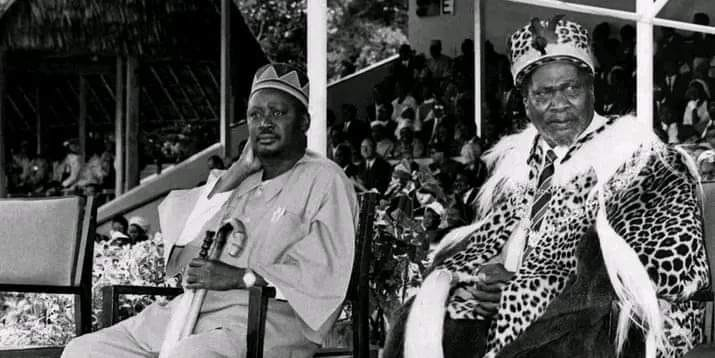
Odinga and Kenyatta: The 1963 Power Struggle That Shaped Kenya’s Security Landscape

On May 27, 1963, it became clear that the Kenya African National Union (KANU) would sweep the general election. This victory marked a turning point in Kenya’s colonial history. Recognizing the moment, the colonial Governor invited Jomo Kenyatta to prepare for internal self-government—with Kenyatta as the country’s first Prime Minister.

ADVERTISEMENT

But what should have been a smooth transition to independence was disrupted by a deep colonial anxiety: the likely appointment of Jaramogi Oginga Odinga to a key security portfolio.


The Colonial Dilemma: Odinga’s Rise

Odinga, a close ally of Kenyatta and a committed Pan-Africanist, was widely expected to take up the role of Minister for Home Affairs, a powerful ministry overseeing internal security and the police. However, this prospect unnerved the British colonial establishment.

In confidential communications, officials expressed concern that Odinga’s inclusion in such a sensitive role would damage public and diplomatic confidence—particularly among European settlers and colonial expatriates. As one confidential note captured, Odinga’s inclusion might be tolerated only if he held a post where “he could do Kenya no serious damage.”

ADVERTISEMENT

Governor’s Countermove on Madaraka Day

As Madaraka Day (June 1, 1963) approached, and with Odinga’s appointment imminent, the colonial Governor took preemptive action. Fearing Odinga’s influence over the police, the Governor stripped the Ministry of Home Affairs of its police powers, transferring them directly to the Office of the Prime Minister.

When the cabinet appointments were officially announced, Odinga was stunned to find himself Minister for Home Affairs—but without control over the police.


Odinga’s Outrage and Threat to Resign

Odinga immediately turned to Kenyatta, who admitted that the decision had been forced by the Governor. On June 2, 1963, a day after the official announcement, an angry Odinga visited the Governor in person. He made it clear that he felt betrayed, and threatened to resign.

This tension is confirmed in a classified telegram dated June 5, 1963, from the Governor to officials in London. It read in part:

“Odinga is very sore indeed at my action… He told me in strict confidence that he would probably resign… My most helpful argument was that my action was not directed simply against him, but that I thought it best for me to deal with only one Minister (and that the Prime Minister) on all matters touching my reserved subjects.”

While Odinga was not convinced, the Governor succeeded in stalling his resignation—at least temporarily.


The Bigger Picture: British Control and Political Engineering

The incident reveals how even on the eve of independence, British colonial officials were still manipulating internal political structures to retain influence over security and decision-making. Odinga’s exclusion from police oversight was not simply about administrative convenience—it was a strategic move to neutralize a figure perceived as too radical and uncontrollable.

Despite Kenyatta’s popularity and eventual consolidation of power, this episode exposed an early fault line in Kenya’s independence leadership. It foreshadowed the deeper ideological rifts that would later surface between Kenyatta and Odinga—culminating in the formation of the opposition KPU and the dramatic events that followed in the late 1960s.

ADVERTISEMENT

Legacy of the 1963 Power Struggle

The Odinga and Kenyatta 1963 power struggle was more than a cabinet reshuffle—it marked a symbolic battle over sovereignty, the role of colonial institutions, and the place of African agency in the post-colonial state.

While Kenyatta chose pragmatism over confrontation, Odinga’s bold challenge signaled his enduring commitment to equity, justice, and African control over key instruments of power.

As Kenya moved from Madaraka to full independence in December 1963, the seeds of political rivalry, colonial interference, and elite compromise were already deeply planted.

Was this article helpful?
YesNo
Tags: British colonial KenyaGovernor Malcolm MacDonaldJaramogi OdingaKenya independence historyKenya internal self-governmentMadaraka Day 1963Ministry of Home Affairs KenyaOdinga and Kenyatta 1963 power struggle
ADVERTISEMENT
Previous Post

Nairobi in 1910: Rickshaws, Riots, and the Grogan Controversy

Next Post

Ngũgĩ wa Thiong’o: Kenya’s Exile, Britain’s Dilemma in 1984

RelatedPosts

British Intelligence Tracked Kenyan Scholarship Students in 1960
African History

British Intelligence Tracked Kenyan Scholarship Students in 1960

8 months ago

British Intelligence Monitored Kenyan Students on Scholarships A recently uncovered British intelligence report from 1960 has revealed that colonial authorities...

Complete Guide to some of  Banyore Clans in Kenya
African History

The Abammutsa Clan of the Abanyole: Echoes of the Forgotten Lineage

6 months ago

🧬 Silent Presence in Nyole Memory Among the 78 recorded clans of the Abanyole, the Abammutsa are notable more for...

The Execution of Dedan Kimathi: Britain’s Darkest Hour in Kenya’s Freedom Struggle
African History

The Execution of Dedan Kimathi: Britain’s Darkest Hour in Kenya’s Freedom Struggle

3 weeks ago

In the early hours of February 18, 1957, the gallows at Kamiti Maximum Security Prison bore witness to one of...

Female Genital Mutilation in African Society: The Impact of Colonization on FGM in Kenya, and FGM in Kenya Today
African History

Anti-FGM Campaign in Colonial Kenya (1929–1932)

5 months ago

The anti-FGM campaign in colonial Kenya from 1929 to 1932 became one of the most pivotal and controversial cultural confrontations...

Current and Former Presidents Attend Raila Odinga’s State Funeral at Nyayo Stadium
African History

Agwambo: The Unexplainable Love Story Between a Nation and Raila Odinga

3 weeks ago

There are leaders — and then there are legends. Raila Amolo Odinga, “Agwambo,” belonged to the latter. His was not...

The Manchester Congress That Ignited Africa’s Freedom Movements
African History

The Manchester Congress That Ignited Africa’s Freedom Movements

3 weeks ago

In October 1945, a quiet town hall in Chorlton-upon-Medlock, on the edge of Manchester, became the birthplace of a revolution...

The Bukusu Clans of Kenya: Origins, Migrations, and Living Traditions
African History

Lusimo lwe Munyongesa – Nandakambilwa alikona Khumwanda Kwenjoli

6 months ago

("An inadvisable one would lay his life on a damned path") This Bukusu proverb originates from the cautionary tale of...

Wabutubile of Walumoli: The Sacred Tribute of Bukusu Ancestry
African History

Wabutubile of Walumoli: The Sacred Tribute of Bukusu Ancestry

6 months ago

In the intricate web of Bukusu oral tradition, few names echo with as much mystery and reverence as Wabutubile of...

Moi’s Final Salute Marred by Hostility at Uhuru Park in 2002
African History

Moi’s Final Salute Marred by Hostility at Uhuru Park in 2002

5 months ago

On December 30, 2002, Kenya witnessed a historic transition of power as President Daniel Toroitich arap Moi, after 24 years...

Jomo Kenyatta Biography
African History

Echoes of the Past: The Kenyatta Oathing Crisis and its Impact on Kenyan Politics

2 years ago

Explore the historical oathing crisis under President Jomo Kenyatta's rule in Kenya, highlighting how political strategies and tribal animosities shaped...

Load More
Next Post
Ngũgĩ wa Thiong’o and the San Francisco Hotel Incident That Sparked a Stand Against Prejudice

Ngũgĩ wa Thiong’o: Kenya’s Exile, Britain’s Dilemma in 1984

Kassam Kanji: Nairobi’s Bicycle King and Freemasonry Pioneer

Kassam Kanji: Nairobi’s Bicycle King and Freemasonry Pioneer

ADVERTISEMENT
Nyongesa Sande

Nyongesa Sande delivers breaking news, technology updates, billionaire profiles, inventions, AI trends, and inspiring facts.

  • About Us
  • Privacy
  • Terms
  • AdChoices
  • Contact Us
  • Careers
  • Dictionary
  • Donate

©2025 Nyongesa Sande. All rights reserved.

No Result
View All Result
  • Tech News
  • Banking
  • Biography
  • Politics
  • Presidents
  • How To
  • Wiki
  • Real Estate
  • Health
  • Gadget Reviews
  • Top 10
  • History
  • Companies
  • Sports
  • Loans
  • Finance
  • Travel
  • Breaking News
  • AI
  • Electric Vehicle
  • Motivation
  • Phone Prices
  • Hosting
  • Shopping Malls
  • Africa
  • Business
  • Insurance
  • Restaurants
  • Investment
  • Classifieds
  • KenyanBaze
  • Shop Anything

©2025 Nyongesa Sande. All rights reserved.

This website uses cookies. By continuing to use this website you are giving consent to cookies being used. Visit our Privacy and Cookie Policy.