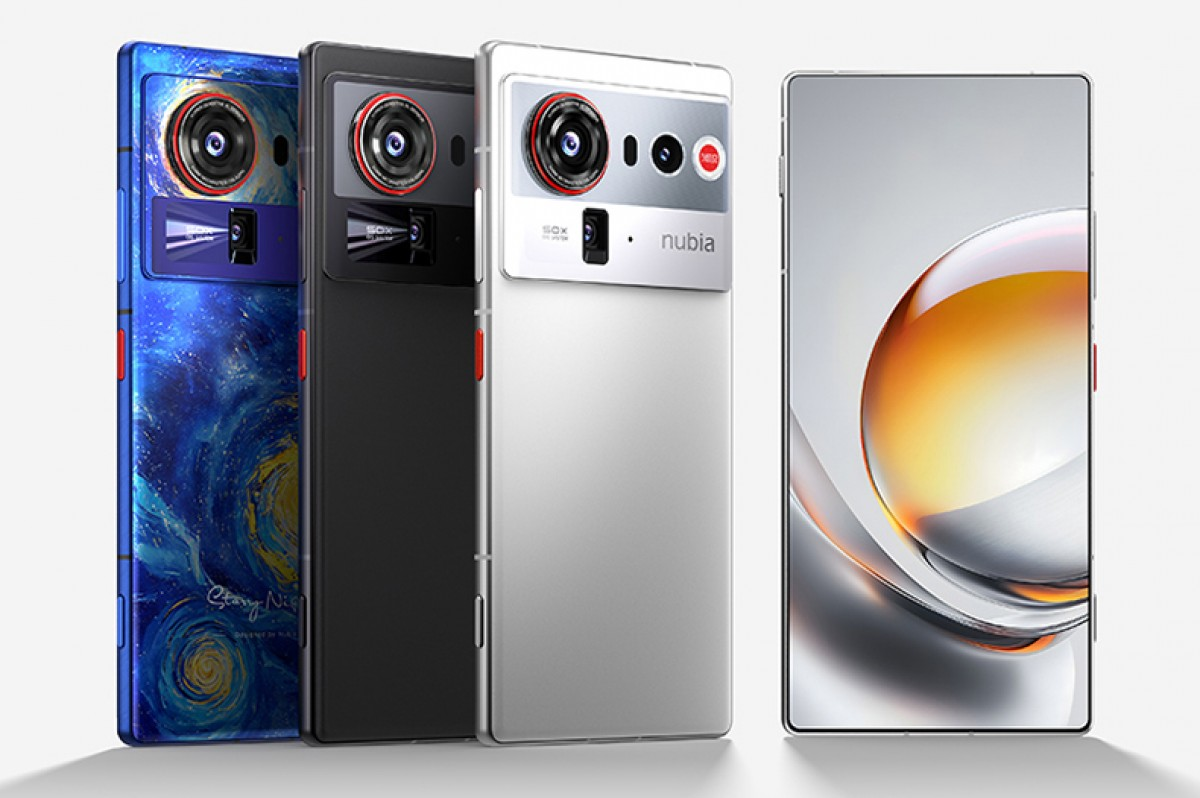
The nubia Z80 Ultra follows a familiar formula, but that formula still stands apart in a market where most flagship phones now look and behave the same. Nubia keeps the uninterrupted display, the 35mm main camera, the extra hardware controls, and the camera-first styling, while also moving to Snapdragon 8 Elite Gen 5 and a larger 7200mAh battery. That combination gives the phone a clear identity before you even start testing it.
This time, though, the story is not just about unusual hardware. The nubia Z80 Ultra also tries to be a more complete flagship with a brighter display, much better battery life, new wireless charging support, and an improved ultrawide choice. At the same time, some old caveats remain. The under-display selfie camera is still a compromise, the software support policy is still unclear, and the camera interface still makes some odd decisions.
Specifications Table
| Category | Details |
|---|---|
| Display | 6.85-inch AMOLED, 1216 x 2688, 144Hz, HDR10 |
| Chipset | Qualcomm Snapdragon 8 Elite Gen 5, 3nm |
| RAM & Storage | 12GB/256GB, 12GB/512GB, 16GB/512GB, 16GB/1TB, UFS 4.1 |
| Rear Camera | 50MP main, 64MP telephoto, 50MP ultrawide |
| Front Camera | 16MP under-display |
| Battery | 7200mAh |
| Charging | 80W wired, 80W wireless, PD 3.0, QC 4 |
| OS | Android 16, Nebula AIOS 2 |
| Build | Glass front and back, aluminum frame, IP68/IP69 |
| Connectivity | 5G, Wi-Fi 7, Bluetooth 6.0, NFC, IR blaster |
Design and Build Quality
The Z80 Ultra looks like a nubia phone right away. That is a good thing. The brand has kept its own visual language while most flagships have drifted toward similar flat slabs with oversized circular camera islands. Here, the camera module remains large, but the styling is more deliberate. The 35mm label and red accent ring still do a lot of the visual work, and the “camera deco” is reportedly 13% smaller this time, even if it remains a dominant part of the rear design.
Build quality appears strong. The phone uses a glass front and back with an aluminum frame, and it carries IP68/IP69 protection. That is now table-stakes for premium flagships, but it still matters. At 227g and 8.6mm thick, the phone is not light. You notice its heft immediately. However, the shape is sensible, and the flat sides help keep that bulk manageable in the hand. It feels dense rather than clumsy.
The back finish trades grip for cleanliness. Nubia has gone with smooth glass across all colors, which means fewer visible fingerprints but also less friction in the hand. That is not ideal on a large device. The included case helps, and most buyers will probably use it. Without a case, the phone can feel slippery.
Compared with the previous model, the design changes are subtle. The more meaningful update is in the controls. Nubia keeps the two-stage camera shutter button and the left-side slider switch. Both are useful. The shutter button in particular gives the Z80 Ultra a tactile advantage over rivals that rely on pressure-sensitive or purely capacitive camera controls. The new ultrasonic fingerprint reader is also a welcome step up from older optical solutions. It is quicker, more reliable, and easier to trust in daily use.
Display Performance
The nubia Z80 Ultra display remains one of the phone’s main attractions. It is a 6.85-inch OLED with a 144Hz refresh rate and no visible cutout for the selfie camera during normal use. That uninterrupted panel is still rare, and it changes the experience more than spec tables suggest. Videos, games, and reading all benefit from the clean rectangle. You simply do not have a punch-hole drawing your eye.
On paper, the panel is not radically different from the previous generation, but testing shows clear progress in brightness. The sourced display results put auto brightness at 1723 nits, which is more than 300 nits above the previous model. That makes the screen more usable outdoors and better suited to navigation, photography, and video in bright conditions. Minimum brightness is not especially low at 3.4 nits, so it is not the most comfortable night-time panel in its class, but that is a minor complaint.
Color and contrast are strong, as expected from OLED, but HDR support is limited. You only get HDR10 here, with no HDR10+ or Dolby Vision. More importantly, streaming support remains shaky. The source notes that Netflix reported only Widevine L3 and standard-definition playback at the time of testing, with no HDR. That is a meaningful limitation on a premium phone. A large, bright OLED matters less if major streaming apps do not fully use it.
Refresh rate behavior is better than before. The nubia Z80 Ultra display can now hit 144Hz across the interface rather than reserving it mainly for games. It is not LTPO, so adaptive switching is less granular than on some rivals, but it does step down to 60Hz when idle. In gaming, the phone can reach 144fps in supported titles, and the built-in gaming utility confirms that in real time. That makes the panel genuinely useful for high-refresh gaming rather than just visually impressive.
Performance and Benchmarks
The Z80 Ultra uses Qualcomm’s Snapdragon 8 Elite Gen 5 with two Oryon V3 Phoenix L cores at 4.6GHz and six Phoenix M cores at 3.62GHz, plus the Adreno 840 GPU. It is exactly the silicon you want in a late-2025 flagship if raw speed is one of your priorities. The benchmark results are accordingly strong. Geekbench, AnTuTu, and 3DMark numbers all place it in the expected flagship tier, slightly behind the RedMagic 11 Pro in some cases, but clearly ahead of more mainstream phones.
The phone does not try to hide its performance focus either. Nubia’s software includes gaming-oriented tools, real-time overlay data, and hardware shortcuts that make it clear this is not meant to be a passive, locked-down flagship. For the right buyer, that adds value.
Real-world performance
In day-to-day use, the phone should feel extremely quick. App launches, multitasking, file transfers, and camera startup are all handled with ease by this class of chipset and UFS 4.1 storage. The interface itself is lighter than many heavily customized Android skins, which also helps perceived speed.
Gaming stability is generally strong. The combination of the Snapdragon 8 Elite Gen 5, 144Hz panel, and Energy Cube gaming utility means the Z80 Ultra is well suited to extended gaming sessions. It is not as explicitly gaming-branded as a RedMagic device, but the underlying behavior is not far off.
Thermal performance
Thermals are the major caveat. The source testing found significant CPU throttling under sustained maximum load, with performance dropping to roughly 60% of its initial level in under two minutes and then holding around that level. GPU stability looked somewhat better at 64%, but the bigger issue was surface temperature. The frame reportedly exceeded 60°C, which is simply too hot for comfort.
That changes how you judge the phone. Yes, it is fast. Yes, it sustains useful performance. But it does so while becoming uncomfortable to hold. In practical terms, that means the Z80 Ultra is powerful enough for demanding games and emulation, though long sessions may require a case, a cooler, or just a high tolerance for heat.
Camera Performance
The nubia Z80 Ultra camera system is unusual in ways that are both interesting and frustrating. Nubia keeps its 35mm main camera, which remains one of the phone’s strongest identity markers. That focal length gives images a more natural perspective than the 23mm to 24mm equivalents used on most flagships. The telephoto is also back, and the ultrawide has been swapped again, this time to a larger-sensor 18mm unit that makes more sense than the previous generation’s setup.
Main camera analysis
The main camera uses the 50MP OmniVision OV50H, a 1/1.3-inch sensor behind an f/1.7 stabilized 35mm lens. In daylight, it produces very good images with strong detail, low noise, and wide dynamic range. That is the good news. The more specific good news is that the 35mm view is genuinely useful. It works especially well for street scenes, food, objects, and people because the perspective feels more natural and less stretched than a 24mm main camera. The source also notes that portraits at 35mm benefit from better natural subject separation.
There are issues, though. Reds are not rendered accurately enough, and portrait mode appears to lose HDR processing, which can lead to harsh highlights. The 50MP mode is not worth using either. It looks like an upscaled version of the standard output and adds file size without adding useful detail. Those are not fatal flaws, but they matter on a phone that leans so heavily on camera identity.
Low-light performance
Low-light is better than expected. The main camera delivers very good night images with solid exposure, wide tonal range, and pleasing colors. Detail remains strong, although deeper shadows can soften up. The 50mm crop from the main camera also remains reasonably usable in the dark, which helps flexibility.
The telephoto is arguably the more interesting lens at night. At its true native 70mm setting, it produces excellent colors, strong dynamic range, and very good detail. That is impressive, especially since telephoto cameras often collapse earlier than the main sensor after dark. The problem is that nubia still defaults the interface to an 85mm crop, even though the underlying optics are really 70mm. That makes the user work harder than necessary to get the best image quality. At 85mm, the results are softer. The camera is capable. The UI gets in the way.
Video performance
Video is one of the Z80 Ultra’s stronger areas. The source material is quite clear on this. The main camera records excellent 4K30 with strong detail, wide dynamic range, and pleasing colors. 4K60 and 4K120 are also very good when stabilized properly. The ultrawide is a little soft at its native 18mm, but still broadly usable. The telephoto performs well at 70mm and less convincingly at 85mm. In low light, the main and ultrawide cameras remain good, though highlights can turn a bit harsh, while the telephoto softens up and shows some stabilization artifacts.
Stabilization is effective on the main and ultrawide cameras for walking shots. That gives the phone a practical advantage for casual video capture, travel clips, and handheld shooting. If still photography has oddities, video feels more settled and more reliable. That matters because some buyers may end up trusting the Z80 Ultra more for video than for point-and-shoot stills.
Battery and Charging
Battery life is one of the clearest strengths of the Z80 Ultra. The 7200mAh silicon-carbon battery gives it real endurance rather than just marketing bragging rights. The sourced results show an Active Use Score of 20:13h, with more than 17 hours of web browsing, over 27 hours of video playback, and more than 12 hours of gaming. Those are excellent figures, and they represent a major improvement over the previous model.
In real-world use, that should translate to easy all-day life for heavy users and potential two-day use for moderate ones. This is exactly the kind of battery behavior that matters outside controlled benchmarks. If you travel, game, use mobile data heavily, or rely on your phone for work, the Z80 Ultra gives you more margin than most premium rivals.
Charging is also well judged. The phone supports 80W wired charging, and the most interesting detail is that it does not seem to depend heavily on a proprietary charger. The source testing found that a quality USB PD charger actually produced slightly quicker results at checkpoints than the official 80W ZTE adapter, even if its peak wattage was lower. That is good news for real users, because it means you are less tied to brand-specific accessories. A full charge takes around 50 minutes, though the phone continues to draw some power after reaching 100%, which is not ideal.
Wireless charging debuts here too, with official support up to 80W on proprietary hardware. Generic pads only reached around 12W in the cited testing, so expectations should remain realistic. Still, the addition of wireless charging makes the Z80 Ultra a more complete flagship. Battery health features are strong as well, including charge separation and charge limiting, both of which are useful for long gaming sessions and longer-term battery care.
Software and User Experience
Nebula AIOS 2 sits on top of Android 16 and feels familiar if you have used recent nubia, ZTE, or RedMagic devices. The software is not especially elegant, but it is functional and relatively direct. The large quick-toggle “bubble” layout remains distinctive, and the system includes a lot of customization. There are also AI translation tools, Google Gemini support, and the Energy Cube gaming interface.
The problem is not daily usability. The problem is long-term certainty. Nubia has not made a strong public case for its update policy here, which makes software support expectations harder to trust. For a phone at this level, that matters. A flagship with strong battery and performance can age very well, but only if software support keeps pace. Right now, that remains a question mark rather than a strength.
In use, the UI should feel snappy and uncluttered enough, especially compared with some heavier Android skins. There is some bloat in the broader ecosystem sense, but the overall experience is not overloaded. It is also nice to see hardware-focused extras like the slider and shutter key integrated properly rather than treated as gimmicks.
Connectivity and Extras
The nubia Z80 Ultra covers the basics well. There is 5G, Wi-Fi 7, Bluetooth 6.0, NFC, and an infrared port. The ultrasonic fingerprint sensor is a clear plus, and the stereo speakers are standard flagship fare. Where the phone falls short is eSIM. It does not support it, and that feels increasingly dated at this level.
There are also some smaller omissions that affect the premium feel. Streaming certification remains inconsistent, as already mentioned. That makes the display less useful for premium media consumption than it should be. For some buyers, that will matter more than the lack of eSIM. For others, the reverse will be true.
The extra controls are genuinely valuable, though. The shutter button and slider switch give the phone a more tactile, tool-like feel. That sets it apart from other mainstream flagships.
Audio and Multimedia
Speaker performance is decent, but not standout. The phone earns a “Very Good” loudness rating, yet the source notes that the sound is somewhat tinny and light on bass. That fits the general pattern here: competent, not class-leading. You can watch videos, play games, and take speaker calls comfortably, but this is not one of the richer-sounding phones in the segment.
For multimedia more broadly, the picture is mixed. The large uninterrupted OLED is excellent for gaming and locally stored content. However, limited HDR support and Netflix playback issues reduce its value as a streaming device. So while the hardware is promising, the content ecosystem support still lags behind better-established brands. That is an important distinction.
Competition and Market Position
The nubia Z80 Ultra is priced aggressively for what it offers. The base model starts around €650, the 16GB/512GB version sits around €800, and the 1TB model reaches €900. That creates a fairly wide spread, but the middle version is probably the most sensible buy. At that price, the phone undercuts many mainstream flagships while offering top-tier silicon, very strong battery life, and unusual hardware features.
The Xiaomi 15T Pro is an obvious rival. Xiaomi offers a more polished software experience and likely a safer mainstream ownership proposition, while the nubia counters with better endurance and stronger outright performance. The Samsung Galaxy S25+ is another alternative. Samsung brings much stronger software support, better ecosystem value, and likely stronger resale, but it gives up battery endurance and raw speed. The Pixel 10 trades performance and battery for a smaller size and better software credibility.
That makes the nubia Z80 Ultra a value-focused enthusiast flagship. It is not trying to be the safest buy. It is trying to offer more hardware for less money, and in many ways it succeeds.
Verdict
The Z80 Ultra is a good phone with a strong personality. That already separates it from many rivals. The clean front, 35mm main camera, extra physical controls, large battery, and high-end chipset make it interesting before you even get to performance numbers. Once you do, the value becomes clear. Battery life is excellent. Charging is fast. The display is bright and immersive. Performance is flagship-grade. Video quality is better than expected.
The weaknesses are just as real. The selfie camera remains poor. The telephoto still suffers from confusing default behavior. The phone runs very hot under sustained load. HDR streaming support is weak, and software support expectations remain uncertain. None of those issues ruin the device, but together they stop it short of feeling fully polished.
Why This Phone Matters in Africa
The Z80 Ultra makes a lot of sense in African markets for practical reasons. First, battery life matters more in places where people spend long periods away from power or rely heavily on mobile data, navigation, and social apps throughout the day. A 7200mAh battery gives real peace of mind. Second, broad 5G support, dual-SIM flexibility, and USB PD charging help in markets where users often mix carriers and use third-party chargers instead of brand-specific accessories.
Battery reliability is likely to be one of this phone’s biggest strengths in the region. So is its value. Buyers who want flagship-grade speed without Samsung or Apple pricing will find the nubia appealing. Repair and resale are more complicated. Nubia does not have the same resale strength or service footprint as bigger brands in many African countries, and the lack of eSIM may also matter to some travelers and professionals. Still, the core hardware is strong enough that resale should remain decent among enthusiast buyers, especially if the battery holds up well over time.
Final Thoughts
The nubia Z80 Ultra is best for buyers who want something different from the usual flagship formula. It suits users who care about battery life, gaming, physical controls, and an uninterrupted display, and who appreciate the 35mm camera perspective enough to work around some UI quirks.
It is less suitable for people who take a lot of selfies, want the safest long-term software bet, or expect the most polished camera experience in the class. Longevity should be good on the hardware side because the chipset, battery, and charging setup are all strong. The software side is harder to predict, and that uncertainty affects the phone’s long-term appeal. Even so, for the right buyer, the Z80 Ultra offers an uncommon mix of performance, stamina, and character at a price that remains competitive.
The Review
nubia Z80 Ultra
We're never really sure what to make of the nubia Ultras. They make bold claims for camera greatness, but deliver only partially, and we wouldn't say we've been seeing a whole lot of groundbreaking improvements in that area.That said, this time we're getting nicer-than-usual video and the tri-set of rear cameras has no major flaws (well, other than the regular nubia camera UI oddities), now that the ultrawide is back on the right track. We know not to expect a lot from the underdisplay selfie camera, sure, but that doesn't negate the fact that the Z80 Ultra is no good for selfies - do keep that in mind.
PROS
- Standout design, IP68/IP69 rating.
- Plenty of physical controls - a slider and a camera button.
- Large and cutout-free OLED display with a 144Hz maximum refresh rate.
- Excellent battery life, fast charging.
- No-frills general UI, wide-ranging gaming capabilities.
- Affordable price point for the latest and greatest Snapdragon 8 Elite Gen 5.
- Great videos from the rear cameras.
CONS
- Default telephoto zoom level in the camera app isn't the native one.
- Funky rendition of fine detail by the telephoto camera.
- Selfies from the under-display camera aren't great.
- NO high-res/HDR support for video streaming platforms.
- No eSIM support.
Review Breakdown
-
Our Rating
 nubia.com