


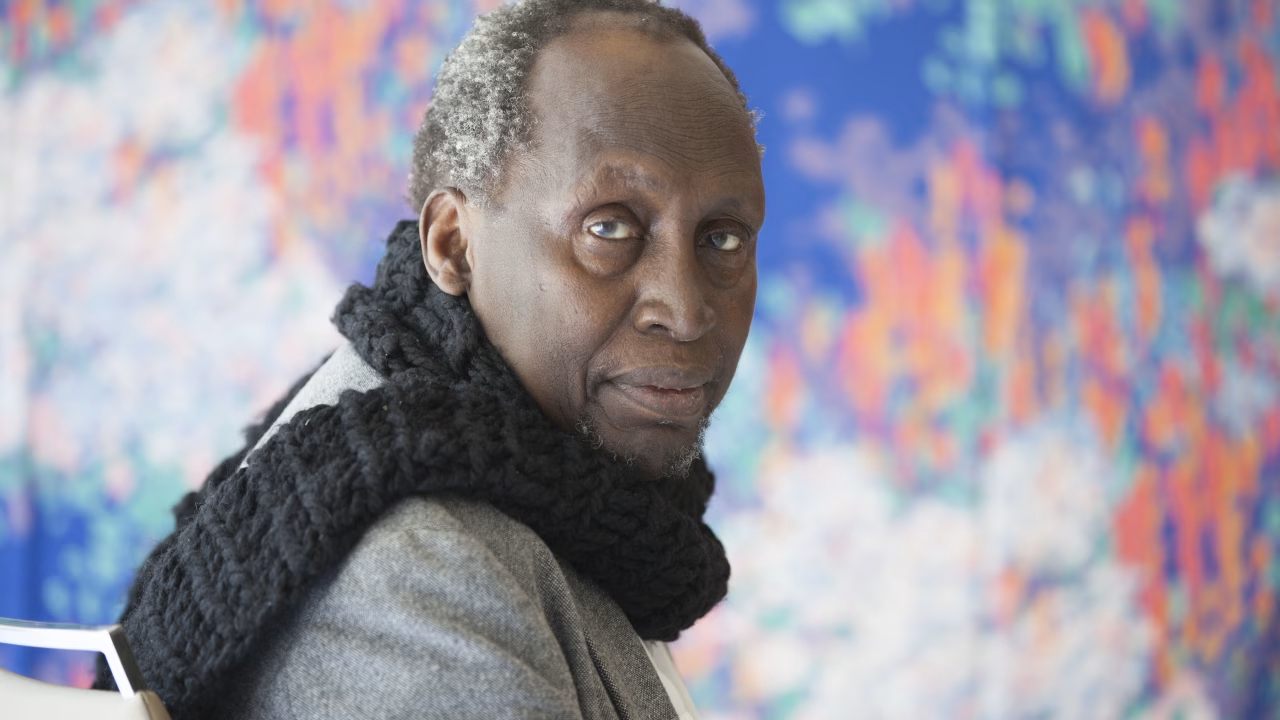
In 2006, celebrated Kenyan writer and academic Ngũgĩ wa Thiong’o had just arrived in San Francisco to attend the African Studies Association convention and promote his then-latest novel, Wizard of the Crow. Known globally for his literary works and scholarly excellence, Ngũgĩ was also a professor of English and comparative literature at the University of California, Irvine, with past teaching stints at Yale and New York University.
His accommodation? The plush Hotel Vitale, an upscale retreat overlooking San Francisco’s scenic waterfront.
After settling in, Ngũgĩ chose to unwind on the terrace of Americano, the hotel’s stylish restaurant. But as he relaxed and took in the views, an employee approached him — not with a menu or pleasantries, but with a pointed command: “This area is for hotel guests. You need to leave.”
The reason? The staff member simply assumed that Ngũgĩ, a Black man sitting alone in an expensive setting, could not possibly belong there. In the employee’s mind, Ngũgĩ did not “look like someone” who could afford such luxury.
Ngũgĩ calmly tried to explain that he was a registered guest, even attempting to verify his booking. But his protests were dismissed. The employee stood firm, refusing to acknowledge Ngũgĩ’s presence as anything other than an unwelcome intrusion.
Shocked and humiliated, Ngũgĩ escalated the matter to senior management. Though they issued a verbal apology, they took no disciplinary action against the staffer. This, for Ngũgĩ, was a second insult — a silent endorsement of discriminatory behavior.
He checked out of Hotel Vitale immediately and moved to the nearby St. Francis Hotel.
But Ngũgĩ wasn’t done.
He penned a formal letter to Hotel Vitale’s management, demanding accountability and a public apology in one of San Francisco’s leading newspapers. He also discussed the encounter during a radio interview, which drew wide public attention. What followed was a storm of negative press that placed the hotel at the center of a racism controversy.
Eventually, the pressure bore fruit. The hotel’s management and the employee personally reached out to Ngũgĩ to apologize. A formal apology was published in the local press, stating:
“These actions were unacceptable, and this experience has deeply affected everyone concerned.”
To make amends, the hotel also donated $5,000 to a local nonprofit dedicated to anti-racism work.
Reflecting on the incident, Ngũgĩ later remarked:
“This person was very sure that there was no way I could have been a guest at that hotel.”
What began as a moment of racial profiling turned into a public reckoning, thanks to one man’s refusal to stay silent. Through dignity and persistence, Ngũgĩ wa Thiong’o not only defended his personal dignity but helped push forward a broader conversation on unconscious bias in elite spaces.


