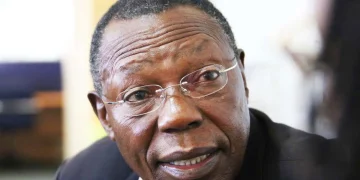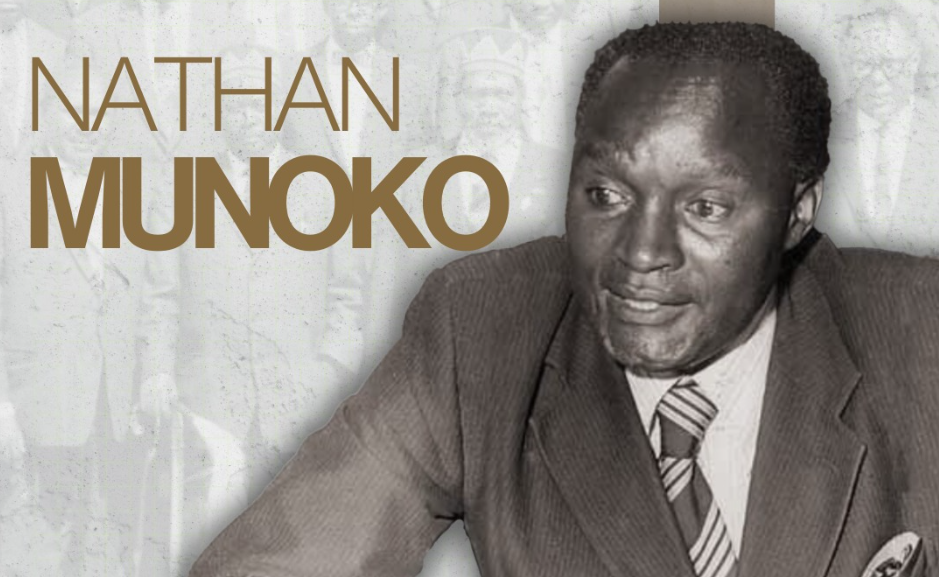
Nathan Waliaula Munoko built a career that defines the Nathan Munoko legacy, spanning colonial administration, post-independence politics, and long-term party organisation. Born on May 20, 1922, in Kolani, Sirisia in present-day Bungoma County, he rose from modest beginnings to become a key figure in Kenya’s political and administrative history.
His early life was shaped by family and community structures that emphasized education. Raised within the Quaker (Friends Church) tradition, he developed a strong foundation in discipline and learning.
Nathan Munoko legacy rooted in education and early service
The Nathan Munoko legacy began with academic achievement. He attended Chwele B School before joining Government African School Kakamega in 1935, where he excelled both academically and in sports.
He later studied at Maseno School and Alliance High School, where he held leadership roles and participated in extracurricular activities alongside future national figures, including Charles Wanyoike Rubia.
Munoko proceeded to Makerere University in 1943 to study veterinary science. Following the relocation of the veterinary school to Kabete, he became among its early graduates and served as a veterinary officer across Kenya.
Transition into local government
In 1956, Munoko entered local administration as Secretary and Chief Executive of the Elgon Nyanza African District Council. The council was regarded as one of the most effective African-led institutions during the late colonial period.
His leadership in local government strengthened his reputation as an administrator and community organiser.
Entry into national politics
The Nathan Munoko legacy expanded in 1963 when he joined national politics, initially serving as a senator representing Bungoma. He later became the first Member of Parliament for Bungoma Central and served as an assistant minister in several government ministries.
His transition reflected the movement of experienced administrators into political leadership during Kenya’s early years of independence.
Cabinet appointment and policy role
In 1975, Munoko was appointed Minister for Public Works, replacing Masinde Muliro following a political dispute linked to the JM Kariuki assassination debate.
This appointment placed him within the cabinet during a period of heightened political sensitivity.
KANU leadership and organisational influence
A central element of the Nathan Munoko legacy was his role within the Kenya African National Union. As National Organising Secretary for 18 years, he played a key role in party operations, including candidate selection and internal coordination.
His position as a long-serving party official made him an institutional figure within KANU, contributing to its continuity during political transitions.
Later years and community leadership
Munoko lost his parliamentary seat in 1979 but remained influential within political and community circles into the 1980s. He later returned to Bungoma, where he served as a Bukusu elder and local leader.
He died in December 2024 at the age of 102, marking the end of a life that bridged colonial and post-independence Kenya.
Broader implications
The Nathan Munoko legacy reflects the role of technocrats and administrators in shaping Kenya’s political institutions. His career demonstrates how governance structures evolved through individuals who combined technical expertise with political organisation.
Outlook
Munoko’s contributions continue to be referenced in discussions on party organisation and leadership in Kenya. His long tenure within KANU and public service illustrates the importance of institutional memory in political systems.
His life remains a reference point for understanding the transition from colonial administration to modern governance in Kenya.