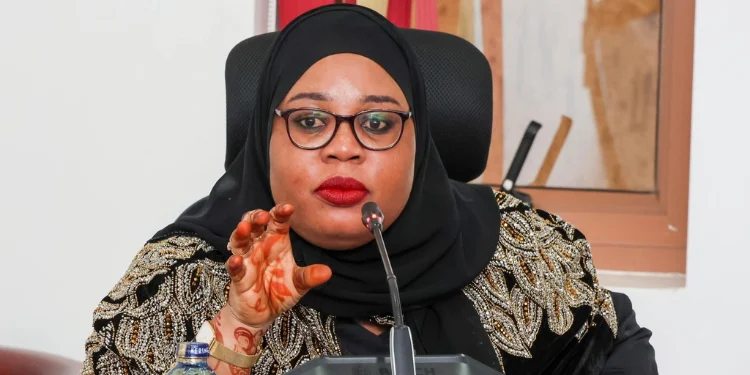
Miraj Abdillahi Abdulrahman is a nominated Senator in Kenya’s 13th Parliament representing women under the United Democratic Alliance. At 34 years old, Miraj Abdillahi has built a public identity shaped by personal resilience, grassroots activism and legislative leadership.
Her story stands out because it combines early hardship with political ambition. Raised in Barsheba in Kisauni Constituency, Mombasa County, she grew up in a single parent household after her parents separated. Over time, those early experiences influenced her advocacy on youth empowerment and gender equality.
The Miraj Abdillahi profile reflects a journey that began in informal trade and community mobilization before transitioning into national politics. Her rise to the Senate in 2022 marked a significant milestone in that trajectory.
Early Life and Educational Background
Childhood in Kisauni
Miraj Abdillahi was born in 1991 in Barsheba, Kisauni Constituency. She was raised by her mother, who operated small scale businesses to support the family. Growing up in Mombasa County exposed her to the socio economic challenges facing urban communities along Kenya’s coast.
Primary and Secondary Education
She began her education at Bondeni Primary School in Mombasa, studying there from 1999 to 2006 and completing her Kenya Certificate of Primary Education.
In 2007, she joined Coast Girls High School. During her secondary school years, she faced a personal setback when she dropped out in 2009 due to an early pregnancy. However, she later returned to school and successfully completed her Kenya Certificate of Secondary Education in 2010.
Her return to education has remained central to her public narrative, especially in relation to teenage motherhood and girls’ education.
Professional and Community Career
Informal Business and Family Support
After finishing secondary school, Miraj Abdillahi entered small scale entrepreneurship. Between 2011 and 2019, she operated informal food vending businesses in Mombasa, including selling viazi karai and porridge. She worked alongside her mother in sustaining household income.
These years grounded her in everyday economic realities. Her experience in informal trade shaped her understanding of youth unemployment and urban poverty.
Founding Young Girls Ambassadors
In 2014, she founded Young Girls Ambassadors, a community initiative focused on mentoring teenage girls and advocating against early marriages and teenage pregnancies. The organization emphasized education retention and mentorship.
Her activism in this area reflected personal experience and a broader commitment to gender empowerment.
Governance and Liaison Roles
From 2013 to 2017, she worked as a personal assistant to nominated Senator Emma Mbura. This position introduced her to parliamentary procedures and legislative engagement.
Later, between 2020 and 2021, she served as a Liaison Officer at Buxton Point Ltd. In that role, she coordinated community engagement programs linked to housing and urban renewal projects in Mombasa.
These roles strengthened her administrative and mobilization skills prior to entering elective politics.
Political Career and Senate Leadership
Early Political Attempts
Miraj Abdillahi first contested for the Tononoka Ward MCA seat in 2013 on a United Democratic Forum ticket. Although she did not win, the campaign introduced her to grassroots electoral politics.
In 2017, she sought to vie for the Mombasa Woman Representative position under the Jubilee Party but did not appear on the final ballot.
Despite these setbacks, she continued strengthening her networks and community presence.
Nomination to the Senate in 2022
Ahead of the 2022 General Election, Miraj aligned with the United Democratic Alliance. In July 2022, she was nominated to the Senate to represent women and marginalized groups.
She was sworn in on 16 August 2022 as part of Kenya’s 13th Parliament.
Committee Roles and Legislative Work
Upon joining the Senate, Miraj Abdillahi was elected Vice Chairperson of the Senate Committee on Information, Communication and Technology. She also became a member of the Roads, Transportation and Housing Committee and the Labour and Social Welfare Committee.
In 2023, she sponsored two Senate Bills. The Care and Protection of Child Parents Bill sought to address the rights and welfare of teenage mothers. The County Hall of Fame Bill aimed to recognize outstanding contributions by citizens at county level.
Her legislative focus has consistently centered on youth empowerment, social welfare and gender equality.
Family and Public Identity
Public information about Miraj Abdillahi’s family life remains limited beyond her upbringing. However, her story frequently references the influence of her mother and the challenges she faced as a young mother.
Her personal narrative has shaped her advocacy for girls’ education and reproductive health awareness.
Net Worth and Senatorial Earnings
Miraj Abdillahi’s net worth has not been publicly disclosed. As a nominated Senator, she earns a gross monthly salary of approximately Ksh739,600.
This includes a basic salary of Ksh443,760, a house allowance of Ksh150,000 and a salary market adjustment of Ksh145,840.
She is also entitled to benefits such as an official vehicle or a car maintenance allowance of Ksh356,525 per month. Medical cover extends to the senator, spouse and dependent children.
Additional benefits include airtime allowance of up to Ksh20,000 monthly, official residence, security and travel allowances under SRC approved guidelines. Retirement benefits include gratuity equivalent to 31 percent of annual pensionable earnings or pension contributions, along with group life insurance valued at three times annual pensionable salary.
A Story of Resilience and Legislative Growth
The Miraj Abdillahi profile highlights a journey shaped by early hardship, entrepreneurship and community activism. From informal trade in Mombasa to committee leadership in the Senate, her career reflects steady advancement through grassroots engagement.
As a nominated Senator, she continues to advocate for youth and women within national legislative structures, positioning herself among Kenya’s emerging generation of political leaders.