Six World Cups is now the rare record that Lionel Messi and Cristiano Ronaldo share. In a rivalry usually defined by separation, comparison and argument, the 2026 FIFA World Cup has created one milestone that belongs to both of them.
For more than two decades, Messi and Ronaldo have stood on opposite sides of football’s greatest individual debate. Messi has the World Cup trophy, more Ballon d’Or awards and a stronger playmaking case. Ronaldo has more career goals, more Champions League titles and the stronger international goalscoring record. Their careers have often been measured by differences.
This record is different.
Appearing across six World Cup tournaments is not about one goal, one trophy or one award. It is about survival at the highest level. It requires a player to break through young, remain elite through several generations, adapt to tactical change, manage injuries, keep national-team relevance and still be good enough for selection after nearly 20 years of pressure.
Messi and Ronaldo reached that stage together. Their routes were different, their styles were different and their World Cup stories were different. But the shared milestone says something powerful about both players. They did not simply dominate one era. They stretched that era until it almost became impossible to define where it began and ended.
The 2026 World Cup in North America is likely to be remembered as the final global tournament where both names still stood at the centre of the conversation. Whatever happens on the pitch, the six World Cups record already places them in a special corner of football history.
From Germany 2006 to North America 2026
Messi and Ronaldo both made their World Cup debuts in Germany in 2006. Messi was 18, a rising Argentina talent already carrying comparisons with the greatest players his country had produced. Ronaldo was 21, already a major figure for Portugal and Manchester United.
At that tournament, they were young stars with very different roles. Messi was still being introduced carefully into Argentina’s senior setup. Ronaldo was more established and helped Portugal reach the semi-finals. Neither player could have known that their World Cup story would stretch all the way to 2026.
They returned in South Africa in 2010. They appeared again in Brazil in 2014, Russia in 2018 and Qatar in 2022. By that point, both had joined the elite group of players to feature in five World Cups. The 2026 tournament took them beyond that mark.
The time span is remarkable. Germany 2006 belonged to another football age. The sport still felt different. Social media had not yet become the matchday machine it is now. Tactical trends were different. Their club careers were still developing. Messi had not yet become Barcelona’s false nine. Ronaldo had not yet become Real Madrid’s record-breaking scorer.
By North America 2026, both players had lived several football lives. Messi had become a Barcelona icon, PSG player, Inter Miami figure and World Cup-winning Argentina captain. Ronaldo had become a Manchester United star, Real Madrid legend, Juventus forward, Al Nassr leader and Portugal’s greatest goalscorer.
The distance between 2006 and 2026 is not just 20 years. It is almost a complete history of modern football.
Why Six World Cups Is So Hard to Reach
Six World Cups sounds simple when written as a number, but it is one of the hardest achievements in international football. A player must begin early enough to make a first tournament before reaching his prime. He must then remain fit, selected and influential through five more cycles.
Most great players do not get close. Injuries intervene. Form drops. Younger players arrive. Managers change direction. National teams rebuild. Some players peak too late. Others burn brightly for two tournaments and disappear. Even legends often stop at three or four World Cups.
For an outfield player, the challenge is even greater. Goalkeepers can sometimes extend their careers longer because their physical demands are different. Outfield players must keep running, pressing, changing direction and surviving contact. The modern game has also become faster and more intense across Messi and Ronaldo’s careers.
Both players had to evolve to last this long. Messi moved from explosive dribbler to false nine, then to right-sided creator, then to deeper playmaker and veteran attacking leader. Ronaldo moved from traditional winger to wide forward, then to left-sided goal machine, then to penalty-box finisher and veteran striker.
That evolution is the real reason the record matters. They did not reach six World Cups by staying the same. They reached it by refusing to become outdated.
Messi’s World Cup Journey
Messi’s World Cup story is one of pressure, pain, patience and ultimate triumph. His 2006 debut introduced him to the global stage as Argentina’s next great hope. In 2010, he played under enormous expectation but did not score. In 2014, he carried Argentina to the final and won the Golden Ball, but Germany denied him the trophy.
Russia 2018 brought frustration. Argentina were chaotic, and Messi’s tournament ended against France in the round of 16. For many critics, that appeared to deepen the argument that international football would remain the one missing piece in his career.
Qatar 2022 changed everything. Messi led Argentina to the World Cup title with one of the greatest individual tournament runs in modern history. He scored, assisted, controlled matches, handled pressure and delivered in the final against France. Winning the trophy transformed his international legacy.
The 2026 tournament added another chapter. Messi entered as a defending champion and one of the most experienced players in World Cup history. His continued presence showed how far his game had evolved. He no longer needed to dominate through constant running. He could still decide matches through timing, passing, finishing and intelligence.
Messi’s World Cup journey is not only about numbers. It is about how an early prodigy became a national leader and finally delivered the trophy Argentina had waited decades to see again.
Ronaldo’s World Cup Journey
Ronaldo’s World Cup journey began with Portugal’s run to the semi-finals in 2006. He was young, fearless and already controversial after the famous incident involving Wayne Rooney in the quarter-final against England. Portugal finished fourth, which remains Ronaldo’s best World Cup team finish.
In 2010, Portugal went out to Spain in the round of 16. In 2014, injuries and team limitations hurt Portugal’s campaign. In 2018, Ronaldo produced one of his greatest World Cup performances with a hat-trick against Spain, including a late free kick that became one of the tournament’s most memorable moments.
Qatar 2022 was difficult. Ronaldo scored against Ghana and became the first male player to score in five World Cups, but Portugal’s tournament ended in pain against Morocco. His role became a major talking point, and the exit felt emotional because many wondered whether it was his final World Cup moment.
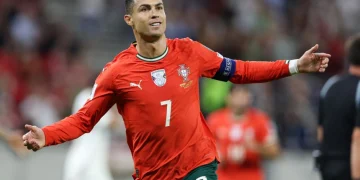
The 2026 tournament gave him one more opportunity. At 41, Ronaldo’s presence was itself historic. His game had changed dramatically from the winger of 2006. He was no longer the player who beat defenders repeatedly on the flank. He had become a veteran finisher, captain and penalty-box threat.
Ronaldo’s World Cup career has not brought the trophy Messi lifted in 2022, but it has shown unmatched persistence. Six tournaments for Portugal reflect extraordinary commitment, fitness and national-team relevance.
The World Cup Numbers Still Separate Them
The six World Cups milestone is shared, but Messi and Ronaldo’s World Cup records are not identical. Their tournament legacies remain different.
Messi has the stronger World Cup performance case. He has won the tournament, reached another final, won the Golden Ball twice and produced major knockout contributions. His 2022 run gave him the one achievement Ronaldo does not have.
Ronaldo’s World Cup legacy is built more on longevity and scoring across editions. His record of scoring in five World Cups remains one of the great examples of international durability. His 2018 hat-trick against Spain stands as one of the most famous individual World Cup performances of the modern era.
Messi’s World Cup story is more complete because it includes the title. Ronaldo’s is more unfinished because the trophy always stayed out of reach. Yet the shared six-tournament record shows that both players remained central to international football longer than almost anyone else.
This is what makes the milestone so interesting. It unites them in longevity while still preserving the debate around impact.
A Record About Time, Not Just Talent
The six World Cups record is ultimately a record about time. Talent can get a player into one tournament. Form can carry him through another. But six tournaments require something more durable.
Messi and Ronaldo had to stay relevant through different tactical eras. They played through changes in pressing, defensive organisation, data analysis, sports science, squad rotation and attacking roles. The game they entered in 2006 is not the same game they are playing in 2026.
They also had to handle changing public expectations. At first, they were young stars. Then they became leaders. Then they became legends. Then they became veterans whose every selection was debated. That final stage is often the hardest. Older stars are judged not only by what they do, but by whether they still deserve the space they occupy.
Both continued to justify their presence. Messi did it through playmaking, leadership and decisive moments. Ronaldo did it through goalscoring instinct, fitness and international authority.
That is why this record belongs among their greatest achievements. It is not as glamorous as a trophy or as dramatic as a final goal, but it may be just as difficult.
What It Says About Modern Football
Messi and Ronaldo reaching six World Cups also says something about modern football. Sports science, recovery methods, nutrition, medical care and workload management have helped elite players extend their careers. Players now understand their bodies better than previous generations did.
But science alone does not explain the record. Many players have access to modern training and medical support. Very few reach this level of longevity. Messi and Ronaldo combined modern preparation with rare motivation and technical adaptation.
Their careers also reflect how football has become more global and more demanding. They played for clubs with huge schedules, travelled across continents, carried commercial attention and faced constant media scrutiny. Sustaining international performance through all of that required unusual discipline.
The six World Cups record is therefore not only a personal achievement. It is a symbol of the modern football era, where elite players can last longer but must manage more pressure than ever.
Why Their Shared Record Matters to the Rivalry
The Messi vs Ronaldo rivalry is usually built around differences. Who scored more? Who assisted more? Who won more? Who dominated the Champions League? Who delivered at the World Cup? Who was the better all-round player?
The six World Cups record creates a different kind of comparison. It is not about one being ahead of the other. It is about two players reaching the same extreme level of endurance.
That matters because their rivalry has often been framed as a race. For once, the race reaches a shared landmark. Both players began in 2006. Both remained central through 2010, 2014, 2018 and 2022. Both reached 2026. Both forced football to stretch its idea of how long an attacking superstar can last.
The record does not settle the GOAT debate. Nothing likely will. But it adds a rare point of agreement. Any serious discussion of Messi and Ronaldo must now include the fact that both carried international relevance across six World Cups.
Argentina, Portugal and the Final Chapter Feeling
The 2026 tournament carries a final chapter feeling for both players. Messi entered as Argentina’s defending champion, while Ronaldo arrived still chasing the World Cup trophy with Portugal.
Argentina’s situation is shaped by proof. They have already won with Messi as their leader. They know how to survive pressure and win difficult knockout matches. Messi does not need 2026 to complete his career, but another deep run would only strengthen his legacy.
Portugal’s situation is shaped by possibility. Ronaldo has never won the World Cup, but Portugal have enough talent to compete if the team finds balance. The key question is how to use his experience without making the attack too predictable.
For both players, every appearance now feels historic. Each match could be one of their last World Cup outings. That gives the tournament extra emotional weight, even for neutral fans.
The rivalry no longer depends only on who scores more. It now carries the feeling of farewell.
What Future Players Must Do to Match It
Future players may match the six World Cups record, but it will be extremely difficult. They must debut young, avoid major career interruptions, remain fit, stay motivated and continue earning selection deep into their thirties or forties.
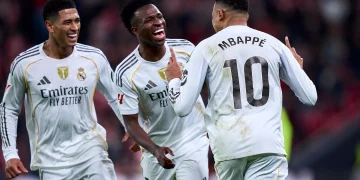
Kylian Mbappé has the early start and World Cup success to chase a long tournament career. Lamine Yamal has time on his side if his development and fitness hold. Jude Bellingham, Jamal Musiala, Endrick and other young stars could also build long international careers.
But matching Messi and Ronaldo requires more than appearing early. A player must stay important. He must remain good enough for managers to keep building plans around him. He must survive pressure, injuries, tactical change and new generations.
That is why six World Cups is more than a participation record. It is a relevance record.
Conclusion
The six World Cups record gives Messi and Ronaldo something rare in their rivalry: a shared place in history. After years of comparison, separation and debate, both players reached a milestone that reflects endurance more than any single statistic.
Messi’s World Cup story includes heartbreak, redemption, a Golden Ball legacy and the ultimate triumph with Argentina. Ronaldo’s World Cup story includes early promise, unforgettable goals, unmatched persistence and one last pursuit of the trophy that has always escaped him. Their paths are different, but their longevity now meets at the same landmark.
Playing in six World Cups means surviving football’s hardest test of time. It means remaining relevant across generations, managers, teammates and tactical eras. It means adapting when speed fades, pressure rises and younger players arrive.
The 2026 tournament may still change how both careers are remembered. Messi could add another chapter to Argentina’s golden era. Ronaldo could still produce a moment that reshapes Portugal’s story. Or both could simply close the greatest rivalry football has ever seen with one final walk across the global stage.
Whatever happens next, the record already says enough. Messi and Ronaldo did not merely play in the same era. They made that era last 20 years.
Read Also: Digital Football Platforms Are Changing Turkish Football Culture