


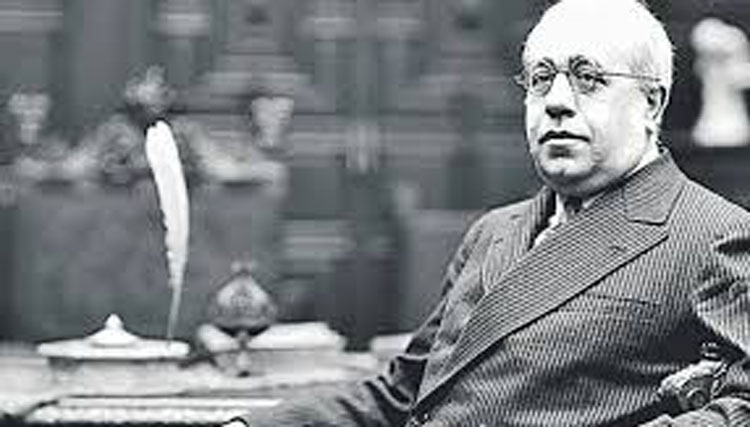
Manuel Azaña Díaz was a Spanish politician who served as Prime Minister of the Second Spanish Republic, organizer of the Popular Front in 1935 and the last President of the Republic. He was the most prominent leader of the Republican cause during the Spanish Civil War of 1936–1939.
Quick Facts
| Attribute | Details |
|---|---|
| Full Name | Manuel Azaña y Díaz |
| Born | January 10, 1880, Alcalá de Henares, Spain |
| Died | November 4, 1940, Montauban, France (aged 60) |
| Title / Office | President of Spain (1936–39), Prime Minister (1931–33, 1936) |
| Political Affiliation | Founder of Republican Action |
| Role In | Spanish Civil War, Second Spanish Republic |
Early Life and Literary Career
Manuel Azaña y Díaz was born on January 10, 1880, in Alcalá de Henares, Spain. He studied law in Madrid and built a career as a civil servant, journalist, and writer. An intellectual figure, he became prominent in Ateneo, a leading Madrid literary club.
Azaña translated George Borrow’s The Bible in Spain and in 1926 won Spain’s national literature prize for his biography of the novelist Juan Valera. His 1927 novel El jardín de los frailes (“The Garden of the Monks”) openly expressed his anticlerical views, foreshadowing his political stance.
Political Career and Republican Reforms
In 1930, Azaña co-founded the Republican Action Party, opposing the dictatorship of General Miguel Primo de Rivera. That year, he signed the Pact of San Sebastián, which united republicans, socialists, and Catalan leftists in opposition to King Alfonso XIII.
Following the king’s abdication in 1931, Azaña joined the provisional republican government as minister of war. He reduced Spain’s oversized army and spearheaded constitutional reforms that:
- Restricted the rights of the clergy
- Established secular education
- Allowed land redistribution
- Extended full voting rights to women
In October 1931, after the resignation of Prime Minister Niceto Alcalá Zamora, Azaña became prime minister, holding office until 1933. His tenure was marked by progressive legislation but also by authoritarian measures such as the Law for the Defense of the Republic (1931). Opposition from conservatives, the clergy, monarchists, and anarchists eroded his popularity.
In 1934, he was arrested by the centre-right government for alleged involvement in the Catalonia uprising but was later acquitted, gaining public sympathy.
Presidency and the Spanish Civil War
Azaña played a central role in forming the Popular Front coalition in 1935, uniting liberals, socialists, and communists. After the 1936 elections, he returned as prime minister. That May, when President Alcalá Zamora was removed, Azaña was elected president of Spain.
As president, Azaña sought moderation and attempted to balance competing left-wing factions. However, his authority was weakened when a military revolt in July 1936 triggered the Spanish Civil War.
Although he initially appointed Diego Martínez Barrio as prime minister to broaden republican support, real power soon passed into the hands of other factions. Azaña remained largely a figurehead, unable to halt the escalating conflict.
When Francisco Franco’s Nationalist forces triumphed in 1939, Azaña fled to France, where he lived in exile until his death in Montauban on November 4, 1940.
Legacy
Manuel Azaña is remembered as a key reformist of the Second Spanish Republic. His anticlericalism, commitment to secular education, and land reforms made him a symbol of progressive politics in pre–Civil War Spain. However, his inability to unite the republicans or control the outbreak of civil war limited his effectiveness as president.
Despite these challenges, Azaña remains an enduring figure in Spanish history, representing both the promise of democratic reform and the tragedy of political polarization that engulfed Spain in the 1930s.




