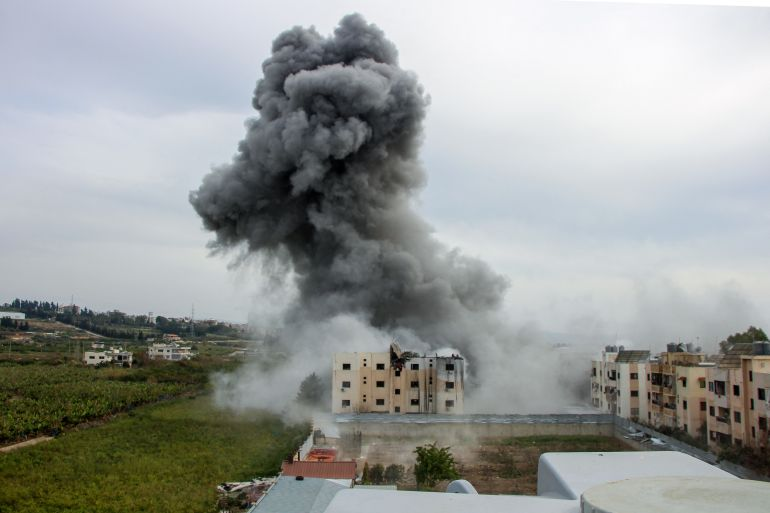
Lebanon Strikes intensified after the Lebanese Ministry of Health reported that 14 people were killed in two waves of Israeli attacks across the south. The incidents underscore the growing humanitarian strain as regional hostilities spill deeper into Lebanese territory.
According to officials, seven people died and eight were wounded in raids targeting the towns of Sidon and al-Qatrani. Another seven were killed in an attack on the Nuns neighbourhood of Nabatieh, with four children among the victims.
Lebanon Strikes Expand Across Southern Cities
Health authorities described coordinated air raids hitting both urban and semi-urban zones. Sidon, a major southern port city, has faced periodic bombardment in recent months. Nabatieh, meanwhile, has seen repeated exchanges due to its proximity to areas linked to armed groups.
The targeting of residential neighborhoods raises fresh concerns over civilian exposure. Under international humanitarian law, distinction between military and civilian infrastructure remains central. However, in densely populated regions, such separation often proves difficult.
Israeli officials have frequently stated that operations aim at militant positions. Yet the casualty figures reported by Lebanese authorities highlight the high human cost of sustained bombardment.
Civilian Toll Climbs as Displacement Surges
The Ministry of Health said the overall death toll from Israeli attacks since February 28 has reached 826. More than 831,000 people have reportedly been displaced during the same period.
Large-scale displacement strains Lebanon’s already fragile economy. The country continues to grapple with financial collapse, currency depreciation, and infrastructure breakdown.
Humanitarian System Under Pressure
Hospitals in southern Lebanon operate under resource constraints. Medical facilities face shortages of fuel, supplies, and staff. Each new Lebanon Strikes wave increases demand for emergency services.
International aid organizations have warned that prolonged fighting could deepen the humanitarian crisis.
Regional Escalation and Strategic Calculations
The southern front has become increasingly active amid broader confrontation involving Israel, Iran, and allied groups. Cross-border exchanges have intensified, and retaliatory cycles appear entrenched.
Historically, Israel’s northern border has been volatile, notably during the 2006 Lebanon war. However, current dynamics include advanced missile systems and drone capabilities, which amplify risks.
Sustained strikes risk drawing additional regional actors more directly into conflict.
Economic and Political Fallout
Lebanon’s economy, already weakened by years of crisis, faces further damage. Displacement disrupts agriculture, trade, and small businesses across the south.
Moreover, reconstruction costs could burden state finances long after hostilities subside. For neighboring countries and international donors, prolonged instability complicates diplomatic efforts.
Energy markets also monitor developments. Although Lebanon is not a major oil exporter, regional escalation influences broader Middle Eastern security calculations.
Why This Matters
Lebanon Strikes highlight how localized military actions quickly evolve into humanitarian emergencies. Rising civilian casualties increase international scrutiny and pressure for de-escalation.
At the same time, displacement on this scale destabilizes communities and risks long-term socioeconomic damage.
What Happens Next
Attention now turns to whether diplomatic channels can contain further escalation along the southern front. Without intervention, additional strikes and retaliatory actions appear likely.
Humanitarian agencies are expected to expand emergency operations as displacement continues.