Honor Privacy Display development is reportedly underway as the Chinese smartphone brand prepares its next flagship phones with a feature similar to the privacy technology introduced on Samsung’s Galaxy S26 Ultra.
According to the latest rumor, Honor is testing privacy-display technology on two upcoming devices. One model is said to have a 6.3-inch screen, while the other reportedly uses a larger 6.8-inch panel. These devices are believed to be part of Honor’s next Magic flagship lineup, although the company has not officially confirmed the feature, the model names or the final launch timing.
The report also suggests that Honor is working with a Chinese display panel maker rather than waiting for Samsung Display to provide its own privacy-display solution to outside brands. That detail matters because Samsung Display is rumored to begin offering its panel-integrated privacy technology to other smartphone manufacturers by the end of 2028.
If the rumor proves accurate, Honor could become one of several Chinese Android brands trying to build a Samsung-style privacy screen before Samsung Display makes the technology more widely available. Xiaomi has also been linked to similar privacy-display development for a future flagship phone.
The trend points to a new direction in premium smartphones. For years, flagship phones competed mainly on cameras, charging speed, display brightness, performance and AI features. Privacy Display could become the next major battleground, especially for users who regularly check messages, banking apps, emails and personal content in public places.
What Is Privacy Display?
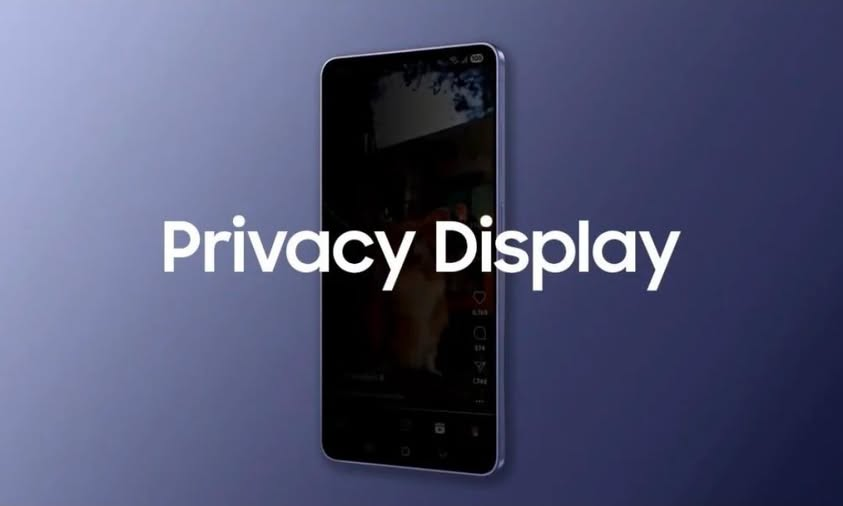
Privacy Display is a screen technology designed to reduce what people can see from side angles. In simple terms, the phone remains clear to the person looking directly at it, while the content becomes harder to read for anyone viewing from the side.
This is not a completely new idea. Many laptop users have seen privacy filters that narrow the viewing angle of a screen. Some people also buy privacy screen protectors for phones. The difference with modern smartphone Privacy Display technology is that it can be built into the display hardware and controlled by software.
That makes it more flexible than a permanent privacy screen protector. A physical privacy protector can reduce brightness and viewing quality all the time, even when the user does not need privacy. A built-in privacy feature can be turned on or off depending on the situation.
For example, a user may turn Privacy Display on while using banking apps, reading private messages, entering passwords or checking personal documents in public transport. The same user may turn it off while watching videos, showing photos to friends or playing games.
This type of feature is especially useful in crowded places such as trains, buses, airports, classrooms, offices, cafés and public waiting areas. Phones are now used for sensitive tasks every day, and users increasingly want more control over who can see their screen.
Why Honor Wants This Feature
Honor’s reported interest in Privacy Display makes sense because the premium Android market is becoming harder to differentiate.
Flagship phones already have bright OLED screens, fast processors, large batteries, advanced cameras and AI tools. Many high-end phones are extremely capable, which makes it more difficult for brands to create one feature that immediately stands out.
Privacy Display could be one of those standout features. It is practical, easy to understand and useful in daily life. Unlike some experimental smartphone features, screen privacy solves a real problem: people looking at private content from the side.
Honor has been pushing aggressively in the flagship market with its Magic series. The company competes with Samsung, Xiaomi, Oppo, Vivo and Huawei across premium Android segments. A privacy-display feature could help Honor market its next flagship as more secure, more personal and more advanced.
The feature could also fit naturally with Honor’s existing focus on display quality. Honor has often promoted eye comfort, high-frequency dimming, brightness and screen protection. Adding privacy control would expand that display story from comfort to security.
If Honor can deliver a strong version of the feature, it may gain a marketing advantage before Samsung Display starts offering its own solution more widely to rival brands.
Samsung’s Role in the Privacy Display Race
Samsung is central to this story because its Galaxy S26 Ultra made Privacy Display one of the most talked-about smartphone features of the year.
Samsung Display’s version is based on Flex Magic Pixel technology. The company describes it as a panel-integrated privacy solution that keeps content visible from the front while making it blurred or nearly invisible from side angles. This is different from a basic software dimming trick because the display panel itself plays a role in controlling viewing angles.
Samsung Display has also tied the technology to its LEAD 2.0 OLED platform, which combines privacy protection with high brightness and power-efficiency improvements.
The fact that Samsung Display may eventually offer similar technology to other smartphone companies is important. Samsung Display is not only a supplier for Samsung Electronics. It is one of the world’s most important OLED panel makers and has supplied screens to many major device brands.
If Samsung Display opens Privacy Display to competitors by the end of 2028, the feature could become more common across premium phones. But that timeline may be too slow for Chinese brands that want to compete sooner. That is why companies such as Honor and Xiaomi may be exploring alternative solutions with local panel makers.
The result could be a new display technology race, with Samsung Display on one side and Chinese display manufacturers trying to develop their own versions on the other.
How Honor’s Version Could Work
Honor has not explained how its rumored Privacy Display technology would work, so the details remain unclear. However, there are a few possible approaches.
The most advanced version would be a hardware-level display solution similar to Samsung’s Flex Magic Pixel. That type of panel could control light direction at the pixel or sub-pixel level, making the display harder to read from the side while preserving front-facing clarity.
Another possibility is a hybrid solution that uses both hardware and software. Honor could combine a special panel structure with software controls that activate privacy mode in selected apps or situations.
A less advanced version could rely mostly on software. That might darken the screen, reduce contrast, blur selected areas or change display behavior when privacy mode is active. A software-only approach would likely be easier to develop but may not match the quality of a true panel-integrated solution.
The key question is quality. A good Privacy Display should protect side-angle visibility without making the screen uncomfortable for the owner. It should not make the display too dim, too blurry or too tiring to use.
Honor’s challenge will be balancing privacy, brightness, color accuracy, battery life and eye comfort.
Read Also: Samsung Galaxy Z Fold8 and Flip8 Details Leak
Why Chinese Display Makers Matter
The rumor that Honor is working with a Chinese display panel maker is important because the display supply chain is becoming more competitive.
Samsung Display has long been a leader in premium OLED technology, especially for flagship smartphones. But Chinese display manufacturers such as BOE, Visionox, TCL CSOT and others have been improving quickly. They now supply panels for many Android brands and are pushing into higher-end display technologies.
If Chinese panel makers can develop strong privacy-display technology, brands such as Honor, Xiaomi, Oppo and Vivo may not need to wait for Samsung Display’s supply timeline. That could help them bring similar features to market faster.
It could also reduce Samsung’s advantage. If Samsung Display is the only supplier of high-quality privacy OLED panels, Samsung phones may enjoy a longer period of differentiation. But if Chinese panel makers produce competitive alternatives, the feature could spread across the Android market more quickly.
This is similar to what has happened with other smartphone technologies. High-refresh-rate OLED screens, ultra-bright panels, fast charging and foldable displays were once limited to a few brands. Over time, suppliers improved and the features became more common.
Privacy Display may follow the same path.
Xiaomi Is Also Linked to Similar Privacy Technology
Honor is not the only Chinese brand reportedly interested in Privacy Display. Xiaomi has also been linked to similar technology for a future flagship device, possibly the Xiaomi 18 Pro.
That matters because Xiaomi and Honor compete directly in several premium Android markets. If both brands introduce privacy-display features around the same generation, the technology could quickly become a selling point for Chinese flagship phones.
Xiaomi has a history of moving fast with display and charging technologies. The company often uses high-brightness OLED panels, fast refresh rates, large batteries and aggressive hardware specifications to compete with Samsung and Apple.
If Xiaomi adds Privacy Display, Honor may have even more reason to develop its own version. No flagship brand wants to appear behind when a practical new feature gains attention.
This could create a chain reaction. Once Samsung, Xiaomi and Honor push privacy-display technology, other brands may follow. Oppo, Vivo, Huawei and OnePlus could all explore similar features if consumer interest grows.
Why Privacy Display Could Become a Flagship Feature
Privacy Display has the potential to become a flagship feature because it is simple to explain and easy for users to understand.
Many smartphone innovations are technical. A user may not fully understand chipset architecture, image signal processing, vapor chamber cooling or display calibration. But privacy is personal. Almost everyone has experienced someone looking at their phone screen in public.
That makes the feature marketable. A phone company can show a simple demonstration: the screen looks normal from the front and hidden from the side. Users immediately understand the benefit.
Privacy Display also connects well with modern smartphone use. People now use phones for banking, identity verification, work messages, health apps, private photos, travel bookings and digital payments. The more sensitive tasks move to phones, the more screen privacy matters.
The feature could also appeal to business users. Professionals often check confidential emails, documents and chats while traveling. A built-in privacy display could reduce the need for external privacy films.
For students and everyday users, the benefit is also clear. It can keep messages, photos and app activity more private in crowded spaces.
The Main Challenge: Display Quality
The biggest challenge with Privacy Display is maintaining screen quality.
Users want privacy, but they do not want a worse display. A flagship phone must still deliver high brightness, sharp text, rich colors, wide color accuracy and comfortable viewing. If privacy mode makes the screen look dull, grainy or uncomfortable, users may stop using it.
Samsung’s solution is interesting because it is built into the panel and can be controlled when needed. But even with advanced technology, some users may notice changes in brightness, viewing comfort or visual texture when privacy mode is active.
Honor and other brands will face the same issue. A privacy feature cannot feel like a cheap filter. It must feel premium, especially on expensive flagship phones.
Battery life is another concern. If privacy mode requires extra processing or changes display behavior in a way that increases power consumption, users may avoid it. A good implementation should be efficient enough for everyday use.
Touch response, refresh rate and outdoor visibility must also remain strong. A privacy display that works only indoors or at low brightness would be less useful.
The 6.3-Inch and 6.8-Inch Testing Clue
The rumor that Honor is testing two screen sizes is interesting. A 6.3-inch model and a 6.8-inch model would fit a typical flagship structure: one smaller premium phone and one larger Pro or Ultra-style device.
If these are indeed future Honor Magic9 models, Honor may be planning to offer Privacy Display across more than one flagship rather than limit it to only the largest model. That would be a strong move, especially if Samsung initially keeps its most advanced privacy-display features for Ultra models.
A smaller 6.3-inch flagship with Privacy Display could appeal to users who want premium features without a huge phone. A larger 6.8-inch version could target users who want the full flagship experience with a big display, stronger battery and more advanced camera system.
However, testing does not guarantee launch. Smartphone makers often test features on prototypes that never reach retail devices. Honor could still delay the feature, limit it to one model or change the final display specifications before launch.
For now, the screen-size detail should be treated as a clue, not confirmation.
What This Means for Samsung
Samsung may have started the modern smartphone Privacy Display race, but the feature may not remain exclusive for long.
If Honor, Xiaomi and other Chinese brands launch similar technology before Samsung Display opens supply to competitors, Samsung could lose some of its early advantage. That would pressure Samsung to improve its implementation, expand it to more Galaxy models or combine it with other security features.
At the same time, Samsung Display could benefit if the feature becomes popular. If rival brands eventually buy Samsung’s privacy OLED panels, Samsung Display may turn the technology into a profitable supply business.
This creates an interesting situation. Samsung Electronics wants Galaxy phones to stand out, while Samsung Display may eventually profit by selling advanced panel technology to other companies.
That tension is common in the smartphone industry. Component suppliers often sell to multiple brands, even when one of those brands is part of the same corporate group.
For Samsung, the challenge will be staying ahead through integration, software features and user experience, not just the panel itself.
What This Means for Honor
For Honor, Privacy Display could become a strong premium feature if it arrives with the next Magic flagship series.
Honor has been working to establish itself as a serious flagship competitor outside China. Its Magic phones often focus on large batteries, powerful cameras, premium screens and fast performance. A privacy-display feature would add another high-end angle.
It could also help Honor differentiate from other Chinese brands that often compete on similar hardware. Many flagships already have bright OLED screens, fast charging and strong processors. Privacy Display would give Honor a more distinctive talking point.
However, Honor must make sure the feature is not just a marketing label. Users will compare it with Samsung’s implementation. Reviewers will test viewing angles, brightness, comfort and real-world usefulness.
If Honor’s version works well, it could strengthen the brand’s reputation for display innovation. If it feels weak or mostly software-based, it may be seen as a copy rather than a real advancement.
What This Means for Buyers
For buyers, the rise of Privacy Display is good news. More competition usually means faster improvement and wider availability.
Today, users who want screen privacy often rely on third-party screen protectors. These can help, but they often reduce brightness, affect touch feel, change screen clarity or make viewing less comfortable. Built-in privacy technology could offer a cleaner solution.
Buyers should still be careful. Not all privacy-display systems will be equal. A hardware-level solution may perform better than a software-only feature. Some systems may protect only certain angles. Others may reduce screen quality more noticeably.
When these phones launch, buyers should look for real-world tests. The most important questions will be:
Does the feature actually hide content from side angles?
Does the screen remain clear from the front?
Can the feature be turned on and off easily?
Does it work only in selected apps or across the whole phone?
Does it affect brightness, battery life or eye comfort?
Does it work outdoors and in bright environments?
These practical details will matter more than the feature name.
Privacy Display Could Pair Well With AI Features
Privacy Display may become even more important as AI features become more common on phones.
Modern phones increasingly summarize messages, analyze documents, show personal recommendations, generate replies and process sensitive information on-screen. If more private data appears directly on the display, protecting that display becomes more important.
A future privacy system could automatically activate when sensitive content appears. For example, the phone could enable privacy mode when opening banking apps, password managers, private chats, work documents or identity information.
It could also protect only part of the screen. That would allow users to keep most content visible while hiding selected areas such as notification previews, account numbers or message content.
Samsung Display has already discussed the idea of partial privacy, and rival brands may explore similar approaches. This could turn Privacy Display from a simple viewing-angle feature into a smarter privacy layer controlled by software and AI.
Honor may use this opportunity to combine display privacy with its own AI and security features.
Why the Feature May Take Time to Spread
Even if consumers like Privacy Display, it may take time to become common.
First, the technology requires display-level changes if it is implemented properly. That means brands must work closely with panel suppliers. It is not as simple as adding a camera mode through software.
Second, cost matters. Advanced OLED panels are expensive. Privacy-display technology could increase panel costs, especially at first. Brands may reserve it for premium models before bringing it to cheaper phones.
Third, quality control is difficult. A privacy display must work consistently across brightness levels, angles and screen content. It must also pass durability, power and color standards.
Fourth, supply chains need scale. If only one supplier can produce strong privacy panels, availability may be limited. Wider adoption will require more panel makers to master the technology.
That is why Samsung Display’s rumored plan to offer the technology to competitors by 2028 matters. It suggests the feature may need time before it becomes widely available across the industry.
Conclusion
Honor is reportedly working on Privacy Display technology for its next flagship phones, possibly including models with 6.3-inch and 6.8-inch displays. The feature is expected to offer a Samsung-style privacy experience, making the screen harder to read from side angles while keeping it clear for the user looking directly at it.
The rumor comes as Samsung’s Galaxy S26 Ultra has made Privacy Display a major talking point in the flagship smartphone market. Samsung Display’s Flex Magic Pixel technology has shown how panel-integrated privacy can become a real hardware feature rather than a simple screen protector replacement.
Samsung Display is also rumored to offer similar technology to other smartphone makers by the end of 2028. But Honor and other Chinese brands may not want to wait. By working with Chinese display makers, they could bring their own versions to market earlier.
If Honor succeeds, Privacy Display could become one of the next major features in premium Android phones. It would give users more control over screen privacy in public spaces and give smartphone brands a new way to compete beyond cameras, charging and AI.
For now, the Honor feature remains unconfirmed. But the direction is clear: smartphone privacy is moving from software settings and screen protectors into the display panel itself. That could make the next wave of Android flagships more private, more secure and more practical for everyday use.
Source (in Chinese)