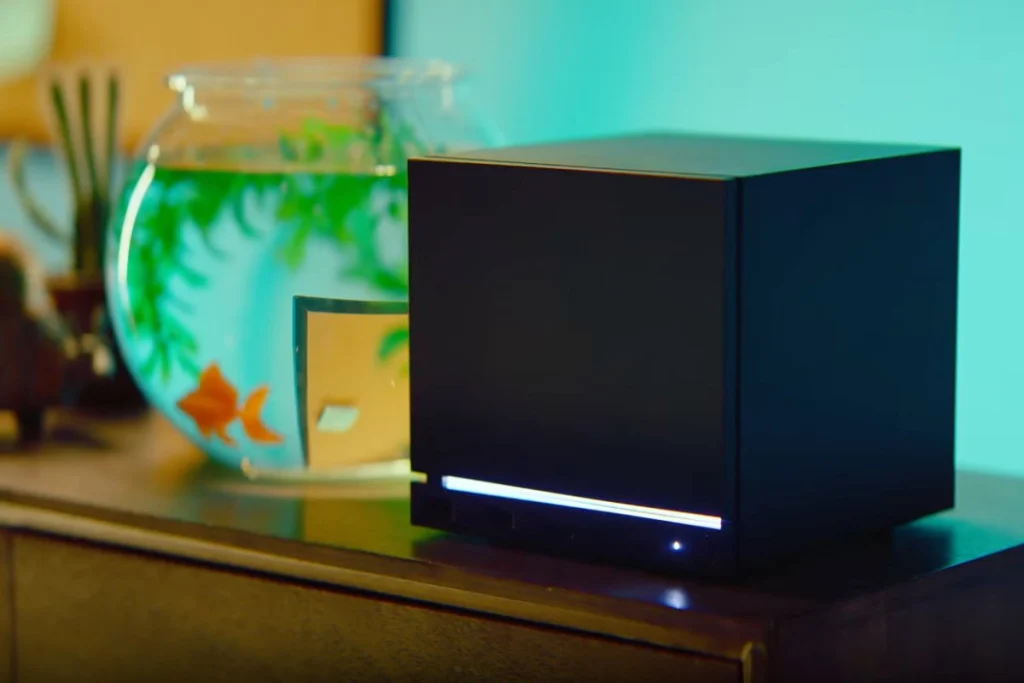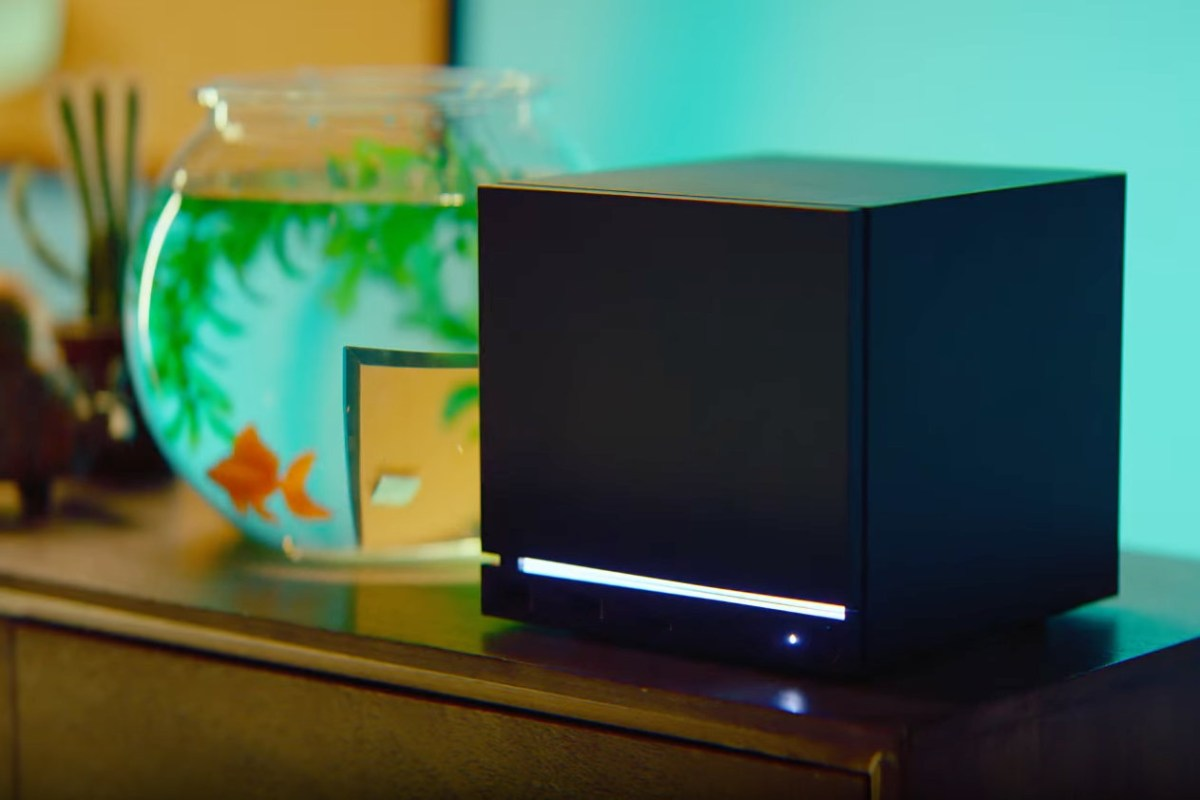
Steam Machine is finally going on sale, but Valve’s long-awaited living-room gaming PC is arriving with a price that will immediately divide players. The compact SteamOS-powered system starts at $1,049 for the 512GB model and rises to $1,349 for the 2TB version. Buyers who want the new Steam Controller bundled with the device will pay even more, with the 512GB bundle listed at $1,128 and the 2TB bundle at $1,428.
That makes the new Steam Machine much more expensive than a traditional game console, even though Valve is positioning it as a small PC built for Steam libraries, couch gaming and desktop flexibility. The device is not a PlayStation or Xbox rival in the strictest sense. It is closer to a console-shaped gaming PC running SteamOS, Valve’s Linux-based operating system.
The price is still the headline. For many players, $1,049 without a controller will feel steep. For others, the Steam Machine may make sense because it offers PC flexibility in a compact form factor that is difficult to replicate with off-the-shelf parts. Valve is also not selling the device through a normal open checkout. Instead, buyers must join a reservation process because launch supply is limited.
The Steam Machine is therefore launching into a complicated market. PC hardware prices remain high, console prices have also climbed, and players are increasingly sensitive to value. Valve’s new machine may be technically impressive, but its price means it will appeal first to committed Steam users rather than casual console buyers.
Steam Machine Price and Configurations
Valve is offering the Steam Machine in four main purchase options.
The base 512GB model costs $1,049. This version does not include the Steam Controller. It is aimed at users who already have a compatible controller, keyboard and mouse, or another input setup they prefer.
The 512GB Steam Machine bundle with the Steam Controller costs $1,128. That bundle is likely to be the practical choice for buyers who want the full living-room experience from day one.
The 2TB Steam Machine costs $1,349. This version adds significantly more storage and includes two additional faceplates. The extra storage will matter for users with large Steam libraries, especially as modern PC games can easily exceed 100GB each.
The 2TB Steam Machine bundle with the Steam Controller costs $1,428. This is the most expensive launch option and is aimed at buyers who want the highest-capacity model and Valve’s controller in one package.
The price difference between the 512GB and 2TB models is large, but storage is one of the areas where modern gaming PCs are under pressure. Players who install several major games at once may quickly fill 512GB, especially after accounting for the operating system and updates.
The good news is that the Steam Machine uses standard M.2 storage, meaning users should be able to upgrade later. That could make the 512GB version more attractive to buyers who are comfortable opening the device and adding a larger drive later.
Reservation Process: How Buyers Can Get One
Valve is not selling the Steam Machine through a simple first-come, first-served checkout. Instead, the company is using a randomized reservation system designed to reduce scalping and give more genuine users a fair chance.
Interested buyers can sign up through Steam before the reservation deadline. After the sign-up period ends, Valve will randomize the list and begin notifying selected users. Those chosen will receive a purchase opportunity, while others may be placed on a waitlist.
Selected buyers will have a limited time window to complete their order. If they do not purchase within that period, Valve will move to the next person in line. This approach is meant to stop bots and resellers from dominating the launch.
Valve is also applying account restrictions. Buyers need a Steam account in good standing with a qualifying purchase made before the cutoff date. The company is also limiting reservations by household to reduce duplicate entries.
The system will not satisfy everyone. Some new customers may be unable to qualify because they did not have an eligible Steam purchase before the cutoff. However, Valve appears to be prioritizing existing Steam users and trying to keep early stock out of the hands of scalpers.
The reservation model also shows that launch supply is tight. Valve is not treating the Steam Machine as a mass-market console available in huge numbers at retail stores. It is a controlled launch for a high-demand, limited-supply PC product.
Why the Steam Machine Is So Expensive
The Steam Machine’s price is high partly because Valve is not following the traditional console business model. Console makers often sell hardware at low margins or even at a loss because they expect to recover money through software sales, subscriptions and closed ecosystems.
Valve says it is not taking that route. The Steam Machine is a PC, and Valve is presenting it as one option among many devices that can play Steam games. The company does not want to lock users into a closed hardware system.
That decision affects the price. If Valve is not heavily subsidizing the machine, the final price must reflect the cost of components, manufacturing, custom engineering and distribution.
The timing is also difficult. Memory and storage prices have risen sharply, and Valve has pointed to component cost pressure as a major reason why the original pricing target no longer worked. RAM and SSD costs affect nearly every PC, but the Steam Machine is especially exposed because it depends on compact, carefully sourced parts.
Limited supply also plays a role. When components are expensive or hard to source, companies cannot easily build huge numbers of devices at a lower cost. Valve has said availability was affected as well as pricing.
This explains why the Steam Machine does not look cheap compared with consoles. It is a compact PC launching during a rough hardware market, not a subsidized living-room console.
Steam Machine Specifications
The Steam Machine is built around a semi-custom AMD platform. It uses a 6-core, 12-thread Zen 4 CPU that can boost up to 4.8GHz. For graphics, it uses an AMD RDNA 3 GPU with 28 compute units and 8GB of GDDR6 VRAM.
The system includes 16GB of DDR5 memory. Reports have noted that some units may ship with either one 16GB memory stick or two 8GB sticks depending on supply. Dual-channel memory is usually better in theory, but Valve has suggested that gaming performance differences are not significant in its testing.
Storage options include 512GB and 2TB configurations. The device uses M.2 storage, which gives users a possible upgrade path. There is also a microSD card slot, which is useful for players who also own a Steam Deck and want to move expandable storage between devices.
The Steam Machine also includes a built-in power supply, which helps keep the setup cleaner in a living-room environment. Instead of using a large external power brick, the device is designed as a compact self-contained cube.
The hardware is not meant to beat high-end gaming PCs. Instead, it aims to provide strong couch gaming performance in a very small, quiet and convenient form factor.
SteamOS Is the Main Selling Point
SteamOS may be the most important part of the Steam Machine. Valve’s software is what makes the device feel more like a console than a normal desktop PC.
SteamOS is designed around Steam, controller navigation and quick access to a game library. It uses Proton to run many Windows games on Linux, which has become one of Valve’s biggest achievements through the Steam Deck era.
For players who already use Steam Deck, the Steam Machine should feel familiar. It is part of the same ecosystem: Steam library, cloud saves, controller support, Big Picture-style interface and Linux-based gaming.
SteamOS also gives the Steam Machine a different identity from a Windows gaming PC. Windows offers broader compatibility, especially for some multiplayer games with anti-cheat systems, but SteamOS offers a cleaner couch gaming experience.
Valve has also been moving toward making SteamOS easier to use on other hardware. That matters because some users may decide to build their own SteamOS PC rather than buy the Steam Machine. Valve seems comfortable with that idea because it sees the Steam Machine as part of an open PC ecosystem, not a closed console.
Steam Machine vs Steam Deck
The Steam Machine is not a handheld. It is a living-room and desk gaming PC. Still, comparisons with Steam Deck are unavoidable because both devices run SteamOS and target Steam users who want a simpler PC gaming experience.
Steam Deck is portable. Steam Machine is not. Steam Deck includes its own screen, controls and battery. Steam Machine requires a TV or monitor and an input device.
The Steam Machine should offer stronger performance because it has more power headroom, a dedicated living-room design and more capable graphics hardware. It is made for bigger displays and higher performance targets than the handheld Steam Deck.
However, Steam Deck remains cheaper and more flexible for users who value portability. Even with recent price increases, many players may still see Steam Deck as the better entry point into SteamOS hardware.
The Steam Machine is for a different buyer. It is for someone who wants SteamOS on a TV, wants a compact box under or near the screen, and prefers a console-like setup without giving up PC library flexibility.
In that sense, Steam Deck and Steam Machine are not direct replacements for each other. They are two parts of Valve’s hardware ecosystem.
Steam Machine vs PlayStation and Xbox
The Steam Machine will inevitably be compared with the PlayStation 5, PlayStation 5 Pro and Xbox Series X because it is designed for the living room. On price alone, Valve’s machine looks expensive.
Traditional consoles are cheaper because they are built around fixed hardware, large production runs and platform economics. Sony and Microsoft can rely on software ecosystems, subscriptions and store revenue to support lower hardware pricing.
The Steam Machine is different. It is a PC that plays Steam games. It does not lock users into a single console store in the same way. Users can tinker, install other software and treat it more like a small computer.
That flexibility is the main argument for the Steam Machine. It gives players access to a massive PC gaming library, frequent Steam sales, mods, cloud saves and compatibility with many controllers and accessories.
But the value comparison depends on the buyer. A console player who only wants simple plug-and-play gaming may find the Steam Machine too expensive. A PC player who already owns many Steam games may see more value in a compact SteamOS box.
Valve is not competing purely on price. It is competing on openness, library access and form factor.
Can You Build a Better PC for Less?
Some users will look at the Steam Machine’s price and ask a fair question: why not build a gaming PC instead?
In raw performance terms, a traditional desktop PC may offer better value. A larger PC case gives users more freedom to choose cheaper components, larger GPUs, stronger cooling and easier upgrades. A DIY PC can also run Windows, Linux or SteamOS depending on user preference.
However, the Steam Machine’s advantage is size and integration. It is a compact cube with custom hardware, custom cooling and SteamOS designed for the experience. Building something equally small, quiet and polished is much harder than building a standard tower PC.
Small form factor PCs often cost more because compact cases, low-profile cooling, mini-ITX motherboards and smaller power supplies can be expensive. They can also be harder to assemble and maintain.
So the answer depends on priorities. Buyers who want maximum performance per dollar should consider a custom PC. Buyers who want a compact SteamOS living-room machine with minimal setup may find the Steam Machine more appealing.
The Steam Machine is not the cheapest way to play PC games. It is one of the cleanest ways to bring Steam gaming to a TV.
The Steam Controller Bundle
The Steam Controller is optional, but it is clearly part of Valve’s intended experience. The controller bundle adds $79 to the price of either Steam Machine model.
Users do not need Valve’s controller to use the Steam Machine. Existing controllers, keyboard and mouse setups, and many standard PC input devices should work. That gives buyers flexibility and helps reduce the initial cost.
Still, the Steam Controller may appeal to players who want the full Valve hardware ecosystem. Valve has long tried to solve the problem of playing PC games comfortably from the couch, including games that were originally designed for mouse and keyboard.
A good Steam Controller can make the Steam Machine feel more like a unified product rather than a small PC connected to a TV. It may also help with games that require more precise input than a normal console controller offers.
The downside is cost. Once the controller is added, the base bundle climbs to $1,128 and the top bundle reaches $1,428. That makes the device feel even further away from mainstream console pricing.
Storage: 512GB or 2TB?
The 512GB model is the cheapest Steam Machine, but it may not be the best long-term option for every user. Modern games are large, and a few major titles can consume most of a 512GB drive quickly.
The 2TB model offers much more breathing room. Players with large libraries, big single-player games, multiplayer titles and modded games will appreciate the extra space. The 2TB version also includes additional faceplates, which gives it a small customization advantage.
However, the $300 difference between 512GB and 2TB is significant. Some users may be better off buying the 512GB model and upgrading storage later, especially because the machine uses standard M.2 drives.
The microSD slot also helps, but microSD storage is usually not as fast as internal NVMe storage. It may work well for smaller games, indie titles or transferring content from Steam Deck, but demanding games will generally benefit from faster internal storage.
For buyers who want convenience and do not want to open the device, the 2TB version is safer. For buyers comfortable with upgrades, the 512GB version may be the smarter starting point.
Performance Expectations
The Steam Machine should not be judged like a top-end gaming desktop. Its goal is not to replace a high-performance tower with a large graphics card. Its goal is to deliver strong gaming performance in a small living-room-friendly box.
The AMD Zen 4 CPU and RDNA 3 GPU should be capable enough for many modern games, especially with SteamOS optimization and upscaling technologies. The 8GB of GDDR6 VRAM is important because many modern titles demand more graphics memory at higher settings.
However, buyers should not expect unlimited 4K gaming at maximum settings. The Steam Machine is likely better understood as a compact PC targeting console-like performance with PC flexibility.
Performance will also depend on game compatibility. Many Steam games run well through Proton, but not every title is perfect. Some online games with anti-cheat systems may still have issues on Linux-based systems.
Valve has improved Linux gaming dramatically through Steam Deck, and that progress benefits the Steam Machine. But users should still check compatibility for their favorite games before buying.
Why Valve Still Believes in the Steam Machine
Valve’s hardware strategy has always been different from traditional console makers. The company is not trying to build a locked-down gaming box with exclusive games and mandatory subscriptions. It wants to expand where and how people play Steam games.
The Steam Deck proved that Valve could make dedicated gaming hardware succeed when the software experience was right. Steam Machine is the living-room version of that idea.
Valve likely sees the device as a reference product. It shows what a compact SteamOS gaming PC can be. It may also encourage other manufacturers to build similar devices or inspire users to create their own SteamOS machines.
Even if the Steam Machine does not sell in console-level numbers, it could still influence PC gaming. It pushes SteamOS further, gives developers another hardware target and strengthens Valve’s argument that PC gaming can work beyond the desk.
The price makes mass adoption harder, but Valve may be playing a longer game. Steam Machine is not only a product. It is a statement about the future of SteamOS hardware.
Who Should Buy the Steam Machine?
The Steam Machine makes the most sense for existing Steam users who want a compact gaming PC for the TV. It is especially appealing to players with large Steam libraries, Steam Deck owners, Linux gaming fans and users who want a console-like interface without leaving the PC ecosystem.
It may also suit people who want a small, clean setup and do not want to build a PC. A compact living-room device with SteamOS, built-in power supply and controller support is more convenient than assembling a mini-ITX system.
However, it is not the best choice for everyone. Budget-conscious players may find better value in a standard console, a gaming laptop deal, a DIY PC or a Steam Deck. Competitive PC gamers who need maximum performance may prefer a larger Windows desktop.
The Steam Machine is a premium niche device. It offers convenience, size and SteamOS integration, but it demands a high price.
Who Should Skip It?
Players who mainly want the cheapest way to play games on a TV should probably skip the Steam Machine. A console will be cheaper and simpler for many households.
Users who want the best graphics performance for the money should also consider building a PC. A larger desktop can offer better upgrade options, stronger GPUs and more storage flexibility.
People who rely heavily on games that do not work well on Linux should be cautious. Proton compatibility is excellent for many titles, but it is not universal. Multiplayer games with strict anti-cheat systems can still be problematic.
New Steam users may also face reservation restrictions, depending on account history. That means the first launch wave is mostly aimed at existing Steam customers.
The Steam Machine is not a casual impulse buy. It is a device for users who already understand why SteamOS, PC gaming flexibility and compact design matter.
The Bigger Picture for Gaming Hardware
The Steam Machine’s price says something bigger about the gaming hardware market. Affordable hardware is becoming harder to deliver. Components are more expensive, supply chains are more complex and companies are facing pressure from memory and storage demand across the technology industry.
Consoles are also no longer immune to price pressure. Mid-generation upgrades and higher storage models have pushed prices upward. Handheld gaming PCs have shown that players will pay more for flexibility, but only up to a point.
Valve’s decision not to subsidize the Steam Machine makes the situation more visible. Instead of hiding hardware costs behind a closed platform strategy, Valve is putting the real cost of a compact gaming PC in front of buyers.
That may be painful, but it is also honest. The Steam Machine is expensive because it is a small PC built during an expensive hardware cycle.
The question is whether enough players will accept that trade-off.
Conclusion
Valve’s Steam Machine is finally going on sale, and its $1,049 starting price makes it one of the most debated gaming devices of the year. The 512GB model starts above many traditional consoles, while the 2TB version and controller bundles push the price even higher.
The device offers a compelling idea: a compact SteamOS gaming PC built for the living room, powered by custom AMD hardware and connected to the massive Steam library. It also offers storage upgrade options, microSD support, controller flexibility and the convenience of a console-like interface.
But the price is difficult to ignore. The Steam Machine is not a budget console replacement. It is a premium compact PC for committed Steam users who value openness, small size and SteamOS integration.
For some buyers, that combination will be worth the cost. For others, a console, Steam Deck or custom gaming PC will make more sense.
The Steam Machine may not be the affordable living-room PC many players hoped for, but it is still one of Valve’s most important hardware launches. It shows where the company wants SteamOS to go next: beyond handhelds, beyond the desktop and deeper into the living room.
Read Also: iOS 27 Beta 2 Adds Write with Siri and Smarter Messaging