Kenya’s long-standing struggle with corruption has come under renewed scrutiny following the release of the latest global corruption rankings, which place the country deeper into the lower tier of international performance. The new data highlights growing concerns among citizens, civil society, and governance experts that anti-corruption efforts are failing to deliver meaningful results. Despite repeated pledges of reform and accountability, Kenya’s standing continues to weaken, raising difficult questions about enforcement, political will, and institutional integrity.
According to the latest Corruption Perceptions Index, Kenya has slipped to position 130 out of 182 countries surveyed. This represents a sharp decline compared to the previous year and reinforces the perception that corruption remains deeply embedded within public institutions. The drop reflects not only worsening scores but also a broader erosion of trust in systems meant to prevent abuse of power. For many Kenyans, the ranking mirrors daily experiences of inefficiency, favoritism, and unpunished wrongdoing.
The index, compiled annually by Transparency International, measures perceived levels of public sector corruption using data from multiple independent sources. While it does not track individual cases, it provides a widely respected snapshot of how corruption is viewed by experts and business leaders. Kenya’s performance in the index has become an important benchmark for assessing whether anti-graft reforms are translating into tangible outcomes.
This year’s results suggest that progress has stalled. Kenya’s score fell to 30 out of 100, down from 32 the previous year. The decline signals that corruption is not only persistent but may be becoming more normalized across governance structures. As public frustration grows, the index has intensified calls for stronger accountability and renewed focus on enforcement rather than rhetoric.
Kenya’s corruption score and global ranking explained
The Corruption Perceptions Index ranks countries on a scale of zero to one hundred, where higher scores indicate lower perceived corruption. Kenya’s score of 30 places it well below the global average and firmly within the category of countries facing serious governance challenges.
Dropping to position 130 reflects a continued downward trajectory over recent years. The ranking indicates that Kenya is performing worse than many peers, particularly when compared to countries that have invested heavily in judicial independence, institutional transparency, and consistent prosecution of corruption cases.
While rankings alone do not capture the full complexity of governance, they provide a comparative lens through which trends can be observed. Kenya’s decline suggests that reforms introduced in recent years have yet to restore confidence among observers who track integrity in public administration.
Sub Saharan Africa remains the weakest performing region
Kenya’s results align with a broader regional pattern. Sub Saharan Africa once again recorded the lowest average score globally, highlighting systemic challenges across the continent. The region posted an average score of 32 out of 100, underscoring persistent struggles with accountability, enforcement, and public sector transparency.
Out of forty nine countries assessed in the region, only a small number scored above the fifty point threshold. Seychelles emerged as the strongest performer with a score of sixty eight, followed by Cabo Verde at sixty two. Botswana and Rwanda were the only other African nations to cross the midpoint mark.
The data shows that while a few countries have made notable progress, many have stagnated or regressed. Since 2012, ten countries in the region have recorded significant declines, while only seven have shown measurable improvement. This trend reflects deep-rooted governance challenges that extend beyond individual administrations.
Public frustration and failed accountability in Kenya
Kenya’s declining score comes at a time of heightened public dissatisfaction with how corruption cases are handled. High profile investigations frequently collapse in court, charges against powerful individuals are dropped, and lengthy delays undermine confidence in the justice system. For many citizens, these outcomes reinforce a sense that accountability applies selectively.
Civil society groups have repeatedly pointed to weak enforcement of existing laws as a core problem. Kenya’s Constitution contains leadership and integrity provisions designed to prevent individuals implicated in corruption from holding public office. However, inconsistent application of these rules has allowed controversial figures to retain influence, fueling perceptions of impunity.
The gap between policy and practice has become increasingly visible. While institutions tasked with fighting corruption remain active, their impact is often questioned when cases fail to result in convictions. This disconnect continues to shape Kenya’s standing in global assessments.
Transparency International Kenya on systemic corruption
The leadership of Transparency International Kenya has offered a blunt assessment of the country’s performance. According to the organization’s Executive Director, corruption in Kenya has evolved beyond isolated incidents into a resilient system that spans multiple levels of government.
This characterization reflects concerns that corruption networks have adapted to oversight mechanisms, making them harder to dismantle. Rather than relying on crude tactics, modern corruption often involves complex procurement schemes, political protection, and legal maneuvering that frustrate investigations.
TI Kenya has emphasized that without consistent consequences, corrupt practices become entrenched. Weak enforcement, coupled with frequent withdrawal of cases, sends a signal that the risks of engaging in corruption remain low. This environment, critics argue, undermines both deterrence and public trust.
Global corruption trends add to the concern
Kenya’s performance mirrors a troubling global pattern. The worldwide average score in the index fell to forty two, the lowest level in more than a decade. Even countries traditionally viewed as strong democracies have struggled to contain corruption, particularly amid economic pressures and political polarization.
At the top of the index, Denmark retained its position as the least corrupt country globally, scoring eighty nine points. Finland followed closely with eighty eight, while Singapore scored eighty four. These countries are often cited as examples of strong institutions, independent judiciaries, and transparent public administration.
At the opposite end of the scale, Somalia and South Sudan tied for last place. Their rankings reflect prolonged instability, weak institutions, and limited capacity to enforce anti-corruption measures.
Political accountability and leadership challenges in Kenya
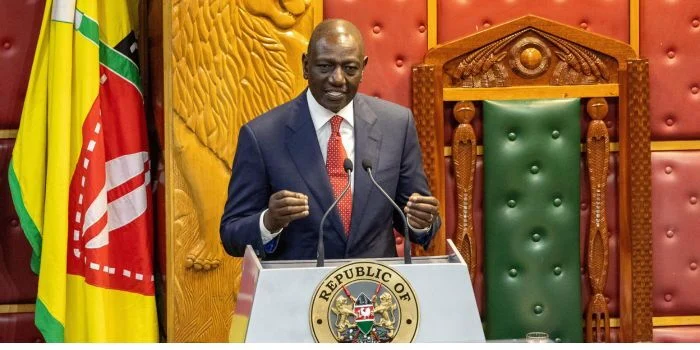
The corruption debate has also taken on a political dimension. The administration led by William Ruto has faced repeated accusations of widespread corruption across state institutions. Critics argue that reforms have not kept pace with the scale of the problem, while supporters maintain that investigations are ongoing.
President Ruto has publicly acknowledged corruption risks within government. During a national forum, he issued a warning to legislators, accusing some Members of Parliament of turning oversight committees into avenues for extortion. According to the President, certain lawmakers have allegedly demanded bribes from public officials in exchange for favorable reports.
Such statements highlight internal tensions within governance structures. While public denunciations signal awareness, observers note that sustained improvement in corruption rankings requires consistent follow-through, including prosecutions and institutional reform.
What Kenya’s CPI decline means for governance
Kenya’s drop in the Corruption Perceptions Index underscores a widening gap between reform promises and lived reality. The data suggests that without stronger enforcement, transparency measures alone may not be sufficient to reverse the trend.
For investors, development partners, and citizens alike, the index serves as a warning signal. Persistent corruption not only erodes public trust but also constrains economic growth and service delivery. As Kenya navigates complex economic and political challenges, restoring confidence in anti-corruption institutions remains a critical task.