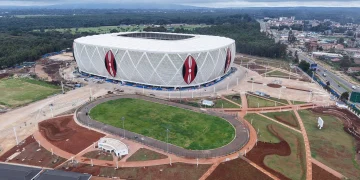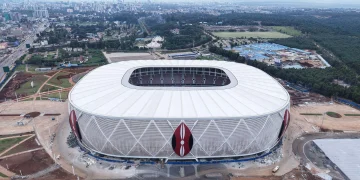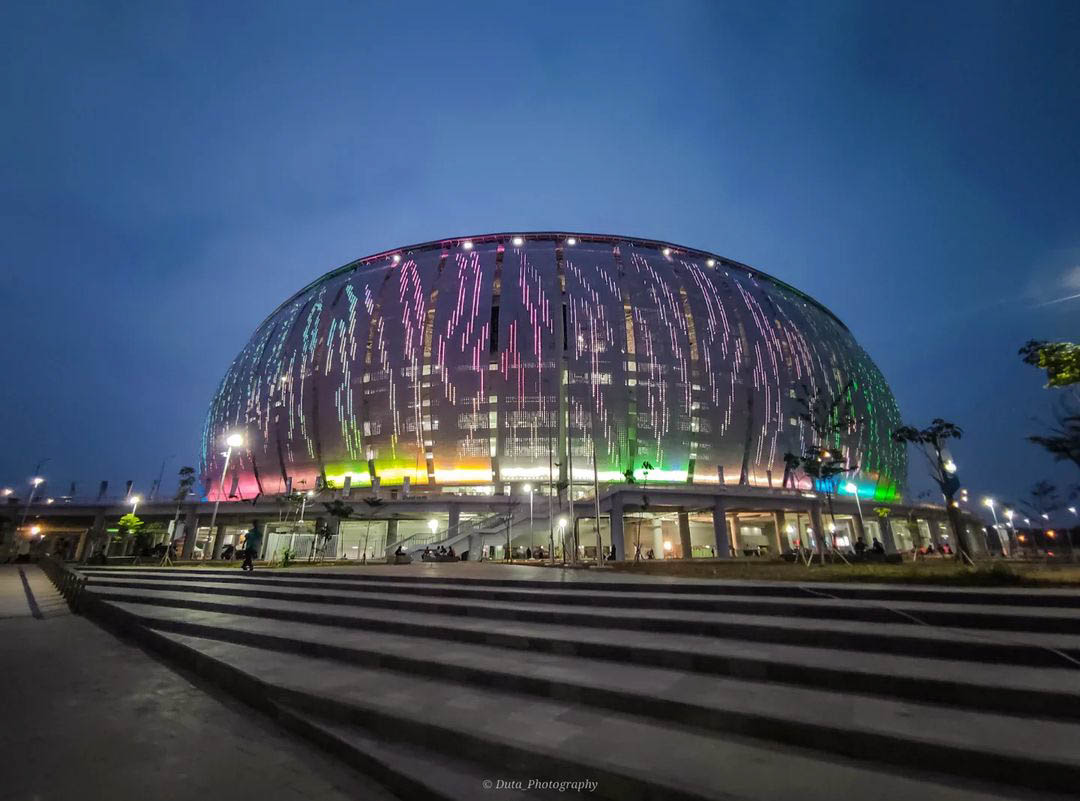
Jakarta International Stadium (JIS), located in North Jakarta, Indonesia, stands as one of the largest and most modern football stadiums in Southeast Asia. With a capacity of 82,000 spectators, JIS is a landmark in the region, boasting a retractable roof, cutting-edge infrastructure, and a unique design. This stadium is not only home to Persija Jakarta, one of Indonesia’s top football clubs, but also hosts a wide range of international sports events and concerts.
History and Construction
The construction of Jakarta International Stadium began in September 2019, following years of planning and land disputes. Initially envisioned as the BMW Stadium in the early 2010s, the project was delayed due to issues with squatters and land ownership. However, the project gained momentum under the leadership of Jakarta Governor Anies Baswedan, with groundbreaking taking place in March 2019.
The stadium faced challenges such as flood-prone land and the complexities of installing its 3,900-ton retractable roof, one of the largest roof lifting projects in the world. After delays caused by the COVID-19 pandemic, the stadium was officially completed and inaugurated on July 24, 2022.
Design and Architecture
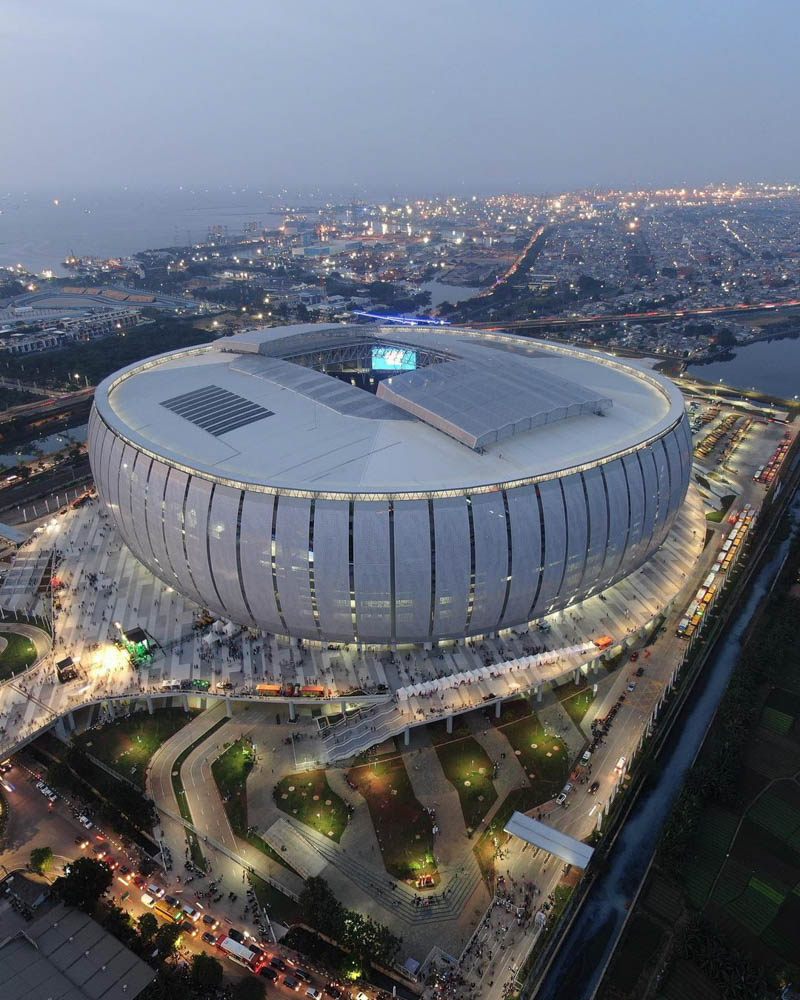
Designed by PDW Architects, Jakarta International Stadium is football-specific, with no athletics track, making it ideal for football matches. Its design features three-tiered stands with a tiger-striped façade that symbolizes Persija Jakarta’s colors and mascot. The retractable roof, made from ETFE membrane, is a standout feature, allowing the stadium to be used in various weather conditions. The roof is supported by two movable sections and is the first of its kind in Indonesia.
The stadium also includes an observation deck 73 meters above ground, offering panoramic views of the Ancol complex and North Jakarta. The sky-view deck provides an elevated space for visitors, making it a unique addition to the venue.
Facilities and Features
The Jakarta International Stadium is designed to host international football matches and a variety of cultural events. Some of its notable features include:
- Seating Capacity: 82,000 spectators
- Retractable Roof: First football stadium in Indonesia with a retractable roof.
- Hybrid Grass Pitch: Combining zoysia matrella grass with Limonta Mixto artificial turf for durability and performance.
- Sky-Viewing Deck: An observation platform offering a 180-degree view of the city.
- Training Facilities: Two full-size training pitches with floodlights and hybrid turf.
- Sustainability: Equipped with photovoltaic panels and designed to be energy-efficient.
- VIP Areas: Including 186 VIP seats, 1610 box seats, and 3490 open business seats.
The stadium’s facilities cater to both sports events and entertainment, with areas for commercial space, meeting rooms, and catering services.
Use and Events
Jakarta International Stadium is home to Persija Jakarta and serves as the venue for Indonesian national football team matches. The stadium is also a hub for international competitions, including the 2023 FIFA U-17 World Cup, where it hosted 16 matches, more than any other venue in the tournament. It is also used for concerts and cultural events due to its state-of-the-art facilities and versatility.
Future Prospects
As Indonesia’s largest football-specific stadium, JIS is poised to become a central venue for international sporting events and concerts. It is expected to host FIFA tournaments, ASEAN competitions, and other major sports events in the coming years. The stadium’s advanced facilities and unique design position it as a symbol of Indonesia’s growing sports infrastructure.
Conclusion
Jakarta International Stadium is a cutting-edge sports venue that exemplifies modern Indonesian architecture and sustainability. With its retractable roof, hybrid pitch, and world-class amenities, it is poised to be a central hub for football, concerts, and cultural events in Southeast Asia. As Persija Jakarta’s home ground, it continues to be a focal point for Indonesian football, while its versatile design makes it a valuable asset for a wide range of global events.