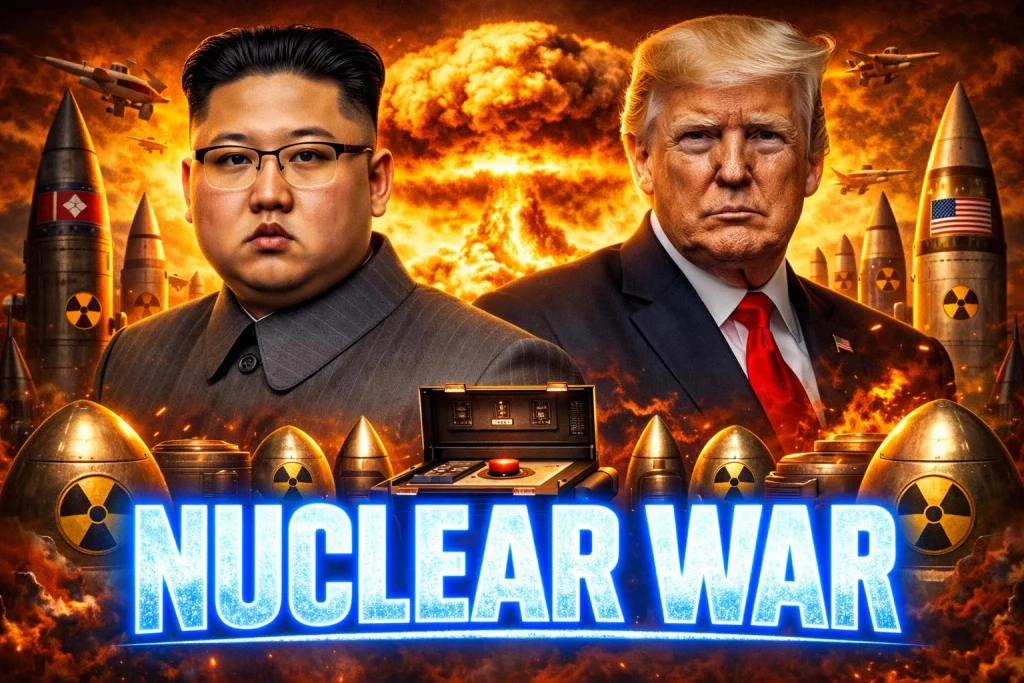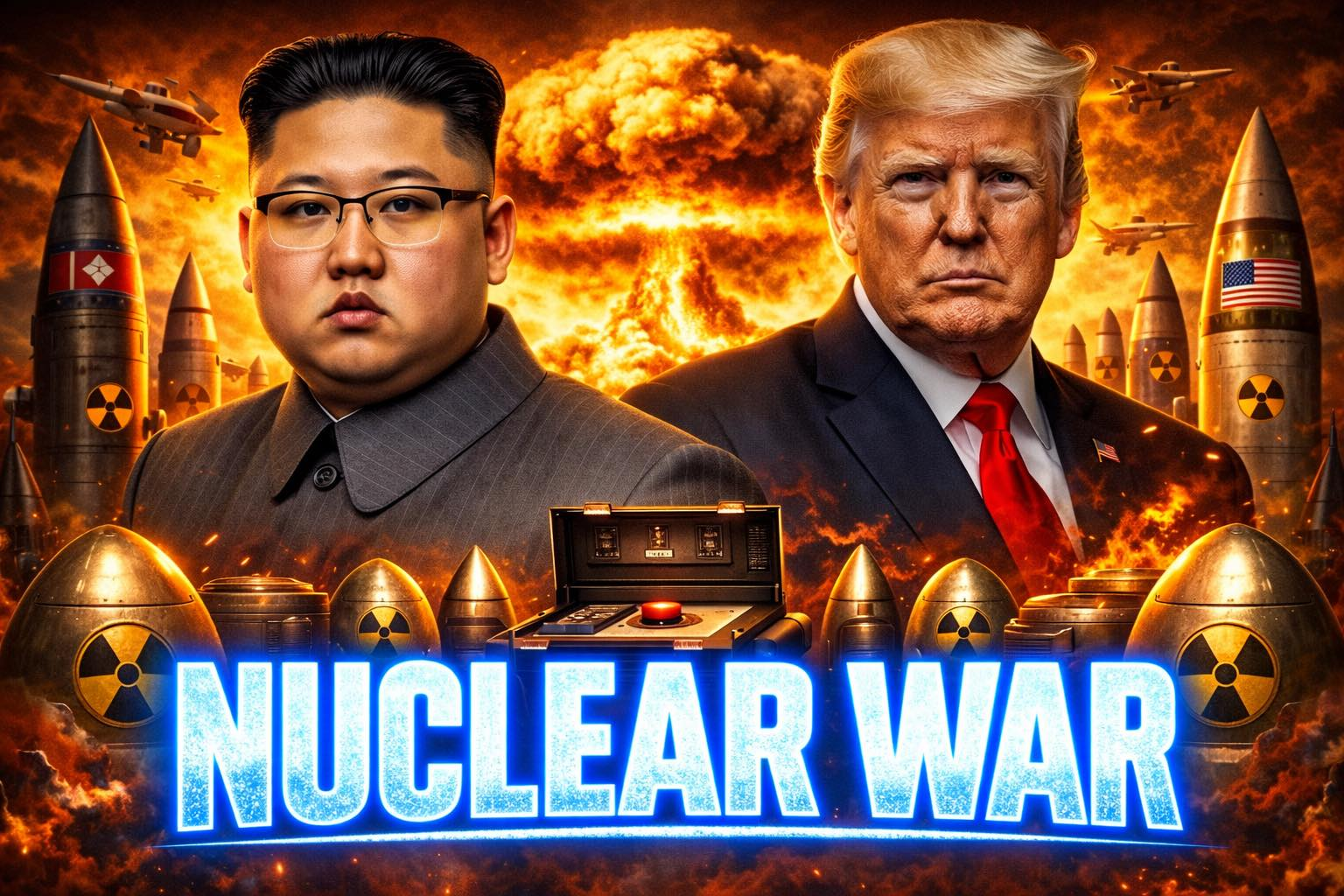
Nuclear weapons are widely regarded as the most destructive tools ever created by human beings. Understanding how nuclear weapons work is not about glorifying them, but about recognizing their immense power and the risks they pose to humanity. It is broadly accepted by military strategists that no country can truly win a nuclear war. The concept of mutually assured destruction means that any large-scale exchange would devastate not only the countries involved but potentially the entire planet.
A single nuclear weapon, depending on its yield, can destroy a major city in seconds. Entire metropolitan areas could be wiped out almost instantly. Beyond the immediate explosion, the long-term environmental and humanitarian consequences would extend far beyond national borders.
To understand the scale of danger, we must first examine the science behind how nuclear weapons work.
The Immediate Effects of a Nuclear Explosion
When a nuclear bomb detonates, it produces a massive fireball that can reach temperatures hotter than the surface of the Sun. This intense heat can ignite fires miles away from the blast center. Buildings collapse under the pressure wave, and infrastructure is destroyed within seconds.
In addition to the blast and heat, the explosion releases radiation. Radiation consists of invisible rays and tiny particles that damage living cells. High doses can cause acute radiation sickness, while long-term exposure increases the risk of cancer and genetic damage.
These immediate effects alone make nuclear weapons uniquely catastrophic. However, the long-term environmental consequences may be even more dangerous.
Nuclear Winter and Global Consequences
If multiple nuclear weapons were used in a war, the resulting fires could send massive clouds of smoke and dust into the upper atmosphere. This smoke could block sunlight for months or even years.
Without sufficient sunlight, plants cannot perform photosynthesis. Photosynthesis is the process by which plants produce their own food using sunlight. If crops fail on a global scale, food production would collapse. At the same time, reduced sunlight would lower global temperatures.
This combination of darkness, cooling and agricultural failure is known as nuclear winter. Scientists warn that such a scenario could cause worldwide famine and economic breakdown, even in countries not directly involved in the conflict.
Countries with Nuclear Weapons
The United States was the first country to develop nuclear weapons during World War II. Soon after, the Soviet Union, now Russia, developed its own nuclear arsenal. Today, nine countries are known to possess nuclear weapons:
- United States
- Russia
- China
- France
- United Kingdom
- India
- Pakistan
- Israel (widely believed to possess them, though it neither confirms nor denies)
- North Korea
The United States remains the only country to have used nuclear weapons in war. It dropped atomic bombs on Hiroshima on August 6, 1945, and Nagasaki on August 9, 1945. Estimates suggest that between 100,000 and 200,000 people died due to the blasts, fires and radiation. No nuclear weapons have been used in armed conflict since then.
Russia and the United States hold the vast majority of the world’s nuclear warheads, each possessing over 5,000. China has over 600, while France and the United Kingdom each have over 200.
The Most Powerful Nuclear Weapon Ever Tested
The most powerful nuclear device ever tested was the Tsar Bomba, developed by the Soviet Union. It was more than 3,000 times stronger than the bomb dropped on Hiroshima. The explosion was so powerful that its shockwave shattered windows hundreds of miles away. It was detonated as a test and never used in combat.
The Two Main Types of Nuclear Weapons
Understanding how nuclear weapons work requires distinguishing between the two primary types: atomic bombs and hydrogen bombs.
Atomic Bombs and Nuclear Fission
Atomic bombs operate through a process called nuclear fission. An atom is the smallest unit of matter. At the center of the atom lies a nucleus. When scientists split the nucleus of certain heavy elements, such as uranium-235, a tremendous amount of energy is released.
In an atomic bomb, this splitting triggers a chain reaction. Each split atom releases energy and additional particles that split more atoms. The result is a rapid and uncontrolled release of energy, producing an enormous explosion.
Hydrogen Bombs and Nuclear Fusion
Hydrogen bombs are significantly more powerful than atomic bombs. They rely on nuclear fusion rather than fission. Fusion occurs when light atomic nuclei, such as special forms of hydrogen called deuterium and tritium, are forced together under extreme heat and pressure.
When these hydrogen isotopes fuse, they release even more energy than fission reactions. In fact, hydrogen bombs typically use a smaller fission explosion to trigger the fusion reaction. This combination makes them vastly more destructive than atomic bombs.
Deterrence and Global Security
Despite their destructive power, nuclear weapons have played a central role in global security strategies. The fear of nuclear retaliation discourages major powers from engaging in direct large-scale wars. This strategy, known as nuclear deterrence, is often credited with preventing direct conflict between nuclear-armed superpowers during the Cold War.
However, the existence of these weapons remains a constant risk. Miscalculations, accidents or unauthorized launches could lead to catastrophic consequences. Even a limited nuclear exchange could result in millions of deaths and severe global disruption.
Conclusion
Understanding how nuclear weapons work reveals why they are considered humanity’s most dangerous invention. From city-destroying explosions and lethal radiation to the possibility of nuclear winter, the risks extend far beyond the battlefield.
While nuclear deterrence may reduce the likelihood of direct superpower wars, the continued existence of thousands of warheads means that the threat remains real. In a world interconnected by trade, climate and food systems, a nuclear conflict would not stay contained. It would affect everyone.