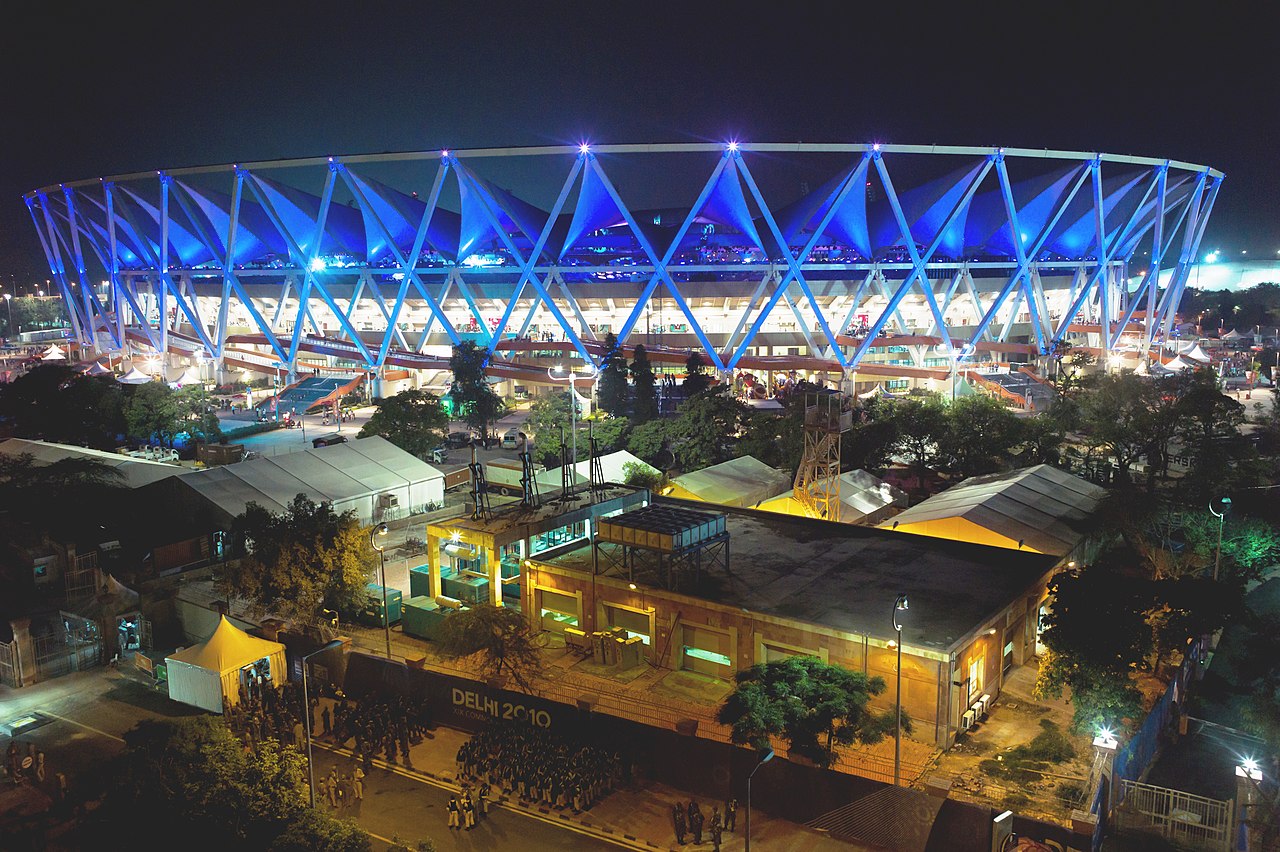
Located in the heart of New Delhi, Jawaharlal Nehru Stadium stands as a symbol of India’s sporting legacy. Opened in 1982 for the Asian Games, it has since evolved into a major venue for football, athletics, and cultural events. With a capacity of 60,254 spectators, it is one of the largest and most iconic stadiums in India, designed to meet international sports standards set by FIFA, the Asian Football Confederation (AFC), and World Athletics (WA).
History and Inception
Jawaharlal Nehru Stadium was constructed to host the 1982 Asian Games, providing the country with a state-of-the-art venue for athletics and the opening and closing ceremonies. At that time, the stadium had a seating capacity of 78,000 and hosted a range of events. It was an important symbol of India’s growing status in the international sporting arena.
Following its debut at the Asian Games, the stadium has hosted numerous other significant events, such as the 1989 Asian Championships in Athletics and various international football competitions. Over the years, the stadium became a hub for Indian sports, hosting the country’s national football team and athletics competitions.
Renovations and Modernization
In the mid-2000s, the stadium underwent a major renovation to prepare for the 2010 Commonwealth Games. The renovation project, which began in 2007, involved significant upgrades, including the installation of a new Teflon-coated roof, improved seating arrangements, and modernized facilities.
The total cost of the renovation amounted to ₹961 crore (approx. $210 million), making it one of the most expensive sports infrastructure projects in India. The seating capacity was reduced to 60,254, but the upgrades significantly enhanced the stadium’s facilities, enabling it to meet international standards for hosting athletics and football events. The 2010 Commonwealth Games marked a new chapter for the stadium, with the venue hosting both the opening and closing ceremonies, as well as athletic events.
Key Football and Sports Events
Jawaharlal Nehru Stadium is known for hosting football matches, athletic events, and cultural performances. Some of the most notable events include:
- 2010 Commonwealth Games: The stadium was the centerpiece of the games, hosting the opening and closing ceremonies as well as athletic events.
- 2017 FIFA U-17 World Cup: The stadium hosted 8 matches, including two Round of 16 games.
- Indian Super League (ISL): From 2014 to 2019, Delhi Dynamos FC used the stadium as their home ground, bringing high-quality football action to the capital.
- SAFF Championship: The stadium hosted several editions of the South Asian Football Federation Championship, showcasing the best of South Asian football.
Football and Cricket Legacy
Jawaharlal Nehru Stadium has a long-standing relationship with football and athletics in India. As the home venue for the Indian national football team, it has hosted numerous important matches, including World Cup qualifiers and international friendlies. One of the notable football events was the 2011 friendly between India and Bayern Munich.
In the early 1990s, the stadium also hosted cricket matches, including ODI fixtures featuring India vs. Australia (1984) and India vs. South Africa (1991). The stadium’s unique design, which included a running track alongside the cricket field, was eventually phased out as international regulations no longer permitted such a setup. This led to the stadium being deemed less suitable for hosting cricket matches.
Cultural Events and Concerts
Jawaharlal Nehru Stadium has also been a key venue for cultural events. In 1988, the stadium hosted the Amnesty International Human Rights Now! Benefit Concert, featuring iconic artists like Bruce Springsteen, Sting, and Tracy Chapman. This was one of the first large concerts held at the stadium and paved the way for future music events.
Other notable performances include Michael Jackson’s cancelled 1993 concert and Ronan Keating’s 2007 performance. The stadium continues to serve as a venue for major concerts, including performances by global artists such as Travis Scott in 2025.
A Hub for Indian Football
After serving as the home ground for Delhi Dynamos FC from 2014 to 2019, Jawaharlal Nehru Stadium has become a key venue for Indian football. It is used by the Indian national football team for international matches and SAFF Championship tournaments. The stadium has witnessed historic moments, including India’s first victory in the 2011 SAFF Cup, marking a significant achievement in the country’s football history.
Conclusion
Jawaharlal Nehru Stadium continues to be one of India’s most iconic sports venues, hosting everything from football and athletics to cultural events. With its rich history, significant renovations, and role as the home of Indian football, it remains an important landmark in New Delhi’s sports landscape.