Guide to U.S. Capital Gains Tax for Investors
Understanding how capital gains taxes work is essential for any investor seeking to maximize returns and avoid costly surprises. This guide to U.S. capital gains tax for investors breaks down how gains are taxed, what qualifies as short-term versus long-term, exemptions you might qualify for, and practical ways to minimize your tax liability while staying compliant with IRS regulations.
What Is Capital Gains Tax?
Capital gains tax is levied on the profit made from selling a capital asset—like stocks, bonds, real estate, or cryptocurrency—at a higher price than its original purchase cost. The IRS classifies gains into two main categories based on how long you held the asset:
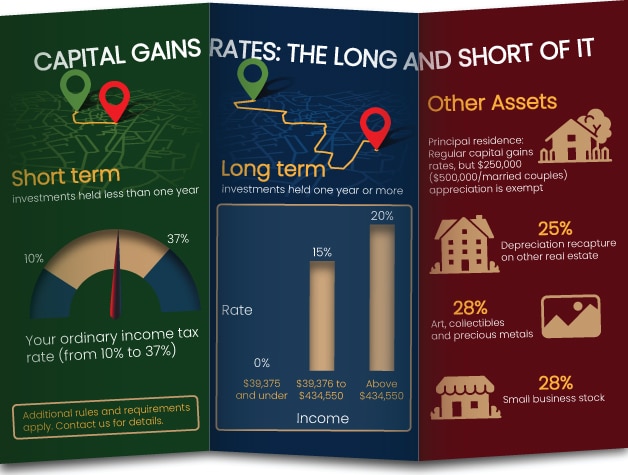
- Short-Term Capital Gains: Held for one year or less, taxed at your ordinary income tax rate.
- Long-Term Capital Gains: Held for more than one year, taxed at favorable rates (0%, 15%, or 20%) depending on your income.
Capital Gains Tax Rates for Individuals
Here’s a simplified breakdown of long-term capital gains tax brackets:
| Filing Status | 0% Rate | 15% Rate | 20% Rate |
|---|---|---|---|
| Single | Up to $44,625 | $44,626 to $492,300 | Over $492,300 |
| Married Filing Jointly | Up to $89,250 | $89,251 to $553,850 | Over $553,850 |
Short-term capital gains are taxed at your federal income tax rate (10% to 37%).
Which Assets Are Subject to Capital Gains Tax?
This guide to U.S. capital gains tax for investors covers gains from various asset classes:
- Stocks and ETFs
- Real estate and REITs
- Cryptocurrencies
- Collectibles (e.g., art, coins)
- Business interests and private equity
Note: Selling your primary residence may qualify for an exclusion of up to $250,000 ($500,000 for married couples), if certain ownership and residency tests are met.
Offsetting Gains with Capital Losses
The IRS allows investors to offset capital gains with capital losses. This strategy, known as tax-loss harvesting, can reduce or eliminate your taxable gains in a given year.
- Losses can offset gains dollar-for-dollar.
- Up to $3,000 of unused losses can be deducted against ordinary income annually.
- Excess losses carry forward to future tax years.
Tax Planning Strategies to Minimize Capital Gains
Smart investors actively reduce tax exposure. This guide to U.S. capital gains tax for investors recommends the following strategies:
- Hold Investments Long-Term
Favor long-term gains to benefit from lower tax rates. - Use Retirement Accounts
Sell within Roth IRAs or traditional IRAs to defer or avoid taxes. - Harvest Losses Strategically
Balance your gains with loss-making assets before year-end. - Gift Appreciated Assets
Donate to charities or family members in lower tax brackets. - Leverage the Step-Up in Basis
Assets passed on through inheritance receive a “step-up” in cost basis, wiping out gains.
Reporting Capital Gains to the IRS
Investors must report all capital gains and losses on Form 8949 and summarize them on Schedule D of IRS Form 1040. Ensure accuracy using:
- 1099-B from your broker
- Cost basis documentation
- Dates of acquisition and sale
Failure to report accurately can result in penalties and audits.
Capital Gains Tax for Real Estate Investors
For real estate, special rules apply:
- Primary residence exclusion of $250,000/$500,000
- Depreciation recapture taxed at a higher rate (25%)
- 1031 exchanges allow deferment when reinvesting in like-kind property (not available for personal property)
Do Foreign Investors Pay U.S. Capital Gains Tax?
Yes, foreign investors may owe U.S. capital gains tax on U.S.-sourced income. However, tax treaties may exempt or reduce liability. Gains from publicly traded stocks are often excluded, but U.S. real property interests (USRPI) usually trigger tax under FIRPTA (Foreign Investment in Real Property Tax Act).
Final Thoughts
This guide to U.S. capital gains tax for investors equips you with the knowledge to plan ahead, structure investments wisely, and minimize tax liabilities. Whether you’re a day trader, long-term investor, or real estate holder, understanding the nuances of capital gains tax is crucial for optimizing returns and avoiding pitfalls.
Always consult a licensed tax professional or CPA to tailor strategies to your unique financial situation and ensure IRS compliance.