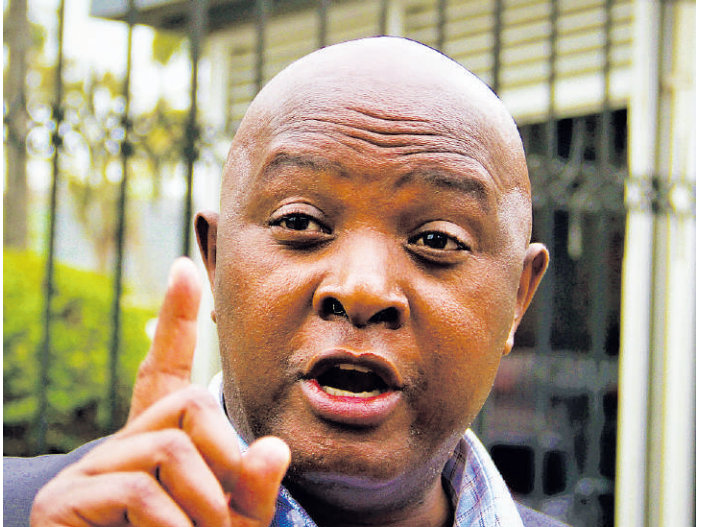
Godfrey Atieno Osotsi is a Kenyan politician, ICT professional, and public policy advocate serving as the Senator for Vihiga County since August 2022. A member of the Orange Democratic Movement (ODM), Osotsi has established himself as one of Kenya’s most vocal legislators on issues of devolution, public accountability, technology policy, and county governance. Before entering frontline politics, he built a strong professional career in information technology management, holding senior ICT leadership positions in both public and private sector institutions.
Known for his outspoken approach to governance oversight, Osotsi transitioned from the technology sector into national politics, first serving as a Nominated Member of the National Assembly between 2017 and 2022 before successfully contesting for the Vihiga County Senate seat in the 2022 Kenyan General Election. His career has been marked by active involvement in parliamentary debates concerning county funding, corruption oversight, ICT infrastructure, and institutional reforms in Kenya’s devolved government system.
Over the years, Osotsi has become closely associated with efforts to strengthen county accountability frameworks and improve transparency in the management of devolved resources. His professional background in ICT has also given him a unique voice in parliamentary discussions surrounding digital transformation, cybersecurity, innovation, and governance modernization in Kenya.
Early Life and Background
Godfrey Atieno Osotsi was born in 1975 in Vihiga County, western Kenya. He hails from Emusenjeli village, an area that shaped much of his understanding of grassroots development challenges, rural economic realities, and the importance of equitable resource distribution in Kenya’s governance system.
Growing up in western Kenya during a period of significant political and economic transition, Osotsi experienced firsthand the structural inequalities that affected many rural communities. These experiences would later influence his political philosophy, particularly his strong support for devolution and county empowerment.
Although much of his private family life remains relatively low-profile, Osotsi has consistently maintained close connections with his home county and frequently references local development issues in his public engagements. His political messaging often centers on youth empowerment, education access, ICT innovation, and accountable governance.
Education

The Godfrey Osotsi biography reflects a strong academic foundation in technology, management, and leadership studies.
Egerton University
Between 1995 and 2000, Osotsi studied at Egerton University, where he earned a Bachelor of Science degree in Computer Science. At the time, computer science was still emerging as a specialized field in Kenya, making Osotsi part of a relatively small generation of early ICT professionals trained during the country’s digital transition era.
His studies exposed him to systems analysis, software engineering, database management, networking, and organizational technology systems. The technical skills he acquired during this period laid the groundwork for his later career in ICT leadership.
University of Sunderland
From 2005 to 2008, Osotsi pursued advanced studies at the University of Sunderland in the United Kingdom. There, he obtained a Master’s degree in Information Technology Management (MSc ITM).
The program focused on strategic technology leadership, enterprise systems management, ICT governance, and digital innovation management. The international exposure significantly expanded his understanding of global technology trends and governance systems.
Executive MBA
In addition to his technical education, Osotsi also pursued an Executive MBA, strengthening his capabilities in leadership, strategic planning, organizational governance, and public administration. His educational background combines technology expertise with managerial and policy-oriented leadership training.
This blend of technical and executive education has often distinguished him from many traditional career politicians in Kenya.
ICT Career Before Politics
Before joining active politics, Osotsi built an extensive career in Kenya’s ICT sector.
Mumias Outgrowers Company Limited
Between 2002 and 2003, Osotsi worked as an ICT Manager at Mumias Outgrowers Company Limited. His responsibilities included managing organizational information systems, improving operational technology frameworks, and overseeing digital processes within the agricultural support company.
This role introduced him to large-scale enterprise management and operational systems administration.
Energy Regulatory Board
From 2003 to 2007, Osotsi served as Head of ICT at the Energy Regulatory Board, one of Kenya’s major state regulatory institutions responsible for overseeing the energy sector.
During this period, Kenya was undergoing significant reforms in energy regulation and institutional modernization. Osotsi played a role in strengthening digital infrastructure, information systems management, and technological operations within the organization.
His work at the Energy Regulatory Board exposed him to national governance systems, regulatory policy implementation, and institutional transformation processes.
Davis & Shirtliff
Between 2007 and 2009, Osotsi worked as Head of ICT at Davis & Shirtliff, one of East Africa’s leading engineering and water solutions companies.
At Davis & Shirtliff, he oversaw enterprise ICT systems, digital integration processes, and technology management operations across the company’s expanding regional business network. His role required balancing technological innovation with corporate operational efficiency.
This private-sector experience broadened his understanding of business management, entrepreneurship, and corporate governance.
Entry Into Politics
Godfrey Osotsi entered national politics through the Orange Democratic Movement (ODM), one of Kenya’s largest political parties led by Raila Odinga.
His transition into politics reflected a growing trend in Kenya where professionals from sectors such as law, business, technology, and academia began entering public service. Osotsi positioned himself as a reform-oriented leader capable of bringing technical expertise and managerial discipline into governance.
ODM’s nomination of Osotsi to the National Assembly in 2017 marked the beginning of his parliamentary career.
Nominated Member of the National Assembly (2017–2022)
From 2017 to 2022, Osotsi served as a Nominated Member of the National Assembly under the ODM party ticket.
During his tenure, he became increasingly visible in parliamentary debates, particularly on issues involving:
- Governance reforms
- Public accountability
- ICT legislation
- National security oversight
- Devolution policy
- Youth empowerment
- County resource management
Parliamentary Committees
While in the National Assembly, Osotsi served in several parliamentary committees, including:
- Departmental Committee on Administration and National Security
- House Business Committee
- Implementation Committee leadership roles
His committee work allowed him to participate directly in legislative scrutiny, policy oversight, and parliamentary procedural reforms.
Legislative Contributions
Osotsi became involved in drafting and supporting several legislative initiatives, including:
- Parliamentary Powers and Privileges Amendment proposals
- County Wards Equitable Development Bill discussions
- Governance accountability reforms
- ICT regulatory policy debates
His parliamentary interventions often reflected his technology background and governance interests.
Senator for Vihiga County
In the 2022 Kenyan General Election, Osotsi successfully contested for the Senate seat representing Vihiga County.
His victory elevated him from a nominated legislator to an elected county representative with direct constitutional responsibilities in the Senate.
As Senator for Vihiga County, Osotsi assumed responsibilities involving:
- County oversight
- Revenue allocation debates
- Devolution protection
- Legislative review
- County accountability monitoring
- Representation of county interests at national level
Since entering the Senate, he has remained one of the more active legislators in debates concerning county governance and misuse of devolved resources.
Committee Leadership in the Senate
One of the most notable developments in the Godfrey Osotsi biography has been his leadership role in the Senate’s oversight architecture.
Chairperson of County Public Investments and Special Funds Committee
Shortly after entering the Senate, Osotsi was elected Chairperson of the Senate Committee on County Public Investments and Special Funds.
The committee plays a critical role in:
- Auditing county expenditures
- Reviewing special funds
- Investigating financial mismanagement
- Enhancing county accountability
- Examining Auditor-General reports
Under his leadership, the committee intensified scrutiny of county bursary programs, public spending systems, and devolved fund administration.
Osotsi repeatedly argued that some county bursary systems had become channels for corruption and political patronage, generating widespread national debate.
Advocacy for Devolution
Throughout his political career, Osotsi has consistently defended Kenya’s devolved governance structure established under the 2010 Constitution.
He has advocated for:
- Increased county allocations
- Stronger Senate oversight powers
- Greater county autonomy
- Transparent county procurement systems
- Improved public participation
He frequently argues that devolution remains one of Kenya’s most transformative governance reforms but requires stronger accountability mechanisms to succeed fully.
ICT and Digital Transformation Advocacy
A defining feature of the Godfrey Osotsi biography is his deep involvement in ICT policy discussions.
Drawing from his technical background, he has participated actively in debates concerning:
- Digital infrastructure
- Cybersecurity
- ICT regulation
- Innovation policy
- Digital inclusion
- E-government systems
- Data protection
Osotsi has often pushed for stronger digital transformation in public service delivery while cautioning against poorly designed regulatory systems that could stifle innovation.
He has also advocated for expanding internet access and digital literacy in rural counties.
Political Ideology and Leadership Style
Osotsi is generally viewed as a reform-oriented politician who combines technocratic thinking with grassroots political engagement.
His leadership style is characterized by:
- Strong public commentary
- Direct criticism of corruption
- Policy-driven arguments
- Institutional oversight focus
- Governance accountability emphasis
Supporters view him as a principled oversight advocate, while critics sometimes describe him as confrontational toward county administrations and institutional actors.
Public Record and Controversies
Like many prominent Kenyan politicians, Osotsi has occasionally attracted controversy through his public remarks and oversight activities.
County Bursary Fund Criticism
One of his most publicized positions involved criticism of county bursary systems. He argued that some bursary programs were poorly managed and susceptible to corruption.
His statements generated political tensions between senators and county officials who defended county bursary initiatives as essential social support mechanisms.
Judiciary and IEBC Remarks
Osotsi also made headlines through criticism of judicial processes and delays involving the Independent Electoral and Boundaries Commission (IEBC).
Some observers argued that his remarks risked escalating tensions between institutions, while supporters defended his comments as legitimate democratic oversight.
ICT Sector Policy Debates
Within Kenya’s technology policy circles, Osotsi has occasionally faced criticism from stakeholders who viewed some of his positions on ICT legislation as inconsistent.
However, he has consistently maintained that technological innovation must be balanced with fair regulation and public accountability.
Relationship With ODM
Osotsi remains a member of the Orange Democratic Movement (ODM), one of Kenya’s dominant opposition and reform-oriented political parties.
His loyalty to ODM has remained relatively consistent throughout his parliamentary career.
Within ODM, he is generally associated with:
- Reform politics
- Institutional accountability
- Devolution advocacy
- Youth engagement
- Governance modernization
Influence in Vihiga County
As Senator, Osotsi has positioned himself as a leading political voice in Vihiga County.
His public engagements frequently focus on:
- Infrastructure development
- Healthcare access
- Youth employment
- Education support
- County governance
- Economic empowerment
He has also emphasized the need for Vihiga County to leverage technology and innovation to expand economic opportunities for young people.
Leadership Reputation
The Godfrey Osotsi biography illustrates a leader whose reputation has largely been built around oversight activism and governance reform.
His supporters credit him for:
- Fighting corruption
- Promoting accountability
- Strengthening Senate oversight
- Advocating for counties
- Bringing professional expertise into politics
Critics sometimes argue that his confrontational style creates unnecessary political tensions.
Nevertheless, his visibility within Kenya’s political landscape has steadily increased since joining the Senate.
Personal Life
Godfrey Osotsi generally maintains a relatively private personal life compared to many high-profile Kenyan politicians.
He rarely places family matters at the center of his political messaging, instead focusing public attention on governance and policy discussions.
Outside politics, he maintains strong interests in:
- Technology innovation
- Leadership development
- Governance systems
- Public policy reform
- Youth mentorship
Legacy and National Significance
Although still actively serving in public office, Osotsi has already built a significant profile in Kenya’s political and governance landscape.
His broader significance lies in representing a generation of technocratic politicians who entered governance from professional sectors rather than traditional political pathways.
The Godfrey Osotsi biography also reflects the growing intersection between technology expertise and governance leadership in modern African politics.
As Kenya continues navigating issues involving digital transformation, county governance, and public accountability, Osotsi is likely to remain an influential voice in parliamentary oversight and governance reform discussions.
Conclusion
Godfrey Atieno Osotsi has emerged as one of Kenya’s prominent technology-oriented political leaders. From his early career in ICT management to his current role as Senator for Vihiga County, his journey reflects a combination of technical expertise, governance advocacy, and political activism.
His parliamentary career has focused heavily on accountability, devolution, ICT policy, and county oversight. Whether through committee leadership, public debates, or legislative participation, Osotsi has positioned himself as a strong advocate for institutional transparency and modern governance systems.
As Kenya’s political and technological landscape continues evolving, the Godfrey Osotsi biography remains closely tied to debates around accountability, digital transformation, and the future of devolved governance in the country.
Read Also: John Mbadi Biography: Treasury CS, Net Worth and Political Rise