


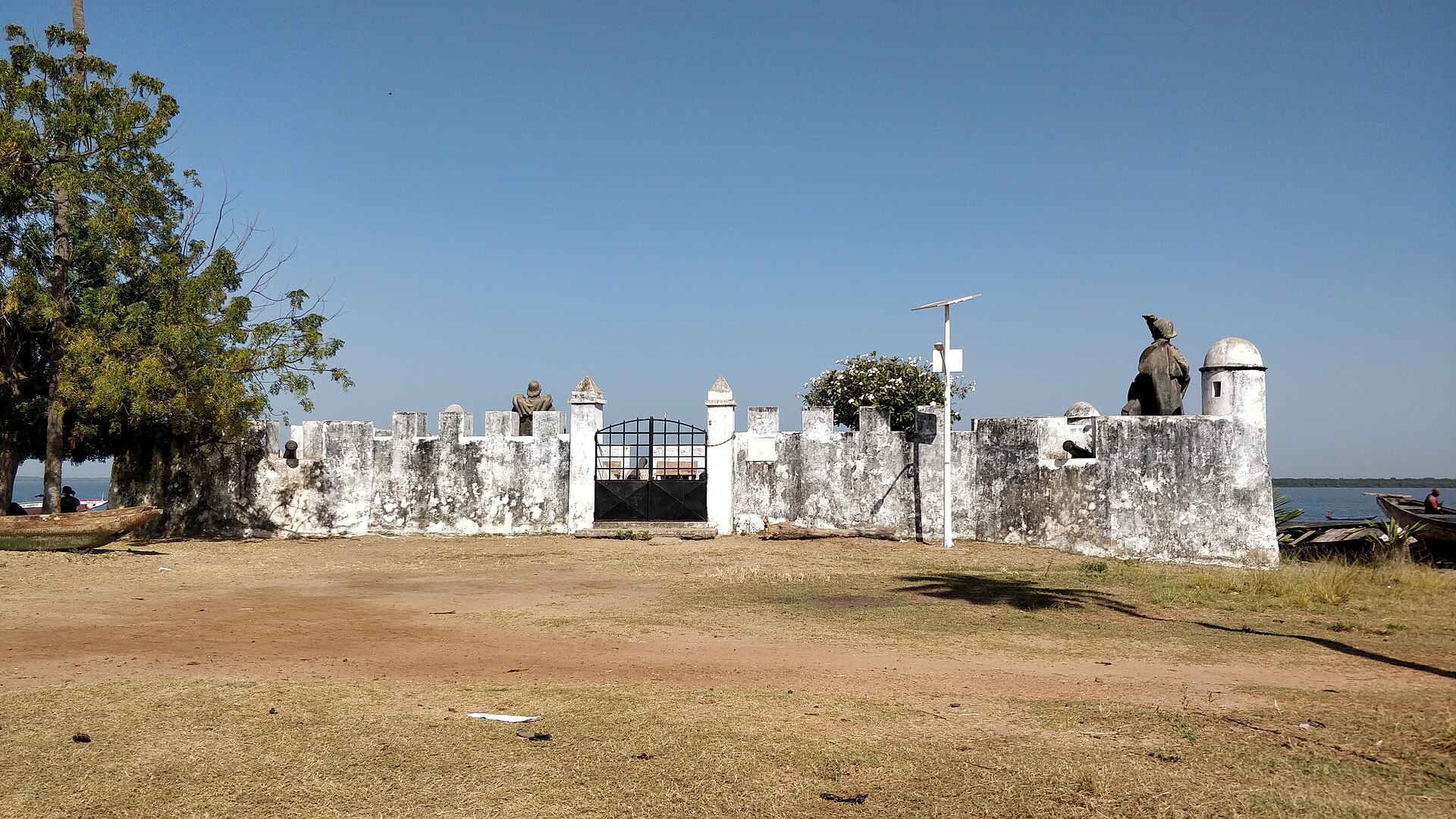
The Fort of Cacheu, located near the mouth of the Cacheu River in northwest Guinea-Bissau, stands as a significant remnant of Portuguese colonial expansion in West Africa. Built to protect European interests and regulate Atlantic trade, especially in ivory, fabrics, and slaves, the fort has transitioned from a military post into a cultural heritage site that reflects centuries of history, commerce, and conflict in the region.
Early History and Construction
The origins of Cacheu date back to 1588, when Portuguese settler Manuel Lopes Cardoso constructed the first fort to defend a Portuguese feitoria (trading post) that had been sanctioned by a local African king. This settlement was already under threat, having suffered an attack by English forces in 1567.
The first structure provided military protection and functioned as a central hub for Portuguese trade. It supported the traffic in manufactured goods, ivory, and enslaved Africans, which defined European economic interests in the region during the late 16th century.
The current fort was commissioned in 1641 by Captain-Major Gonçalo Gambôa de Ayalla to enhance the site’s defense, particularly against Spanish incursions during a period of intense maritime rivalry in the Atlantic.
The Rise of Colonial Trade Companies
In order to formalize and grow economic activity along the Guinea coast, the Company of Cacheu and Rivers and Commerce of Guinea was created in 1675. Just a year later, on May 19, 1676, the Portuguese Crown granted the company exclusive rights to trade along the Guinea coast, the Cape Verde Islands, and with Spanish America, particularly in slaves for both the Metropolis (Portugal) and overseas colonies.
Despite its early promise, the company ceased operations in 1682. It was succeeded by the Cacheu and Cape Verde Company in 1690, which shifted its base of operations to Bissau, marking a gradual decline in Cacheu’s dominance in the region.
Urban Development of Cacheu
The town of Cacheu grew in tandem with the fort’s establishment and consisted of two distinct neighborhoods reflecting colonial social divisions:
- Vila Fria (“Cold Town”): Located closer to the Cacheu River, this area was inhabited by Portuguese settlers. It featured two main streets—Rua Direita and Rua de Santo António—and was constructed with European-style buildings.
- Vila Quente (“Hot Town”): Situated further from the river, this neighborhood was home to native Guineans. It comprised adobe houses with thatched roofs, showcasing traditional West African architecture.
Until 1879, the region was administered as a dependency of Cape Verde before becoming part of the newly created Portuguese Guinea province.
Cultural Symbolism and Restoration
In 1946, the fort was memorialized on a Portuguese postage stamp with a value of 30 escudos, commemorating the fifth centenary of Portugal’s discovery of Guinea.
More than five decades later, the Fort of Cacheu underwent significant restoration. Between January and March 2004, with funding from the Union of Capital Cities of Portuguese Official Language (UCCLA), approximately €100,000 was invested to conserve and repurpose the fort as a cultural and leisure space.
As part of the redevelopment:
- Statues of Portuguese navigators Gonçalves Zarco and Nuno Tristão—the first Europeans to reach the Guinea coast in the 15th century—were installed.
- A library and community rooms were created in the old service buildings.
- The fort became a tourist attraction, representing both its colonial past and post-colonial transformation.
Architectural Features
Though modest in size, the Fort of Cacheu is architecturally significant:
- The layout is rectangular, measuring 26 meters in length and 24 meters in width.
- Small bulwarks at each corner provided defense vantage points.
- Walls are made from mortared stone, standing approximately 4 meters high and 1 meter thick.
- The fort once housed sixteen cannons, aimed at securing the river entrance and deterring enemy ships.
- The main entrance is a gate-of-arms over 1.5 meters wide, serving as the only access point to the enclosed compound.
Despite its small scale, the fort was a critical military and economic post during the height of the Atlantic trade networks.
Legacy of the Fort of Cacheu
Today, the Fort of Cacheu stands as a testament to Guinea-Bissau’s multifaceted history—from precolonial trade routes to Portuguese colonization and the transatlantic slave trade. Its restoration and repurposing as a public cultural space signal a broader effort to preserve and reflect on colonial heritage while empowering local communities through education, tourism, and historical engagement.
As one of the oldest surviving Portuguese fortifications in West Africa, it remains a vital marker of European-African encounters, colonial exploitation, and the resilience of African societies.


