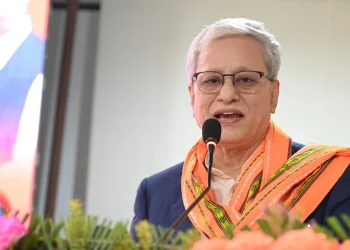
Zine al-Abidine Ben Ali (born September 3, 1936, near Sousse, Tunisia—died September 19, 2019, Jiddah, Saudi Arabia) was a Tunisian army officer and politician who served as president of Tunisia from 1987 to 2011. His long rule ended amid mass protests during the Arab Spring, making him one of the first leaders toppled in the wave of uprisings across the Arab world.
Early Life and Rise in Security Services
Ben Ali trained in France at the military academy of Saint-Cyr and at the artillery school at Châlons-sur-Marne before studying engineering in the United States. Between 1964 and 1974, he directed Tunisian military security, a role that gave him access to the country’s ruling elite. After serving as military attaché in Morocco, he was appointed head of national security, then ambassador to Poland. His reputation as a hard-liner grew when he suppressed riots in 1978 and 1984.
By 1986 he became minister of the interior, tasked with dismantling Islamist networks. The following year, President Habib Bourguiba—ailing and widely considered unfit—named Ben Ali prime minister. On November 7, 1987, Ben Ali staged a peaceful coup, removing Bourguiba from office and assuming the presidency.
Presidency (1987–2011)
Initially, Ben Ali promised political reforms and a softer stance on religion. In the 1989 elections, he won more than 99 percent of the vote. However, hopes for openness soon faded. In 1991 he banned Ennahda, a moderate Islamist party, and cracked down on dissent. Over the next two decades, he consistently won reelections with overwhelming majorities—in 1994, 1999, 2004, and 2009—though international observers denounced these polls as unfair.
His government delivered economic growth and modernization, but it also fostered corruption, nepotism, and political repression. The ruling Democratic Constitutional Rally controlled nearly all aspects of Tunisian politics, while opposition groups faced surveillance, imprisonment, or exile.
Fall from Power and Exile
In December 2010, protests erupted after a young street vendor, Mohamed Bouazizi, set himself on fire in protest of government harassment. These demonstrations escalated into a nationwide movement against unemployment, inequality, and repression. Security forces killed dozens of protesters, intensifying calls for Ben Ali’s resignation.
On January 14, 2011, after failing to quell the unrest, Ben Ali fled Tunisia with his family, taking refuge in Saudi Arabia, where he remained until his death.
Trials and Sentences in Exile
Following his ouster, Tunisian courts pursued him on charges of embezzlement, corruption, smuggling, and responsibility for protester deaths. He was convicted in absentia in multiple trials, receiving decades-long sentences and life imprisonment. Despite international arrest warrants, Saudi Arabia refused to extradite him.
Ben Ali lived in exile until his death in 2019, leaving behind a legacy of authoritarian rule, rapid modernization, and political repression, as well as his central role in triggering the Arab Spring uprisings that reshaped the Middle East and North Africa.
Quick Facts
| Attribute | Details |
|---|---|
| Full Name | Zine al-Abidine Ben Ali |
| Also Known As | Zayn al-ʿĀbidīn ibn ʿAlī |
| Born | September 3, 1936, near Sousse, Tunisia |
| Died | September 19, 2019, Jiddah, Saudi Arabia (aged 83) |
| Title / Office | President of Tunisia (1987–2011) |
| Political Affiliation | Democratic Constitutional Rally |
| Key Role | Overthrew Habib Bourguiba (1987), toppled in Arab Spring (2011) |
| Legacy | Authoritarian modernization, corruption scandals, exile in Saudi Arabia |