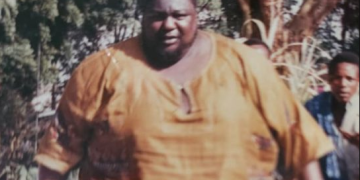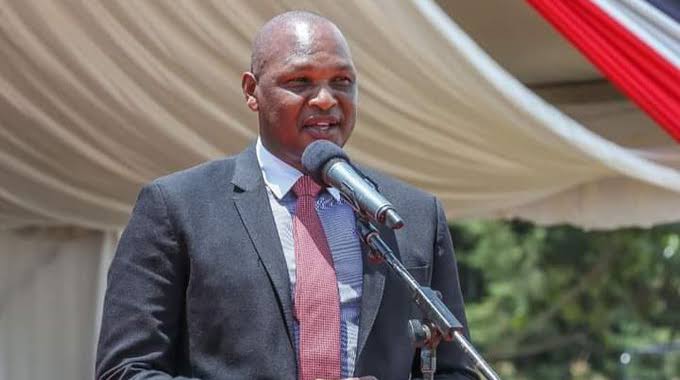
Farouk Teigut Kibet is a Kenyan political operative and close aide to President William Ruto, often described as the President’s right-hand man. Although he holds no official government post, Farouk wields immense influence within the corridors of power, controlling access to State House and shaping key political decisions behind the scenes.
Known for his low-profile yet powerful presence, Farouk has been a fixture in Ruto’s inner circle for over two decades. His loyalty, discretion, and political acumen have made him one of the most trusted figures in the current administration.
He is a man of few words but significant impact, often compared to historical political kingmakers like Nicholas Biwott and Mark Too — powerful figures who influenced Kenya’s political direction without seeking elective office.
Early Life and Background
Farouk Kibet was born in Kapkechui Village, Chepsaita, Turbo Constituency, along the border between Uasin Gishu and Kakamega counties. He is the son of the late Mzee Paul Teigut, a respected and wealthy maize farmer who passed away on November 15, 2018.
Farouk’s exact date of birth remains undisclosed, though he is believed to have been born in the early 1970s, placing him in his early 50s. Raised in a modest but industrious family, Farouk learned the value of loyalty and hard work early in life — traits that have defined his career in politics.
He attended Chepkemel Primary School, but details about his secondary or tertiary education remain unclear. Unlike many political figures, Farouk’s rise to influence was not through academic credentials or elective positions, but through strategic networking and steadfast loyalty to key political leaders.
Early Career and Political Journey
Before becoming a prominent political insider, Farouk Kibet was known in Eldoret’s media circles, maintaining strong friendships with print journalists. During the late 1990s, he frequently interacted with reporters, often sharing updates praising KANU politicians from the North Rift, including Mark Too, Ezekiel Barngetuny, and Reuben Chesire.
His early political alignment was with President Daniel arap Moi’s KANU party, where he earned a reputation as a loyal grassroots mobilizer. Farouk’s sharp instincts and ability to build relationships caught the attention of William Ruto, with whom he would form a long-term political alliance that continues to this day.
Their relationship dates back more than 20 years, evolving from comrades in the Rift Valley political scene to a powerful partnership that now defines the Ruto presidency.
Role in President Ruto’s Inner Circle
Farouk Kibet is often described as the “gatekeeper to State House.” Members of Parliament, business leaders, and political allies reportedly rely on him to arrange meetings or secure access to the President. His influence is such that Majority Leader Kimani Ichung’wah once hinted publicly that Farouk’s approval determines who meets the Head of State.
Insiders describe him as fiercely loyal, disciplined, and protective of the President. In political rallies and national events, Farouk is often seen standing or sitting close to President Ruto and Deputy President Rigathi Gachagua, symbolizing his senior role in political coordination and presidential scheduling.
Though he shuns the spotlight, Farouk is believed to play a major role in campaign logistics, intelligence coordination, and grassroots mobilization, particularly in the Rift Valley and Mt. Kenya regions.
Controversies and Public Attention
Farouk Kibet has not been without controversy. He was mentioned during the ICC investigations following the 2007–2008 post-election violence, when prosecutors alleged he had connections to political activities in Eldoret during the unrest — claims that were never substantiated in court.
In 2017, his name appeared in reports linking him to the NYS KSh 700 million scandal, after he was allegedly associated with one of the suspects. Parliament’s Public Accounts Committee considered summoning him, but the issue later faded without explanation.
Despite the allegations, Farouk has maintained his influence and close relationship with the President, remaining largely untouchable within political circles.
Wealth, Lifestyle, and Properties
Farouk Kibet is known to lead a high-profile yet private lifestyle. He reportedly owns several luxurious properties, including:
- A mansion in Upper Elgon View, Eldoret, located near Moi University’s School of Law.
- A residence on Chepsaita Hills, his rural home area, where he occasionally lands by helicopter.
- A home in Karen Estate, Nairobi, close to the political elite.
His properties are said to feature high-level security, with modern architecture and sophisticated privacy features.
Locals describe Farouk as a generous man, frequently contributing to church fundraisers, school projects, and community development initiatives in Turbo and surrounding regions.
While his exact salary remains unknown — as he holds no official public office — his estimated net worth is believed to be around KSh 500 million, derived from political consultancy, business investments, and real estate ventures.
Family and Personal Life
Farouk has managed to keep his family life extremely private. Apart from his late father, Mzee Paul Teigut, little is known about his immediate family members. He rarely discusses personal matters and is known to keep a tight circle of trusted associates.
There have been unverified claims that his birth name was Benjamin Kipkazi, though these allegations have never been confirmed.
Those who know him describe him as disciplined, spiritual, and unwaveringly loyal — a man who values privacy and discretion above fame.
Legacy and Influence
Farouk Kibet represents a unique figure in Kenya’s political landscape — a man without a title but with undeniable power. His behind-the-scenes influence, loyalty to President Ruto, and longevity in politics have cemented his position as one of Kenya’s most enigmatic political operatives.
Though not a public officeholder, his imprint on Kenyan politics is undeniable, and his loyalty has become a defining feature of the Ruto presidency.