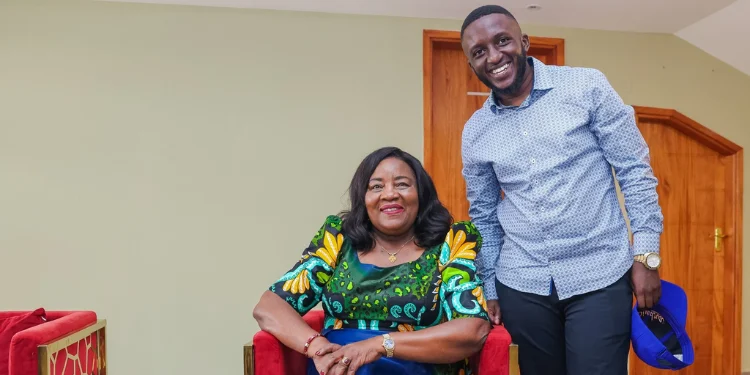
Boyd Were has emerged as a notable young political aspirant in Homa Bay County following the death of his father, Charles Ong’ondo Were, the late Member of Parliament for Kasipul. At 27 years old, Boyd Were represents a new generation of leaders whose political journeys are intertwined with family legacy, public service and personal ambition.
The assassination of his father on April 30, 2025, reshaped the political landscape in Kasipul. In the months that followed, Boyd Were stepped into public life, declaring his intention to contest the parliamentary seat left vacant. His candidacy has drawn both support and scrutiny, reflecting broader debates in Kenya about succession politics and generational leadership.
Understanding Boyd Were requires examining his upbringing, academic path and professional experience. While his surname carries political weight, he has sought to frame his campaign around education, youth empowerment and continuity of development projects.
Early Life and Educational Background
Growing Up in a Political Household
Born on 22 April 1998, Boyd Were was raised in a politically active environment shaped by his father’s career in public service. Exposure to community meetings, constituency engagements and governance discussions formed part of his early life.
Despite this political environment, his formative years were centered on education. Those close to him describe a childhood marked by discipline and structured learning rather than direct involvement in political strategy.
Primary and Secondary Education
Boyd attended Kanyakine Boys Boarding Primary School for his early education. He later joined St. Patrick’s High School, commonly referred to as G Senior, for his secondary studies.
These academic institutions provided the foundation for his later pursuit of finance at the university level.
University Studies in Finance
After completing high school, Boyd Were pursued a Bachelor of Science in Finance at the Cooperative University of Kenya. His undergraduate training covered financial management, accounting principles and economic systems.
He is currently undertaking a Master’s degree in Commerce with a focus on Finance and Investment at KCA University. This advanced training deepens his knowledge of fiscal policy, investment strategies and corporate finance.
His educational path reflects a focus on economic literacy, which he frequently cites as central to improving local development planning in Kasipul.
Professional Career at the Kenya Revenue Authority
Entry Into Public Service
In 2021, Boyd Were joined the Kenya Revenue Authority. KRA plays a central role in tax collection and fiscal administration within Kenya.
At the agency, he has worked in roles related to taxation, compliance and financial administration. These positions require understanding of regulatory frameworks and public finance systems.
Exposure to Governance Structures
Working at KRA provided Boyd with exposure to the operational side of government revenue systems. The experience complements his academic training in finance and investment.
He often references this professional background as evidence of preparedness for public office. According to his public messaging, experience in fiscal management equips him to contribute to responsible budgeting and constituency oversight.
Political Aspirations in Kasipul
Declaration of Candidacy
Following his father’s death, Boyd Were publicly declared his intention to run for the Kasipul parliamentary seat in May 2025. The announcement marked his formal entry into elective politics.
His campaign centers on continuing development projects initiated by his father. Education support programs and local economic initiatives feature prominently in his agenda.
Party Support and Community Endorsement
Boyd has received backing from members of the Orange Democratic Movement youth wing and several local leaders within Homa Bay County. Endorsements from party figures have strengthened his visibility.
At the same time, his candidacy has prompted debate over political inheritance. Critics question whether legacy politics narrows access for other aspirants, while supporters argue that continuity preserves unfinished development work.
Public Messaging and Advocacy
During campaign events, Boyd Were has delivered speeches calling for justice regarding his father’s death while also emphasizing forward looking development plans. He frames his bid as both a tribute and a policy driven initiative.
His messaging increasingly highlights youth empowerment, small business growth and improved governance structures at the constituency level.
Family Legacy and Personal Identity
Boyd Were is the son of the late Charles Ong’ondo Were, whose tenure as Kasipul MP shaped local political discourse. The family name remains influential in the region.
However, Boyd has sought to define himself through education and professional experience. His narrative emphasizes competence and generational transition rather than solely relying on lineage.
Public information about his immediate family life remains limited. His public presence is largely centered on community engagement and campaign activities.
Net Worth and Financial Disclosure
Boyd Were’s net worth has not been publicly disclosed. Unlike long serving elected officials, he has not held an office that requires detailed financial declarations in the public domain.
At 27 years old, his income sources are primarily linked to his employment at the Kenya Revenue Authority and his academic pursuits. No verified financial records confirm specific asset valuations.
A Generational Shift in Kasipul Politics
Boyd Were’s candidacy reflects a broader shift within Kenyan politics, where younger professionals increasingly seek elective office. His academic background in finance and experience in public administration distinguish him within the field of aspirants.
At the same time, his bid highlights enduring questions about political succession and democratic competition. Whether voters prioritize continuity or broader competition will shape the outcome in Kasipul.
As campaigns unfold, Boyd Were remains positioned at the intersection of family legacy, professional training and youth leadership. His journey illustrates how Kenya’s evolving political landscape continues to blend tradition with generational change.