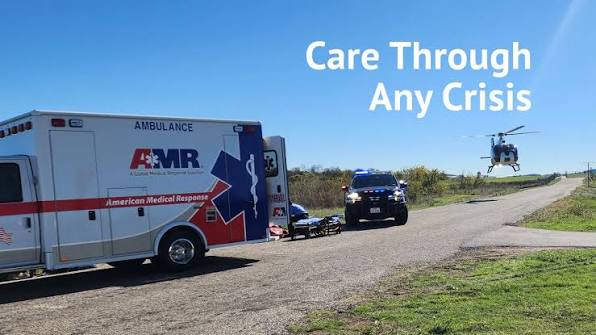
Ambulance Services in the United States are a critical part of emergency healthcare, connecting patients to hospitals, trauma centers, stroke centers, cardiac units, urgent care systems, and specialty medical facilities. In a medical emergency, the most important action is simple: call 911. Emergency dispatchers determine the appropriate response based on location, symptoms, urgency, and available public safety resources.
The U.S. ambulance industry is complex because it includes public EMS agencies, fire-based EMS, hospital-owned ambulance programs, nonprofit ambulance authorities, private ambulance companies, air ambulance providers, critical care transport teams, and non-emergency medical transport operators. Some services respond to 911 emergencies. Others focus on scheduled patient transport, interfacility transfers, wheelchair transport, event medical coverage, air medical evacuation, or critical care movement between hospitals.
Demand for ambulance services is shaped by aging populations, chronic disease, hospital capacity pressure, rural healthcare gaps, natural disasters, emergency preparedness, insurance rules, and the need for faster access to specialty care. At the same time, the sector faces major challenges: staffing shortages, reimbursement pressure, response-time scrutiny, high vehicle and equipment costs, and public concern over surprise medical bills.
This guide profiles some of the best Ambulance Services in the United States, explains how the EMS market works, and helps readers understand how to evaluate ambulance providers for hospitals, municipalities, event planners, healthcare systems, and non-emergency transport needs.
Industry Overview: Ambulance Services in the United States
The U.S. ambulance market is not one single national system. It is a patchwork of local and regional EMS models. Some cities operate ambulance services through fire departments. Others contract with private providers. Some regions use public utility models, hospital-based systems, or nonprofit ambulance authorities.
Emergency ambulance service is usually accessed through 911. Private ambulance companies may operate under local government contracts, but patients generally do not choose the responding ambulance in an emergency. For non-emergency transport, hospitals, nursing homes, patients, insurers, and families may have more choice.
Services typically fall into several categories:
Basic Life Support, or BLS, for medically stable patients needing transport and basic monitoring.
Advanced Life Support, or ALS, for higher-acuity patients requiring paramedic-level care.
Critical Care Transport, or CCT, for seriously ill patients needing advanced monitoring, ventilators, medication infusions, or specialty teams.
Air Ambulance for helicopter or fixed-wing medical transport.
Non-Emergency Medical Transport, or NEMT, for scheduled medical appointments, wheelchair transport, and facility transfers.
Large national providers such as Global Medical Response operate across many markets. Reuters reported in May 2026 that GMR, also known as Global Medical Response, operates in about 1,400 U.S. counties and handles about 5.5 million patient encounters annually.
Ranking Methodology
This directory evaluates ambulance services based on public reputation, service range, geographic coverage, emergency and non-emergency capabilities, air and ground transport capacity, healthcare partnerships, training infrastructure, public information, and relevance to U.S. EMS buyers.
This is not a medical endorsement. For emergencies, always call 911. For contracts, event coverage, hospital transfers, or non-emergency transport, verify local licensing, medical director oversight, insurance participation, response-time standards, staffing credentials, vehicle certification, and service availability.
Best Ambulance Services in the United States
Global Medical Response / American Medical Response
Overview
Global Medical Response, commonly known as GMR, is one of the largest ambulance and medical transportation organizations in the United States. Its American Medical Response, or AMR, brand is widely known in ground ambulance service, emergency response, non-emergency transport, managed transportation, and community EMS.
GMR describes itself as a provider of emergency medical services, ground and air ambulance transport, and mobile healthcare. The company’s scale makes it especially important for municipalities, hospitals, emergency systems, event operators, and healthcare organizations that need broad coverage.
Reuters reported that GMR raised about $478.7 million in a U.S. IPO in May 2026, giving the company a valuation of around $3.35 billion at pricing.
Services Offered
Ground ambulance, 911 EMS, non-emergency transport, air ambulance through affiliated brands, disaster response, mobile healthcare, managed medical transportation, and event medical support.
Patients Served
Emergency patients, hospitals, municipalities, health systems, nursing facilities, insurers, event organizers, and public agencies.
Notable Features
GMR operates both ground and air medical transport brands, giving it one of the broadest EMS footprints in the country.
Competitive Advantages
Its advantage is national scale, integrated ground-air capacity, and experience serving complex EMS markets.
Headquarters
Lewisville, Texas.
Website
globalmedicalresponse.com and amr.net
Why It Stands Out
GMR/AMR stands out as one of the most important large-scale ambulance and EMS providers in the United States.
Acadian Ambulance Service
Overview
Acadian Ambulance Service is one of the most respected private ambulance companies in the United States, with roots dating back to 1971. The company began in Louisiana and has grown into a broader health, safety, air medical, and emergency services organization.
Acadian says it has expanded into eight divisions, including Acadian Ambulance Service, Acadian Air Med, National EMS Academy, Acadian Health, Acadian Federal Resources, and safety-related businesses.
The company is especially important in Gulf Coast and Southern markets where ambulance response, air medical transport, industrial safety, hurricane readiness, and EMS training are critical.
Services Offered
911 EMS, ground ambulance, non-emergency transport, air medical services, critical care transport, EMS education, industrial medical support, and federal response services.
Patients Served
Emergency patients, hospitals, municipalities, industrial clients, government agencies, healthcare facilities, and rural communities.
Notable Features
Acadian combines ambulance service with air medical transport, EMS training, safety services, and healthcare-at-home capabilities.
Competitive Advantages
Its advantage is regional depth, long operating history, and strong EMS training infrastructure.
Headquarters
Lafayette, Louisiana.
Website
acadianambulance.com
Why It Stands Out
Acadian stands out for Southern U.S. EMS coverage, air medical services, disaster response capability, and workforce training.
Falck USA
Overview
Falck USA is the American division of Falck, a global emergency response and healthcare services company. Falck USA provides ambulance response and medical transportation services in selected U.S. markets.
Falck describes itself as a global market leader in emergency response and healthcare services. Its global heritage gives it a strong brand in EMS operations, patient transport, and emergency response systems.
Falck is especially relevant in contracted municipal EMS markets, where cities and counties rely on private operators to provide ambulance response under performance requirements.
Services Offered
Emergency ambulance response, BLS transport, ALS transport, 911 EMS, non-emergency medical transport, and municipal EMS contract services.
Patients Served
Emergency patients, municipalities, hospitals, healthcare facilities, public agencies, and communities served under local contracts.
Notable Features
Falck has more than a century of emergency-response history globally and operates ambulance services in U.S. markets.
Competitive Advantages
Its advantage is international EMS experience combined with U.S. municipal ambulance operations.
Headquarters
Orange, California, for Falck USA.
Website
falck.us
Why It Stands Out
Falck USA stands out for cities and regions seeking an experienced private EMS contractor with global emergency-response roots.
Air Evac Lifeteam
Overview
Air Evac Lifeteam is one of the best-known air ambulance providers in the United States. It is part of the Global Medical Response network and focuses on helicopter emergency medical transport, especially in rural and underserved regions.
Air Evac says it is the largest independently owned and operated membership-supported air ambulance service in the United States, with more than 150 mutually supporting bases across 10 states.
Air medical transport is especially important when patients are far from trauma centers, stroke centers, burn centers, cardiac centers, or specialty hospitals.
Services Offered
Helicopter air ambulance, emergency medical flight transport, rural EMS support, hospital transfers, trauma response, and membership-supported air medical services.
Patients Served
Critically ill or injured patients, rural communities, hospitals, EMS agencies, trauma systems, and specialty care networks.
Notable Features
Air Evac Lifeteam has a large base network in rural U.S. regions.
Competitive Advantages
Its advantage is rural air medical access and integration with broader EMS systems.
Headquarters
Part of Global Medical Response.
Website
lifeteam.net
Why It Stands Out
Air Evac Lifeteam stands out for helicopter emergency medical transport in rural and regional markets.
MedStar Mobile Healthcare
Overview
MedStar Mobile Healthcare is a well-known EMS provider based in North Texas. It has been recognized for mobile integrated healthcare, EMS system innovation, and advanced life support response.
MedStar says it provides advanced life support ambulance service to 436 square miles and more than 1 million residents, responding to more than 190,000 calls per year with a fleet of 75 ambulances.
However, EMS systems can change over time. Reporting from 2025 noted that Fort Worth was transitioning EMS operations from MedStar to the Fort Worth Fire Department, showing how local ambulance contracts and public EMS models can shift.
Services Offered
Advanced life support ambulance response, emergency medical services, non-emergency transport, mobile integrated healthcare, community paramedicine, and EMS system support.
Patients Served
Residents, emergency patients, local governments, hospitals, healthcare facilities, and public safety partners.
Notable Features
MedStar has been widely discussed as an innovative EMS system, particularly in community paramedicine and mobile healthcare.
Competitive Advantages
Its advantage is EMS system innovation and experience in high-volume urban-suburban ambulance service.
Headquarters
Fort Worth/Tarrant County, Texas region.
Website
medstar911.org
Why It Stands Out
MedStar stands out for EMS innovation and its long role in North Texas mobile healthcare.
Medstar Ambulance Michigan
Overview
Medstar Ambulance in Michigan is a major regional EMS provider serving emergency and interfacility care needs. It describes itself as Michigan’s largest provider of 911 EMS, critical care, and interfacility care and says it is trusted by more than 235,000 patients each year.
Regional ambulance providers like Medstar are important because EMS is local. A strong regional provider may understand area hospitals, dispatch systems, road networks, nursing facilities, and community needs better than a distant national operator.
Services Offered
911 EMS, critical care transport, interfacility transport, ambulance service, and medical transportation support.
Patients Served
Emergency patients, hospitals, nursing homes, healthcare facilities, municipalities, and regional communities.
Notable Features
Medstar has a strong Michigan presence and serves both emergency and facility-transfer needs.
Competitive Advantages
Its advantage is regional scale and integration with local healthcare systems.
Headquarters
Michigan.
Website
medstarambulance.org
Why It Stands Out
Medstar Ambulance stands out as a major regional EMS provider in Michigan.
REACH Air Medical Services
Overview
REACH Air Medical Services is another major air medical transport provider within the Global Medical Response family. It supports emergency air transport, critical care flights, and hospital-to-hospital transfers in selected U.S. regions.
Air ambulance services are especially important in trauma, stroke, cardiac emergencies, neonatal care, and rural medical access. They can reduce transport time when ground transport would be too slow or when patients require specialty care far away.
Services Offered
Helicopter air ambulance, fixed-wing medical transport where available, critical care flight services, specialty transport, and hospital transfer support.
Patients Served
Critically ill patients, trauma patients, hospitals, EMS agencies, rural communities, and specialty care systems.
Notable Features
REACH is part of GMR’s broader air medical network, which also includes other aviation medical brands.
Competitive Advantages
Its advantage is air medical specialization and integration with a national EMS organization.
Headquarters
Part of Global Medical Response.
Website
reachair.com
Why It Stands Out
REACH stands out for air medical transport and critical care flight capability.
Industry Trends Affecting Ambulance Services in the United States
EMS Staffing Pressure
Many ambulance services face shortages of EMTs, paramedics, dispatchers, and critical care transport staff. This affects response times, overtime, morale, and system reliability.
Growth of Mobile Integrated Healthcare
Some EMS providers now support community paramedicine, home visits, chronic disease checks, post-discharge follow-up, and non-emergency healthcare navigation.
Air Ambulance Billing Scrutiny
Air ambulance services can be lifesaving but expensive. Patients should understand insurance rules, membership programs, and federal protections where applicable.
Public vs Private EMS Debate
Some cities are reconsidering whether ambulance service should be run by fire departments, public agencies, nonprofit authorities, or private contractors. Fort Worth’s 2025 transition from MedStar to fire department EMS is one example of this broader debate.
Technology and Dispatch Integration
Ambulance services increasingly use GPS dispatch, electronic patient records, telemedicine support, automated vehicle location, cardiac monitors, and hospital-notification systems.
Buyer’s Guide: How to Choose Ambulance Services
For Emergencies, Call 911
In a true emergency, do not search for a private ambulance company. Call 911 immediately and follow dispatcher instructions.
For Hospitals and Facilities
Hospitals, nursing homes, and clinics should evaluate licensing, response reliability, staffing levels, clinical protocols, medical director oversight, insurance documentation, and transport categories.
For Events
Event organizers should ask about standby EMS teams, ambulance availability, paramedic staffing, emergency action plans, heat illness protocols, crowd size experience, and hospital coordination.
For Non-Emergency Transport
Patients and families should confirm insurance coverage, medical necessity, wheelchair or stretcher needs, oxygen requirements, pickup time, destination approval, and out-of-pocket cost.
Watch for Red Flags
Red flags include unclear licensing, no medical director information, poor response history, vague pricing, weak insurance documentation, limited clinical staffing, and poor communication.
Why Ambulance Services Matter in the United States
Ambulance services matter because minutes can change outcomes in cardiac arrest, stroke, trauma, breathing emergencies, allergic reactions, sepsis, and serious injuries. EMS teams provide assessment, stabilization, transport, and communication with hospitals before a patient arrives.
They also support healthcare systems through interfacility transfers, disaster response, rural access, community paramedicine, and hospital surge support. Strong ambulance systems reduce delays, improve continuity, and connect patients to the right level of care.
Conclusion
Ambulance Services in the United States include national EMS companies, regional providers, air ambulance operators, municipal systems, nonprofit authorities, and hospital-linked transport teams. Global Medical Response/AMR, Acadian Ambulance, Falck USA, Air Evac Lifeteam, MedStar Mobile Healthcare, Medstar Ambulance Michigan, and REACH Air Medical Services are among the most visible names in the sector.
The best ambulance service depends on the need. For emergencies, call 911. For hospitals and healthcare facilities, evaluate clinical capability, reliability, licensing, coverage area, and contract performance. For non-emergency medical transport, compare cost, insurance, vehicle type, and patient needs. The strongest Ambulance Services combine speed, clinical skill, safety, communication, and system reliability.
Frequently Asked Questions
What are the best ambulance services in the United States?
Some of the best-known ambulance services in the United States include Global Medical Response/AMR, Acadian Ambulance, Falck USA, Air Evac Lifeteam, MedStar Mobile Healthcare, Medstar Ambulance Michigan, and REACH Air Medical Services. The best provider depends on the location and type of service needed. In emergencies, patients should call 911 rather than trying to choose a private ambulance company.
What is the largest ambulance company in the United States?
Global Medical Response, which includes American Medical Response and several air medical brands, is one of the largest EMS and ambulance organizations in the United States. Reuters reported in 2026 that GMR operates in about 1,400 U.S. counties and handles about 5.5 million patient encounters annually.
Should I call an ambulance company directly in an emergency?
No. In a medical emergency in the United States, call 911. Dispatchers will send the appropriate ambulance, fire, police, or medical response based on your location and situation. Calling a private company directly can delay emergency care.
What is the difference between BLS and ALS ambulance service?
Basic Life Support, or BLS, is usually staffed by EMTs and provides basic medical care, monitoring, and transport. Advanced Life Support, or ALS, is usually staffed by paramedics and can provide more advanced interventions, cardiac monitoring, medications, airway management, and higher-level emergency care.
What is critical care transport?
Critical care transport is used for seriously ill or unstable patients who need advanced monitoring, ventilators, medication infusions, or specialized medical teams during transfer. It is common for hospital-to-hospital transfers when a patient needs intensive care, surgery, trauma care, neonatal care, or specialty treatment.
What is an air ambulance?
An air ambulance is a helicopter or fixed-wing aircraft equipped to transport sick or injured patients. Helicopters are often used for trauma, rural emergencies, and time-sensitive transfers. Fixed-wing air ambulances are commonly used for longer-distance medical transport. Air ambulance services can be expensive, so insurance and billing rules matter.
How much does an ambulance cost in the United States?
Ambulance costs vary widely depending on location, provider, insurance, distance, level of care, medications, mileage, and whether the transport is emergency or non-emergency. Air ambulance costs can be much higher than ground ambulance costs. Patients should contact their insurer and provider for billing details.
Does insurance cover ambulance transport?
Insurance may cover ambulance transport when it is medically necessary, but coverage depends on the plan, provider network, documentation, and type of transport. Non-emergency transport often requires medical necessity and sometimes prior authorization. Patients should verify coverage whenever possible.
What is non-emergency medical transport?
Non-emergency medical transport helps patients get to medical appointments, dialysis, rehabilitation, hospital discharges, nursing facilities, or specialty visits when they need medical assistance, wheelchair access, stretcher transport, or monitoring but are not in an emergency.
What should hospitals look for in an ambulance provider?
Hospitals should evaluate response reliability, clinical protocols, critical care capability, staffing levels, dispatch technology, insurance coverage, licensing, medical director oversight, patient handoff quality, data reporting, and performance history. Contract terms should define response expectations clearly.
What are red flags when choosing an ambulance service?
Red flags include unclear licensing, weak insurance documentation, no medical director oversight, poor communication, vague pricing, limited staffing information, poor safety record, outdated vehicles, and no clear complaint or quality-review process.
Are private ambulance services better than public EMS?
Not necessarily. Some private ambulance services are excellent, and some public EMS systems are excellent. Quality depends on staffing, training, funding, dispatch, leadership, oversight, medical protocols, response times, and integration with hospitals. The best model varies by city or region.
Can ambulance services provide event medical coverage?
Yes. Many ambulance services provide event standby coverage for sports events, concerts, festivals, corporate events, races, and public gatherings. Event organizers should confirm staffing level, ambulance availability, emergency plans, communication with local 911, and nearest hospital routes.
What is community paramedicine?
Community paramedicine uses EMS professionals to support non-emergency healthcare needs, such as home visits, chronic disease checks, post-hospital follow-up, fall prevention, and care navigation. It can reduce unnecessary emergency calls and help vulnerable patients access care.
What is the future of ambulance services in the United States?
The future of ambulance services will likely include more mobile integrated healthcare, better dispatch technology, stronger hospital coordination, more data reporting, expanded community paramedicine, and continued debate over public versus private EMS models. The strongest systems will focus on response reliability, patient outcomes, workforce stability, and cost transparency.