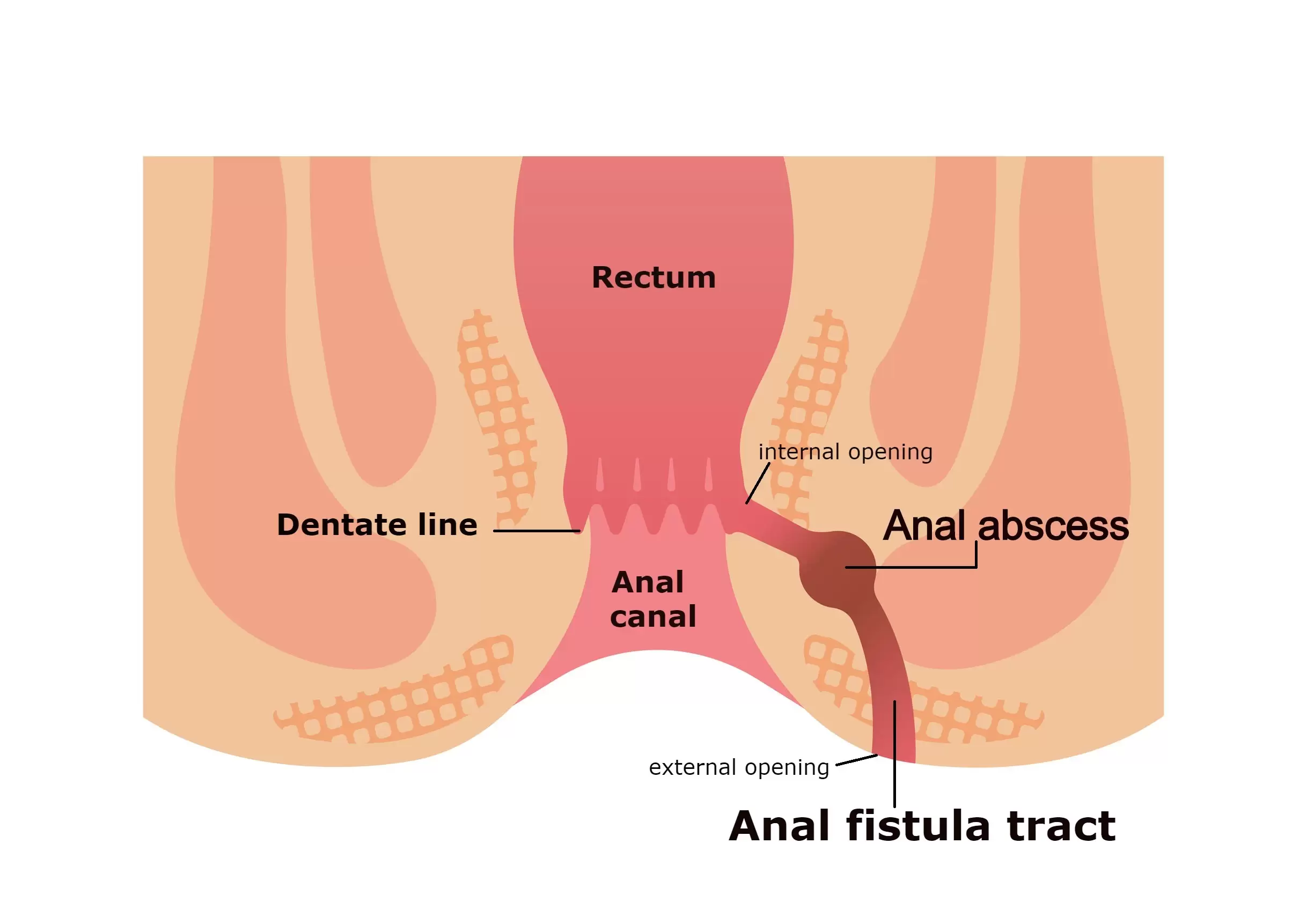
An anal fistula—also known as fistula-in-ano—is an abnormal tunnel that forms between the inside of the anus and the external skin surrounding the anus. This condition is often the result of an infection in an anal gland, leading to an abscess that drains through the skin. Anal fistulas are uncomfortable and, in most cases, require surgical intervention.
What is an Anal Fistula?
An anal fistula is essentially a persistent drainage pathway caused by infection. The anus contains glands that help with lubrication. When these glands become infected, they can form an abscess—a pocket of pus that may either drain spontaneously or require surgical drainage. The tract formed by this drainage connects the infected gland or anal canal to an external opening in the skin, creating a fistula.
Symptoms of an Anal Fistula
Common symptoms of an anal fistula include:
- Visible external opening: A small hole or opening on the skin near the anus.
- Redness and inflammation: Surrounding the opening or along the tract.
- Drainage: Oozing of pus, blood, or even stool from the external opening.
- Pain: Localized to the rectum and anus, which may worsen during sitting or bowel movements.
- Fever: May occur in cases of infection.
If you experience any of these symptoms, particularly drainage or pain, it’s important to seek medical advice promptly.
When to See a Doctor
It’s crucial to consult a healthcare provider if you:
- Notice persistent pain or swelling near the anus.
- Experience recurring abscesses or oozing of pus.
- Have a fever along with rectal pain.
- Observe a visible opening or abnormal drainage around the anus.
Delaying treatment can lead to complications, such as recurring infections or additional fistulas.
Causes of Anal Fistulas
The most common cause of an anal fistula is an infection in the anal gland. This infection often leads to the formation of an abscess, which may drain naturally or surgically, leaving behind the fistula. Other causes include:
- Crohn’s disease: Chronic inflammation of the gastrointestinal tract increases the risk of fistulas.
- Trauma: Injury to the anal area may result in abnormal connections.
- Radiation therapy: Used for treating anal cancer, it can damage tissues and lead to fistula formation.
- Infections: Specific infections like tuberculosis or sexually transmitted infections may also lead to anal fistulas.
- Surgery: Past surgical procedures in the anal region can contribute to fistula development.
Risk Factors for Anal Fistulas
Several factors increase the likelihood of developing an anal fistula:
- Previous abscess: Individuals with a history of drained anal abscesses are at higher risk.
- Crohn’s disease: Chronic inflammatory bowel disease significantly raises the risk.
- Trauma: Injury to the anal or rectal area.
- Radiation therapy or surgery: Prior treatments for anal cancer can be contributing factors.
- Infections: Conditions like HIV or tuberculosis can increase the likelihood.
Anal fistulas are most common in men and individuals around the age of 40.
Complications of Anal Fistulas
If not treated properly, anal fistulas can result in:
- Recurrence: Even after treatment, fistulas or abscesses can recur.
- Fecal incontinence: Surgical treatment, especially involving the anal sphincter, can sometimes lead to difficulty in controlling stool.
Prompt treatment and careful surgical planning can minimize these complications.
Diagnosis of Anal Fistulas
To diagnose an anal fistula, healthcare providers may perform:
- Physical examination: Identifying external openings or drainage sites.
- Imaging tests:
- MRI: Offers detailed views of the fistula tract.
- Ultrasound: Helps visualize the anal region.
- CT scans: Used in complex cases.
These tools help classify the fistula and determine the best course of treatment.
Treatment Options for Anal Fistulas
1. Surgical Treatments
Surgery is often the preferred approach for treating anal fistulas. Options include:
- Fistulotomy: The fistula is cut open and allowed to heal from the inside out.
- Seton placement: A thread-like material is placed to help drain the fistula while preserving sphincter muscle function.
- Flap procedure: Healthy tissue is used to cover the internal opening of the fistula.
- Ligation of intersphincteric fistula tract (LIFT): The fistula tract is tied off and removed.
- Fibrin glue or plugs: Minimally invasive techniques to seal the fistula.
2. Nonsurgical Treatments
Nonsurgical options may be used in select cases:
- Antibiotics: To control infection.
- Fibrin glue: An adhesive injected into the fistula to close it.
- Biologic agents: For those with Crohn’s disease, medications to manage inflammation.
3. Lifestyle and Home Care
While surgery addresses the fistula, maintaining proper hygiene and a healthy lifestyle can help with recovery:
- Good hygiene: Clean the anal area gently to prevent infection.
- Fiber intake: A high-fiber diet promotes regular bowel movements and reduces strain.
- Hydration: Staying well-hydrated helps soften stool.
Preventing Anal Fistulas
Prevention focuses on managing risk factors:
- Treat infections promptly: Avoid delayed treatment for anal abscesses.
- Manage Crohn’s disease: Regular check-ups and medication adherence can prevent complications.
- Practice good hygiene: Proper cleaning of the anal area can minimize infection risk.
- Avoid trauma: Be cautious to avoid injuries in the anal region.
Key Takeaways
- Anal fistulas are abnormal tunnels connecting the anal canal to external skin and often result from infection.
- Symptoms like pain, drainage, and redness should prompt immediate medical evaluation.
- Surgical intervention is usually necessary, with options tailored to the complexity of the fistula.
- Proper hygiene, dietary adjustments, and timely treatment can aid in recovery and prevent recurrence.
Medical Disclaimer
This article is for informational purposes only and does not replace professional medical advice, diagnosis, or treatment. Consult a qualified healthcare provider for any questions or concerns about your health. If you experience symptoms of an anal fistula, seek immediate medical attention.