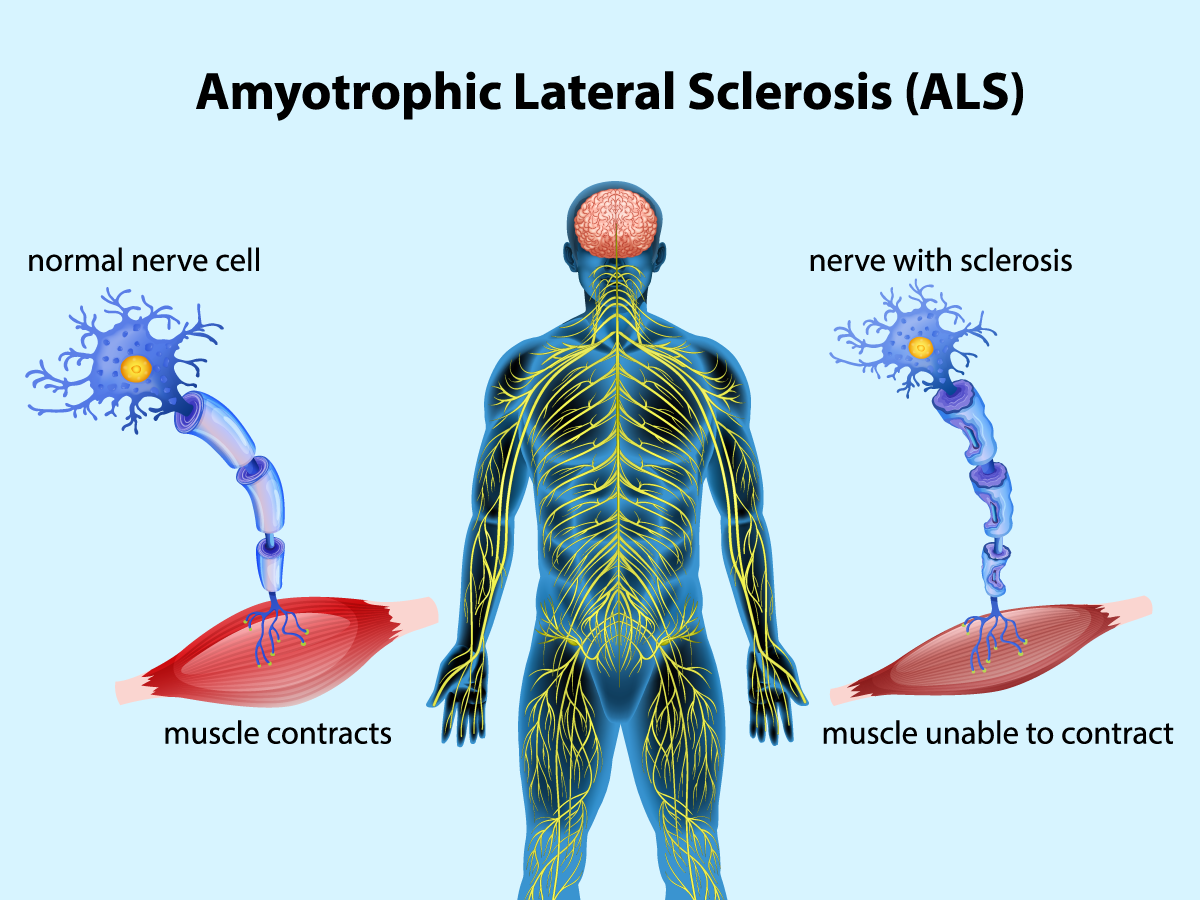
Amyotrophic Lateral Sclerosis (ALS), commonly referred to as Lou Gehrig’s disease, is a rare and progressive neurodegenerative condition that affects nerve cells in the brain and spinal cord. ALS disrupts the motor neurons responsible for voluntary muscle movements, such as walking, talking, and breathing. Over time, these motor neurons deteriorate, leading to muscle weakness, loss of function, and eventual paralysis.
ALS is a life-threatening condition with no known cure. However, ongoing research and treatments focus on slowing its progression, managing symptoms, and improving the quality of life for those affected.
Key Symptoms of ALS
Symptoms of ALS vary depending on the affected nerve cells. Common early signs include muscle weakness and coordination problems, which worsen over time. Key symptoms include:
- Difficulty with movement and daily activities:
- Trouble walking or maintaining balance.
- Frequent tripping and falling.
- Weakness in legs, feet, and ankles.
- Muscle-related symptoms:
- Hand weakness and clumsiness.
- Muscle cramps and twitching, especially in the arms, shoulders, and tongue.
- Speech and swallowing difficulties:
- Slurred speech.
- Trouble swallowing, leading to potential choking hazards.
- Behavioral and cognitive changes:
- Uncontrolled emotional responses, such as crying or laughing.
- Difficulty with thinking and decision-making, sometimes linked to frontotemporal dementia.
As ALS progresses, muscle weakness spreads to other parts of the body, impacting chewing, swallowing, breathing, and communication. Despite these changes, ALS typically spares sensory functions, bladder control, and pain perception, particularly in early stages.
Causes of ALS
The precise cause of ALS remains unclear, though it is believed to result from a combination of genetic and environmental factors. Here’s what we know:
- Genetics:
- About 10% of ALS cases are hereditary, passed down through a defective gene. This type is called familial ALS, and it carries a 50% chance of transmission to offspring.
- Environmental triggers:
- Smoking: A significant risk factor, especially in postmenopausal women.
- Toxin exposure: Possible links to lead or other hazardous substances have been observed but remain inconclusive.
- Military service: Veterans have a higher likelihood of developing ALS, potentially due to chemical exposure, traumatic injuries, or physical exertion.
ALS damages both upper motor neurons (connecting the brain to the spinal cord) and lower motor neurons (connecting the spinal cord to muscles). The gradual death of these neurons halts communication between the brain and muscles, causing them to weaken and waste away.
Risk Factors
Certain factors may increase the likelihood of developing ALS:
- Age: Risk peaks between ages 60 and 75.
- Gender: Men are slightly more at risk before age 65, though this difference diminishes with age.
- Genetic predisposition: A family history of ALS increases susceptibility.
- Environmental factors: Smoking, chemical exposure, and physical trauma.
Complications of ALS
ALS has far-reaching impacts on the body, leading to several complications:
- Breathing Problems:
- Progressive weakening of respiratory muscles may necessitate breathing aids like a mask ventilator.
- Advanced stages may require a tracheostomy to facilitate breathing.
- Respiratory failure is the leading cause of death among ALS patients.
- Speaking Difficulties:
- Speech becomes slower and slurred.
- Assistive communication technologies can help maintain communication as speech abilities decline.
- Eating Challenges:
- Weak swallowing muscles increase the risk of malnutrition, dehydration, and aspiration pneumonia.
- A feeding tube may be used to ensure adequate nutrition and hydration.
- Cognitive Decline:
- Some individuals experience frontotemporal dementia, affecting language, memory, and decision-making abilities.
Managing and Treating ALS
Though there is no cure for ALS, treatments focus on symptom management and slowing disease progression. Common interventions include:
- Medications:
- Riluzole (Rilutek): Slows disease progression by reducing damage to motor neurons.
- Edaravone (Radicava): May help reduce oxidative stress in nerve cells.
- Physical and Occupational Therapy:
- Maintains mobility and improves quality of life.
- Adaptive devices like braces, walkers, or wheelchairs enhance independence.
- Speech Therapy:
- Addresses communication challenges.
- Introduces assistive technologies for non-verbal communication.
- Nutritional Support:
- Diet modifications and feeding tubes combat malnutrition and hydration issues.
- Respiratory Support:
- Non-invasive ventilation devices like BiPAP provide breathing assistance.
- Advanced cases may require ventilators via tracheostomy.
- Psychological Support:
- Counseling and support groups help patients and families cope with emotional challenges.
Living with ALS
For individuals diagnosed with ALS, the journey can be emotionally and physically demanding. Strategies to navigate this condition include:
- Joining support networks: Connecting with others who understand ALS can provide comfort and practical advice.
- Planning ahead: Advance care planning ensures that future medical and personal wishes are honored.
- Seeking specialized care: Multidisciplinary ALS care teams offer comprehensive treatment plans tailored to individual needs.
Research and Hope for the Future
ALS research is advancing rapidly, exploring new treatments and potential cures. Scientists are investigating:
- Gene therapy: Targeting defective genes linked to familial ALS.
- Stem cell therapy: Exploring ways to regenerate damaged neurons.
- Drug trials: Testing new medications to slow progression and improve quality of life.
Continued research and clinical trials provide hope for better outcomes in the future.
Key Takeaways
- ALS is a progressive neurological disorder affecting motor neurons, leading to loss of muscle function and eventual paralysis.
- Symptoms include muscle weakness, difficulty speaking or swallowing, and cognitive changes.
- There is no cure, but treatments like medications, therapy, and assistive devices can help manage the disease.
- Early diagnosis and multidisciplinary care improve quality of life.
Medical Disclaimer
This article is for informational purposes only and not a substitute for professional medical advice, diagnosis, or treatment. Always consult a qualified healthcare provider for personalized care regarding ALS or any other medical condition. If you or a loved one experience symptoms of ALS, seek medical attention promptly.