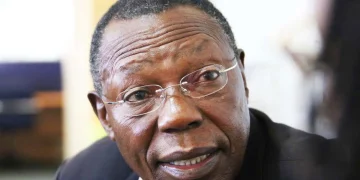
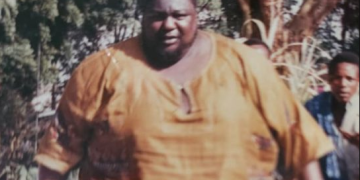
Ahmed Khalif Mohamed remains one of the most tragic figures in Kenya’s political history. He entered President Mwai Kibaki’s first Cabinet in January 2003 as Minister for Labour, carrying with him the hopes of Wajir West, the promise of North Eastern representation in the new NARC administration, and a reputation built through years of public service and Muslim community leadership.
But his Cabinet career ended almost as soon as it began.
Khalif served for only about 20 days before he died on January 24, 2003, following a plane crash at Busia Airstrip. The crash also killed the two pilots and left several senior members of the new government seriously injured. His death made him widely remembered as Kenya’s shortest-serving Cabinet minister.
His story is not only about a brief ministerial tenure. It is also about political transition, regional representation, the early optimism of the Kibaki era, and a fatal journey that became one of the most haunting episodes in Kenya’s post-2002 political history.
Who Was Ahmed Khalif Mohamed?
Ahmed Khalif Mohamed was a Kenyan politician from Wajir and a former Member of Parliament for Wajir West. He was elected to Parliament on a National Rainbow Coalition ticket during the historic 2002 General Election, when NARC ended KANU’s long rule and brought Mwai Kibaki to power.
His victory was politically significant. North Eastern Kenya had long been considered a stronghold of KANU influence, and winning a parliamentary seat there on a NARC ticket showed both his local standing and the reach of the new political wave that swept across the country in 2002.
Before joining the Cabinet, Khalif had already built a public profile. He was known for his involvement in Muslim community affairs and had served as secretary general of the Committee of Muslims in Kenya. He was also described as a soft-spoken but firm leader who cared deeply about issues affecting Muslims and marginalized communities.
Physically, he was memorable too. Those who knew or saw him often remembered his distinctive white patch of hair and goatee, features that made him instantly recognizable in public life.
A Politician From Wajir With National Reach
Khalif’s political journey reflected both local and national concerns. Coming from Wajir, he represented a region that had often felt politically distant from Nairobi. North Eastern Kenya had endured years of marginalization, insecurity, underdevelopment, and limited access to national resources.
For many in Wajir and the wider Somali Muslim community, Khalif’s appointment to Cabinet mattered. It placed one of their own at the center of national decision-making at a time when the new Kibaki government was promising reform, inclusion, economic recovery, and a break from the old political order.
His appointment as Labour Minister was therefore more than a personal achievement. It was a symbolic moment for a region and community that wanted stronger visibility in government.
The 2002 NARC Moment
To understand Ahmed Khalif Mohamed’s brief Cabinet career, it is necessary to understand the political mood of the time.
The 2002 General Election was one of the most important elections in Kenya’s history. After 24 years of Daniel arap Moi’s presidency and decades of KANU dominance, NARC defeated KANU and formed a new government under President Mwai Kibaki.
The country was filled with optimism. Many Kenyans believed a new democratic chapter had begun. The new government brought together figures from different political backgrounds and regions, including Martha Karua, Raila Odinga, Moody Awori, Raphael Tuju, Linah Jebii Kilimo, and others who became prominent in the early Kibaki administration.
Khalif was part of that early Cabinet generation. His Labour docket placed him in charge of a ministry connected to workers, employment, trade unions, industrial relations, and labour policy.
But before he could leave a clear mark on the ministry, tragedy struck.
Kenya’s Shortest-Serving Cabinet Minister
Ahmed Khalif Mohamed is remembered as Kenya’s shortest-serving minister because he died only weeks after being appointed to the Kibaki Cabinet.
His time in office was too brief for him to implement a major policy agenda. Yet the shortness of his tenure is exactly what makes his story so memorable. He entered government at a moment of national renewal, only for his service to be cut short almost immediately.
In public memory, Khalif became associated with unrealized promise. He represented what might have been: a Cabinet minister from Wajir who could have influenced labour policy, Muslim affairs, regional inclusion, and the relationship between North Eastern Kenya and the new administration.
The Busia Trip
On January 24, 2003, Khalif was among senior government and NARC leaders who had travelled to Busia for a homecoming event for Moody Awori, who had become Vice President in the Kibaki administration.
The trip came during a period when the new government’s leaders were still celebrating electoral victory across different parts of the country. Homecoming ceremonies were important political events. They allowed newly appointed leaders to thank supporters, introduce themselves in their new capacities, and strengthen the image of the new administration.
After the Busia event, the delegation prepared to leave by air.
Among those reported to have been on the aircraft were Ahmed Khalif Mohamed, Martha Karua, Raphael Tuju, Martha Koome, Linah Jebii Kilimo, George Khaniri, Dr. Wanjiru Kihoro, and others.
Martha Karua later recalled details of the journey in her memoir, Against the Tide. According to accounts of her recollection, Khalif had delayed the group briefly because he had gone to a nearby mosque to pray. When asked why he had kept the others waiting, he explained that he had stopped for prayers.
That detail has remained one of the most human moments in the story. It presents Khalif not only as a politician but as a man of faith, keeping his religious practice even in the middle of a busy political journey.
A Thanksgiving Ceremony That Never Happened
Before the aircraft took off, Khalif reportedly invited some of his colleagues to a thanksgiving ceremony he planned to hold in Wajir the following Sunday.
The invitation reflected a common political tradition in Kenya. After winning an election or being appointed to a major office, leaders often return home for thanksgiving ceremonies. These events bring together constituents, elders, religious leaders, political allies, family, and supporters.
Khalif’s thanksgiving would have been especially meaningful. It would have celebrated his election as Wajir West MP, his appointment as Labour Minister, and his community’s presence in the new NARC government.
Some of his colleagues reportedly suggested that the event was too close to Raila Odinga’s homecoming scheduled for the same weekend. Khalif is said to have indicated that he would consider postponing it.
He never got the chance.
The Crash at Busia
The aircraft carrying the delegation crashed shortly after take-off from Busia Airstrip on January 24, 2003.
Contemporary reports said the aircraft failed to gain enough height after take-off, struck power lines, and crashed. The accident killed Labour Minister Ahmed Khalif Mohamed and the two pilots, while several other passengers were injured.
Aviation accident records identify the aircraft as a Grumman G-159 Gulfstream I and report that it crashed after take-off from Busia’s runway, which was about 3,281 feet long. The aircraft struck power cables and crashed into a house. Both pilots and Khalif died, while other occupants were seriously injured.
The Guardian reported at the time that Khalif died after being admitted to hospital, with a doctor announcing that he had died from severe injuries. Other reports from the time also confirmed that two pilots died in the crash.
The tragedy shocked the country. It happened less than a month after the new government had taken power, at a time when national optimism was still high.
Survivors of the Crash
Several passengers survived the crash, though some were seriously injured.
Martha Karua later became one of the most prominent survivors of the accident. She would go on to serve in various Cabinet roles and remain a major figure in Kenyan politics.
Martha Koome also survived. She later became one of Kenya’s most consequential judicial figures and rose to become Chief Justice.
Raphael Tuju survived and continued to serve in government and politics. Linah Jebii Kilimo also survived and remained active in public life.
Dr. Wanjiru Kihoro, wife of writer and former Nyeri Town MP Wanyiri Kihoro, was seriously injured. She remained in a coma for years and died in 2006.
The crash therefore did not end with the immediate deaths alone. Its pain continued through the injuries, trauma, hospitalizations, and long-term consequences faced by survivors and their families.
Martha Karua and Martha Koome’s Narrow Escape
One of the most widely remembered parts of the Busia crash story is the confusion that followed immediately after the accident.
In the chaos after the crash, some passengers could not be accounted for at once. Rumours reportedly spread that Martha Karua and Martha Koome had also died. They were later found alive but badly injured.
Karua’s later recollections gave the crash a personal and emotional dimension. Her account helped preserve the memory of what happened inside the aircraft before take-off and in the moments before the tragedy.
For Kenya’s political class, the crash became a shared scar. It had taken one Cabinet minister, injured several public figures, and nearly wiped out several leaders of the new administration.
The Two Pilots Who Also Died
The Busia crash also claimed the lives of the two pilots. Later reports identified them as Sammy Mungai and Abdikadir Kuto.
Their deaths are often mentioned briefly because the political prominence of the passengers dominates public memory. But the tragedy was also an aviation tragedy involving crew members whose families also suffered loss.
Any full account of the crash must therefore remember all three immediate fatalities: Ahmed Khalif Mohamed and the two pilots.
Questions Raised After the Crash
The crash raised serious questions about aviation safety, aircraft condition, runway suitability, and oversight.
Aviation accident summaries note that the aircraft struggled to gain height after take-off and hit power cables. One accident record also states that a public inquiry found the plane was too heavy for a safe departure, required a longer runway, and that there were concerns about documentation, maintenance, and certification.
These findings deepened public concern about how senior government officials had been placed on an aircraft whose safety later came under question.
The crash therefore became more than a personal tragedy. It became a reminder of the importance of aviation standards, aircraft maintenance, runway safety, flight planning, and proper oversight.
Khalif’s Place in Kenyan Political Memory
Ahmed Khalif Mohamed’s national political career ended before it fully began. Yet his name remains in Kenya’s political memory for several reasons.
First, he is remembered as the shortest-serving Cabinet minister in Kenya’s history.
Second, he represents the early days of the Kibaki administration, when the country was emerging from KANU’s long rule and trying to build a new political order.
Third, he symbolized representation for Wajir and North Eastern Kenya at the highest level of government.
Fourth, his death is tied to one of Kenya’s most serious political aviation tragedies.
Finally, he is remembered as a Muslim leader whose public life connected faith, community service, and national politics.
A Loss for Wajir and North Eastern Kenya
For Wajir West, Khalif’s death was a major loss. The constituency had elected him at a time of national transition, and his Cabinet appointment had given the region a rare moment of national visibility.
North Eastern Kenya has often struggled for equal attention in national politics. Issues such as infrastructure, security, education, drought, health services, and political representation have remained central concerns.
Khalif’s rise to Cabinet suggested that the region could have a stronger voice in Nairobi. His death ended that possibility too soon.
A Faith-Rooted Public Life
Khalif’s identity as a Muslim leader was central to his public image. Before Cabinet, he had served in Muslim community leadership, including as secretary general of the Committee of Muslims in Kenya.
His last reported delay before boarding the aircraft, caused by a stop at a mosque to pray, has often been retold because it captured the consistency of his faith.
In a country where religious identity often intersects with politics, community leadership, education, and public advocacy, Khalif stood as one of the Muslim leaders who entered national politics while maintaining a clear connection to religious and community service.
The Human Side of the Tragedy
Political history can sometimes reduce people to titles: MP, minister, survivor, victim, pilot, Cabinet member. But the Busia crash was also a human tragedy.
Khalif had family, supporters, constituents, colleagues, and a community waiting to celebrate him. The pilots had families and careers. The survivors had to live with injuries and memories. Dr. Wanjiru Kihoro’s long coma and eventual death added another painful chapter to the story.
The crash also disrupted the early rhythm of the Kibaki government. A Cabinet that had just begun work was suddenly mourning one of its own.
Why Ahmed Khalif Mohamed’s Story Still Matters
Ahmed Khalif Mohamed’s story still matters because it captures several important themes in Kenya’s history.
It shows how quickly political promise can be cut short.
It shows the importance of regional representation in national government.
It reminds Kenya of the early optimism and fragility of the 2002 transition.
It highlights the place of Muslim leaders in Kenya’s public life.
It preserves the memory of a tragedy that shaped several leaders who survived it.
It also reminds the country that public service carries personal risk, sometimes in ways no one can foresee.
Frequently Asked Questions About Ahmed Khalif Mohamed
Who was Ahmed Khalif Mohamed?
Ahmed Khalif Mohamed was a Kenyan politician, Wajir West MP, Muslim community leader, and Labour Minister in President Mwai Kibaki’s first Cabinet.
Why is Ahmed Khalif Mohamed remembered?
He is remembered as Kenya’s shortest-serving Cabinet minister. He served for about 20 days before dying in the January 24, 2003 Busia plane crash.
Which ministry did Ahmed Khalif Mohamed lead?
He served as Minister for Labour in the Kibaki administration.
When did Ahmed Khalif Mohamed die?
Ahmed Khalif Mohamed died on January 24, 2003, after a plane crash at Busia Airstrip.
What caused the Busia plane crash?
Reports say the aircraft failed to gain sufficient height after take-off, struck power lines, and crashed. Later accident summaries also raised concerns about aircraft weight, runway length, documentation, and maintenance.
Who else died in the Busia plane crash?
The crash killed Ahmed Khalif Mohamed and the two pilots, identified in later reports as Sammy Mungai and Abdikadir Kuto.
Who survived the Busia plane crash?
Survivors included Martha Karua, Raphael Tuju, Martha Koome, Linah Jebii Kilimo, George Khaniri, Dr. Wanjiru Kihoro, and others.
What happened to Dr. Wanjiru Kihoro?
Dr. Wanjiru Kihoro was seriously injured in the crash and remained in a coma for years. She died in 2006.
Which constituency did Ahmed Khalif Mohamed represent?
He represented Wajir West Constituency.
Why was his election important?
His election on a NARC ticket was significant because KANU had long been dominant in North Eastern Kenya. His win showed NARC’s reach and gave Wajir West a Cabinet-level voice in the new government.
Key Takeaways
Ahmed Khalif Mohamed was the Wajir West MP and Labour Minister in President Mwai Kibaki’s first Cabinet.
He is widely remembered as Kenya’s shortest-serving Cabinet minister.
He died on January 24, 2003, after the Busia plane crash, only about 20 days into his ministerial tenure.
The crash also killed the two pilots and injured several senior government and political figures.
Survivors included Martha Karua, Martha Koome, Raphael Tuju, Linah Jebii Kilimo, George Khaniri, and Dr. Wanjiru Kihoro.
Khalif’s death was a major loss for Wajir, North Eastern Kenya, the Muslim community, and the new Kibaki administration.
His story remains one of the most tragic episodes in Kenya’s modern political history.
Conclusion
Ahmed Khalif Mohamed’s Cabinet career was painfully brief, but his story remains deeply significant. He rose from Wajir politics and Muslim community leadership to become Labour Minister in one of the most hopeful moments in Kenya’s democratic history.
He entered government when the country was celebrating the end of KANU’s long rule and the beginning of the Kibaki era. For Wajir West and North Eastern Kenya, his appointment carried the promise of representation, inclusion, and national visibility.
Then, within weeks, he was gone.
The Busia plane crash of January 24, 2003 turned a moment of political celebration into a national tragedy. It killed Khalif and two pilots, injured several leaders, and left lasting scars on Kenya’s political memory.
Khalif did not serve long enough to build a ministerial legacy through policy. But his life still tells a powerful story: of faith, representation, ambition, transition, public service, and the fragile nature of political promise.
He remains Kenya’s shortest-serving minister, but also a reminder that even a brief public life can leave a lasting mark.
Read Also: Top 10 Richest People in Wajir County