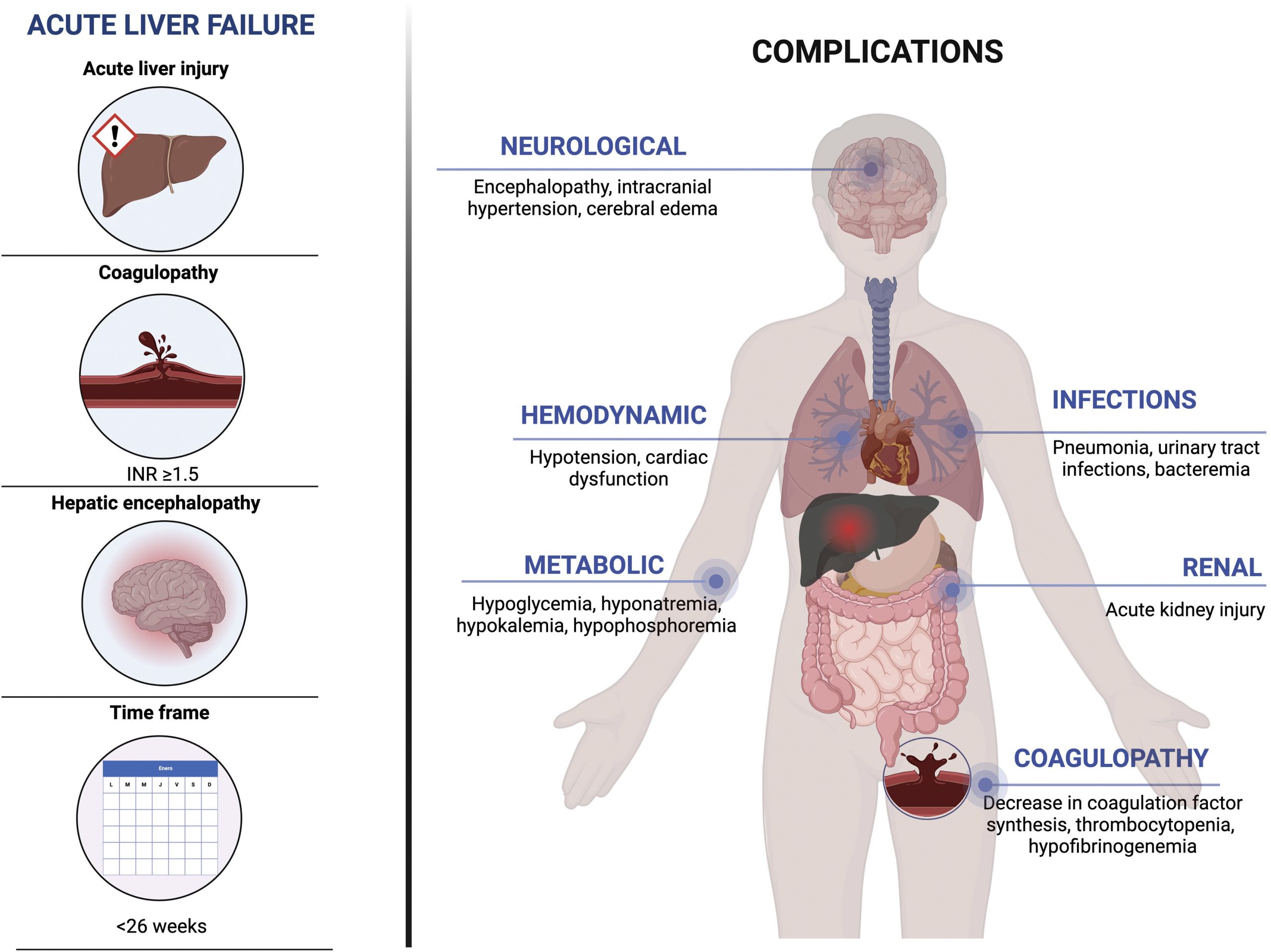
Acute liver failure, also known as fulminant hepatic failure, is a rare but severe condition where the liver suddenly loses its ability to function. Unlike chronic liver failure, which develops gradually over time, acute liver failure occurs rapidly, often in just days or weeks, and typically affects individuals without prior liver disease. This condition requires immediate medical attention, as it can lead to life-threatening complications.
Symptoms of Acute Liver Failure
Acute liver failure presents with a variety of symptoms that can progress rapidly. Early recognition is essential to improve outcomes.
Common Symptoms:
- Jaundice: Yellowing of the skin and eyes due to elevated bilirubin levels.
- Abdominal Pain: Particularly in the upper right region of the belly.
- Ascites: Swelling in the abdomen caused by fluid buildup.
- Nausea and Vomiting: General digestive distress.
- Malaise: A general feeling of unwellness and fatigue.
- Mental Changes: Confusion, disorientation, or difficulty concentrating, which may progress to severe sleepiness or coma.
- Breath Odor: A musty or sweet smell on the breath.
- Tremors: Involuntary shaking or trembling.
When to Seek Medical Attention:
If symptoms such as jaundice, abdominal pain, or mental confusion appear suddenly, seek immediate medical care. Acute liver failure is a medical emergency that requires hospitalization.
Causes of Acute Liver Failure
Acute liver failure can result from various factors, with the most common causes including medication overdoses, viral infections, and exposure to toxins.
Key Causes:
- Acetaminophen Overdose:
- The leading cause in the United States.
- Can occur after a single very large dose or consistent overuse over several days.
- Hepatitis and Viral Infections:
- Hepatitis A, B, and E viruses.
- Other viral infections such as Epstein-Barr virus and herpes simplex.
- Prescription Medications:
- Nonsteroidal anti-inflammatory drugs (NSAIDs), antibiotics, and anticonvulsants may contribute.
- Herbal Supplements and Toxins:
- Supplements such as kava, ephedra, and skullcap.
- Poisonous wild mushrooms like Amanita phalloides.
- Autoimmune Hepatitis:
- An autoimmune response where the immune system attacks liver cells.
- Vascular Conditions:
- Diseases like Budd-Chiari syndrome that block liver veins.
- Metabolic and Genetic Disorders:
- Wilson’s disease (copper buildup) or acute fatty liver of pregnancy.
- Cancer:
- Cancer originating in or spreading to the liver.
- Shock and Severe Infections:
- Sepsis and shock can reduce blood flow to the liver.
- Heat Stroke:
- Extreme physical activity in high temperatures.
Risk Factors for Acute Liver Failure
While acute liver failure can affect anyone, certain factors increase the likelihood of developing the condition:
- Gender: Women are more commonly affected.
- Underlying Conditions: Preexisting metabolic, autoimmune, or viral liver diseases.
- High-Risk Behaviors: Illicit drug use, unsafe tattooing or piercing practices, and unprotected sex increase exposure to hepatitis.
- Medication Misuse: Overusing acetaminophen or combining it with alcohol.
- Obesity: Can lead to metabolic dysfunction-associated steatotic liver disease (MASLD), formerly known as nonalcoholic fatty liver disease (NAFLD).
Complications of Acute Liver Failure
Acute liver failure can lead to severe complications, many of which can be life-threatening:
- Cerebral Edema: Excess fluid in the brain can cause pressure buildup, leading to confusion, seizures, and coma.
- Bleeding Disorders: The liver’s inability to produce clotting factors results in bleeding, particularly in the gastrointestinal tract.
- Infections: People with liver failure are at higher risk of blood, respiratory, and urinary infections.
- Kidney Failure: Particularly common in cases caused by acetaminophen overdose.
- Multi-Organ Failure: Severe liver damage can cascade into failures of other organ systems.
Diagnosis of Acute Liver Failure
Prompt diagnosis is critical to managing acute liver failure. Healthcare providers use a combination of clinical evaluations, blood tests, and imaging studies to determine the condition’s cause and severity.
Key Diagnostic Tools:
- Blood Tests: Measure liver function through enzyme levels, bilirubin, and clotting time.
- Imaging: Ultrasound, CT, or MRI to detect liver damage or obstructions.
- Biopsy: Occasionally used to confirm the cause of liver failure.
Treatment for Acute Liver Failure
Treatment focuses on addressing the underlying cause, managing symptoms, and preventing complications.
1. Medications and Supportive Care:
- Acetaminophen Overdose: Administering N-acetylcysteine (NAC) to counteract toxicity.
- Infections: Treating bacterial or viral infections with antibiotics or antivirals.
- Bleeding: Blood transfusions or clotting factor replacement.
2. Advanced Treatments:
- Liver Transplantation: Often the only option for irreversible liver failure.
- Hemodialysis: For kidney failure associated with liver failure.
Prevention of Acute Liver Failure
Preventative measures can significantly reduce the risk of acute liver failure.
1. Medication Safety:
- Follow dosage instructions on all medications, especially acetaminophen.
- Discuss all medications and supplements with your healthcare provider.
2. Protect Against Hepatitis:
- Vaccination: Get vaccinated against hepatitis A and B.
- Safe Practices: Avoid sharing needles or personal items like razors and toothbrushes.
3. Limit Alcohol Consumption:
- Drink in moderation, or not at all.
4. Avoid Toxins:
- Stay away from poisonous mushrooms and harmful chemicals.
5. Maintain a Healthy Lifestyle:
- Follow a balanced diet.
- Exercise regularly and manage your weight.
Living with Acute Liver Failure
Recovery depends on the underlying cause, the extent of liver damage, and the treatment received. While some people regain full liver function, others may need lifelong care, including possible liver transplantation.
Post-Treatment Tips:
- Regular follow-ups with healthcare providers.
- Monitoring for complications such as chronic liver disease.
- Adopting liver-friendly habits, such as a healthy diet and avoiding alcohol.
Conclusion
Acute liver failure is a critical condition requiring immediate medical intervention. Understanding its causes, symptoms, and prevention strategies is essential to reduce the risk and improve outcomes.
By maintaining a healthy lifestyle, managing medications responsibly, and protecting against hepatitis, individuals can significantly lower their chances of developing acute liver failure. Early diagnosis and treatment remain key to a successful recovery.
Disclaimer: This article is for informational purposes only and should not replace professional medical advice. If you suspect acute liver failure, seek medical attention immediately.