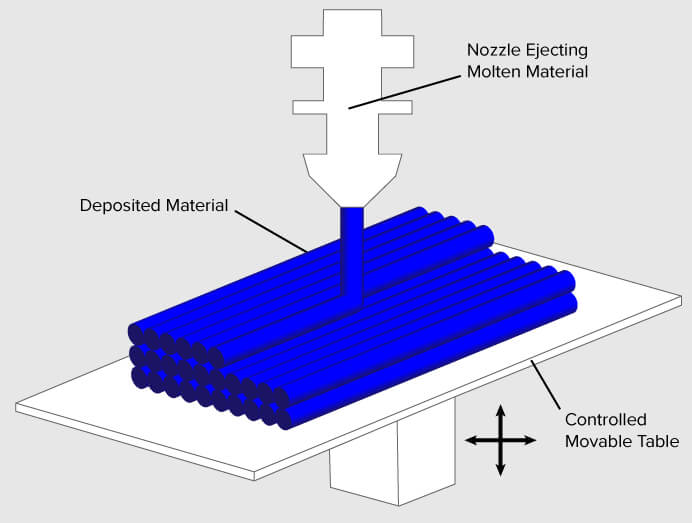
3D printing transformed manufacturing by changing how physical products are designed, prototyped, and produced. Instead of cutting, drilling, or molding materials into shape, 3D printing creates objects layer by layer directly from digital files, allowing manufacturers to build highly complex structures with remarkable precision and reduced material waste.
Also known as additive manufacturing, 3D printing became one of the most disruptive industrial technologies of the 21st century because it challenged traditional production models across industries ranging from aerospace and automotive to healthcare and construction.
The technology offers several major advantages:
- faster prototyping
- reduced manufacturing waste
- lower tooling costs
- customized production
- complex design flexibility
At the same time, limitations involving production speed, scalability, intellectual property protection, and material constraints continue preventing 3D printing from fully replacing traditional mass manufacturing systems.
Nevertheless, the technology is rapidly reshaping global supply chains, industrial design, inventory management, and production economics. Many analysts now view additive manufacturing as a foundational component of the broader transition toward digital manufacturing and Industry 4.0 systems.
What Is 3D Printing?
3D printing is a manufacturing process that creates physical objects from digital designs by adding material layer by layer.
Unlike traditional subtractive manufacturing, which removes material through cutting or drilling, additive manufacturing builds objects progressively until the final structure is complete.
Basic 3D Printing Process
Digital Design→Layer\-by\-Layer Manufacturing→Physical Object
The technology allows manufacturers to produce intricate shapes and customized components that may be difficult or impossible using traditional methods.
How 3D Printing Works
The process begins with a digital design file.
Step 1: Creating a Digital Model
Engineers or designers create a digital 3D model using computer-aided design (CAD) software.
The model defines:
- dimensions
- geometry
- structure
- internal features
Slicing the Design
Special software then divides the model into thin horizontal layers.
This process is known as slicing.
The printer follows these layer instructions sequentially during production.
Step 2: Layer-by-Layer Manufacturing
The printer deposits or solidifies material one layer at a time.
Additive Manufacturing Principle
Object=∑Layeri
Each layer bonds with the previous one until the final object is completed.
Materials Used in 3D Printing
Common materials include:
- plastics
- resins
- titanium
- aluminum
- stainless steel
- ceramics
- concrete
- carbon composites
Material selection depends on the intended industrial application.
Why 3D Printing Is Called Additive Manufacturing
Traditional manufacturing often removes material.
Subtractive vs Additive Manufacturing
Traditional subtractive manufacturing methods include:
- drilling
- milling
- cutting
- grinding
- injection molding
These processes often waste raw materials.
Additive Manufacturing Reduces Waste
3D printing uses only the material necessary to build the object itself.
This can significantly improve material efficiency.
How 3D Printing Improves Manufacturing Efficiency
One of the biggest advantages of 3D printing is production flexibility.
Faster Prototype Development
Manufacturers can rapidly create prototypes without building expensive tooling systems.
This reduces:
- development costs
- product testing timelines
- time-to-market
Innovation Acceleration
Rapid prototyping encourages:
- experimentation
- product iteration
- startup innovation
- design optimization
Small manufacturers especially benefit because they can test products cheaply and quickly.
Why 3D Printing Matters for Supply Chains
The technology may fundamentally reshape logistics and inventory systems.
On-Demand Manufacturing
Instead of maintaining large inventories, companies can manufacture components when needed.
This may reduce:
- warehousing costs
- shipping expenses
- inventory risks
Localized Production
3D printing also allows production closer to end customers.
This may shorten supply chains and reduce dependence on centralized factories.
3D Printing in Aerospace
Aerospace companies became early adopters of additive manufacturing.
Why Aerospace Uses 3D Printing
Aircraft manufacturing values:
- lightweight materials
- structural strength
- precision engineering
3D printing supports all three goals.
Boeing and Titanium Components
Boeing uses 3D-printed titanium parts in the 787 Dreamliner.
Titanium components provide:
- reduced weight
- improved fuel efficiency
- high structural durability
3D Printing in Automotive Manufacturing
Automakers increasingly use additive manufacturing for design and production.
Automotive Applications
3D printing supports:
- prototype creation
- custom tooling
- lightweight components
- performance optimization
General Electric and Engine Simplification
General Electric created a helicopter engine using only 16 parts instead of 900 through additive manufacturing redesign.
This demonstrates how 3D printing can simplify supply chains and reduce assembly complexity.
3D Printing in Healthcare
Healthcare became one of the most promising sectors for additive manufacturing.
Customized Medical Devices
3D printing enables personalized production of:
- implants
- prosthetics
- hearing aids
- dental devices
Personalized Medicine
Because every patient’s anatomy differs, customization provides major advantages.
Medical professionals can create patient-specific devices using 3D scanning technologies.
Hearing Aid Manufacturing
The hearing-aid industry became one of the most successful examples of commercial 3D printing adoption.
Why Hearing Aids Benefit From 3D Printing
Every ear canal has unique dimensions.
3D printing allows manufacturers to create fully customized hearing aids quickly and accurately.
Faster Production Cycles
Audiologists use 3D scanners to create digital ear models, which manufacturers convert directly into finished products.
3D Printing in Construction
Construction firms increasingly experiment with additive manufacturing.
Printing Homes and Structures
Some companies use giant 3D printers to construct homes using layered concrete systems.
Potential benefits include:
- lower construction costs
- faster building times
- reduced labor requirements
24-Hour Construction Possibilities
Some experimental projects demonstrated homes constructed within 24 hours using printed concrete layers.
3D Printing in Fashion and Consumer Products
Footwear and apparel companies also embraced additive manufacturing.
Customized Footwear Design
Companies such as:
- Nike
- Adidas
- New Balance
use 3D printing to create specialized shoe components.
Design Flexibility
3D printing allows highly customized:
- cushioning systems
- sole structures
- performance designs
that traditional manufacturing may struggle to produce efficiently.
Economic Benefits of 3D Printing
The technology offers several important financial advantages.
Lower Tooling Costs
Traditional manufacturing often requires expensive molds or production tooling.
3D printing eliminates many of these upfront costs.
Reduced Development Expenses
Companies can test multiple product designs quickly without major capital investment.
Reduced Material Waste
Additive manufacturing typically uses less raw material than subtractive processes.
Waste Reduction Formula
Material Waste3D Printing<Material WasteTraditional Manufacturing
This improves production efficiency and sustainability.
Challenges Facing 3D Printing
Despite its advantages, the technology still faces major limitations.
Slow Mass Production Speed
3D printing remains relatively slow for large-scale manufacturing.
This limits its effectiveness for:
- mass-market consumer products
- high-volume industrial production
Traditional Manufacturing Still Dominates
Processes such as injection molding remain more efficient for mass production at scale.
Material Limitations
Not all materials work effectively with additive manufacturing systems.
Durability and Performance Issues
Some printed materials may face challenges involving:
- strength
- heat resistance
- long-term durability
Specialized Material Costs
Advanced printing materials can also be expensive.
Intellectual Property Concerns
Digital manufacturing creates legal challenges.
Easy File Replication
Because products originate from digital files, designs may be copied or distributed illegally.
This creates risks involving:
- patents
- copyrights
- counterfeiting
Cybersecurity Risks
Connected manufacturing systems may also face cyberattack vulnerabilities.
Environmental Impact of 3D Printing
The technology has both positive and negative sustainability implications.
Environmental Benefits
Potential advantages include:
- reduced material waste
- localized manufacturing
- lower transportation emissions
Energy Consumption Concerns
Some industrial printers consume substantial energy during operation.
Environmental outcomes depend heavily on:
- materials used
- production scale
- energy sources
The Future of 3D Printing
The technology continues evolving rapidly.
Industry 4.0 Integration
3D printing increasingly integrates with:
- robotics
- artificial intelligence
- automation systems
- smart factories
Digital Manufacturing Ecosystems
Future factories may rely heavily on digital workflows connecting design, production, logistics, and customer customization.
Potential Future Applications
Researchers continue exploring advanced applications involving:
- organ printing
- aerospace structures
- food printing
- bioprinting
- semiconductor manufacturing
Some technologies remain experimental but may reshape entire industries.
Why 3D Printing Matters Economically
Additive manufacturing may alter global industrial economics significantly.
Supply Chain Transformation
Localized production could reduce reliance on:
- overseas manufacturing
- long-distance shipping
- centralized factory systems
Lower Barriers to Entry
Small firms and startups can prototype and manufacture products without massive industrial infrastructure.
This may increase entrepreneurial innovation globally.
Frequently Asked Questions
What is 3D printing?
3D printing is an additive manufacturing process that creates physical objects layer by layer from digital designs.
Why is 3D printing called additive manufacturing?
The process adds material progressively rather than removing material through cutting or drilling.
Which industries use 3D printing?
Industries include aerospace, automotive, healthcare, fashion, construction, and consumer manufacturing.
Why is 3D printing useful for prototyping?
It reduces development costs and accelerates product testing and design iteration.
Can 3D printing replace traditional manufacturing?
Not completely. Traditional manufacturing remains faster and more efficient for large-scale mass production.
What materials are used in 3D printing?
Common materials include plastics, metals, ceramics, concrete, and carbon composites.
What are the biggest limitations of 3D printing?
Key challenges include slow production speed, material constraints, scalability issues, and intellectual property concerns.
Key Takeaways
- 3D printing creates physical objects layer by layer from digital files.
- The technology reduces waste and improves design flexibility.
- Aerospace, healthcare, automotive, and construction industries increasingly use additive manufacturing.
- Rapid prototyping significantly accelerates product development.
- 3D printing may reshape global supply chains and inventory systems.
- Mass production speed remains a major limitation.
- The technology is becoming central to Industry 4.0 and digital manufacturing systems.
Conclusion
3D printing represents one of the most transformative manufacturing technologies of the modern industrial era. By enabling layer-by-layer production directly from digital designs, additive manufacturing changed how companies prototype products, manage supply chains, customize components, and approach industrial innovation.
The technology’s influence now extends far beyond prototyping. Aerospace firms use it to reduce aircraft weight, healthcare companies use it for customized implants and hearing aids, construction firms experiment with printed homes, and consumer brands increasingly integrate additive manufacturing into product design.
Although challenges involving speed, scalability, material limitations, and regulation remain significant, 3D printing continues advancing rapidly. As automation, artificial intelligence, and digital manufacturing ecosystems evolve, additive manufacturing is likely to play an increasingly central role in the future of global production, logistics, and industrial innovation.
Read Also: 3(c)(7) Exemption Explained