When businesses buy products or services on credit, payment terms play a major role in managing cash flow, supplier relationships, and working capital. One of the most common invoice arrangements in business finance is the 1%/10 net 30 payment term.
At first glance, 1%/10 net 30 may look like accounting jargon. In reality, it is a practical financial tool that helps suppliers accelerate payments while giving buyers an opportunity to reduce costs through early payment discounts.
Understanding how 1%/10 net 30 works is important for business owners, finance professionals, accountants, procurement managers, and entrepreneurs seeking to improve financial efficiency. These payment terms influence liquidity, supplier negotiations, operational planning, and even profitability.
The concept is widely used across industries including manufacturing, wholesale trade, retail distribution, construction, and corporate procurement. Companies that understand how to use these terms strategically can improve cash flow management and strengthen vendor relationships.
What Is 1%/10 Net 30?
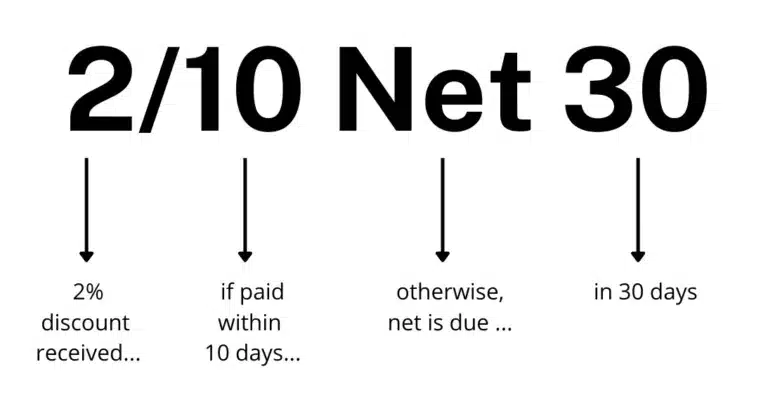
The 1%/10 net 30 payment term means a buyer can receive a 1% discount on an invoice if payment is made within 10 days. If the buyer does not pay within that discount period, the full invoice amount becomes due within 30 days.
The structure can be broken down into three components:
| Component | Meaning |
|---|---|
| 1% | Discount offered |
| 10 | Number of days to qualify for the discount |
| Net 30 | Full payment due within 30 days |
In simple terms, suppliers reward customers for paying quickly.
For example:
- Invoice amount: $10,000
- Payment within 10 days: Pay $9,900
- Payment after 10 days but before 30 days: Pay full $10,000
This arrangement creates a financial incentive for early payment while still allowing customers access to short-term trade credit.
Why Businesses Use 1%/10 Net 30
The 1%/10 net 30 structure benefits both sellers and buyers, although each side gains in different ways.
Benefits for Suppliers
Suppliers use 1%/10 net 30 to accelerate incoming cash flow. Faster payments help businesses:
- Improve liquidity
- Reduce reliance on bank loans
- Cover operational expenses sooner
- Lower accounts receivable risks
- Improve working capital cycles
For businesses operating with thin cash reserves, receiving payments earlier can make a major operational difference.
A manufacturing company, for example, may need rapid cash inflows to purchase raw materials for the next production cycle. Early payment discounts encourage customers to provide that liquidity faster.
Benefits for Buyers
For buyers, the discount reduces procurement costs.
Even a seemingly small 1% discount can generate meaningful annual savings for companies handling large transaction volumes.
Businesses also benefit through:
- Reduced purchasing costs
- Better supplier relationships
- Improved credit reputation
- Stronger negotiation leverage
- More efficient financial planning
Large corporations often use automated accounts payable systems specifically to capture early payment discounts whenever possible.
How 1%/10 Net 30 Works in Practice
To understand the practical application of 1%/10 net 30, consider the following example.
Example Scenario
A supplier sells office equipment worth $50,000 to a retailer under 1%/10 net 30 terms.
The retailer has two options:
| Payment Timing | Amount Paid |
|---|---|
| Within 10 days | $49,500 |
| Within 30 days | $50,000 |
If the retailer pays early, it saves $500.
For a single transaction, that may seem modest. However, companies processing millions of dollars in annual procurement can save substantial amounts through systematic early payments.
The Financial Logic Behind 1%/10 Net 30
The 1%/10 net 30 structure essentially acts like short-term financing.
When buyers skip the discount and pay later, they effectively pay extra for the privilege of holding onto cash longer.
Finance professionals often compare the cost of ignoring the discount to an annualized interest rate.
In many cases, failing to take a 1% discount can equate to a very high effective annual borrowing cost.
This is why financially disciplined businesses frequently prioritize early payment discounts over certain low-yield investment opportunities.
Effective Cost of Skipping the Discount
Ignoring a 1% discount over a short period can translate into an annualized financing cost exceeding many traditional borrowing rates.
For companies with strong liquidity, taking the discount often represents a financially efficient decision.
1%/10 Net 30 and Cash Flow Management
Cash flow management is one of the biggest reasons businesses negotiate payment terms carefully.
For Suppliers
Suppliers want predictable and timely payments to:
- Pay employees
- Purchase inventory
- Cover operating costs
- Avoid liquidity shortages
Delayed receivables can strain operations, especially for small businesses.
Offering a modest discount may be worthwhile if it significantly improves payment timing.
For Buyers
Buyers must balance:
- Cash preservation
- Discount opportunities
- Working capital needs
- Investment alternatives
Some businesses intentionally delay payments to preserve liquidity for higher-priority expenses or investments.
Others aggressively pursue discounts to reduce operational costs.
The best strategy depends on a company’s financial condition and treasury management priorities.
Industries Where 1%/10 Net 30 Is Common
The 1%/10 net 30 payment structure appears frequently in industries with high invoice volumes and ongoing supplier relationships.
Common sectors include:
- Manufacturing
- Wholesale distribution
- Construction
- Healthcare supply chains
- Retail procurement
- Industrial equipment
- Logistics and transportation
- Office supply distribution
Businesses in these sectors often rely heavily on trade credit and supplier financing arrangements.
Accounting Treatment of 1%/10 Net 30
Accounting departments must properly record payment discounts under accepted accounting practices.
There are two primary accounting approaches:
Gross Method
Under the gross method:
- The full invoice amount is initially recorded
- Discounts are recognized only if payment occurs within the discount period
Example:
- Invoice recorded at $10,000
- Payment within 10 days at $9,900
- $100 recorded as purchase discount
This method assumes the discount may not be taken.
Net Method
Under the net method:
- The invoice is initially recorded at the discounted amount
- Failure to take the discount is later recognized as an additional expense
Example:
- Invoice initially recorded at $9,900
- Paying $10,000 later creates a $100 financing-related expense
Many accountants consider the net method more financially accurate because it treats missed discounts as financing costs.
Advantages of 1%/10 Net 30
The popularity of 1%/10 net 30 comes from its operational and financial flexibility.
Key Advantages
Improved Cash Flow
Suppliers receive money faster, reducing liquidity pressure.
Lower Credit Risk
Earlier payments reduce exposure to late-payment risks and bad debts.
Stronger Supplier Relationships
Consistent early payments improve trust between buyers and vendors.
Operational Efficiency
Clear payment structures simplify invoice management.
Cost Savings
Buyers reduce procurement expenses through discounts.
Disadvantages of 1%/10 Net 30
Despite its benefits, the arrangement also has drawbacks.
Key Disadvantages
Reduced Supplier Revenue
Suppliers sacrifice part of their revenue through discounts.
Cash Constraints for Buyers
Some businesses may lack liquidity to pay early.
Administrative Complexity
Tracking discount windows requires organized accounting systems.
Potential Overreliance on Trade Credit
Businesses may become dependent on supplier financing structures.
Common Mistakes Businesses Make
Many businesses fail to optimize payment terms effectively.
Missing Discount Deadlines
Manual invoice systems often lead to overlooked discounts.
Ignoring Effective Financing Costs
Some companies underestimate the high implicit cost of delayed payments.
Poor Accounts Payable Processes
Inefficient invoice approvals can delay payments unnecessarily.
Weak Supplier Negotiations
Businesses sometimes accept unfavorable terms without negotiation.
How Technology Improves 1%/10 Net 30 Management
Modern accounting software helps companies manage payment discounts more effectively.
Popular ERP and accounting platforms automate:
- Invoice tracking
- Approval workflows
- Payment scheduling
- Discount calculations
- Supplier management
Automation reduces human error and helps businesses capture more available discounts.
Companies using advanced accounts payable automation often achieve stronger working capital efficiency.
1%/10 Net 30 vs Other Payment Terms
Different payment terms serve different business needs.
| Payment Terms | Meaning |
|---|---|
| Net 30 | Full payment due in 30 days |
| Net 60 | Full payment due in 60 days |
| 2/10 Net 30 | 2% discount if paid within 10 days |
| COD | Cash on delivery |
| Due on Receipt | Immediate payment required |
Among these, 1%/10 net 30 offers a balance between flexibility and incentive.
Why 1%/10 Net 30 Matters for Small Businesses
Small businesses often face the greatest cash flow challenges.
For suppliers, faster collections can improve survival odds during slow economic periods.
For buyers, payment discounts may improve margins in highly competitive industries.
Even small savings become significant over time when businesses operate on thin profit margins.
Expert Insight on 1%/10 Net 30
Finance experts often view early payment discounts as one of the simplest ways to improve financial efficiency.
Well-managed companies evaluate:
- Cost of capital
- Available liquidity
- Supplier relationships
- Treasury priorities
- Cash conversion cycles
The decision to take or skip discounts should align with broader financial strategy.
Why This Matters
The 1%/10 net 30 payment structure is more than a routine accounting term. It directly affects cash flow, operational efficiency, supplier trust, and profitability.
Businesses that manage payment terms strategically often gain advantages in:
- Financial stability
- Vendor negotiations
- Cost control
- Working capital management
- Long-term operational resilience
In competitive industries, even small financial efficiencies can create meaningful advantages over time.
Frequently Asked Questions
What does 1%/10 net 30 mean?
1%/10 net 30 means a buyer receives a 1% discount if payment is made within 10 days. Otherwise, the full invoice amount is due within 30 days.
Is 1%/10 net 30 a type of loan?
In practice, it functions similarly to short-term financing because delaying payment means giving up a discount in exchange for holding cash longer.
Who benefits most from 1%/10 net 30?
Both suppliers and buyers can benefit. Suppliers improve cash flow while buyers reduce purchasing costs.
Should businesses always take the 1%/10 net 30 discount?
Not always. The decision depends on liquidity, investment opportunities, and financing costs.
How does 1%/10 net 30 affect cash flow?
It accelerates incoming cash for suppliers and influences payment timing decisions for buyers.
What industries commonly use 1%/10 net 30?
Manufacturing, wholesale distribution, construction, healthcare, logistics, and retail frequently use these payment terms.
Is 1%/10 net 30 better than net 30?
For suppliers seeking faster payments, yes. For buyers, it depends on available cash and financial priorities.
Key Takeaways
- 1%/10 net 30 offers a 1% discount for payment within 10 days
- Full payment remains due within 30 days
- Suppliers use it to improve cash flow
- Buyers use it to reduce purchasing costs
- Skipping discounts can create high implicit financing costs
- Effective invoice management is essential
- Payment terms significantly impact working capital efficiency
Conclusion
The 1%/10 net 30 payment structure remains one of the most widely used trade credit arrangements in business finance because it creates mutual benefits for buyers and suppliers.
For suppliers, it encourages faster cash inflows and reduces credit exposure. For buyers, it creates opportunities for cost savings and stronger vendor relationships.
Businesses that understand how to manage payment terms strategically can improve financial performance, strengthen operations, and gain a competitive advantage in increasingly challenging markets.
As companies continue prioritizing cash flow efficiency and operational resilience, understanding structures like 1%/10 net 30 becomes an essential part of modern financial management.
Read Also: KenGen Power Plan Threatens KPLC Monopoly