Wuling’s decision to establish a new subsidiary dedicated to low-speed intelligent driving marks an important step in its broader strategy to accelerate intelligent mobility development. The new unit, Guangxi Yuankong Intelligent Drive Technology Co., Ltd., will operate independently and concentrate on drive-by-wire chassis platforms and low-speed autonomous vehicles. This move arrives at a time when competition in the new energy vehicle space continues to intensify, pushing manufacturers to explore specialized growth paths that can deliver fast commercialization. The company’s announcement emphasized that separating this business from its main operations will improve conversion efficiency while supporting future innovation.
Unlike many automotive players focusing on high-speed urban navigation and advanced NOA systems for passenger vehicles, Wuling is positioning itself in low-speed unmanned scenarios. These include autonomous logistics, unmanned shuttle services, and autonomous charging robots. Such applications typically offer faster deployment cycles, which help companies gain early revenue traction as they refine technical capabilities. The newly formed subsidiary will manage modularized drive-by-wire chassis development as well as complete vehicles tailored for specific environments. Several of its products have already entered the commercial phase, highlighting progress within this segment and confirming the company’s commitment to new business models.
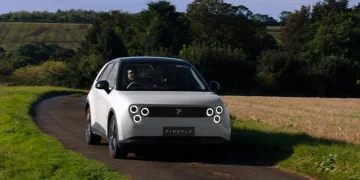
Wuling’s passenger vehicle division continues to perform strongly, offering support for this technological expansion. In October, the Hongguang MINI EV recorded 61,506 units sold, securing the top position among small NEVs. At the same time, the Wuling Bingo S achieved 17,248 units sold, rising sharply month-on-month and placing within the top five best-selling models in its category. This momentum across small electric vehicles illustrates sustained demand for affordable pure-electric mobility, which remains one of the company’s core strengths.
The steady performance of the MINI EV and Bingo S also creates a stable financial base that enables the company to invest in emerging intelligent driving ventures. These sales results help balance the risks associated with developing innovative technologies and new operational models. As manufacturers across China prepare for a future defined by software-driven vehicles, Wuling aims to leverage both its market position and technological assets. This dual-path strategy supports its pursuit of a second growth curve, combining established volume products with next-generation intelligent platforms.
The company’s latest announcement also noted that independent operations are expected to improve business agility. It plans to build synergies between the new subsidiary and its existing manufacturing ecosystem to streamline development. With low-speed autonomous driving poised for rapid expansion, Wuling’s ability to convert pilot projects into commercial deployments will remain a crucial metric. Market observers expect the new structure to help the company respond quickly to customer needs and industry shifts as it positions itself within the broader intelligent mobility landscape.