The latest World Bank reforms tied to Kenya’s budget-support programme have put public finance discipline, anti-corruption safeguards and infrastructure governance at the centre of the country’s next borrowing test.
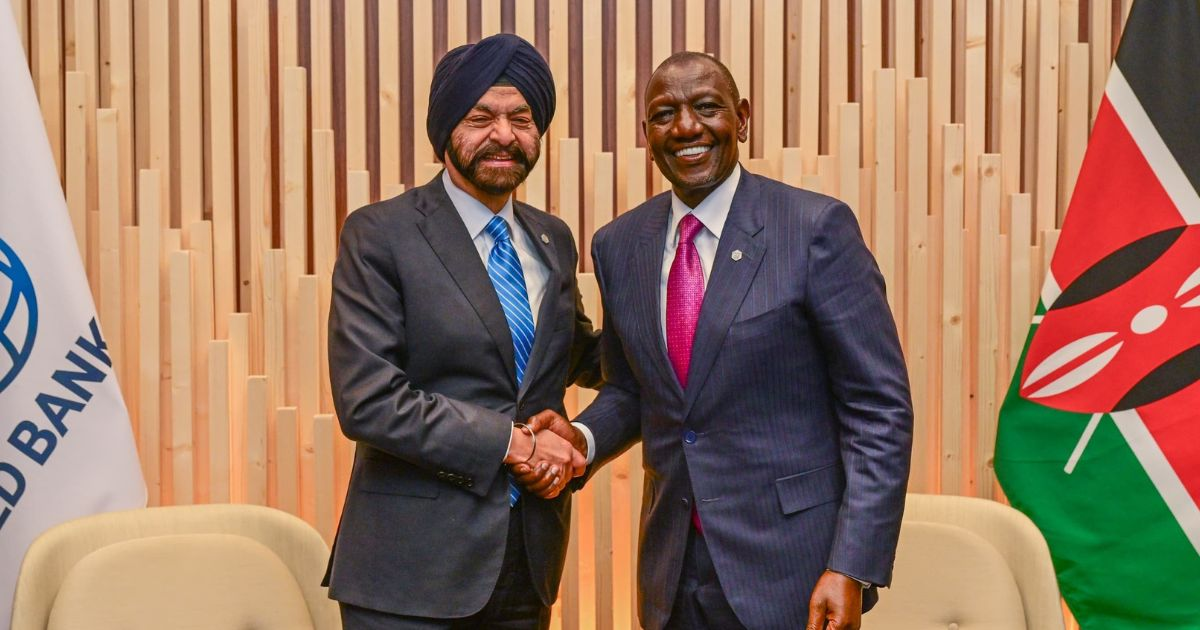
Kenya recently secured US$750 million in World Bank support under the Second Kenya Fiscal Sustainability and Resilient Growth Development Policy Operation, a programme designed to support stronger accountability, public finance management, social protection and private-sector confidence. The financing includes US$340 million from the International Bank for Reconstruction and Development and US$410 million from the International Development Association.
The new money, however, is not the end of the process. The operation is the second in a planned series of three, meaning Kenya’s next access to similar support will depend on further legal, regulatory and institutional changes. The World Bank programme document says the operation is built around three objectives: improving the efficiency, transparency and equity of public finance; promoting more competitive and inclusive markets; and strengthening climate action.
The pending conditions touch some of the most politically sensitive areas of government: whistleblower protection, conflicts of interest, unsolicited public-private partnership proposals, company ownership transparency, supplementary budgets, payroll controls, rail regulation, urban transport, e-mobility and green building rules.
For Kenya, this is bigger than one loan. The reform checklist is a test of whether the government can turn external financing pressure into durable changes in how public money is raised, spent, tracked and protected.
World Bank Reforms Target Kenya’s Public Finance Weak Points
The World Bank reforms are aimed at systems that have long shaped Kenya’s fiscal risks: procurement, payroll, debt pressure, budget slippage and opaque contracting.
Business Daily reported that the lender has outlined tough terms for the next round of loans to Kenya, including anti-corruption, public finance, PPP, transport and climate-related conditions. The reforms are linked to future budget support after Kenya secured about KSh97 billion under the current programme.
The conditions are not random. They are designed to close gaps that can weaken fiscal credibility. If public officers can hide personal interests, procurement is exposed. If companies can conceal true owners, conflict-of-interest checks fail. If government payroll records are fragmented, wage-bill leakages can survive. If supplementary budgets routinely alter spending plans, Parliament-approved fiscal targets lose force.
The World Bank’s programme document also points to the wider fiscal context. It says about one-third of government revenues are currently dedicated to interest payments, mostly on domestic debt. That leaves Kenya with limited room to absorb waste, delays or poorly controlled spending.
This is why the lender is pushing reforms that go beyond new taxes or spending cuts. The focus is on the machinery of government. The question is whether Kenya can improve the systems that decide who gets public contracts, how budgets are changed, how workers are paid and how major projects are approved.
If implemented properly, the reforms could improve investor confidence and reduce leakages. If passed only to unlock funding, they could become another compliance exercise with limited impact.
Background: Why This Story Matters
Kenya’s public finance debate is no longer only about how much the government borrows. It is also about how efficiently the state uses the money it already collects.
The country has faced rising debt-service pressure, public resistance to higher taxes and growing demands for better services. In that environment, any weakness in procurement, payroll or budgeting becomes more expensive. Money lost through inflated contracts, ghost workers, poor project selection or unplanned spending is money that cannot fund schools, hospitals, roads, security, agriculture or counties.
World Bank budget support is attractive because it can offer financing on better terms than commercial borrowing. But development policy financing usually comes with agreed reforms. The lender releases money in support of policy and institutional changes that are expected to strengthen the country’s economy over time.
The World Bank said the June 2026 operation supports Kenya’s effort to strengthen governance, improve public financial management and expand social protection for vulnerable citizens. It also said the programme contributes to the regulatory certainty needed to create jobs, attract private investment and reduce poverty.
That is the official development-finance argument. The political argument is more difficult. Many Kenyans are sceptical of external loan conditions, especially when public debt is already high. Citizens may ask why reforms needed World Bank pressure in the first place.
That scepticism is understandable. Kenya has passed many laws before. The challenge is enforcement. A new whistleblower law will matter only if whistleblowers are protected. An e-procurement system will matter only if agencies actually use it. Beneficial ownership rules will matter only if hidden owners can be detected and sanctioned.
This makes the next phase critical. Kenya does not only need to pass reforms. It needs to prove that the reforms can change behaviour inside government.
Key Details From the Development
The pending conditions can be grouped into governance reforms, fiscal controls, procurement reforms, payroll reforms, transport legislation and climate-linked standards.
Together, they represent one of the more detailed reform packages attached to Kenya’s recent budget-support cycle.
Whistleblower Protection Is Central to the Anti-Graft Agenda
One of the main conditions is the enactment of the proposed Whistleblower Protection Act.
The World Bank’s policy framework lists enactment of the proposed Whistleblower Protection Act as part of measures meant to improve fair competition, increase value for money and strengthen detection of misuse of public funds.
This is important because corruption is often exposed by people who see wrongdoing from inside institutions. Without protection, staff, contractors or public officers may fear retaliation, dismissal, blacklisting or harassment if they report abuse.
A credible whistleblower law should protect good-faith disclosures, establish safe reporting channels, preserve confidentiality and create penalties for retaliation. It should also prevent false reporting from being used maliciously.
For Kenya, the reform has direct fiscal significance. Public trust in taxes and borrowing depends partly on whether citizens believe stolen or wasted money will be detected and punished. If people see debt rising but corruption going unpunished, public support for fiscal reform weakens.
Public Officials’ Interests Must Be Declared and Checked
Another key reform concerns declarations of personal interests by public officials.
The World Bank’s results framework sets a target for 85% of public officials’ personal-interest declarations to be reviewed and verified by responsible commissions by 2028, from a baseline of zero in 2025.
That is a major governance test.
Declaring interests is useful, but verification is what gives the system power. A public official can file a form and still conceal a relationship with a supplier, contractor or company. Verification allows oversight bodies to check whether declarations match actual ownership, business links or procurement activity.
This reform matters for public procurement, licensing, regulation and service delivery. If an official has a private interest in a company seeking a contract, that relationship must be known before decisions are made.
For businesses, verified declarations can improve fair competition. Firms that win tenders through quality and pricing should not lose to politically connected companies hidden behind insiders.
PPP Rules Must Reduce Opaque Infrastructure Deals
The World Bank also wants Kenya to publish regulations limiting unsolicited public-private partnership proposals.
Unsolicited PPP proposals can be useful when private firms bring genuinely innovative ideas. However, they can also weaken competition if they allow large infrastructure deals to be negotiated without open tendering.
Business Daily reported that the World Bank wants Kenya to limit unsolicited PPP proposals and promote competitive tendering for infrastructure projects.
This condition is especially important because Kenya has limited fiscal space but large infrastructure needs. The government will continue looking to private capital for roads, energy, transport, housing and logistics. PPPs can help, but they can also create hidden public liabilities if poorly structured.
A strong PPP framework should require value-for-money tests, fiscal-risk assessment, public disclosure, competitive challenge and clear contract terms. It should also prevent government from accepting proposals simply because they appear to offer quick financing.
For taxpayers, the concern is straightforward. A badly negotiated PPP can become expensive long after the ribbon-cutting ceremony is over.
Beneficial Ownership Rules Must Be Strengthened
Kenya is also expected to amend the Companies Act to align beneficial ownership rules with international anti-money laundering standards.
The World Bank programme document identifies the need to update beneficial ownership rules, include legal trusts, connect beneficial ownership information with the e-Government Procurement system and establish penalties for non-compliance.
Beneficial ownership rules identify the real individuals who ultimately own or control a company. This matters because hidden ownership can be used to conceal corruption, money laundering, tax evasion or conflicts of interest.
In procurement, the reform is particularly important. If a company bidding for a public contract is secretly owned by a public official, relative or politically exposed person, the state needs a way to identify that risk before awarding the contract.
Connecting beneficial ownership data to e-procurement would allow automated checks and better audit trails. It would also make it harder for shell companies to win contracts while hiding their real controllers.
For legitimate businesses, stronger ownership transparency can make competition fairer. For regulators, it improves enforcement. For investors, it signals that Kenya is trying to align with global financial integrity standards.
Public Finance Rules Must Control Supplementary Budgets
The reform package also targets the Public Finance Management Act.
The World Bank wants Kenya to ensure that budget changes during execution remain aligned with fiscal aggregates approved by Parliament through the Budget Policy Statement. The programme document links this to stronger fiscal discipline and improved public finance transparency.
This is a technical reform with major political implications.
Supplementary budgets are necessary when circumstances change. Emergencies, revenue shortfalls or new priorities can require adjustments. But if supplementary budgets are used too frequently or too loosely, the original budget loses credibility.
When spending plans keep changing, fiscal targets become harder to enforce. Ministries may expect additional allocations later. Parliament’s initial budget approval becomes less meaningful. Investors and lenders may question whether the government can stick to its fiscal path.
The proposed reform is therefore about discipline. It does not eliminate flexibility. It seeks to keep flexibility inside the fiscal limits already approved.
Payroll and HR Records Must Be Consolidated
The World Bank also wants Kenya to consolidate payroll and human resource records across government.
The programme framework refers to consolidated HR and payroll data covering ministries, departments and agencies, county executives and assemblies, non-commercial state corporations, commissions and independent offices. It also points to unified payroll numbers and consistency between payroll data, authorised staff establishments and HR records.
This is one of the most practical reforms in the package.
Payroll is a large and politically sensitive part of public spending. Fragmented systems can make it difficult to detect duplicate payments, ghost workers, unauthorised positions, irregular allowances or payroll errors.
A unified payroll and HR system can help the government answer basic questions: Who is employed? Where do they work? Is the position authorised? Is the salary correct? Is the same person being paid twice? Does payroll match the approved establishment?
This reform may not attract the same public attention as a major infrastructure project, but it can have a direct effect on fiscal space. If Kenya reduces payroll leakage, more revenue can be directed toward services and development.
E-Procurement Must Become the Default
The reform agenda also includes mandatory use of the e-Government Procurement system.
The World Bank’s results framework targets 75% of ministries, departments and agencies’ procurement budgets, excluding the security sector, to be processed through e-GP using competitive tendering methods and complying with beneficial ownership transparency requirements by 2028.
This is a major transparency target.
Public procurement is one of the largest channels through which state resources move into the private sector. It is also one of the areas most vulnerable to manipulation. Manual systems make it easier for tender documents to disappear, timelines to be adjusted, bidders to be excluded or evaluation records to be contested.
E-procurement creates a digital trail. It can reduce discretion, widen supplier participation, standardise tender procedures and improve audit capacity.
However, implementation will be difficult. National agencies and counties must have reliable systems, trained officers and enforcement. If agencies can avoid e-GP without consequences, the reform will weaken.
Railways Bill Must Support Modern Transport Governance
Kenya must also advance the Railways Bill as part of the World Bank-supported transport reform agenda.
The World Bank programme document links the Railways Bill to a clearer framework for the development, ownership and operation of rail services, including separating passenger and freight functions and clarifying private-sector participation.
Rail matters because urban mobility is one of Kenya’s biggest productivity issues. Congestion in Nairobi and other urban centres raises the cost of doing business, reduces worker productivity and increases emissions.
A stronger rail framework can support commuter rail, freight logistics and long-term transport planning. It can also help define how public and private players participate in rail operations.
But the law alone will not solve urban transport. Kenya will still need financing, station planning, last-mile connections, safety systems and integration with buses, matatus and non-motorised transport.
Urban Transport and E-Mobility Regulations Are Required
The World Bank is also pushing Kenya to publish regulations for the Urban Transport Policy and E-Mobility Policy.
This reflects the growing importance of electric mobility, especially electric motorcycles, buses and charging networks. Kenya has seen rising interest in e-mobility, but the sector needs clear rules on standards, safety, licensing, battery handling, charging infrastructure and public transport integration.
Urban transport reform is not only a climate issue. It is an economic issue. Cities that move people and goods efficiently are more productive. Workers spend less time in traffic. Businesses face lower delivery costs. Public transport becomes more reliable.
For investors, clear e-mobility rules reduce uncertainty. For consumers, they improve safety and accountability. For government, they provide a framework for managing a fast-growing sector without waiting for problems to become entrenched.
Green Building Standards Must Be Adopted
The final major reform area is green building.
Kenya is expected to integrate green building standards into the Affordable Housing Policy and adopt mandatory minimum performance requirements for new buildings and major renovations.
The World Bank programme document connects this to the country’s climate finance architecture and measurable greenhouse-gas reduction outcomes. It sets a target of US$750 million in climate-finance revenue associated with emissions reductions by 2028.
This condition links housing policy with climate finance.
Affordable housing is one of the government’s flagship priorities. If new units are built without energy and water efficiency standards, Kenya could lock in higher utility costs and emissions for decades. Green building standards can influence design, materials, ventilation, water use, energy consumption and long-term operating costs.
For developers, the rules may raise compliance requirements. For households, they can reduce future utility costs if implemented properly. For government, they can strengthen Kenya’s credibility when seeking climate-linked financing.
Impact on Investors, Government, Businesses and Citizens
For the government, the immediate impact is clear: the next round of World Bank loans depends on reform delivery.
This gives Treasury and Parliament a strong incentive to move legislation and regulations forward. But the reforms cross many institutions, meaning coordination will be difficult. Ministries, county governments, commissions, procurement officers, state corporations and regulators will all be affected.
For investors, the reforms could improve confidence in Kenya’s public-sector operating environment. Transparent procurement, beneficial ownership rules and PPP discipline can make public contracting more predictable. Stronger budget control can also reduce fiscal uncertainty.
For businesses, e-procurement and ownership transparency create both opportunities and obligations. Firms may get fairer access to tenders, but they will also need cleaner documentation, ownership disclosure and compliance readiness.
For citizens, the reforms could improve value for money if they reduce leakages. Cleaner payrolls, stronger procurement and better budget controls can free resources for services. But the benefits will not be instant. Citizens are unlikely to feel the effect unless the laws are enforced consistently.
For counties, the burden may be heavy. Payroll consolidation, e-procurement and licensing reforms require capacity. County governments will need systems, training and support to avoid becoming weak links in the reform chain.
Market, Policy or Industry Context
The World Bank’s pressure comes as Kenya works to maintain fiscal credibility after years of rising debt, high interest costs and public resistance to taxation.
External lenders are watching not only debt ratios, but also the quality of public finance systems. A country with weak procurement, uncontrolled payrolls and frequent budget deviations faces higher risk because new borrowing may not translate into productive spending.
This is why the DPO conditions focus heavily on institutions. The World Bank is effectively saying that Kenya’s access to budget support depends on whether the country can prove it is improving the way public money is managed.
The programme also reflects a wider shift in development finance. Lenders increasingly connect financing to governance, climate action and private-sector enabling reforms. Money is no longer judged only by how much is disbursed. It is judged by whether it supports systems that can attract investment, protect vulnerable households and reduce long-term fiscal risks.
For Kenya, the reforms can support a stronger investment story. Investors want to know that public contracts are competitive, project approvals are transparent and the state can manage its finances. If reforms work, Kenya could benefit from lower risk perception and stronger private-sector participation.
But there is a warning. Passing laws to satisfy lenders is not the same as building institutions. The country’s history shows that implementation often determines whether reforms succeed or fail.
What Comes Next
The next stage will be legislative and administrative.
Parliament will need to move on laws such as the Whistleblower Protection Bill, Companies Act amendments, Public Finance Management changes, procurement-related amendments and the Railways Bill. Ministries and agencies will need to publish regulations for PPPs, urban transport, e-mobility and green building standards.
The Controller of implementation will not be one office. It will be the combined work of Treasury, Parliament, KRA-related systems, procurement bodies, county governments, transport regulators, housing authorities and oversight commissions.
The most important signs to watch are practical.
Does Kenya enact a whistleblower law with real protections? Are personal-interest declarations actually verified? Are unsolicited PPPs limited by enforceable rules? Does e-procurement become mandatory in practice? Are payroll records cleaned across counties and state entities? Are green building standards used in actual housing projects?
The World Bank’s programme document identifies overall risk as substantial. That is a reminder that reform delivery is not guaranteed.
Kenya is also moving closer to the 2027 election cycle, when fiscal discipline can become harder. Political spending pressure, public demands and lobbying by affected interests may slow implementation.
Expert Analysis
The World Bank’s conditions are tough because they focus on the areas where reform is most likely to face resistance.
Whistleblower protection threatens those who benefit from silence. Conflict-of-interest verification threatens officials with hidden business links. Beneficial ownership rules threaten anonymous contracting. E-procurement threatens manual discretion. PPP rules threaten opaque deal-making. Payroll consolidation threatens ghost workers and unauthorised payments. Budget controls threaten unplanned spending.
That is why the conditions matter. They are not cosmetic reforms. If implemented honestly, they would change incentives inside government.
The strongest part of the package is its systems approach. No single reform can fix public finance. But together, beneficial ownership disclosure, e-procurement, conflict checks and whistleblower protection can make procurement abuse harder. Payroll consolidation and PFM amendments can improve spending control. PPP rules can reduce fiscal risks from infrastructure. Green building and transport reforms can connect growth with climate finance.
The main weakness is execution risk. Kenya can pass laws faster than it can change behaviour. Agencies may comply on paper while preserving old practices. Digital systems may be introduced but not fully used. Oversight bodies may receive new duties without enough resources.
The government should therefore treat the World Bank conditions as a domestic accountability agenda, not just a loan checklist. The reforms are in Kenya’s interest even without external pressure. Citizens need cleaner procurement. Businesses need fairer competition. Investors need predictability. Treasury needs spending control.
If the reforms are implemented well, the next loan tranche could be only the short-term benefit. The deeper gain would be a stronger public finance system.
If they are implemented weakly, Kenya may unlock financing but lose the larger opportunity to rebuild trust.
Frequently Asked Questions
What is the main issue?
The main issue is that Kenya must complete a new set of World Bank-linked reforms before accessing the next phase of budget support under the Development Policy Operations programme.
Why do the World Bank reforms matter?
They matter because they target public finance weaknesses that affect corruption risk, procurement, payroll control, infrastructure contracting, climate finance and investor confidence.
How much funding did Kenya recently secure?
Kenya recently secured US$750 million under the Second Kenya Fiscal Sustainability and Resilient Growth Development Policy Operation. The package includes US$340 million from IBRD and US$410 million from IDA.
What laws and regulations are involved?
The reforms include the proposed Whistleblower Protection Act, Companies Act amendments on beneficial ownership, Public Finance Management Act changes, procurement reforms, PPP regulations, the Railways Bill, urban transport and e-mobility regulations, and green building standards.
Why is whistleblower protection important?
Whistleblower protection is important because insiders are often the first to detect corruption, procurement abuse or misuse of public funds. Without legal protection, many may avoid reporting wrongdoing.
How will businesses be affected?
Businesses may benefit from fairer procurement and clearer PPP rules, but they will also face stronger disclosure and compliance requirements, especially around beneficial ownership and e-procurement.
What happens next?
Kenya must move the required laws, amendments and regulations through Parliament, Cabinet and implementing agencies. Future World Bank budget support will depend on whether the reforms are completed and implemented credibly.
Conclusion
Kenya’s next World Bank loan test is not only about borrowing. It is about credibility.
The reform conditions target some of the most important weaknesses in the country’s public finance system: corruption reporting, hidden ownership, conflicts of interest, opaque PPPs, fragmented payrolls, loose budget adjustments and weak procurement controls. They also push Kenya to modernise transport rules and adopt climate-linked building standards.
For Treasury, the reward is access to budget support at a time when fiscal space remains tight. For citizens, the promise is better protection of public money. For investors, the reforms could improve confidence in Kenya’s governance and infrastructure pipeline.
But the risk is familiar. Kenya could pass the laws, unlock the money and then under-implement the reforms. That would preserve the appearance of progress while leaving the deeper system unchanged.
The better outcome is harder but more valuable. If Kenya treats the World Bank reforms as a national governance agenda, the benefits could last beyond one financing cycle. Cleaner procurement, verified conflict declarations, transparent company ownership, disciplined budgets and controlled payrolls would strengthen the state’s ability to deliver services and manage debt.
The next loan may depend on the checklist. Kenya’s long-term fiscal future depends on whether the checklist becomes real reform.