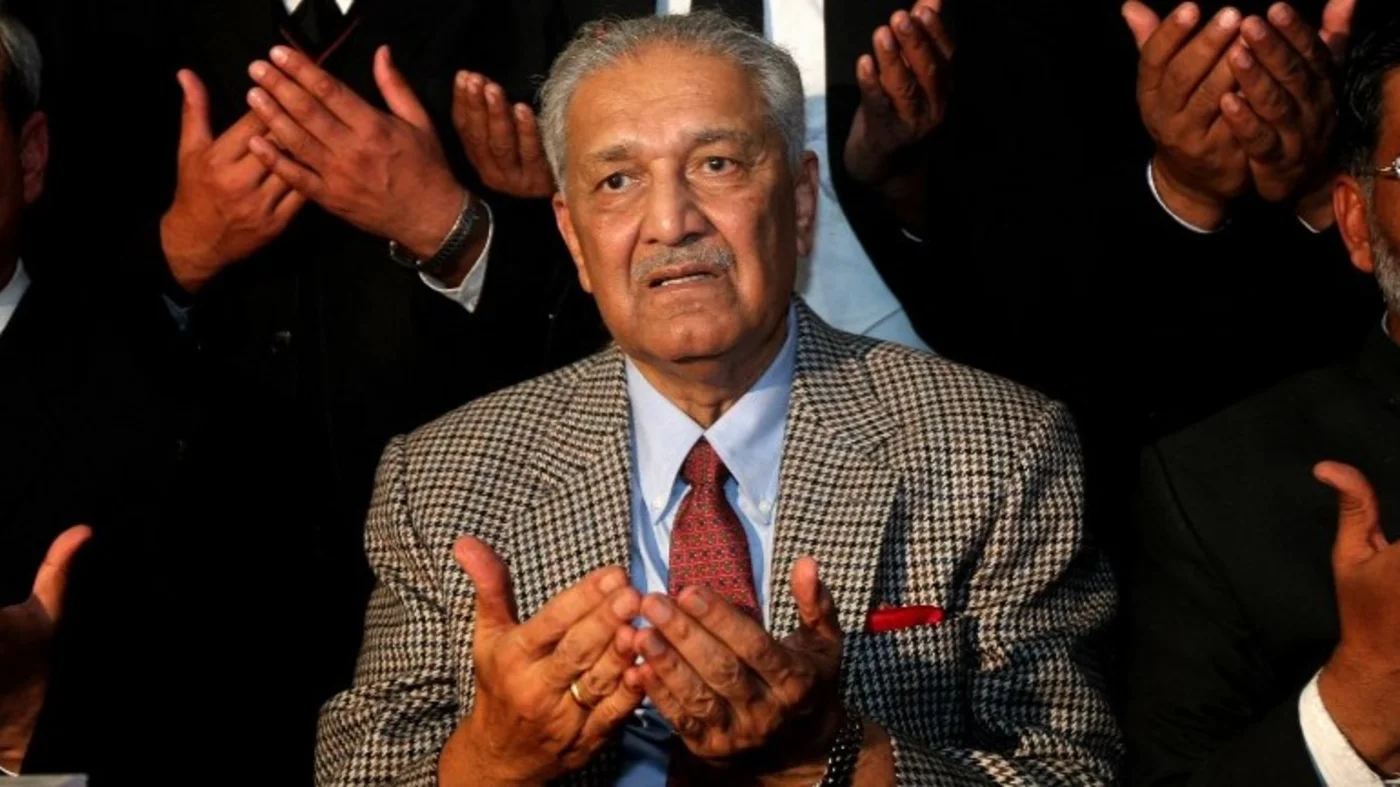
By Editor Bizmart Holdings | June 28, 2025. In the heart of South Asia, amid escalating rivalries and ideological fervor, one man changed the strategic destiny of an entire nation — and shook the nuclear order of the world.
Dr. Abdul Qadeer Khan, Pakistan’s most celebrated nuclear scientist, is revered by many in his homeland as the father of the country’s atomic bomb. But in the eyes of Israel’s Mossad and America’s CIA, he was one of the most dangerous men alive — a scientist who outmaneuvered global powers, defied multiple assassination attempts, and ignited fears of a so-called “Islamic bomb.”
Despite Israeli threats, Western opposition, and covert sabotage attempts, Pakistan succeeded in becoming the first Muslim-majority country to acquire nuclear weapons — a historic moment driven by AQ Khan’s determination and shielded by geopolitical opportunism.
The Origins of the Islamic Bomb
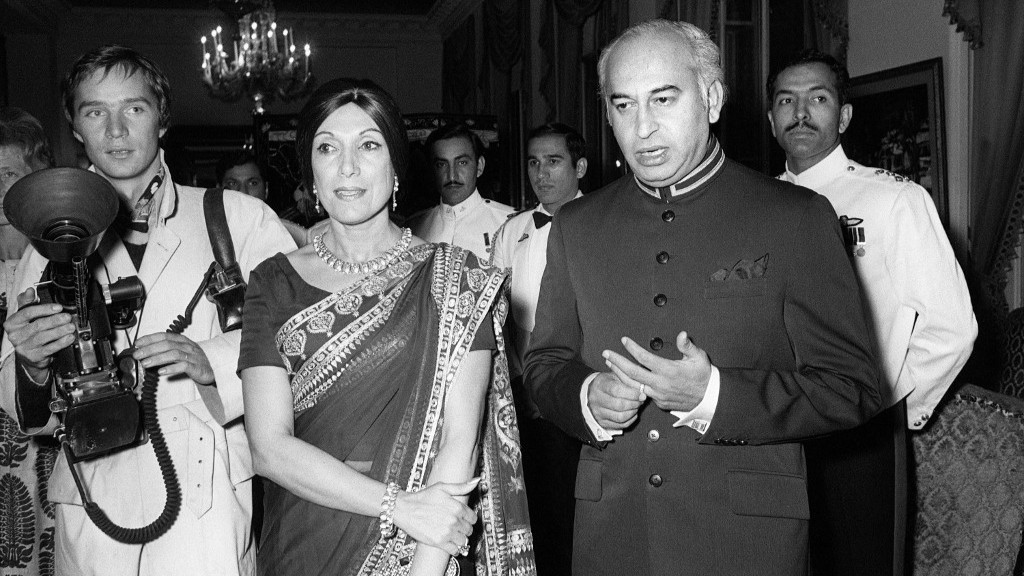
The race began in May 1974, when India detonated its first nuclear device, dubbed “Smiling Buddha.” Days later, Pakistani Prime Minister Zulfikar Ali Bhutto vowed that Pakistan would match its rival — at any cost.
“We will eat grass or leaves, even go hungry, but we will get one of our own,” Bhutto declared. “There is a Christian bomb, a Jewish bomb, and now a Hindu bomb. Why not an Islamic bomb?”
That nationalistic and religious fervor laid the groundwork for AQ Khan’s historic undertaking. Born in 1936 under British colonial rule, Khan earned degrees in metallurgy in Berlin and the Netherlands. By the mid-1970s, while working for URENCO — a Dutch partner in European nuclear energy — Khan gained access to sensitive centrifuge blueprints used to enrich uranium.
In 1976, he abruptly returned to Pakistan, reportedly carrying with him classified designs that would form the backbone of Pakistan’s uranium enrichment program.
Israeli and Western Sabotage Campaigns
From the beginning, Pakistan’s nuclear ambitions alarmed Israel. By the early 1980s, Mossad had identified Khan as a serious threat. Israeli intelligence reportedly launched a series of sabotage and intimidation campaigns — including letter bombs, threats to European suppliers, and pressure on governments — aimed at derailing Khan’s work.
“They didn’t want a Muslim country to have the bomb,” said Feroz Khan, a former Pakistani official.
According to authors Adrian Levy and Catherine Scott-Clark, Mossad even contemplated assassinating Khan. One executive working with Khan narrowly survived a letter bomb attack; another received repeated threats from a mysterious Israeli agent posing as a German diplomat.
By 1983, a Dutch court had convicted Khan in absentia for nuclear espionage, though the case was overturned. None of it stopped the program.
A Secret Israeli-Indian Strike Plan
One of the most dramatic Israeli efforts came in the mid-1980s. Israel, allegedly in coordination with India, formulated a plan to bomb the Kahuta nuclear facility near Rawalpindi — the heart of Pakistan’s enrichment effort.
Israeli F-16s were to launch from India’s Jamnagar airbase. Indian Prime Minister Indira Gandhi initially approved the operation. But under diplomatic pressure — and possibly fearing all-out war — the plan was scrapped.
In 1987, during her son Rajiv Gandhi’s premiership, Indian forces again mobilized near the Pakistan border. General Krishnaswami Sundarji reportedly sought to provoke conflict as a pretext to strike Kahuta. But once again, political intervention prevented escalation.
The Cold War Shield: US and Chinese Tolerance
Despite condemnation, Western nations — especially the U.S. — often turned a blind eye. After the Soviet invasion of Afghanistan in 1979, Pakistan became vital to the American-led effort to repel communism.
Though President Jimmy Carter initially cut aid over Pakistan’s nuclear activities, his administration reversed course. Under President Reagan, Washington funneled arms and funds to Islamabad, downplaying nuclear concerns for Cold War gains.
China also quietly supported Pakistan, providing enriched uranium, technical experts, and possibly nuclear weapon designs — all while Israel and the West struggled to monitor AQ Khan’s growing underground network.
Pakistan Becomes a Nuclear Power
By the late 1980s, Khan had built an independent and secretive enrichment network. In 1998, following India’s second round of nuclear tests, Pakistan responded with five underground detonations in the Balochistan desert.
The world’s seventh nuclear power had arrived — and it was Muslim.
Khan became a national hero, paraded through Islamabad, and hailed as the savior of Pakistan. “Who made the atom bomb? I made it. Who made the missiles? I made them for you,” he famously declared.
A Global Nuclear Bazaar
What shocked the world more than Pakistan’s tests was what came next.
From the mid-1980s, Khan secretly operated a black-market nuclear network. He sold designs, components, and expertise to Iran, Libya, and North Korea — often by ordering surplus equipment through dummy companies.
In 2003, Libyan leader Muammar Gaddafi exposed the entire operation in exchange for U.S. protection. Western agencies seized nuclear materials disguised as chicken farm equipment and traced documents to a dry cleaner in Islamabad.
“It was an astounding transformation,” said a U.S. official. “He exploited the market to build a bomb — then sold the entire kit to the world’s worst regimes.”
Confession, House Arrest, and Legacy
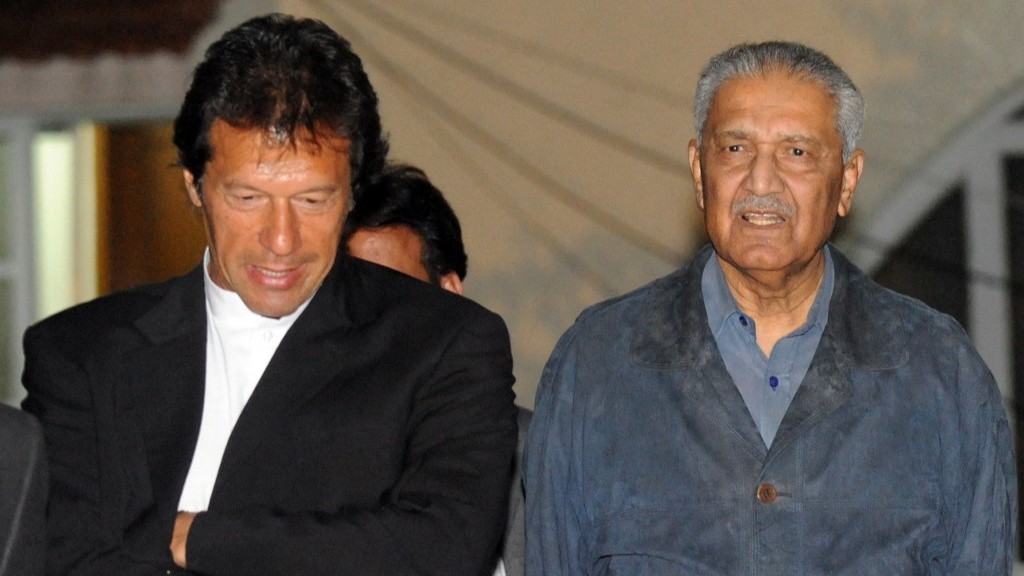
In 2004, Khan went on national television and took full responsibility — claiming he acted alone. President Pervez Musharraf swiftly pardoned him, calling him “my hero,” but placed him under house arrest until 2009.
In his later years, Khan lived a quiet life in Islamabad, running a community center and feeding monkeys. He remained defiant, insisting he had done the right thing.
“I saved the country when I made Pakistan a nuclear nation, and I saved it again when I confessed and took the whole blame on myself,” he said.
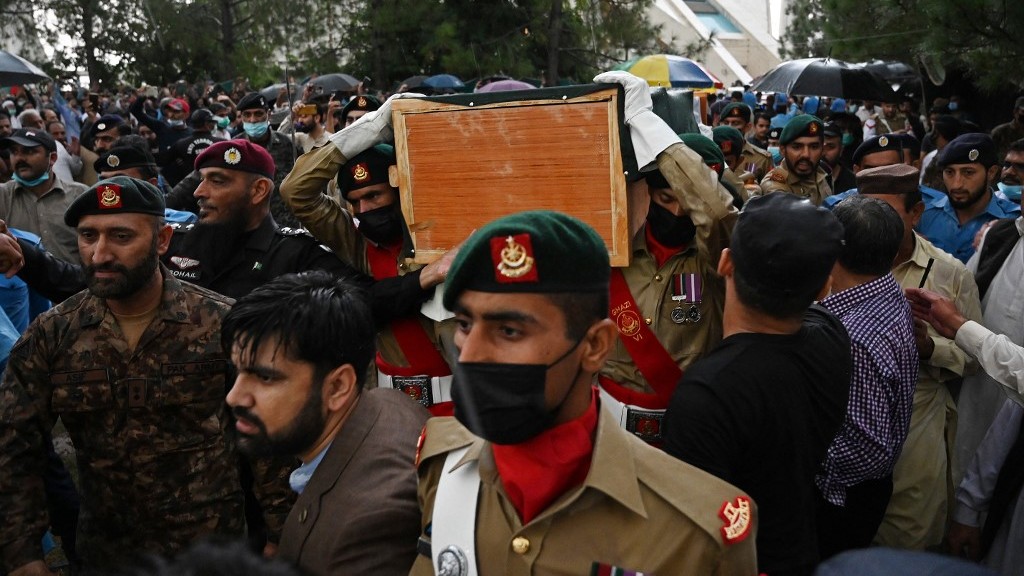
He died of COVID-19 in October 2021. His funeral was a state ceremony, attended by top military brass and mourners from all walks of life.
A Lasting Impact
To Israel and the West, AQ Khan was a dangerous rogue scientist who disrupted the global nonproliferation regime.
To Pakistan, he remains a national savior — the man who ensured that no foreign power would ever again threaten the country’s survival.
“No one can cast an evil eye on Pakistan,” he had declared.
And for many in the Muslim world, he was the embodiment of one defiant question: Why not an Islamic bomb?
Description
Abdul Qadeer Khan NI, HI, FPAS was a Pakistani nuclear physicist and metallurgical engineer. He is colloquially known as the “father of Pakistan’s atomic weapons program”. Wikipedia
Born: 27 April 1936, Bhopal, India
Died: 10 October 2021 (age 85 years), KRL Hospital, Islamabad, Pakistan
Education: Delft University of Technology (TU Delft), KU Leuven · See more
Children: Dina Khan, Ayesha Khan
Place of burial: Graveyard, H-8, Islamabad, Pakistan
Books: Dr. A.Q. Khan on Science and Education
Siblings: Abdul Quyuim Khan