


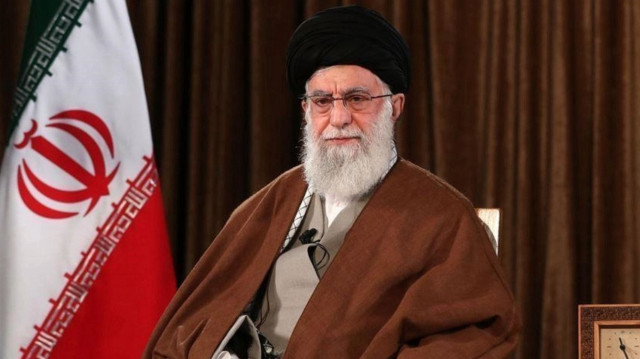
Tehran, June 28, 2025 – In a fiery and defiant address broadcast on state television and posted on social media, Iran’s Supreme Leader Ayatollah Ali Khamenei declared victory over Israel following a 12-day military confrontation that rattled the region and drew international concern.
Speaking in a pre-recorded message to the Iranian people, Khamenei lauded what he described as a “historic triumph” by the Islamic Republic against its longtime adversary. “With all that clamor, with all those claims, the Zionist regime, under the blows of the Islamic Republic, has almost collapsed and been crushed,” he said in the televised remarks.
“I offer my congratulations on the victory over the fallacious Zionist regime,” Khamenei continued, in a speech that many analysts interpret as both a morale booster for domestic audiences and a direct challenge to Israel and its allies.
A Shift in Rhetoric Amid Rising Tensions
The comments follow nearly two weeks of intense cross-border fighting between Iran and Israel — the most direct and sustained military clash between the two nations in modern history. The conflict, which erupted after the bombing of Iranian-linked sites in Syria and Lebanon, quickly escalated into a full-scale confrontation, with missile barrages, cyberattacks, and drone warfare targeting strategic infrastructure and military bases on both sides.
Israeli officials have not formally responded to Khamenei’s latest statement, though government sources speaking to regional media rejected the claim of defeat, calling it “delusional propaganda.” Israel’s defense minister Yoav Gallant said on Wednesday that the Israeli military had inflicted “severe and irreversible damage” to Iranian military capabilities in the region.
Khamenei’s Political Messaging
Khamenei’s declaration is being viewed as a symbolic assertion of ideological dominance rather than an admission of literal military victory. Analysts believe the Supreme Leader is capitalizing on the sustained resistance displayed by Iran and its proxy militias — including Hezbollah in Lebanon and various groups in Iraq and Yemen — to project strength amid increasing internal dissent and economic challenges at home.
“This is more about strategic messaging than battlefield reality,” said Dr. Reza Hashemi, a Middle East analyst based in London. “Iran wants to present itself as the moral and tactical victor in a protracted struggle against Zionism and Western influence.”
Fallout and International Reaction
The 12-day war resulted in heavy casualties on both sides, though exact figures remain disputed. Iranian state media reported that dozens of Revolutionary Guard personnel were killed, while Israeli reports confirmed significant losses, including soldiers and civilians, particularly in the north where missile strikes were most concentrated.
The United Nations has called for restraint, with Secretary-General António Guterres urging both nations to “step back from the brink” and return to diplomacy. The United States, a key ally of Israel, has reaffirmed its commitment to Israel’s defense but has also cautioned against further escalation that could drag the entire region into a broader war.
Meanwhile, celebrations erupted in parts of Tehran and other Iranian cities following Khamenei’s announcement, with crowds waving flags and chanting anti-Israel slogans. State media broadcast images of jubilant citizens praising the Supreme Leader and the Islamic Revolutionary Guard Corps (IRGC) for their resistance.
A Battle of Narratives
While the actual outcome of the war remains contested and unresolved, both sides are now engaged in a fierce narrative war. Israel continues to highlight its technological superiority and the effectiveness of its Iron Dome and cyber defenses, while Iran emphasizes its resilience and ideological resolve.
Khamenei’s remarks signal that Tehran sees the confrontation not just as a military conflict, but as a symbolic moment in a decades-long ideological struggle. “This is not the end,” he said in closing his message. “The resistance will continue until the Zionist entity is fully uprooted.”
Whether this rhetoric will translate into further conflict or mark a turning point toward negotiations remains to be seen. But what is clear is that the war has altered the geopolitical landscape and intensified the already volatile rivalry between Tehran and Tel Aviv.


