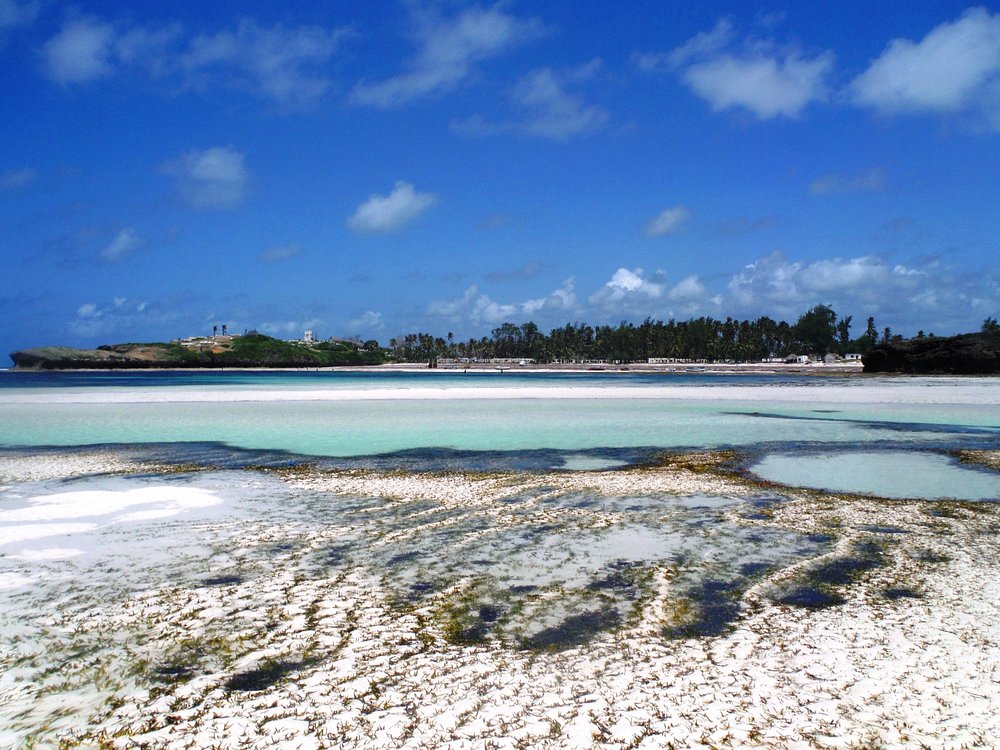
Watamu Beach represents a quieter, more environmentally conscious side of Kenya’s Indian Ocean coastline. Located in Kilifi County between Malindi and Mombasa, Watamu Beach is defined by shallow turquoise bays, offshore coral gardens, and wide stretches of white sand shaped into natural coves. Unlike busier coastal centers, Watamu Beach has evolved around conservation, community involvement, and slow-paced travel, creating a destination that feels intimate rather than crowded.
The coastline here unfolds in a series of protected bays rather than a single uninterrupted beach. Each bay offers a slightly different character, from open sandbanks exposed at low tide to sheltered lagoons ideal for snorkeling. Offshore reefs break the waves before they reach the shore, keeping the water calm and clear for most of the year. At low tide, sandbars emerge and allow visitors to walk far into the ocean, observing fish and coral through shallow water.
Watamu Beach has long attracted travelers seeking nature over nightlife. The village grew around fishing, small-scale trade, and later eco-tourism, which now forms the backbone of the local economy. Resorts and lodges are spread out and often integrated into the natural environment, surrounded by palms, mangroves, and indigenous vegetation. This low-density development preserves the sense of openness that defines the area.
Cultural diversity also shapes Watamu Beach. While the region has deep Swahili roots, modern Watamu reflects migration from across Kenya, driven largely by employment in tourism and conservation. The result is a community that blends coastal traditions with inland cultures, creating a welcoming and layered social landscape. This balance between people, nature, and heritage has made Watamu Beach one of the most respected eco-tourism destinations on Kenya’s coast.
Geography and Coastal Layout of Watamu Beach
Watamu Beach is located approximately fifteen kilometers south of Malindi and about one hundred kilometers north of Mombasa. The village sits on a small headland between Blue Lagoon Bay and Watamu Bay, giving it access to multiple sheltered inlets along the shoreline. This geography has played a major role in shaping the area’s marine biodiversity and tourism appeal.
The coastline is composed of several distinct beaches and reef systems, including Garoda Beach, Turtle Bay, Ocean Breeze, Kanani Reef, and Jacaranda Beach. These areas are protected under the Watamu Marine National Park, ensuring that coral reefs, seagrass beds, and marine species remain intact. The combination of shallow lagoons and deeper reef drop-offs makes the area suitable for both beginners and experienced snorkelers.
Inland, Watamu Beach transitions into mangrove forests, coastal woodland, and tidal creeks. Mida Creek, one of the most important ecosystems in the region, lies just south of the main village. This extensive mangrove system supports fish breeding, birdlife, and local livelihoods while acting as a natural buffer against coastal erosion.
Watamu Marine National Park and Conservation Efforts
Watamu Beach is internationally recognized for its marine conservation achievements. The Watamu Marine National Park forms part of a larger protected seascape that has earned UNESCO Biosphere Reserve status. This designation reflects the area’s ecological value and the successful integration of conservation with human activity.
The marine park protects coral reefs that host hundreds of fish species, sea turtles, dolphins, and seasonal visitors such as whale sharks and humpback whales. The shallow reefs are particularly resilient, benefiting from long-standing protection and active management. Snorkeling and diving activities are carefully regulated to minimize environmental impact.
Local conservation initiatives play a central role in protecting the marine environment. Community organizations, tourism operators, and environmental groups work together to support reef monitoring, turtle conservation, and environmental education. This collaborative approach has positioned Watamu Beach as a model for community-based marine conservation in East Africa.
Marine Life and Seasonal Wildlife at Watamu Beach
Marine biodiversity is one of Watamu Beach’s defining features. The reefs support an extraordinary variety of fish, from colorful reef dwellers to larger pelagic species that pass through deeper waters. Sea turtles are commonly seen near the shore, particularly around nesting seasons, and conservation centers actively rehabilitate injured turtles before releasing them back into the ocean.
Between mid-year months, humpback whales migrate along the coast, offering opportunities for whale watching. These migrations bring whales close enough to shore to be observed from boats and, occasionally, from the beach itself. Dolphins are present year-round and often accompany snorkeling or boat excursions.
On land, the surrounding forests and mangroves host monkeys, reptiles, and diverse bird species. Watamu Beach is also notable for its herpetological discoveries, including the identification of unique snake species adapted to coastal environments.
History and Archaeological Heritage Near Watamu Beach
Human settlement around Watamu Beach dates back centuries. Archaeological evidence indicates continuous habitation since at least the thirteenth century, driven by trade, fishing, and agriculture. The region was part of the broader Swahili coast network that connected East Africa with Arabia and Asia through Indian Ocean trade routes.
One of the most important historical sites near Watamu Beach is the Gede Ruins. Hidden within a coastal forest, this ancient Swahili town once supported a thriving population with stone houses, mosques, and a sophisticated water system. Today, the ruins stand as a reminder of the region’s historical depth and cultural complexity.
Visiting these ruins provides context for understanding modern Watamu Beach. The relationship between people and the environment, evident in ancient architecture and land use, continues to influence conservation practices today.
People and Community Life in Watamu Beach
Watamu Beach is home to a diverse population shaped by centuries of migration and exchange. The Bajuni people are considered among the earliest inhabitants, tracing their heritage to interactions between coastal communities and traders. Over time, people from inland Kenya moved to the area, drawn by opportunities in fishing, hospitality, and conservation.
This diversity is reflected in everyday life, from markets and schools to festivals and religious practices. Community involvement is particularly strong in environmental initiatives, where local knowledge complements scientific conservation approaches.
Cultural expression in Watamu Beach includes music, storytelling, and religious traditions that link the present community to its coastal roots. These elements enrich the visitor experience while reinforcing a sense of place.
Tourism Experience and Atmosphere at Watamu Beach
Tourism in Watamu Beach emphasizes quality over quantity. Accommodation ranges from eco-lodges and boutique resorts to private villas, many designed to blend into the natural environment. The absence of large commercial developments preserves the village’s relaxed character.
Visitors are drawn to Watamu Beach for its calm atmosphere and outdoor activities rather than nightlife. Days often revolve around the tide, with snorkeling, kayaking, or beach walks timed to water levels. Evenings are quieter, focused on dining, sunsets, and community events.
This slower pace appeals to travelers seeking meaningful engagement with nature and local culture. As a result, Watamu Beach attracts families, couples, researchers, and eco-tourists looking for a balanced coastal experience.
How to Get to Watamu Beach
Watamu Beach is accessible by air, road, and rail-road combinations. The nearest airport is Malindi, located a short drive from the village. Flights connect Malindi with major cities, making air travel the fastest option.
Road travel from Mombasa offers scenic views of the coastline and rural landscapes. While the journey takes longer, it provides flexibility and access to surrounding attractions.
Train travelers can arrive in Mombasa before continuing by road. This option combines comfort with affordability and is commonly used by domestic travelers.
Entry Fees and Charges for Watamu Beach Attractions
Access to Watamu Beach itself is open, but several protected sites require entry fees. The Watamu Marine National Park charges daily conservation fees that vary based on residency status and season. These fees support reef protection, ranger patrols, and environmental education.
The Gede Ruins charge a separate entry fee, contributing to site preservation and community programs. Mida Creek boardwalk experiences include guided canoe rides and conservation access fees.
Activity costs such as snorkeling trips depend on group size, duration, and equipment provided. These charges often include park fees, guides, and safety equipment.
Entry Fees & Activity Costs
Fees are subject to seasonal changes and residency status.
| Location / Activity | Non-Resident | Citizen (KES) | Details |
|---|---|---|---|
| Marine National Park | US$ 20–40 | KSh 200–500 | Fees vary by season (High: July-Mar). |
| Gede Ruins | US$ 10 (approx.) | KSh 200–300 | 12th-century Swahili archaeological site. |
| Mida Creek Boardwalk | US$ 22 | KSh 500 | Includes boardwalk and traditional canoe ride. |
| Snorkeling Boat Trip | US$ 50–100 | KSh 3,000+ | Private or group glass-bottom boat tours. |
Top Things to Do
- Watamu Marine National Park: Known for “The Marine Big Five” (sea turtles, whale sharks, dolphins, whales, and billfish) and over 600 fish species.
- Gede Ruins: Explore the mysterious remains of a lost Swahili town nestled in a lush forest filled with Sykes’ monkeys.
- Mida Creek: A tidal inlet surrounded by mangroves; popular for sunset dhow cruises, kayaking, and birdwatching (flamingos and kingfishers).
- Turtle Watch: Visit the Local Ocean Conservation centre to see rescued sea turtles being rehabilitated.
- Marafa Hell’s Kitchen: A 1-hour drive to a dramatic sandstone canyon known for its vibrant red rock formations at sunset.
- Water Sports: Excellent conditions for kitesurfing (at Garoda Beach), paddleboarding, and deep-sea fishing.
Getting There
- Flight: Fly from Nairobi (Wilson or JKIA) to Malindi Airport. A taxi from Malindi to Watamu costs approximately KSh 2,500–3,500.
- Train: Take the SGR Madaraka Express to Mombasa Terminus, then hire a private transfer or take a matatu toward Malindi.
Top Activities at Watamu Beach
Snorkeling remains the most popular activity at Watamu Beach due to calm waters and vibrant reefs. Boat-based trips allow access to deeper reef areas, while shore snorkeling is possible during favorable tides.
Kayaking and paddleboarding are common at Mida Creek, offering quiet exploration through mangrove channels. Sunset dhow cruises combine cultural heritage with scenic views.
Nature-based excursions extend beyond the coast. Day trips to inland geological formations and conservation areas provide contrast and expand the range of experiences available from Watamu Beach.
Watamu Beach as an Eco Tourism Destination
Watamu Beach has earned recognition as a leader in eco-tourism along Kenya’s coast. Conservation is not treated as a separate activity but integrated into daily life and tourism operations. From waste management to wildlife protection, sustainability principles guide development.
This approach has helped maintain the area’s natural beauty while supporting livelihoods. Visitors are encouraged to participate responsibly, contributing to long-term preservation through informed choices.