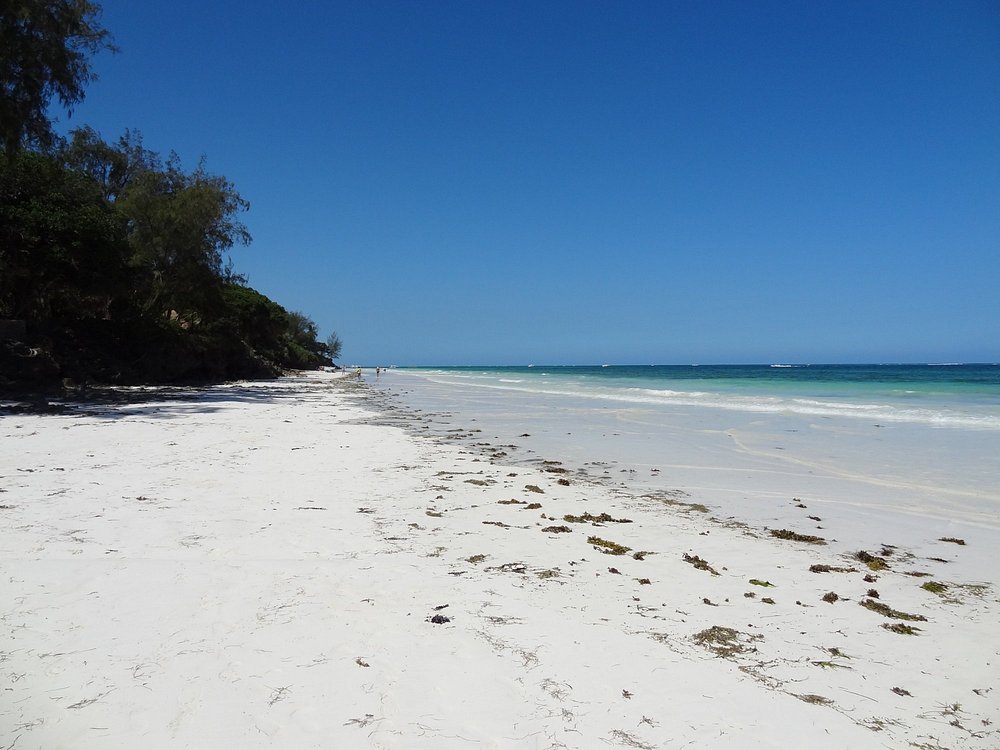
Diani Beach is widely regarded as one of the most iconic coastal destinations in East Africa. Stretching along the Indian Ocean in Kwale County, the beach lies south of Mombasa and forms part of Kenya’s renowned South Coast. Its long arc of powder-white sand, gently sloping shoreline, and vivid turquoise waters have made it a symbol of tropical travel in the region. Over time, Diani Beach has grown from a quiet coastal settlement into a globally recognized beach destination while still retaining a relaxed, natural character.
The appeal of Diani Beach lies in its balance. It offers open space and calm waters for travelers seeking rest, yet it also provides adventure for visitors drawn to marine sports and cultural exploration. Coral reefs run parallel to the shore, acting as a natural barrier that keeps the nearshore waters shallow and clear at low tide. This unique geography allows visitors to wade far out toward the reef while observing the sandy seabed below, creating an experience that feels both safe and immersive.
Beyond the shoreline, Diani Beach is framed by lush coastal vegetation. Palm trees, indigenous forests, and riverine systems shape the landscape and provide habitat for birds and small mammals. The Mwachema River flows into the ocean near the beach, adding ecological diversity and scenic contrast to the coastline. Inland, the environment gradually transitions from beach vegetation to woodland and rolling hills, reinforcing the sense that Diani Beach is part of a broader living ecosystem rather than an isolated resort strip.
Culturally, Diani Beach reflects centuries of coastal history. The area is traditionally home to the Digo people, one of the Mijikenda communities whose cultural practices remain deeply connected to the land and forests. Over time, people from across Kenya and beyond have settled in Diani, drawn by tourism and opportunity. This blend of heritage and migration has shaped a coastal town that feels welcoming, diverse, and rooted in tradition while remaining outward-looking.
Location and Physical Setting of Diani Beach
Diani Beach lies along Kenya’s Indian Ocean coastline in Kwale County, forming a continuous stretch of shoreline that extends from the Kongo River in the north to Galu Beach in the south. The beach spans approximately seventeen kilometers, making it one of the longest uninterrupted beach fronts in the country. This length contributes to its spacious feel, even during peak travel periods.
The shoreline is characterized by fine coral sand that remains cool underfoot and reflects sunlight, giving the beach its distinctive brightness. Offshore, coral reefs protect the coast from strong waves, creating calm swimming conditions for much of the year. During low tide, sandbars emerge beneath the surface, allowing visitors to walk far into the shallow water while observing fish and marine life through the clear sea.
Vegetation plays a key role in defining the landscape. Coconut palms line much of the beach, while dense greenery inland provides shade and natural cooling. These features help maintain Diani Beach’s reputation as a visually striking yet environmentally grounded destination.
Cultural Heritage Around Diani Beach
The cultural landscape of Diani Beach is closely linked to the history of the South Coast. The Digo community has lived in this region for generations, maintaining traditions connected to fishing, farming, and sacred forests. Cultural sites in and around Diani Beach continue to play an important role in preserving this heritage.
One of the most significant landmarks is the Kongo Mosque, located near the northern end of Diani Beach where the river meets the ocean. This historic structure is one of the oldest remaining Swahili sites in the area and reflects early Islamic influence along the East African coast. Its presence highlights the long-standing connections between coastal Kenya and wider Indian Ocean trade networks.
Cultural experiences around Diani Beach often extend beyond monuments. Local markets, community initiatives, and guided visits to sacred forests allow visitors to learn about traditions in respectful and informative ways. These interactions add depth to the beach experience and strengthen connections between tourism and cultural preservation.
Tourism Growth and Community Life in Diani Beach
Tourism has shaped Diani Beach for decades, gradually transforming it into a major destination while supporting local livelihoods. Accommodation ranges from boutique hotels and eco-lodges to family-friendly resorts, offering options for different travel styles. Despite this growth, Diani Beach has avoided the dense urban development seen in some coastal destinations, retaining open spaces and natural scenery.
The population of the wider Ukunda and Diani area reflects this evolution. People from various regions have settled here, drawn by employment and business opportunities linked to tourism. This diversity contributes to a dynamic community atmosphere that blends local identity with international influence.
Infrastructure has continued to improve, enhancing access while reducing pressure on older transport routes. New road connections have shortened travel times from Mombasa, making Diani Beach more accessible without altering its essential character.
How to Get to Diani Beach on Kenya’s South Coast
Reaching Diani Beach is straightforward, with several transport options available. Air travel offers the fastest route, with regular flights from Nairobi to Ukunda Airstrip. The short flight time makes Diani Beach ideal for travelers seeking quick access to the coast.
Road travel remains popular, particularly for visitors coming from Mombasa. The journey typically takes under an hour, depending on traffic and route choice. Improved bypass routes have reduced reliance on ferry crossings, making road access more predictable.
Rail travelers can use the standard gauge railway to Mombasa, followed by a road transfer to Diani Beach. This option combines comfort with scenic views along the coast.
Marine Environment and Ocean Conditions at Diani Beach
The marine environment is central to the identity of Diani Beach. Coral reefs offshore support diverse marine life, including tropical fish, sea turtles, and occasional dolphins. These reefs not only protect the shoreline but also create ideal conditions for snorkeling and diving.
Water clarity varies with tides and seasons, but visibility is often excellent, especially during calmer periods. The gentle slope of the seabed makes swimming accessible to a wide range of visitors, while deeper waters beyond the reef attract divers and experienced swimmers.
Conservation efforts focus on protecting coral ecosystems and managing marine tourism sustainably. Entry fees apply when accessing protected marine areas, supporting long-term preservation of these environments.
Key Activities and Experiences at Diani Beach
Diani Beach offers a wide range of activities that appeal to both relaxed travelers and adventure seekers. Skydiving provides aerial views of the coastline, allowing participants to experience the contrast between ocean, reef, and forest from above. Water sports such as snorkeling, kitesurfing, and glass-bottom boat trips reveal marine life without requiring extensive experience.
River cruises near the mouth of the Kongo River offer a quieter way to explore the landscape, combining ocean views with inland scenery. Camel rides along the shoreline remain popular for short, scenic experiences, particularly at sunset.
Cycling and guided tours inland allow visitors to explore nearby villages, forests, and conservation sites, extending the experience beyond the beach itself.
Entry Fees and Charges for Marine and Conservation Areas
While access to Diani Beach itself is generally open, certain activities involve entry fees. Marine protected areas require payment to support conservation and management. These fees vary by visitor category and contribute directly to marine protection efforts.
Additional charges apply for guided tours, equipment rental, and specialized activities such as diving or skydiving. Transparent pricing and regulated operators help ensure safety and quality across tourism services.
Key Activities & Estimated Costs
Diani is a hub for both relaxation and high-adrenaline water sports.
| Activity | Estimated Cost (2026) | Description |
|---|---|---|
| Skydiving | US$ 350–450 | Tandem jumps with Skydive Diani for a bird’s-eye view of the coastline. |
| Kisite-Mpunguti Snorkeling | US$ 100–140 | Full-day dhow trip to the marine park; includes lunch and dolphin spotting. |
| Kongo River Sunset Cruise | KSh 2,500–4,000 | Traditional dugout canoe or dhow ride where the river meets the ocean. |
| Kitesurfing Lessons | US$ 60–80 (per hour) | Diani is a world-class spot for kitesurfing, especially during the Kaskazi and Kuzi wind seasons. |
| Glass Bottom Boat | KSh 1,500–3,000 | A 2-hour trip to the “sandbank” to see coral and fish without getting wet. |
| Camel Rides | KSh 500–1,500 | Short rides along the shoreline, popular for photos. |
Nearby Attractions
- Shimba Hills National Reserve: Only 45 minutes away, home to the rare Sable Antelope and the Sheldrick Falls.
- Colobus Conservation: A sanctuary dedicated to the rescue of the endangered Angolan Colobus monkeys found in the area.
- Ali Barbour’s Cave Restaurant: A famous fine-dining restaurant set inside a naturally formed coral cave open to the stars.
- Kaya Kinondo Sacred Forest: A cultural site where you can learn about the traditions of the local Digo people.
Diani Chale Marine National Park Fees
If you enter the marine protected areas for snorkeling or diving, KWS fees apply:
- Non-Resident Adult: US$ 15
- Citizen Adult: KSh 500
For tailored resort recommendations, specify your preferred vibe (e.g., boutique luxury, family-friendly, or backpacker).
Nearby Attractions Around Diani Beach
Diani Beach serves as a gateway to several notable attractions on Kenya’s South Coast. Inland reserves offer opportunities to see wildlife and waterfalls within forested landscapes. Conservation centers focus on protecting endangered primates and educating visitors about coastal ecosystems.
Cultural sites, including sacred forests, provide insight into traditional belief systems and land stewardship practices. Unique dining experiences set in natural surroundings add to the area’s appeal, blending cuisine with atmosphere.
Diani Beach as a Leading Coastal Destination
Diani Beach continues to stand out as a destination that combines natural beauty, cultural depth, and modern accessibility. Its long shoreline, calm waters, and welcoming community create an environment that appeals to a wide range of travelers.
By balancing tourism with conservation and cultural respect, Diani Beach remains a defining feature of Kenya’s Indian Ocean coast and a reference point for sustainable beach tourism in the region.