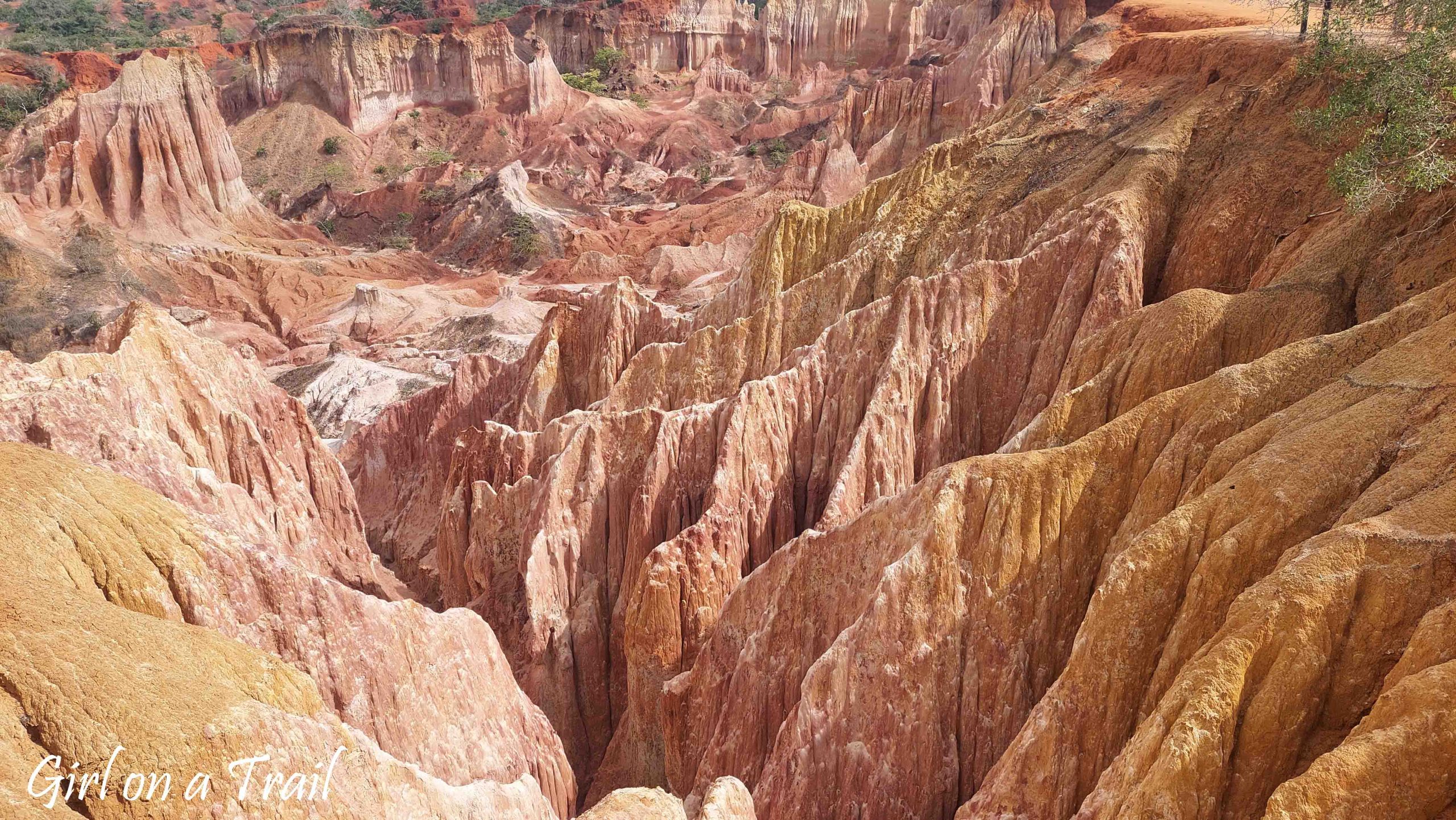
Marafa Hell’s Kitchen is one of Kenya’s most visually arresting natural landmarks, rising unexpectedly from the gently rolling countryside north of Malindi. Known locally as the Nyari Depression, this vast sandstone canyon presents a dramatic contrast to the palm-lined beaches and coral reefs that define much of the nearby coastline. From the first glimpse at the rim, the land appears fractured and sculpted into towering columns, deep gullies, and narrow passages that glow with intense color as the sun shifts across the sky.
The canyon owes its distinctive appearance to centuries of erosion. Wind, seasonal rainfall, and extreme temperature changes gradually carved the soft sandstone into layered formations that reveal bands of white, pink, orange, and deep red. These colors intensify during late afternoon, when sunlight strikes the canyon walls at a low angle, creating the illusion that the landscape is burning from within. This phenomenon gave rise to the name Hell’s Kitchen, a title that reflects both the heat and the visual drama of the site.
Unlike many geological attractions that require long journeys into remote regions, Marafa Hell’s Kitchen is relatively easy to reach. Located roughly forty kilometers northwest of Malindi, the canyon sits close enough to the coast to make it an ideal half-day excursion from beach destinations such as Watamu or Malindi. This accessibility has helped transform Marafa Hell’s Kitchen into one of the most popular inland attractions on Kenya’s northern coast.
Beyond its visual impact, the canyon carries cultural meaning for surrounding communities. Local guides share stories passed down through generations, blending geological explanation with folklore that adds emotional depth to the visit. These narratives, combined with the physical experience of walking through the canyon, create a destination that feels both educational and deeply atmospheric.
Geography and Geological Formation of Marafa Hell’s Kitchen
Marafa Hell’s Kitchen lies within a semi-arid zone characterized by sandy soils, scattered shrubs, and seasonal streams. The Nyari Depression itself is a natural basin formed as softer sedimentary rock eroded more rapidly than surrounding ground. Over time, water runoff cut deeper channels, while wind smoothed and sharpened exposed edges, producing the canyon’s current form.
The rock layers visible in Marafa Hell’s Kitchen tell a geological story spanning thousands of years. Lighter layers are composed of older, mineral-rich sediments, while darker red bands reflect iron oxidation and prolonged exposure to heat and air. These contrasting layers create the canyon’s signature striped appearance.
Temperature plays a major role in shaping the site. During the hottest hours of the day, heat intensifies within the narrow gullies, accelerating weathering processes. As a result, the canyon continues to evolve, with small collapses and shifts gradually reshaping its contours.
Cultural Meaning and Local Legends of Marafa Hell’s Kitchen
For nearby communities, Marafa Hell’s Kitchen is more than a geological curiosity. Oral traditions describe the canyon as a place shaped by moral lessons and spiritual forces. One widely shared legend tells of a wealthy family whose greed angered higher powers, leading to their transformation into the red and white layers of the canyon, symbolizing blood and milk.
These stories are shared by local guides during walks through the canyon, offering visitors insight into how the landscape is understood beyond scientific explanation. The blending of folklore and physical geography enriches the experience and highlights the importance of storytelling in preserving cultural identity.
Community involvement remains central to site management. Entry fees and guiding services directly support local residents, reinforcing a model of tourism that values participation and shared benefit.
Visiting Experience at Marafa Hell’s Kitchen
A visit to Marafa Hell’s Kitchen typically begins at the canyon rim, where panoramic views reveal the scale and complexity of the formation. From above, the canyon appears like a maze of deep cuts and towering pillars stretching across the landscape. As visitors descend, the environment shifts dramatically, with temperatures rising and colors becoming more intense.
Guided canyon walks lead through narrow passages often referred to as chimneys. These routes wind between high walls, allowing visitors to observe rock textures and formations at close range. The walk usually lasts under an hour, making it accessible to most visitors with moderate fitness levels.
The experience concludes with time spent back at the rim, where sunset transforms the canyon into a glowing tapestry of color. This moment is widely considered the highlight of a visit, drawing photographers and nature enthusiasts alike.
Best Time to Visit Marafa Hell’s Kitchen
Timing is critical when planning a visit to Marafa Hell’s Kitchen. Late afternoon offers the most rewarding experience, as lower temperatures and favorable light enhance both comfort and visibility. The golden hour before sunset creates dramatic contrasts and deep shadows that emphasize the canyon’s contours.
Midday visits are strongly discouraged due to extreme heat. Temperatures within the depression can rise sharply, making walking uncomfortable and potentially unsafe. Early morning can be pleasant but lacks the visual intensity that defines the site’s reputation.
Entry Fees and Charges at Marafa Hell’s Kitchen
Access to Marafa Hell’s Kitchen involves modest entry fees that contribute directly to community development. Charges vary depending on visitor category and whether services are booked independently or through tour operators.
Non-resident adults typically pay a higher entry fee, while Kenyan citizens benefit from reduced rates. A local guide is mandatory for all visitors, ensuring safety and providing valuable interpretation of the site. Guide fees are charged per group and vary based on duration and group size.
These fees support maintenance, visitor management, and community livelihoods, reinforcing sustainable tourism practices.
Visitor Information (2026)
- Opening Hours: 9:00 AM – 5:00 PM (Monday to Friday); reportedly closed or limited on weekends.
- Best Time to Visit: Late afternoon (around 4:00 PM – 5:30 PM) is highly recommended to witness the sunset, which makes the canyon appear to glow as if “on fire”.
- Caution: Avoid the midday sun (11:00 AM – 2:00 PM) as temperatures inside the depression can reach a scorching 50°C (122°F).
Entry Fees & Costs
Fees at the site support the local Marafa community.
| Category | Entry Fee (Approx.) |
|---|---|
| Non-Resident Adult | US5–US5 – cap U cap S5–𝑈𝑆 10 (approx. KSh 500 – 1,500) |
| Kenyan Citizen Adult | KSh 200 – 500 |
| Local Guide (Mandatory) | KSh 500 – 1,000 (per group) |
| Note: Fees can vary based on whether you arrive independently or via a tour package. |
Key Activities
- Guided Canyon Walk: A 45-minute to 1-hour hike through the “chimneys” and gullies. Local guides share folklore, such as the legend of an ancient family punished by gods, resulting in the red and white “milk and blood” colors of the rocks.
- Photography: The striking colors and unique geological formations make it one of the best photography spots on the Kenyan coast.
- Sunset Viewing: Most visitors gather at the rim for a “golden hour” view after finishing the hike.
Getting There
The road from Malindi is now mostly paved and in good condition.
- By Taxi/Tuk-tuk: A return taxi trip from Malindi typically costs between KSh 4,000 – 9,000 depending on the vehicle type and waiting time.
- By Matatu: You can take a minibus from the Malindi-Mombasa road stage to Marafa village (KSh 200), then walk about 20 minutes or take a boda-boda (motorbike) to the entrance.
- Organized Tours: Many resorts in Watamu and Malindi offer half-day excursions starting at US$ 90–120 per person, which usually includes transport, park fees, and a guide
Activities Available at Marafa Hell’s Kitchen
Guided canyon walks form the core activity at Marafa Hell’s Kitchen. These walks combine physical exploration with storytelling, allowing visitors to engage with both the land and its cultural narratives.
Photography is another major draw. The interplay of light and color creates constantly changing scenes, making each visit visually unique. Sunset photography is particularly popular, with visitors gathering at designated viewpoints along the rim.
Observation and quiet reflection also play a role in the experience. The canyon’s scale and stillness invite moments of pause, encouraging visitors to appreciate natural processes that operate on timescales far beyond human life.
Getting to Marafa Hell’s Kitchen from Malindi and Watamu
Reaching Marafa Hell’s Kitchen is relatively straightforward due to improved road infrastructure. From Malindi, the journey takes about an hour by road, passing through rural landscapes and small villages. Most of the route is paved, with short unpaved sections near the site.
Taxis and private transfers offer the most convenient option, particularly for groups. Public transport is also available, with minibuses stopping near Marafa village, followed by a short walk or motorcycle ride to the entrance.
Organized tours provide an all-inclusive alternative, combining transport, entry fees, and guided walks. These tours are commonly arranged through resorts in Malindi and Watamu and appeal to visitors seeking convenience.
Safety Considerations When Visiting Marafa Hell’s Kitchen
Safety is an important aspect of visiting Marafa Hell’s Kitchen. The mandatory presence of local guides helps manage risks associated with heat, uneven terrain, and navigation through narrow passages.
Visitors are advised to wear comfortable footwear, carry water, and protect themselves from the sun. Following guide instructions is essential, particularly during descent into the canyon where footing can be unstable.
Weather conditions can also influence safety. Heavy rainfall may make certain paths slippery, leading to temporary restrictions on access.
Marafa Hell’s Kitchen in Coastal Tourism Itineraries
Marafa Hell’s Kitchen complements coastal destinations by offering a contrasting inland experience. Many visitors pair a canyon visit with time spent at nearby beaches, creating itineraries that balance relaxation with exploration.
The site also appeals to travelers interested in geology, photography, and cultural storytelling, expanding the diversity of experiences available along Kenya’s coast. Its proximity to Watamu and Malindi makes it a natural addition to multi-day travel plans.
Environmental Importance of Marafa Hell’s Kitchen
While primarily known for its visual appeal, Marafa Hell’s Kitchen also holds environmental value. The canyon supports specialized plant species adapted to dry, rocky conditions and provides habitat for birds and small mammals.
Responsible tourism practices help protect these fragile systems. By limiting access through guided visits and maintaining community oversight, the site avoids excessive disturbance while remaining accessible to visitors.