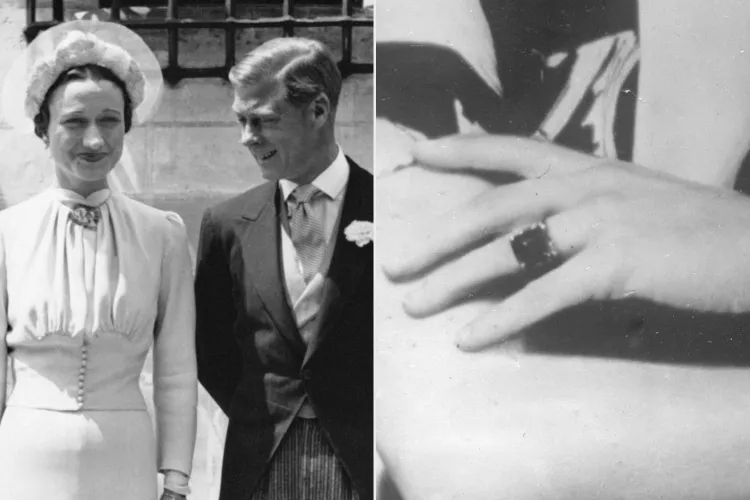
The Wallis Simpson ring was unlike the conventional diamond engagement jewellery associated with royal marriages. Its centrepiece was a 19.77-carat emerald, mounted by Cartier and engraved with a private message that marked the date King Edward VIII proposed.
The jewel’s historical importance came from far more than its size or value. Edward gave the ring to Simpson on October 27, 1936, while she was still completing the legal process of ending her second marriage. Six weeks later, he surrendered the British throne after failing to secure political and religious acceptance for their proposed marriage.
The engagement therefore became inseparable from the constitutional crisis that changed the line of succession. Edward’s younger brother became King George VI, placing the future Queen Elizabeth II directly in line to inherit the Crown. Edward and Simpson subsequently lived mainly outside Britain as the Duke and Duchess of Windsor.
The ring was deeply personal despite the global consequences surrounding it. Its inner inscription referred to the couple collectively and recorded the date of their secret engagement. It functioned almost as a private contract between two people whose relationship was being challenged by the government, the Church of England, the royal household and much of the British establishment.
Simpson later had Cartier redesign the jewel, demonstrating that she regarded even a historically significant engagement ring as part of an evolving personal collection rather than an untouchable royal relic.
After her death, the ring became one of the most important objects offered in Sotheby’s landmark 1987 auction of the Duchess of Windsor’s jewels. It sold for approximately $1.98 million, while the complete collection generated more than $50 million, vastly exceeding expectations.
Today, the emerald remains an enduring symbol of personal devotion, political disruption, luxury and exile.
The Wallis Simpson Ring Featured a 19.77-Carat Emerald
Edward commissioned Cartier to create an engagement ring around a large emerald weighing 19.77 carats.
Rather than choosing the white diamond that had become increasingly common for engagement jewellery, he selected a strongly coloured gemstone with an imposing rectangular form.
The emerald was surrounded or flanked by diamonds, giving the green centre stone greater contrast. The original ring was created in platinum, although Simpson later asked Cartier to redesign it in a yellow-gold setting with additional diamond detailing.
The emerald’s scale made it visually dramatic. At nearly 20 carats, it was far larger than most conventional engagement stones and immediately reflected the couple’s taste for custom-made, highly personal jewellery.
Cartier became central to the Windsors’ collection. Over the years, Edward commissioned numerous pieces from the house, often incorporating private jokes, dates, initials and messages understood primarily by the couple.
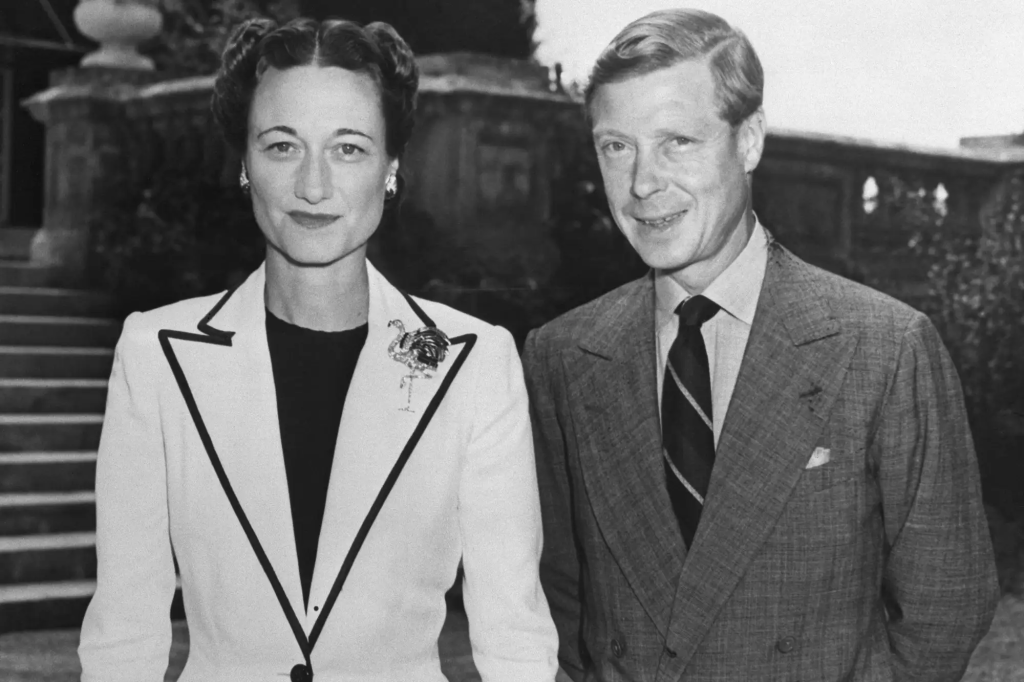
The engagement ring established that pattern early.
Its material value was considerable, but its message was more important to the people who commissioned it.
A Secret Message Was Engraved Inside the Ring
The inner band carried an inscription commonly recorded as:
“We are ours now 27 X 36.”
The date referred to October 27, 1936, when Edward proposed.
Some historical jewellery accounts render the opening as “WE are ours now,” using the capital letters as a possible reference to Wallis and Edward. The precise typography varies between retellings, but the central meaning remains clear: the engraving marked the moment the couple considered themselves privately committed to each other.
The phrase was unusually intimate for a ring tied to a reigning monarch.
Edward was not simply giving Simpson an expensive gemstone. He was recording the idea that they belonged to each other at a time when their future remained uncertain.
The proposal had to remain private because Simpson’s divorce from Ernest Simpson was not yet final and because opposition to the relationship was already building within official circles.
The inscription therefore captured both commitment and defiance.
It marked a decision taken before the Crown, government and public had fully confronted its consequences.
The Emerald Was Reportedly Sourced in Baghdad
The gemstone’s provenance adds another international dimension to the ring.
Historical accounts state that Jacques Cartier acquired the original emerald in Baghdad earlier in the 1930s. The rough or larger stone was reportedly of exceptional size and was eventually divided into two pieces.
One portion was sold to an American collector or millionaire. The other, weighing 19.77 carats after cutting, was acquired for Edward and became the centre of Simpson’s engagement ring.
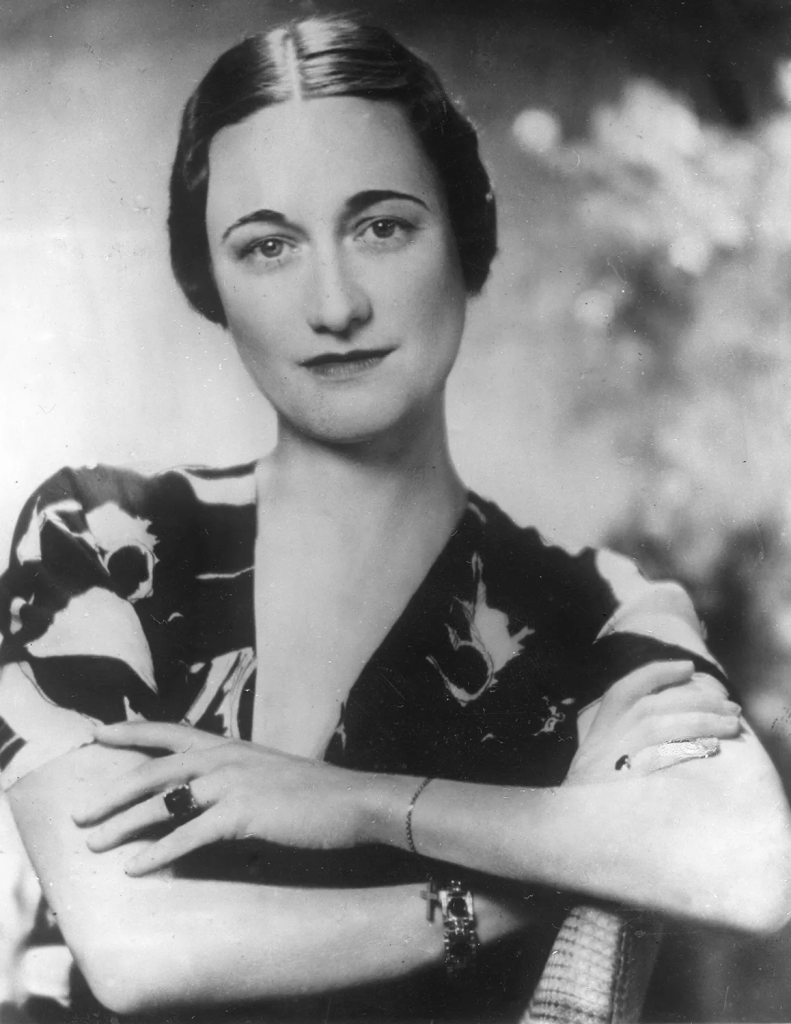
Descriptions comparing the original emerald with a bird’s egg help convey its scale, but such language comes from later jewellery histories rather than a modern gemological report.
The reference to Baghdad should also be interpreted carefully. It identifies the location where Cartier reportedly sourced the stone, not necessarily the mine from which the emerald originated.
Most fine emeralds historically came from places such as Colombia, although gemstones frequently passed through international dealers and trading centres before reaching European jewellery houses.
No publicly available modern laboratory report establishes every stage of the stone’s geological and commercial history.
What can be stated confidently is that Cartier acquired the emerald through the international gemstone trade and transformed it into one of the twentieth century’s best-known engagement rings.
Background: Why the Ring Became Politically Significant
Wallis Simpson was an American socialite who had already divorced her first husband and was still married to her second when her relationship with Edward became a constitutional issue.
Edward became king in January 1936 after the death of his father, George V.
By then, his relationship with Simpson had developed beyond friendship, although most British newspapers avoided openly reporting it for much of the year.
The silence did not exist because the relationship was unknown.
It resulted from an informal understanding among sections of the British press, government and broadcasting establishment that the story should be kept from domestic audiences while officials attempted to manage the crisis.
American and European newspapers were far less restrained.
Readers outside Britain therefore knew considerably more about the king’s private life than many of his own subjects.
The situation became impossible to contain after Simpson began divorce proceedings and Edward indicated that he intended to marry her.
The issue was not simply that she was American.
The central objections involved her marital history, the continued life of her former husbands, Edward’s position as head of the Church of England and the political consequences of a sovereign disregarding ministerial advice.
Edward Proposed Before the Abdication
Edward proposed on October 27, 1936, weeks before he gave up the throne.
The engagement occurred shortly after Simpson obtained an initial divorce decree from Ernest Simpson. The divorce had not yet become fully final under the legal process of the period.
The private timing was crucial.
Edward had committed himself to marriage while the government was still assessing whether any constitutional arrangement could allow him to remain king.
Several possibilities were discussed, including a morganatic marriage under which Simpson might not become queen and any children might be excluded from the succession.
The British government rejected that solution, and political leaders in the self-governing dominions did not provide the support Edward needed.
The king was effectively left with three choices:
- End the relationship.
- Marry against ministerial advice and trigger a government crisis.
- Abdicate and marry as a private royal duke.
He chose abdication.
The engagement ring therefore preceded and, in practical terms, intensified the constitutional confrontation.
Why Britain’s Establishment Opposed the Marriage
The crisis is sometimes simplified into the claim that a king was forbidden to marry a divorced woman.
The reality involved law, religion, convention and politics.
As monarch, Edward was the symbolic head of the Church of England. At the time, the church strongly opposed remarriage after divorce when a former spouse remained alive.
Simpson had two living former husbands.
The prime minister, Stanley Baldwin, also believed the public and governments across the British Empire would not accept her as queen.
Ministers were concerned about Edward’s political judgment, his willingness to challenge constitutional convention and the possibility that a marriage opposed by the government could undermine confidence in the monarchy.
Edward could not govern independently of elected ministers.
If he ignored their formal advice and they resigned, he would struggle to find another government capable of commanding a parliamentary majority.
The marriage dispute therefore became a test of constitutional monarchy rather than a purely personal disagreement.
Edward VIII Abdicated in December 1936
Edward signed the Instrument of Abdication on December 10, 1936, and addressed the public by radio the following day.
In the broadcast, he explained that he could not continue carrying the responsibilities of kingship without the support of the woman he loved.
The speech transformed the relationship into one of the most famous love stories of the twentieth century.
However, the romantic interpretation can obscure the constitutional reality.
Edward did not simply choose one woman over ceremonial privilege. He was unable or unwilling to reconcile his intended marriage with the obligations placed on a constitutional sovereign.
His decision changed the monarchy immediately.
His brother Albert became King George VI.
George’s elder daughter, Princess Elizabeth, became the heir presumptive and later succeeded him as Queen Elizabeth II in 1952.
The emerald ring was therefore connected indirectly to the reign that would dominate British public life for the next 70 years.
The Ring Became a Symbol of the Abdication
Jewellery usually commemorates a marriage or private emotional milestone.
Simpson’s ring came to represent a transformation in the British state.
It symbolised:
- Edward’s private commitment to Simpson.
- His rejection of the expectations attached to the Crown.
- The accession of George VI.
- Elizabeth II’s new position in the succession.
- The couple’s later life outside the central royal establishment.
This historical weight helped make the ring far more valuable than an emerald of similar size without the same provenance.
Collectors do not purchase historic jewels solely for their gemstones.
They also purchase documented ownership, craftsmanship and association with major events.
The Wallis Simpson ring carried all three.
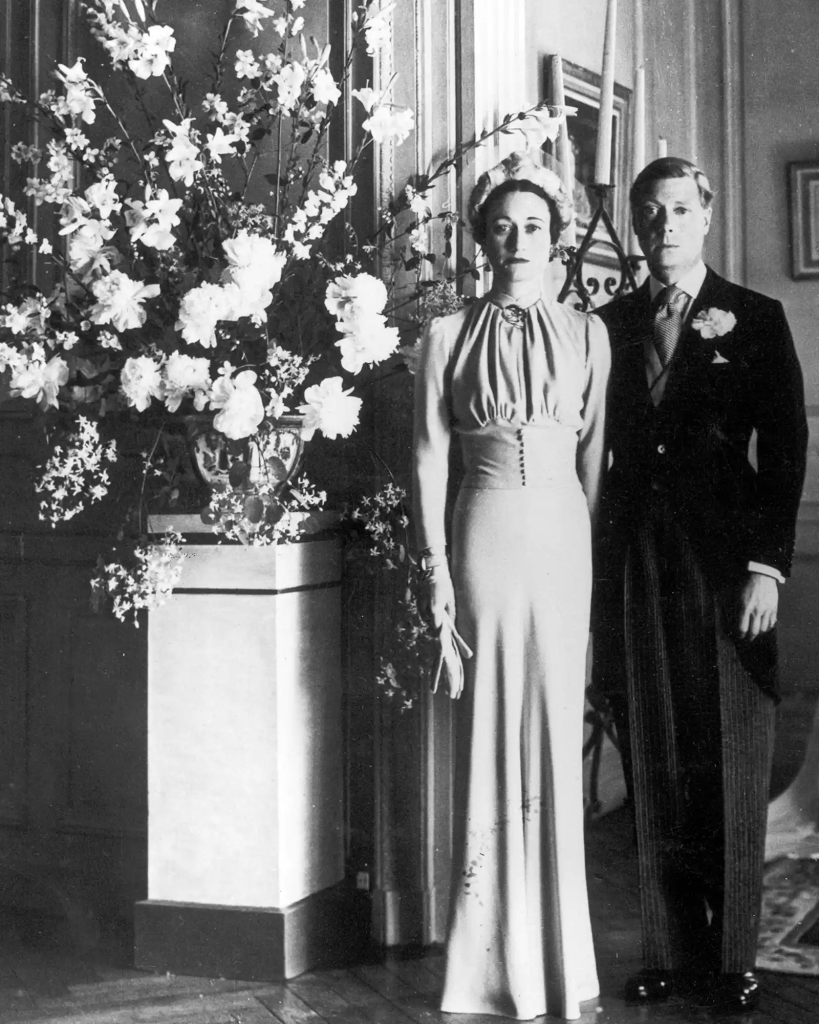
Wallis Simpson and Edward Married in France
Edward and Simpson married on June 3, 1937, at the Château de Candé near Tours, France.
The ceremony was small and attended by fewer than 20 guests.
No immediate member of the British royal family attended.
Simpson wore a Mainbocher dress in a pale blue shade that became closely associated with her wedding style.
The exclusion of the royal family demonstrated that the conflict did not end with the abdication.
Edward had been created Duke of Windsor, while Simpson became Duchess of Windsor following the marriage.
However, the issue of royal status remained contentious.
She was not granted the style “Her Royal Highness,” a decision that reportedly remained a source of resentment for Edward.
The couple spent much of their married life in France and other locations outside Britain.
They remained together until Edward’s death in May 1972.
Their Marriage Lasted 35 Years
Edward and Simpson were married for nearly 35 years.
Their long marriage was frequently cited as evidence that the abdication represented a lasting personal commitment rather than a temporary obsession.
Yet historians continue to debate the emotional dynamics of their relationship.
Private correspondence, biographies and accounts from friends sometimes present a more complicated picture than the idealised “king who gave up everything for love” narrative.
The couple faced isolation from parts of the royal family, financial questions, political controversy and criticism concerning their conduct before and during the Second World War.
Their 1937 visit to Nazi Germany, including a meeting with Adolf Hitler, remains one of the most damaging episodes associated with them.
The engagement ring should therefore not be interpreted only as a romantic object.
It belonged to two historically controversial people whose choices had consequences far beyond their marriage.
Wallis Simpson Became a Major Jewellery Collector
As Duchess of Windsor, Simpson developed one of the twentieth century’s most famous private jewellery collections.
Edward gave her pieces by Cartier, Van Cleef & Arpels, Harry Winston and other leading houses.
Many were custom commissions rather than standard retail designs.
The collection featured:
- Emeralds and diamonds.
- Panther motifs.
- Personal inscriptions.
- Initials and coded messages.
- Important dates.
- Bracelets recording events in the couple’s lives.
- Designs that could be transformed or worn in multiple ways.
The jewels functioned almost as a private archive.
They recorded anniversaries, reconciliations, travels and emotional messages.
This personalised approach distinguished the collection from jewellery assembled primarily as an investment.
The engagement ring remained one of its foundational objects.
Cartier’s Role Extended Beyond the Engagement Ring
Cartier had a long relationship with European royalty and elite international clients.
Its connection with Edward and Simpson became especially important because the couple were willing to experiment with modern and unconventional designs.
The jeweller created pieces that combined valuable gemstones with playful, sculptural or emotionally coded elements.
The Windsor collection included some of Cartier’s best-known animal jewellery, particularly panther designs.
The house’s involvement also strengthened the engagement ring’s later value.
Cartier craftsmanship, major provenance and an important gemstone form a powerful combination in the auction market.
The ring was not only linked to a former king and duchess. It was also part of the design history of one of the world’s most influential jewellery companies.
Why an Emerald Was an Unconventional Choice
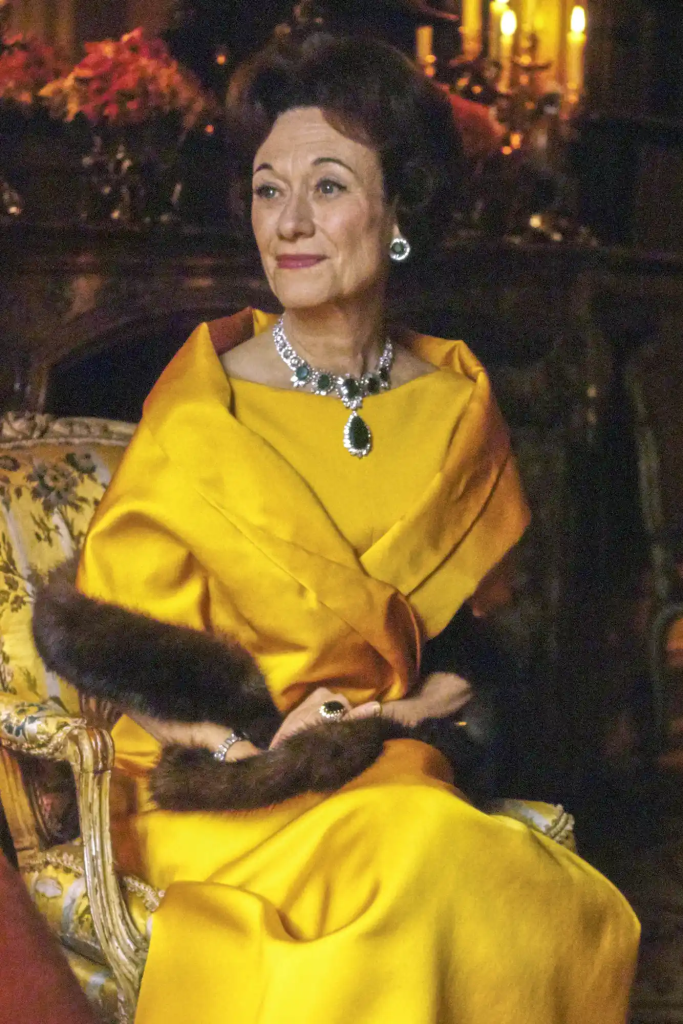
Emeralds have appeared in royal collections for centuries, but they are less practical than diamonds for jewellery worn every day.
The stone ranks below diamond, sapphire and ruby in hardness and can contain natural internal features that make it vulnerable to damage.
A large emerald engagement ring therefore requires careful handling.
Edward’s selection may have reflected several considerations.
The intense green colour made the ring distinctive.
The unusual gemstone suited Simpson’s reputation for individual style.
The stone’s scarcity and size communicated exceptional value.
Emeralds have also been associated symbolically with renewal, loyalty and hope, although it is unclear whether Edward selected the gem because of any specific traditional meaning.
The choice separated Simpson’s ring from more conventional royal diamond designs and contributed to its lasting recognition.
Was Simpson the First Modern Royal Bride With a Coloured Ring?
Some modern fashion accounts describe Simpson as the first royal bride in recent history to receive a coloured-gemstone engagement ring.
That claim should be treated cautiously.
European royal families had used rubies, sapphires, emeralds, pearls and other coloured stones in betrothal and engagement jewellery long before 1936.
Even within the British royal family, earlier rings included coloured gemstones.
What made Simpson’s ring exceptional was not that colour had never appeared before.
Its significance came from the emerald’s enormous scale, the Cartier design, the personal inscription and the unprecedented political story surrounding the engagement.
It later helped establish the idea that a royal or aristocratic engagement ring could be instantly recognisable through colour rather than only diamond brilliance.
Simpson Redesigned the Ring in 1958
In 1958, more than two decades after the proposal, Simpson returned the engagement ring to Cartier for redesign.
The original platinum arrangement was replaced or substantially altered with a yellow-gold setting and additional diamonds.
This decision is striking because many people would regard such a historically important engagement ring as untouchable.
Simpson approached jewellery differently.
She often altered pieces according to changing taste, fashion and personal preference.
The redesign modernised the ring and made it consistent with the bold gold jewellery popular in the post-war period.
Importantly, the original engraved section was reportedly retained, preserving the emotional inscription even as the visible design changed.
The alteration gives the ring two historical identities:
- The 1936 engagement jewel associated with the abdication.
- The later Duchess of Windsor jewel reflecting Simpson’s mature style.
Why Historic Jewellery Is Sometimes Redesigned
Modern collectors often prefer historically important jewellery to remain in its original state.
Original construction can strengthen authenticity and help scholars study design techniques from a specific period.
Owners, however, do not always treat jewellery as museum material.
A ring is a wearable object, and personal taste can change over several decades.
Simpson may have wanted the engagement jewel to match her later collection or to feel more contemporary.
Cartier’s redesign did not erase the ring’s provenance. It added another chapter.
At auction, documentation of both versions became part of the object’s story.
Edward Died in 1972
The Duke of Windsor died in Paris on May 28, 1972.
His body was returned to Britain, and he was buried at the Royal Burial Ground at Frogmore near Windsor Castle.
Simpson attended the funeral and later lived primarily in Paris.
Her health declined during her final years, and she became increasingly isolated.
She died on April 24, 1986.
She was buried beside Edward at Frogmore, bringing the couple physically back into the royal setting from which they had spent much of their lives separated.
Her death also opened the way for the disposal of the jewellery collection.
The 1987 Sotheby’s Auction Became a Global Event
Sotheby’s offered the Jewels of the Duchess of Windsor in Geneva in April 1987.
The sale became one of the most important jewellery auctions ever conducted.
Collectors were attracted by the combination of:
- Royal provenance.
- The abdication story.
- Cartier and other major designers.
- Important gemstones.
- Custom inscriptions.
- The collection’s unusually complete documentation.
More than 200 pieces were offered.
The auction generated approximately $50.3 million, compared with an estimate of roughly $7.5 million. Contemporary reporting described the result as almost seven times the expected value, while later accounts often round the comparison to six times the estimate.
The result demonstrated how strongly collectors valued history.
The gemstones and craftsmanship were important, but the emotional and political association multiplied demand.
The Engagement Ring Sold for About $1.98 Million
The emerald engagement ring sold for approximately $1.98 million at the Geneva auction.
The buyer’s identity was not publicly disclosed.
The price was extraordinary for 1987 and reflected a significant premium beyond the intrinsic value of the emerald, diamonds and gold.
The ring’s provenance was impossible to reproduce.
Another collector could purchase a similarly sized emerald or commission a Cartier design, but no other ring could be the one Edward VIII gave Simpson before surrendering the throne.
That uniqueness is central to the economics of historic objects.
Value is created not only by material scarcity but by narrative scarcity.
There was only one principal engagement ring connected to the abdication crisis.
Why the Ring’s Current Owner Is Unknown
Major auction buyers sometimes remain anonymous for reasons including security, privacy and investment strategy.
Sotheby’s did not publicly identify the successful buyer of the engagement ring.
The ring has not subsequently appeared in a widely documented public auction under the same description.
It may remain in a private collection.
Without confirmation from the owner, auction house or a recognised institution, claims about its present location should be treated as speculation.
Its absence from public view has arguably strengthened its mystery.
The design is known through catalogues and archival photographs, but the actual jewel is rarely available for direct inspection.
The Full Collection Raised More Than $50 Million
The ring was one of the sale’s leading lots, but the wider collection was equally important.
Other pieces included Cartier panther jewellery, gem-set bracelets, brooches, necklaces, earrings and objects carrying private inscriptions.
The complete sale achieved more than $50 million and established a record for a single-owner jewellery collection at the time.
That figure demonstrates how auction value can be distributed across a coherent collection.
Buyers were not simply competing for isolated gemstones.
They were purchasing fragments of the Windsors’ personal story.
Some objects reappeared at later auctions, where they again achieved major prices. Sotheby’s reunited a selection of Windsor jewels for a London sale in 2010, confirming that collector demand had remained strong decades after the original Geneva event.
Auction Proceeds Benefited the Pasteur Institute
The proceeds from the 1987 jewellery sale were directed to the Pasteur Institute in Paris.
The institution conducts scientific and medical research, including work connected with infectious disease, cancer and public health.
The charitable destination added another layer to the collection’s afterlife.
Objects created as private gifts between two of the twentieth century’s most controversial royal figures ultimately generated substantial funding for medical research.
The decision also reflected Simpson’s long residence in France and her relationship with the country that had provided the couple with their principal home after the abdication.
The Ring’s Value Cannot Be Reduced to Its Emerald
Valuing a historic ring requires more than calculating the price per carat.
The main components include:
Gemstone Quality
Emerald value depends on colour, transparency, treatment, origin and condition.
The publicly available historical descriptions do not provide the full laboratory information expected in a modern sale catalogue.
Cartier Craftsmanship
A signed piece from an important period attracts a premium because of the house’s design reputation.
Royal Provenance
Documented ownership by the Duke and Duchess of Windsor greatly increases desirability.
Historical Association
The ring is directly tied to the abdication crisis, one of the defining constitutional events of twentieth-century Britain.
Inscription
The engraved date and phrase establish intimate documentary evidence of the engagement.
Auction History
Its appearance in the record-setting 1987 sale gives it established market significance.
Together, these factors explain why it achieved a price far above that of an ordinary emerald ring.
What Would the Ring Be Worth Today?
No reliable current valuation can be established without inspecting the jewel and testing the market.
Historic jewellery values do not rise according to a simple inflation formula.
A modern price would depend on:
- The condition of the emerald.
- Any oiling or treatment.
- Documentation proving continuity of ownership.
- Changes made after 1987.
- Current demand for Cartier and royal provenance.
- The number and wealth of competing bidders.
- Whether the ring were offered alone or within a broader historical sale.
The $1.98 million result provides an important benchmark, but it does not automatically determine a present value.
Given the growth of the global luxury auction market and continued interest in the Windsors, it is reasonable to infer that the ring could command a much higher nominal price today. That remains an inference rather than a confirmed appraisal.
The Ring Influenced Royal Jewellery Culture
Simpson’s emerald did not create the practice of using coloured stones in royal engagement rings, but it became one of its most visible twentieth-century examples.
Later royal rings also gained recognition through colour.
Princess Diana’s sapphire ring, now worn by Catherine, Princess of Wales, became perhaps the most famous example.
Princess Eugenie received a pink-orange padparadscha sapphire.
Other European royal families have used rubies, sapphires and coloured diamonds.
Simpson’s ring showed how a distinctive centre stone could become inseparable from the identity of its wearer.
The emerald’s shape and colour made it recognisable even in black-and-white historical discussion because descriptions focused so heavily on its unusual scale.
The Jewel Also Reflected Simpson’s Fashion Identity
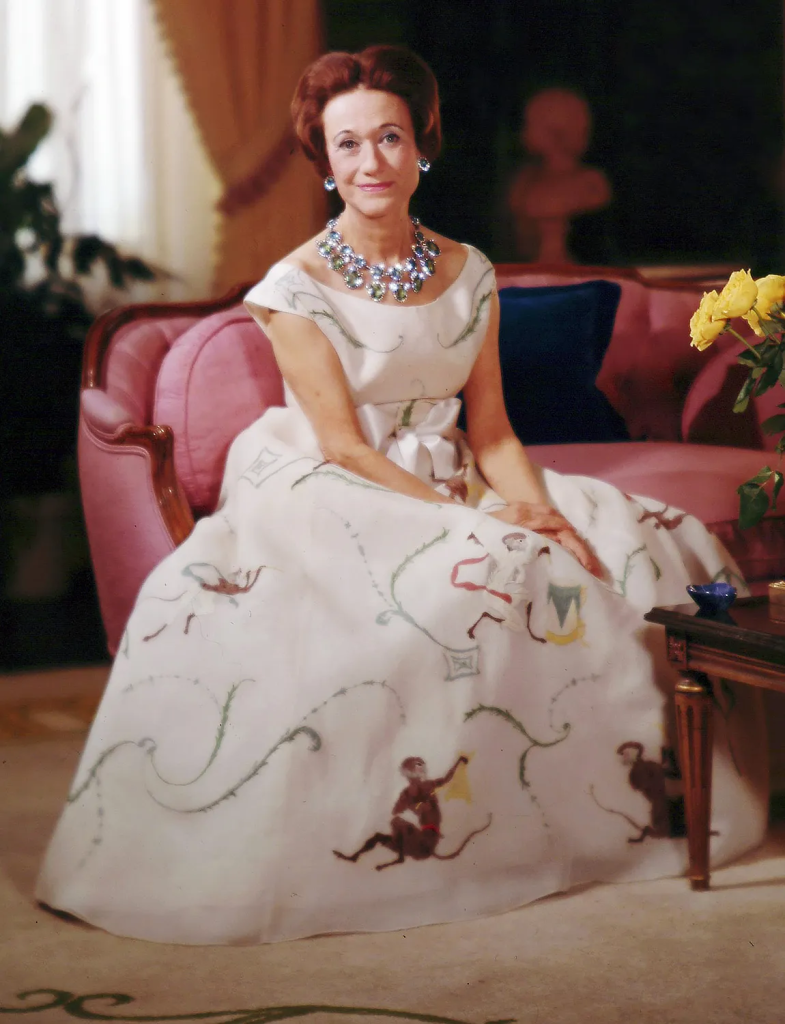
Simpson was not celebrated for conventional beauty by many contemporary commentators, but she became known for disciplined presentation and sophisticated clothing.
She understood proportion, tailoring and the power of accessories.
The large emerald suited that strategy.
Rather than wearing numerous unrelated pieces, she often used strong jewellery to control attention and complete a carefully constructed appearance.
Her relationship with designers and jewellery houses helped turn her into an influential fashion figure despite her political unpopularity.
The ring therefore operated simultaneously as:
- An engagement symbol.
- A constitutional artefact.
- A Cartier design.
- A fashion statement.
- A future auction trophy.
The Romantic Narrative Remains Contested
Edward’s radio statement created an enduring story of a king sacrificing the Crown for love.
The ring appears to offer the perfect physical symbol for that interpretation.
However, serious historical analysis must acknowledge the couple’s controversies.
Edward’s attitude toward constitutional duty raised concerns long before the abdication.
His political judgment was questioned.
The couple’s contacts and behaviour relating to Nazi Germany damaged their reputation permanently.
Simpson herself has often been blamed disproportionately for a crisis that ultimately resulted from Edward’s choices as sovereign.
Presenting the ring as a romantic object without this context risks repeating a simplified narrative.
It is better understood as evidence of a deeply personal commitment that produced enormous public consequences.
Wallis Simpson’s Role Has Often Been Oversimplified
For decades, Simpson was portrayed either as a calculating woman who captured a king or as the great love for whom a monarch made an unmatched sacrifice.
Both versions reduce a complicated historical person to a symbol.
She was ambitious, socially skilled and highly conscious of fashion and status.
She was also placed under exceptional public hostility, including criticism shaped by misogyny, anti-American sentiment and discomfort with divorce.
Edward held the constitutional authority and made the decision to abdicate.
He was not a passive figure controlled entirely by Simpson.
The engagement ring belonged to her, but the crisis was created by the king’s inability to resolve the conflict between his private wishes and public responsibilities.
What the Ring Reveals About Personalised Luxury
The Windsors’ jewels show that the most memorable luxury objects are not always the largest or most expensive.
Personalisation gave the collection emotional depth.
Dates, initials and private phrases converted jewellery into a record of the relationship.
Modern luxury houses continue using this strategy through custom engraving, bespoke gemstones and designs linked to personal stories.
The Wallis Simpson ring remains a powerful example because its inscription documented a moment before the world knew how dramatically the engagement would alter history.
The phrase was private.
The consequences were global.
Expert Analysis
The enduring importance of Wallis Simpson’s engagement ring comes from the collision of private emotion and public power.
Without the abdication, it would still be an exceptional Cartier emerald ring.
Without the emerald, the abdication would remain one of Britain’s most important constitutional crises.
Together, they created an artefact whose meaning exceeds either element alone.
The ring also challenges several assumptions about royal jewellery.
It was not inherited through generations.
It did not come from the official Crown collection.
It was not designed to reinforce dynastic continuity.
Instead, it marked a relationship that disrupted the monarchy’s expected future.
The inscription confirms that Edward and Simpson regarded the engagement as a private commitment before the constitutional process was resolved.
That sequencing matters.
Edward did not first determine a workable royal settlement and then propose.
He proposed and subsequently attempted to make the monarchy accommodate the decision.
The government’s refusal forced the final choice.
Simpson’s later redesign adds another important dimension.
She did not freeze the ring in its politically explosive 1936 form. She treated it as her own possession and changed it according to her tastes.
This act asserted personal ownership over an object the world regarded as a historical symbol.
The 1987 auction completed the transformation.
A private promise became a publicly traded trophy.
Collectors assigned a monetary value to the ring’s combination of scandal, craftsmanship and history.
Its nearly $2 million price was not payment only for a large emerald. It was payment for proximity to the abdication.
Frequently Asked Questions
What stone was in Wallis Simpson’s engagement ring?
The ring featured a 19.77-carat emerald surrounded or flanked by diamonds in a design by Cartier.
Where did Wallis Simpson’s emerald come from?
Historical jewellery accounts say Jacques Cartier sourced the larger stone in Baghdad before it was divided. The 19.77-carat portion was later used for Simpson’s ring.
What was engraved inside the ring?
The ring carried a phrase recorded as “We are ours now,” followed by numbers referring to October 27, 1936, the couple’s engagement date.
Did Edward VIII propose before abdicating?
Yes. He proposed on October 27, 1936, and abdicated in December of that year.
Did Wallis Simpson change the ring’s design?
Yes. In 1958, she asked Cartier to redesign it with a more modern yellow-gold and diamond setting.
How much did the ring sell for?
It sold for approximately $1.98 million at Sotheby’s Geneva in April 1987.
Where is Wallis Simpson’s engagement ring now?
The successful buyer at the 1987 auction was not publicly identified. Its confirmed current ownership and location are not publicly known.
Conclusion
Wallis Simpson’s engagement ring was created as a private symbol between two people, but it became permanently connected with a public crisis that reshaped the British monarchy.
The 19.77-carat emerald distinguished the jewel immediately.
Its Cartier craftsmanship, diamond setting and deeply personal inscription made it more than an extravagant gift.
The date inside the band recorded the moment Edward committed himself to Simpson before the Crown, government and Church had accepted their future.
They never did.
Edward abdicated six weeks later, allowing his brother to become George VI and changing the line of succession that eventually placed Elizabeth II on the throne.
The couple married in France in 1937 and remained together until Edward’s death in 1972.
Simpson later redesigned the ring, demonstrating that she regarded it as a living part of her personal style rather than a sacred constitutional artefact.
After her death, it entered another phase.
The ring sold for nearly $2 million during the extraordinary 1987 auction of her jewellery, while the wider collection generated more than $50 million for the Pasteur Institute.
Its unidentified buyer took possession not only of an emerald but of one of the most recognisable objects linked to twentieth-century royal history.
The ring’s meaning remains contested.
To some, it represents a monarch’s willingness to sacrifice power for love.
To others, it reflects a failure of royal duty and judgment.
Historically, it represents both private commitment and constitutional consequence.
That combination explains why the Wallis Simpson ring continues to attract interest nearly a century after Edward placed it on her hand.
Read Also: Meet Matthew McConaughey’s Son Levi