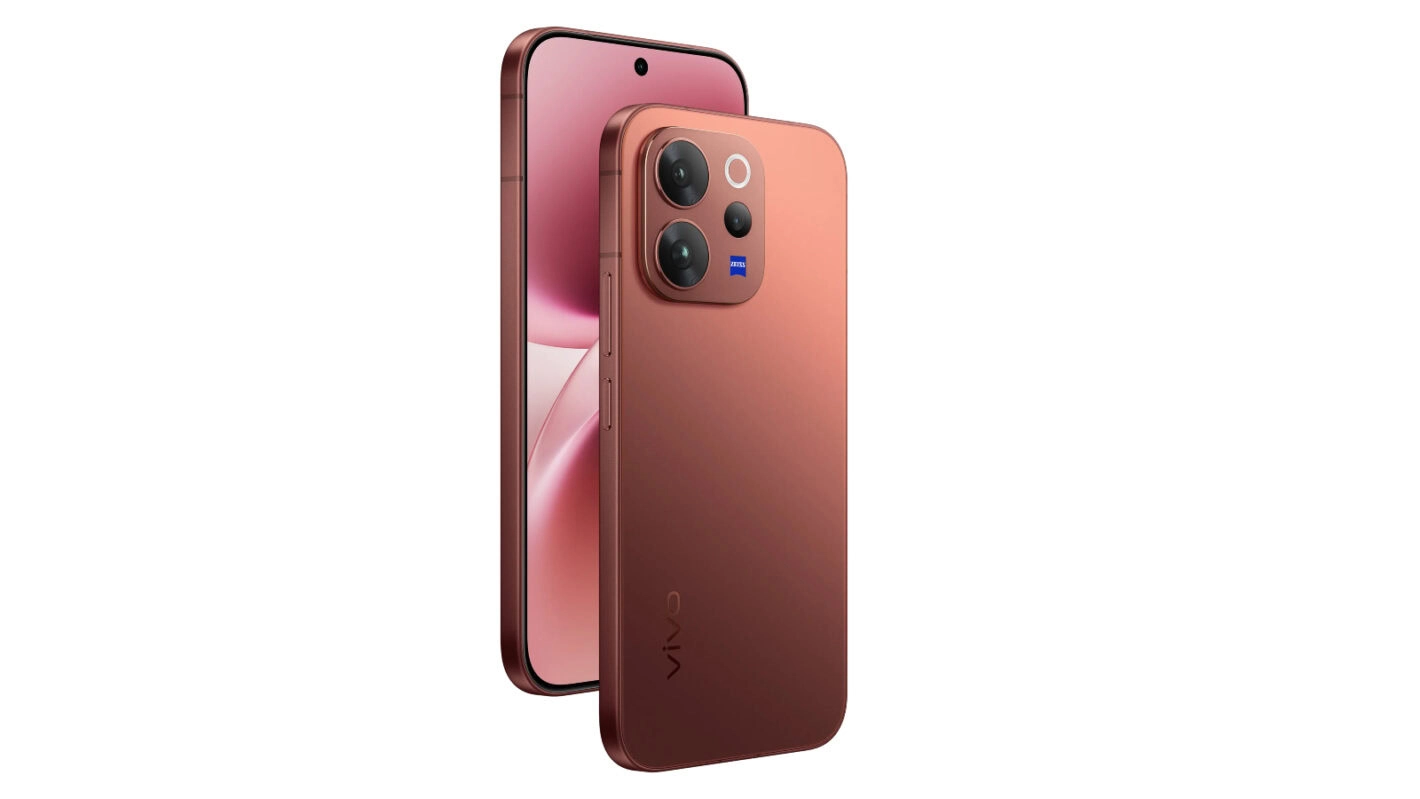
The vivo V70 enters a crowded upper-midrange segment where brands now compete on battery size, camera flexibility, and overall polish rather than just raw specs. The vivo V70 follows the same direction as previous V-series phones, but this time the refinements are easier to notice. The design is cleaner, the frame is now aluminum, and the phone feels closer to vivo’s higher-end X-series than before.
At the same time, the vivo V70 remains true to its formula. It is not trying to outmuscle performance-focused rivals or reinvent the category. Instead, it leans on camera appeal, a polished daily experience, a very bright display, and strong battery life. That makes it easier to like than to criticize, though not every part of the package feels equally strong.
Specifications Table
| Spec | Details |
|---|---|
| Display | 6.59-inch AMOLED, 1260 x 2750, 120Hz, HDR10+, up to 5000 nits peak |
| Chipset | Snapdragon 7 Gen 4, Adreno 722 |
| RAM & Storage | 8GB/12GB RAM, 256GB/512GB UFS 4.1 |
| Rear Camera | 50MP main with OIS + 50MP telephoto with OIS + 8MP ultrawide |
| Front Camera | 50MP with autofocus |
| Battery | 6500mAh |
| Charging | 90W wired, reverse wired, bypass charging |
| OS | Android 16, OriginOS 6, up to 4 major Android upgrades |
| Build | Glass front, aluminum frame, glass or fiber-reinforced plastic back, IP68/IP69 |
| Connectivity | 5G, Wi-Fi 6, Bluetooth 5.4, NFC, IR blaster, USB-C 2.0 |
Design and Build Quality
The biggest visible change on the vivo V70 is the design. Vivo has moved away from the older curved-screen look and shifted toward a flatter, cleaner shape with rounded edges. That makes the phone look more current, and it also improves handling. The flat front is easier to live with, while the softer frame corners make the phone feel less sharp in hand.
The move to an aluminum frame matters too. It gives the phone a more premium feel than older V-series devices, which often looked good but felt slightly less substantial than they should. The chassis now feels tighter and more mature, and the whole phone carries itself with more confidence.
Build quality is very good. There is little to complain about here. The phone feels dense without becoming heavy, the materials fit together well, and the IP68/IP69 rating adds useful reassurance. That level of sealing is still a real advantage in this class, especially for users who keep their phones for several years.
Compared with the vivo V60, the V70 is smaller in every direction and easier to manage. That change helps usability. The V70 is not a compact phone, but it no longer feels oversized. The only design element that feels less memorable is the rear camera island. It is tidy and restrained, though also rather generic.
Display Performance
The vivo V70 uses a 6.59-inch AMOLED panel with a sharper 1260 x 2750 resolution, 120Hz refresh rate, HDR10+, and 10-bit color support. This is one of the phone’s stronger areas.
Sharpness is excellent at this size. Text looks crisp, fine detail is clean, and the panel feels appropriately premium for the price. Color reproduction is lively in the usual vivo style, but it does not look oversaturated in a distracting way. Contrast is predictably strong, and HDR playback looks convincing.
Brightness is another strength, though mostly in automatic mode. Manual brightness is relatively modest, so the screen performs best when left on auto. In real-world use, outdoor visibility is very good, and HDR content gets enough headroom to look punchy without washing out.
Refresh rate handling is decent, but not flawless. Since this is an LTPS panel rather than LTPO, it lacks the finer dynamic range of more expensive phones. It can still switch between 60Hz, 90Hz, and 120Hz, which is enough for smooth daily use. However, some apps and games still refuse to run above 60Hz even when manually forced. That makes high refresh gaming a bit inconsistent.
The lack of Dolby Vision is not unusual in this segment, but it is worth noting. Still, Widevine L1, HDR10+, and Ultra HDR support cover most practical needs.
vivo V70 Performance and Benchmarks
The vivo V70 keeps the Snapdragon 7 Gen 4 from the previous model. That immediately tells you what kind of phone this is. It is not built to lead benchmark charts. It is built to feel smooth and efficient in regular use.
The chipset uses one higher-clocked Cortex-720 core, four more Cortex-720 cores, and three Cortex-520 efficiency cores, paired with the Adreno 722 GPU. This is a modern upper-midrange platform with sensible efficiency, but it does not try to punch into true flagship territory.
vivo V70 real-world performance
In normal use, the V70 feels fast enough. App launches are quick, multitasking is stable, and the jump to UFS 4.1 storage helps the phone feel snappier than some rivals with similar chipsets. That storage upgrade may matter more in daily use than a small CPU gain would have.
Social apps, camera use, browsing, and general navigation all run smoothly. OriginOS 6 also helps, because the animations and transitions are well tuned. The phone rarely feels sluggish unless you start comparing it directly with more performance-driven rivals.
Gaming is more mixed. Lighter and moderate games run comfortably, but the GPU is not particularly powerful for this price tier. The phone can handle gaming, though it is not the natural choice for buyers who care most about sustained graphics performance or high frame rate consistency.
vivo V70 thermal performance
Thermal control is unusual in one way. The CPU shows almost no throttling under stress, which is impressive for an upper-midrange phone. That means longer productivity or multitasking loads should remain consistent.
The GPU behaves differently. Under heavier graphics stress, the V70 drops a large chunk of its GPU output. The phone itself stays pleasantly warm rather than hot, so vivo has clearly chosen comfort over aggressive sustained graphics performance. That is a reasonable decision for a camera-oriented device, but it confirms that the V70 is not meant to be a gaming-first phone.
Camera Performance
The camera setup is where the V70 tries to stand out. On paper, the package looks promising: a 50MP main camera, 50MP telephoto, 8MP ultrawide, and a 50MP autofocus selfie camera. In practice, the camera story is good, but uneven.
The phone’s strengths are clear. The main camera is reliable, the selfie camera is excellent, and the telephoto is useful. The weakest point is just as obvious. The ultrawide is not at the same level and feels like a compromise.
vivo V70 main camera analysis
The main camera uses a 1/1.56-inch sensor with OIS, and it produces very good daylight images. Contrast is strong, colors have the familiar vivo pop, and dynamic range is handled well. These are attractive photos without being excessively artificial.
Detail is generally strong, though there is a slight digital look in some textures. That is common in this class and not a major issue. The more interesting weakness appears with people shots. Facial detail can look a little soft, even when the overall image looks well exposed and pleasant. Skin tones are good, but the face rendering is not always as crisp as it should be.
HDR behavior is dependable, and the phone does a good job balancing shadows and highlights. Low-light performance from the main camera is also one of the best parts of the camera system. Exposure stays controlled, colors hold up nicely, and the files keep useful detail without looking overprocessed.
vivo V70 low-light performance
At 1x, low-light performance is genuinely impressive for this segment. The main camera captures attractive night shots with strong dynamic range and believable color. Noise exists, but it is handled in a natural enough way that it does not ruin the result.
At 2x, quality drops more noticeably. Sharpening becomes more aggressive, and fine detail is not as convincing. These shots are usable for social sharing, but less satisfying if you inspect them closely.
The telephoto camera remains a mixed bag. It gives you useful reach and often maintains strong color and contrast, but fine detail can look pixelated or artificially rendered, especially around slanted lines and textures. That issue is present by day and night. The phone gives you zoom options, but not all of them feel equally polished.
The ultrawide is clearly the weak link. Even in daylight it is merely acceptable, and in low light it becomes soft and messy. Its colors and dynamic range are decent enough, but the underlying image quality is not competitive.
vivo V70 video performance
Video features are adequate, though not extensive. You get 4K60 on the main, telephoto, and selfie cameras, but the ultrawide is limited to 1080p30. There is no Pro video mode and no HDR video recording, which makes the feature set feel conservative.
The main camera produces very good 4K footage in daylight. Detail, exposure, and color all come together nicely. Night video from the main camera is also strong, with good sharpness and stable exposure.
The telephoto is good in daylight but less convincing after dark, where softness and noise increase. The ultrawide remains basic, both because of its lower resolution cap and because of its more limited overall quality.
Stabilization is generally very good. Walking footage is handled well, pans are smooth, and the phone usually remains stable in normal handheld use. There can be occasional focus hunting, but overall the results are dependable.
Battery and Charging
Battery life is one of the V70’s best selling points. The 6500mAh silicon-carbon battery helps the phone deliver excellent endurance, and the results back that up. This is an easy all-day phone for heavy users and a likely two-day phone for lighter ones.
The strongest area appears to be video playback, where the phone does particularly well. Web and social use remain good too, even if not class-leading against every rival. The overall result is still comfortably above average for the segment.
Charging is good, but less impressive than the 90W branding suggests. The phone charges fast enough to be convenient, yet some competitors with similar or even slightly lower wattage feel quicker in the early stages. It is not slow, but it is also not one of the most aggressive charging implementations in the class.
The proprietary nature of the charging solution is a downside. To get the full speed, you need vivo’s charger and cable. On the other hand, battery care options are sensible. Bypass charging, charge limits, and the option to disable FlashCharge all help the V70 look better as a long-term ownership device.
Software and User Experience
OriginOS 6 is one of the biggest upgrades here, especially for international users. Vivo’s software now feels more modern, more coherent, and more visually polished than the older FuntouchOS approach.
Animations are smooth, transitions look refined, and the overall interface feels more alive. It is clearly influenced by broader industry design trends, but it still has its own identity. Features like Origin Island, the refreshed control center, and the cleaner iconography help the phone feel more premium than many midrange competitors.
AI features are increasingly present. Writing tools, live transcription, translation, image editing, and cross-device continuity are all here. Some of these features will matter more than others depending on language and region, but the broader point is clear: the software no longer feels like an afterthought.
Vivo promises four major Android updates plus two additional years of security patches. That is decent, though not class-leading. It should still give the phone acceptable longevity, especially since the software experience already feels more polished than before.
Connectivity and Extras
The V70’s connectivity package is good, though not especially ambitious. You get dual-SIM 5G, Wi-Fi 6, Bluetooth 5.4, NFC, and an IR blaster. For many buyers, that is enough.
The lack of eSIM on the review unit is worth mentioning, especially since some rivals include it. USB-C is also limited to USB 2.0 speeds, with no video output over Alt mode. That feels dated at this level and slightly reduces the phone’s utility for power users.
The ultrasonic fingerprint scanner is a clear improvement over the old optical solution. It is quick, reliable, and fits the premium feel of the rest of the device. Stereo speakers are also a plus, and the overall extras list is practical even if not exhaustive.
Audio and Multimedia
The stereo speakers perform well. Loudness is very good, and the sound has decent width and clarity. Bass remains limited, which is normal for phones, but mids are strong and highs hold together fairly well even at louder volumes.
That makes the V70 a pleasant multimedia phone. The display is bright and sharp, streaming support is good, and the speakers are more than adequate for casual viewing and gaming.
The built-in audio enhancements are not especially deep, but they are useful enough. The lack of a headphone jack is expected here, though it may still matter to some buyers.
Competition and Market Position
The vivo V70 sits in a part of the market where competition is unusually strong. The Oppo Reno15, Realme 16 Pro+, OnePlus 15R, and iQOO 15R all give buyers different mixes of performance, battery, cameras, and charging.
The V70’s best argument is balance. It combines a premium build, strong battery life, an excellent main camera, and one of the better selfie cameras in the segment. That makes it appealing for users who value a polished all-round experience.
Its weakness is that some rivals specialize better. Performance-focused phones offer stronger chipsets. Value-driven phones offer faster charging or bigger batteries. Some alternatives also deliver more convincing secondary cameras. The V70 remains competitive, but it wins through refinement rather than raw dominance.
The pricing also matters a lot. In markets where it stays close to Oppo and Realme rivals, the V70 makes sense. In markets where it climbs sharply, especially in Europe, it becomes harder to defend.
Verdict
The vivo V70 does what the V series usually aims to do. It delivers a well-rounded experience with a clear camera-first identity, but this time it also feels more mature in design and software. The battery life is excellent, the main camera is dependable, and the selfie camera is among the best in its class.
The weak points are also easy to identify. The ultrawide is underwhelming, the chipset does not lead the category, and the zoom camera sometimes produces artificial-looking detail. Even so, the overall package remains strong because the fundamentals are handled well.
Why This Phone Matters in Africa
The vivo V70 matters in Africa because it gets several practical things right. Battery reliability is one of them. A 6500mAh battery with strong real-world endurance is useful in markets where users may spend long hours away from power.
Pricing sensitivity is another factor. The V70 only makes sense if it remains within reach of strong upper-midrange rivals. When priced sensibly, it offers a combination of battery life, premium feel, and selfie quality that will appeal to many buyers. However, if pricing rises too far, performance-focused alternatives may look more attractive.
Network support is solid for modern usage, though eSIM absence on some units may matter to a smaller group of buyers. Repair and resale will vary by market, but vivo’s growing presence in several African countries helps. The phone should also age reasonably well thanks to its build quality and efficient battery technology, though software support remains shorter than what Samsung now offers.
Final Thoughts
The vivo V70 is best for buyers who want a stylish upper-midrange phone with strong battery life, a dependable main camera, and excellent selfies. It is also a good fit for users who value design polish and a more premium in-hand feel than many phones in this class provide.
Those who care most about gaming power, ultrawide camera quality, or maximum charging speed should compare more widely before buying. The vivo V70 is not the most aggressive phone in its segment, but it is one of the safer and more polished ones. Its long-term appeal will depend on regional pricing, yet as a camera-focused daily driver, it gets far more right than wrong.
The Review
vivo V70
The vivo V70 is a well-balanced upper-midrange phone with a strong focus on cameras, especially selfies. It offers excellent battery life, a reliable main camera, and a more refined design and software experience.Its weaknesses include an average chipset, a weaker ultrawide camera, and sometimes inconsistent zoom results. Still, overall performance remains solid for everyday use.In Africa, it stands out for its long-lasting 6500mAh battery, stylish build, and practical reliability. However, its appeal depends heavily on competitive pricing, as performance-focused rivals may offer better value.
PROS
- Premium new design with aluminum frame
- Excellent battery life
- Very bright, sharp AMOLED display
- Very good main camera
- Excellent selfie camera with autofocus
- Polished OriginOS 6 experience
- Stereo speakers, IR blaster, ultrasonic fingerprint reader
- IP68/IP69 protection
CONS
- Snapdragon 7 Gen 4 is not class-leading
- Ultrawide camera is weak
- Telephoto detail rendering can look artificial
- No HDR video or Pro video mode
- No eSIM on this unit
- USB 2.0 port feels dated
- Charging is fast, but not exceptional in practice
 Vivo
Vivo