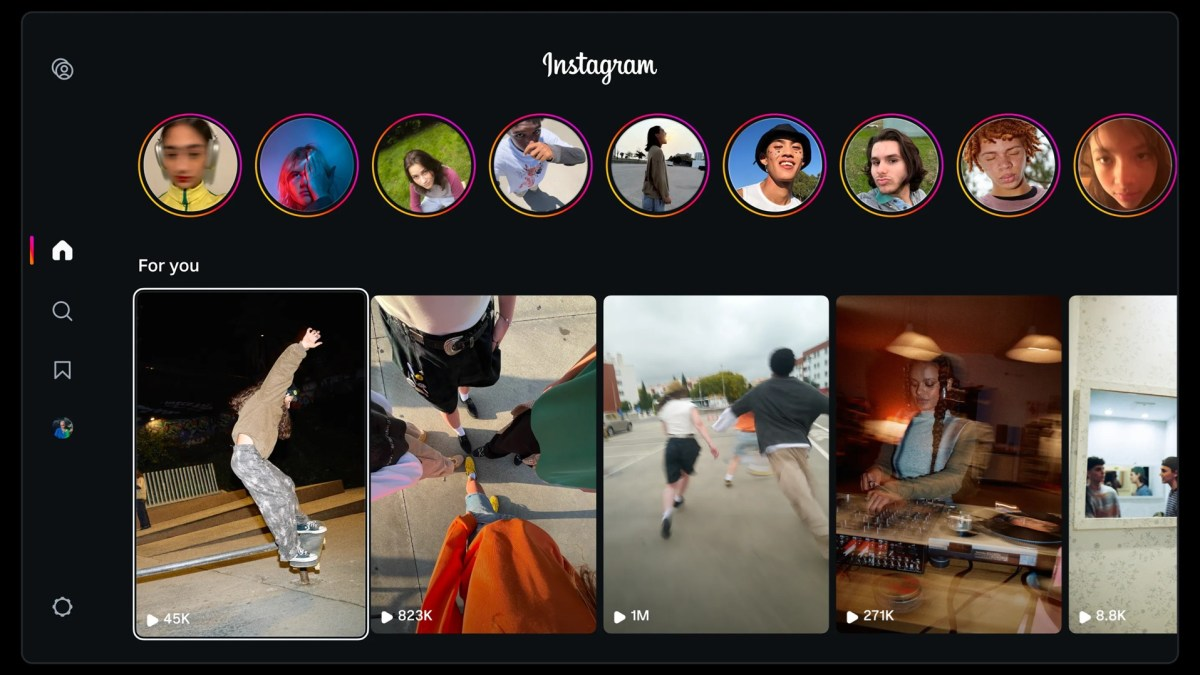
Instagram for TV is expanding to Samsung Smart TVs in the United States, giving more users a way to watch Reels, Stories and creator videos on a larger screen. The rollout covers Samsung Smart TVs from the 2020 model year and newer, marking another major step in Meta’s effort to move Instagram beyond the phone and into the living room.
The expansion is important because Samsung is one of the biggest TV brands in the US. By bringing Instagram for TV to Samsung sets, Meta is placing the app in front of a much wider connected-TV audience. The app was previously available on Amazon Fire TV and Google TV, but the Samsung rollout gives Instagram a stronger position across major smart-TV platforms.
The move also shows how Instagram is changing its view of video. For years, Instagram was built around mobile-first scrolling, vertical Reels, Stories and creator posts designed for a phone screen. A TV app changes that experience. It turns Instagram from a personal scrolling app into something that can be watched with friends, family or roommates in a shared space.
Meta is not only expanding device support. The company is also testing new features designed for the living-room experience. These include channels organized around user interests, the ability to watch Stories on TV, phone-to-TV casting for Reels and Saved videos on supported platforms, and a dedicated home for horizontal videos.
The company is also exploring longer-form creator content, episodic series and live creator experiences for TV. That signals a broader ambition: Instagram does not want to be only a short-video app on a bigger screen. It wants to become a social video destination that can compete for attention in the same room where people watch YouTube, TikTok, Netflix, Prime Video and live entertainment.
Why the Samsung TV Expansion Matters
The Samsung rollout matters because connected TV has become one of the most valuable screens in the home. Smartphones remain the center of social media, but the television still dominates shared viewing. When a platform moves successfully to TV, it can increase watch time, change user behavior and create new opportunities for creators.
Instagram’s challenge is that its content was not originally designed for TV. Reels are often vertical, fast and personal. A user usually watches them alone while holding a phone. On a TV, the experience is different. People sit farther away from the screen. They may watch with others. They may prefer longer videos, landscape formats and simpler navigation.
That is why Meta is testing features that make Instagram feel more natural on TV. Channels can help viewers find videos around comedy, sports, interests or favorite creators without endless searching. Stories on TV can make casual updates easier to watch in a shared setting. Horizontal video support gives creators a better format for the biggest screen in the home.
For Samsung users, the biggest change is simple access. Instead of relying on a phone, browser workaround or separate streaming device, eligible Samsung TV owners in the US can use Instagram for TV directly on supported sets.
For Meta, the expansion gives Instagram a stronger chance to become part of living-room entertainment habits.
What Instagram for TV Offers
Instagram for TV is designed to bring Instagram’s video experience to connected TVs. The app focuses mainly on video discovery and watching content on a large screen.
The experience is built around Reels, creators and interest-based viewing. Users can browse videos, discover new creators and watch content that would normally appear on their phones. The larger display makes the app more suitable for group viewing, especially when users want to show a funny Reel, a sports clip, a creator video or a saved post to other people in the room.
Meta is also testing channels organized around interests. This could make Instagram for TV feel less like a scrolling feed and more like a video hub. A viewer may be able to move between content categories such as comedy, sports, entertainment, lifestyle or favorite creators.
Stories are also coming to the big screen. This is notable because Stories are one of Instagram’s most personal formats. Watching Stories on TV could be useful for catching up with friends, public figures and creators without crowding around a phone.
The app is still evolving, but the direction is clear. Meta wants Instagram for TV to feel less like a copied mobile app and more like a TV-first experience.
Casting Reels From Phone to TV
One of the most useful features Meta is testing is phone-to-TV casting. This allows users to send Reels from their phone to the TV in a few taps.
Casting makes sense because discovery often still happens on the phone. A user may be scrolling Instagram on mobile, find a video worth sharing, and want others nearby to see it. Instead of passing the phone around, casting sends the video to the big screen.
Meta says casting also supports videos from the Saved tab, making it easier to revisit favorite clips and share them with others. However, the casting feature is currently available on Google TV and Fire TV, not Samsung TV.
That distinction matters. Samsung TV users are getting Instagram for TV app support, but some features may arrive differently depending on platform. Meta appears to be building the product in stages, testing features where they are ready and expanding support over time.
Casting could become one of the most important TV features for Instagram because it connects the mobile experience with the living-room experience. It allows the phone to remain the discovery tool while the TV becomes the shared viewing screen.
Channels Could Make Instagram Easier to Watch Together
Channels are one of the most important features Meta is testing for Instagram for TV. On mobile, Instagram is highly personal. The feed is shaped around each user’s interests, follows and behavior. On TV, that personal experience has to work in a shared environment.
A group of people watching together may not want to scroll through one person’s entire feed. Channels can solve that by organizing videos around broader interests. Comedy, sports, creators and entertainment categories can make the app easier to use when several people are in the room.
This also gives Instagram a more TV-like structure. Instead of endless vertical scrolling, users can choose a viewing lane. That could make the app more comfortable for people who are used to browsing streaming services.
For creators, channels could improve discovery. If Instagram groups content around interests, creators may reach viewers who are actively looking for that type of video. A sports creator, comedy creator or lifestyle creator could benefit from being surfaced in a living-room format.
Channels also help Meta compete with YouTube and TikTok, both of which have pushed video discovery across multiple screen sizes. Instagram needs a strong discovery experience if it wants users to open the TV app regularly, not just try it once.
Stories on the Big Screen
Stories are coming to Instagram for TV as part of Meta’s push to make the app more complete on larger screens.
On mobile, Stories are quick, casual and personal. They often include daily updates, short videos, behind-the-scenes moments and creator posts that disappear after a limited time. Bringing them to TV changes how users may experience that format.
Watching Stories on TV could make sense in homes where people already use Instagram together. Friends may want to catch up on creator updates. Families may watch public Stories from celebrities, athletes or travel accounts. Users may also enjoy viewing visual content on a bigger display.
However, Stories on TV may require careful design. Some Stories are text-heavy or made for close phone viewing. Others include stickers, links, polls or interactive features that may not translate perfectly to a remote-control experience.
This is why Instagram for TV is still a developing product. Meta has to decide which parts of Instagram work naturally on TV and which features need to be redesigned.
Stories could become useful on TV, but the feature will need to feel simple and not overloaded.
Horizontal Video Shows Meta Is Thinking Beyond Reels
One of the most interesting parts of the announcement is Meta’s testing of a dedicated home for horizontal videos.
This matters because TV screens are horizontal. Instagram’s most successful video format, Reels, is vertical. While vertical video can be watched on a TV, it does not always use the screen naturally. A vertical Reel on a wide TV often leaves empty space on both sides.
By testing a horizontal video section, Meta is giving creators a reason to produce content that fits the TV screen better. This could encourage more polished, longer and more cinematic videos.
Horizontal video could also help Instagram compete more directly with YouTube. YouTube has long dominated TV-based creator video because its format already works well on large screens. Instagram has strong creator relationships and massive mobile reach, but it needs more TV-friendly formats to succeed in the living room.
This does not mean Reels will disappear from Instagram for TV. Reels remain central to Instagram’s video strategy. But horizontal video gives the platform another layer. It allows Instagram to serve both quick vertical entertainment and more traditional TV-style content.
For creators, this could open new production strategies. A creator may publish short vertical clips for mobile while also producing longer horizontal episodes for TV viewing.
Longer-Form Creator Content Could Change Instagram’s Strategy
Meta is also exploring longer-form creator content for Instagram for TV. This could be a major shift for the platform.
Instagram has been strongly associated with short-form video, especially since the rise of Reels. Short videos work well on mobile because users scroll quickly and consume content in small bursts. TV viewing is different. People often expect longer sessions, deeper stories and more relaxed viewing.
Longer-form content could allow creators to build stronger relationships with audiences. Instead of posting only short highlights, creators could tell fuller stories, publish extended interviews, create documentaries, share tutorials or produce lifestyle episodes.
This would move Instagram closer to YouTube’s territory. YouTube has built a powerful creator economy around long-form video, TV viewing and searchable content. If Instagram succeeds with longer-form TV content, it could give creators another platform for deeper engagement.
However, longer-form content also raises challenges. Instagram users are trained to expect fast content. Meta will need to help creators format longer videos in a way that still feels native to Instagram. The platform must also make discovery easy so users do not feel lost.
The living room could be the place where Instagram stretches beyond quick scrolling.
Episodic Series Could Bring TV-Like Habits to Instagram
Meta is exploring episodic series for Instagram for TV. This is one of the clearest signs that Instagram wants to build more structured viewing habits.
Episodic content gives viewers a reason to return. A creator can publish a series with multiple parts, building anticipation and loyalty over time. This is different from the typical Reel, which may be discovered randomly and watched once.
Series could work well for many categories. Fitness creators could produce weekly routines. Chefs could build cooking shows. Travel creators could publish destination episodes. Educators could create lessons. Comedians could release recurring sketches. Sports creators could create weekly analysis shows.
For Instagram, episodic content could increase repeat viewing. Users may open the TV app not only to browse but to watch the next episode from a favorite creator.
This format also makes more sense on TV than on mobile. People are used to watching episodes on a big screen. If Instagram can combine creator personality with TV-style structure, it may create a new type of social entertainment.
The challenge will be quality. Episodic viewing requires stronger planning and production. Not every creator will want to make series-style content. But for those who do, Instagram for TV could become a useful new stage.
Live on TV Could Turn Instagram Into a Shared Event Platform
Meta is also exploring Live on TV, which could bring creator livestreams to the big screen.
Instagram Live has traditionally been a mobile-first experience. Users watch on phones, comment, react and interact in real time. Moving Live to TV could make creator events feel bigger and more social.
Live on TV could work for concerts, creator Q&A sessions, sports commentary, product launches, watch parties, interviews and community events. Instead of one person watching on a phone, a group could watch together in a living room.
The key challenge is interaction. On mobile, typing comments and reacting is easy. On TV, interaction through a remote is slower. Meta may need to use the phone as a companion device, allowing users to watch on TV while commenting or reacting from mobile.
This could create a hybrid experience: the TV handles viewing, while the phone handles interaction. That model may become important for social video on connected TVs.
Live content also creates urgency. Viewers have a reason to tune in at a specific time. That could help Instagram compete with platforms that already dominate live video and streaming events.
How Instagram for TV Competes With YouTube and TikTok
Instagram’s TV expansion puts it more directly into competition with YouTube and TikTok.
YouTube is already strong on TV. Many users watch YouTube on smart TVs for music, tutorials, podcasts, creator videos and entertainment. YouTube’s horizontal format and long-form library make it naturally suited to living rooms.
TikTok has also experimented with TV apps and big-screen viewing. Its short-form video model is closer to Instagram Reels, making TikTok a direct competitor in mobile-first entertainment.
Instagram sits between the two. It has Reels for short videos, Stories for casual updates, Live for real-time creator interaction and a large creator ecosystem. But it must adapt those formats for TV.
The Samsung rollout gives Instagram more distribution, but distribution alone will not guarantee success. Users must find a reason to open Instagram on TV instead of YouTube, Netflix, TikTok or another app.
The strongest reason may be social discovery. Instagram already knows who users follow, what creators they like and what content they save. If the TV app can turn that into a comfortable shared viewing experience, it may find a valuable role in the home.
What This Means for Creators
Instagram for TV could create new opportunities for creators, especially those who want to reach audiences beyond the phone.
Creators may need to think differently about format. Vertical Reels will still matter, but horizontal videos could become more important for TV viewing. Longer videos and episodic series may also reward creators who can plan structured content.
This could benefit creators in entertainment, education, sports, travel, lifestyle, fitness, cooking and commentary. Any creator who can hold attention for more than a few seconds may gain from a TV-first format.
The living room also changes audience behavior. When people watch together, content may spread differently. A funny video, travel clip or sports reaction may become a shared moment rather than a private scroll.
For brands and advertisers, this could become valuable over time. TV screens are premium attention spaces. If Instagram can grow watch time on connected TVs, creators may eventually see new monetization options.
For now, Meta appears to be focused on testing the product and learning how users behave.
What This Means for Samsung TV Owners
For eligible Samsung Smart TV owners in the US, the rollout means Instagram is becoming easier to access on the big screen.
Users with Samsung TVs from the 2020 model year and newer should be able to use Instagram for TV as availability rolls out. The app gives them a way to watch Instagram videos without relying only on a phone.
However, not every feature is available on every platform. Casting Reels and videos from the Saved tab is currently available on Google TV and Fire TV. Samsung users may still receive other core TV app features, but Meta’s feature rollout may vary by device.
That means users should expect Instagram for TV to keep changing. New features may arrive gradually as Meta tests what works.
For Samsung, the app adds another major social platform to its smart-TV ecosystem. For Instagram, Samsung support makes the TV app more visible to mainstream connected-TV users.
Why Meta Wants Instagram in the Living Room
Meta wants Instagram in the living room because attention is shifting across screens. People do not use only one device. They discover content on phones, watch longer videos on TVs, message friends on apps and move between screens throughout the day.
Instagram has already won a major role on mobile. But the living room remains a different kind of opportunity. TV viewing sessions can be longer. People may watch together. The screen is larger. Advertisers often value TV-style attention.
By bringing Instagram to TV, Meta can extend the platform’s relevance beyond mobile scrolling. It can also defend Instagram against competitors that already perform well on connected TVs.
The move also fits a broader trend in social media. Platforms are no longer satisfied with being apps people open for a few minutes. They want to become entertainment ecosystems. YouTube, TikTok, Snapchat, Twitch and Instagram all compete for video attention in different ways.
Instagram for TV is Meta’s attempt to make sure Instagram remains part of that competition as viewing habits evolve.
Challenges Instagram Still Faces on TV
Instagram still faces several challenges as it expands on TV.
The first challenge is format. Much of Instagram’s video content is vertical, while TVs are horizontal. This can make some videos feel less natural on a large screen.
The second challenge is navigation. Instagram is built for touchscreens. TV users rely on remotes, which are slower and less flexible. Meta must make browsing simple and comfortable.
The third challenge is account privacy. Instagram is often personal. A TV is shared. Users may not want their private feed, messages or interests visible to everyone in the room. The TV app must balance personalization with shared viewing.
The fourth challenge is content length. Short Reels may work well for quick entertainment, but TV users may want longer sessions. This is why Meta is exploring longer-form and episodic formats.
The fifth challenge is competition. YouTube already dominates creator video on TV. Netflix, Prime Video and other streaming services dominate longer entertainment. TikTok competes in short-form video. Instagram must offer something distinct.
The sixth challenge is creator adoption. For TV formats to grow, creators must see value in producing content that works on a big screen.
The Bigger Picture
Instagram’s move to Samsung TVs is not just a device expansion. It is part of a larger shift in how social platforms think about video.
The old model separated social media and television. Social apps lived on phones. TV apps were for films, shows, sports and streaming. That separation is fading. People now watch creator content on TVs, discover clips on social platforms and expect entertainment to move across devices.
Instagram for TV sits inside that shift. It takes content that started on a phone and adapts it for the largest screen in the home.
The success of the product will depend on whether users treat it as a regular viewing destination or only a novelty. If people open Instagram for TV to watch creators together, follow series, enjoy live sessions and share Reels, Meta could build a strong new viewing habit.
If the app feels like a phone feed stretched onto a TV, adoption may be limited. That is why Meta’s testing of channels, horizontal video, episodic content and Live on TV is important.
Conclusion
Instagram for TV’s expansion to Samsung Smart TVs in the US marks a major step in Meta’s push to bring Instagram into the living room. By supporting Samsung TVs from the 2020 model year and newer, Instagram is reaching one of the largest smart-TV audiences in the country.
The rollout also shows that Meta sees the future of Instagram as more than mobile scrolling. Channels, Stories on TV, phone-to-TV casting, horizontal video, longer-form creator content, episodic series and Live on TV all point toward a broader social entertainment strategy.
For users, Instagram for TV could make it easier to watch Reels and creator content with friends and family. For creators, it could open new formats designed for larger screens. For Meta, it is a chance to compete more directly for connected-TV attention.
The app is still developing, and not every feature is available on every platform yet. But the direction is clear: Instagram wants to become a bigger part of how people watch social video at home.


Read Also: ARRI ALEXA Mini: Specs, Sensor, Recording Modes and Features