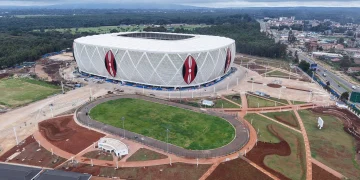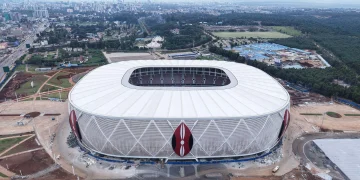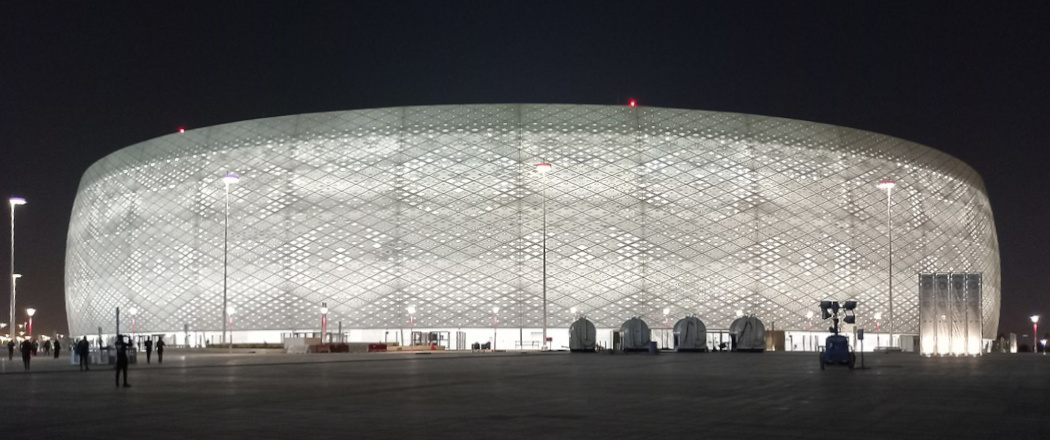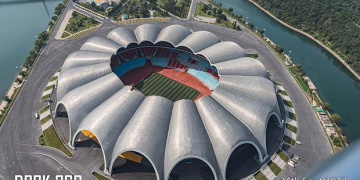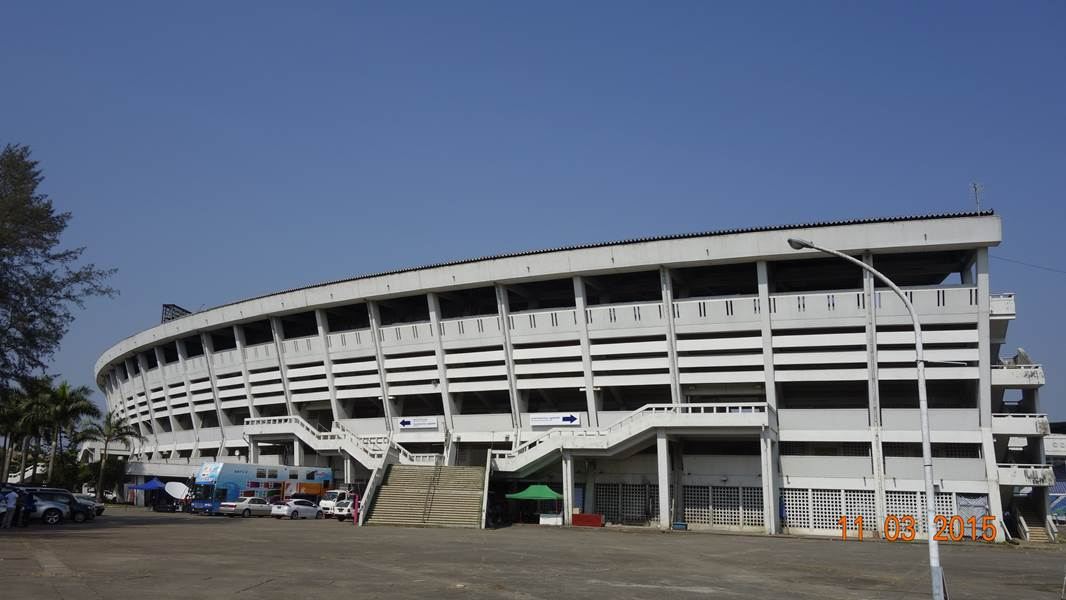
Thuwunna Youth Training Center Stadium (commonly referred to as Thuwunna YTC Stadium) is one of Myanmar’s most significant sports venues, located in the former capital, Yangon. Inaugurated in 1985, the stadium is primarily known for hosting football matches, especially games involving the Myanmar national team. Over the years, its role has grown as the country’s largest sports venue.
History and Development
Originally built in 1985, the stadium featured a covered grandstand and three lower terraces surrounding the football field and athletics track. This design made it a major sports venue in the Yangon area, frequently used for football matches and other athletic events.
In 2011, the stadium underwent significant renovations, including the thorough renovation of the main west stand and an expansion of the remaining stands to increase the overall seating capacity. The stadium’s new configuration now allows it to hold up to 50,000 spectators, making it Myanmar’s largest all-seater venue. These changes helped solidify Thuwunna YTC Stadium as the centerpiece of Myanmar’s sports infrastructure, enabling it to host larger events and provide better facilities for both players and fans.
Notable Features and Upgrades
The renovations transformed the stadium into a modern multi-use facility, but also brought some controversial changes. A huge fence was added during the works, which obstructed the view for many spectators, particularly along the sides. While this design change enhanced security, it altered the overall viewing experience for attendees.
Despite this, the stadium is still recognized for its prime location, making it a popular destination for major sporting events. Thuwunna YTC Stadium remains the largest stadium in Myanmar, and its renovated facilities continue to serve as a key venue for football and other sporting events in the country.
Cultural and Sporting Significance
Thuwunna YTC Stadium is not just a venue but also a symbol of Myanmar’s sporting identity. As the home stadium for the national football team, it plays a central role in international football matches. Additionally, the stadium has hosted numerous events over the years, further cementing its position as a hub for Myanmar’s sports culture.