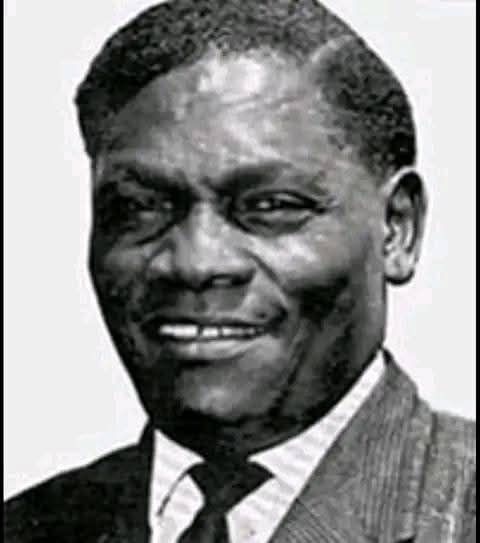
Ambrose Michael Ofafa was a prominent figure in Kenya’s pre-independence political landscape, particularly within the Luo community. A teacher, trade unionist, businessman, and City Councillor of Nairobi, Ofafa’s life embodied the resilience and determination of the Kenyan people during the colonial era. His tragic death in 1953, during the height of the Mau Mau Uprising, would not only mark a turning point in his community’s history but also lead to the establishment of a lasting memorial—The Ofafa Memorial Hall in Kisumu. This article explores his life, contributions, and the enduring impact of his legacy on Kenya’s history.
Early Life and Education
Born in 1913 by the shores of the River Nzoia, which lies on the border of modern-day Kenya and Uganda, Ambrose Ofafa was raised in a family of nine children. His parents, Zakaria Oluta Ofafa and Marcela Onyaka Ofafa, relocated to Rang’ala Catholic Mission in Siaya County, where his father studied religion and became a teacher. It was at Rang’ala that Ambrose began his early education.
Later, Ambrose attended St. Mary’s School, Yala, a Catholic institution, before proceeding to St. Mary’s Teacher Training College in Yala (later transferred to Eregi) to become a teacher. After completing his teacher training, he settled into a teaching job at Saint Mary’s School, Yala, where he taught until 1938.
From Teaching to Public Service
In 1938, Ambrose transitioned from teaching to work with the East African Railways and Harbours. Starting as an assistant station master in Nairobi, he quickly rose through the ranks, being promoted to Stationmaster and posted to several locations, including Kahawa and Lumbwa (Kipkelion). In 1942, Ambrose switched careers again, joining the Kenya Postal Services, where he served as postmaster at Kikuyu station by 1944.
Ambrose’s career continued to evolve. After working with the Kenya Postal Services, he joined The East African Standard, the only daily newspaper in Kenya at the time, as an accountant. Later, he worked as a paymaster for the army, and then, with financial support from his younger brother Andrea Waka, ventured into business by opening a shop at Kariokor Market in Nairobi.
Political Involvement and Leadership
Ambrose’s commitment to serving his community extended beyond his professional work. In recognition of his leadership qualities and dedication to his people, he was nominated by Governor Sir Philip Mitchell to represent African views in the Nairobi City Council. Ambrose was joined by Tom Mbotela, and together they played crucial roles in advocating for the needs of Nairobi’s African residents. He chaired the Finance, Staff, and General Purposes Committee of the City Council and was a member of the Trade and Plot Allocations Committee.
On the national front, Ambrose became the national treasurer of the Kenya African Union (KAU), which was formed after Jomo Kenyatta’s return from Britain. KAU, with Kenyatta as president, was a key organization pushing for Kenya’s independence from British colonial rule.
Ambrose Ofafa and the Mau Mau Uprising
Ambrose Michael Ofafa’s life took a tragic turn in November 1953, when he was gunned down by suspected Mau Mau insurgents in Nairobi during the height of the Mau Mau Uprising. As the Secretary of the Luo Union, Ofafa was a strong critic of the Mau Mau movement, which sought to overthrow British colonial rule through armed resistance. While the Mau Mau uprising had widespread support from many Kikuyu and other ethnic groups, figures like Ambrose Ofafa, who were more aligned with the colonial government, condemned the movement’s violent methods.
The colonial administration used Ofafa’s death for propaganda, urging the Luo community to retaliate against the Kikuyu, claiming that they posed the greatest threat to everyone in the colony. However, this narrative, which sought to divide Kenyans along ethnic lines, was immediately contested by Oginga Odinga, a prominent Luo leader at the time. Odinga, understanding the colonialists’ divide-and-rule tactic, visited Luo communities in Nairobi, urging them not to fall into the trap of retaliating against the Kikuyu. Instead, Odinga called on the community to honor Ofafa’s memory by raising funds to build a memorial.
The Building of Ofafa Memorial Hall
The initiative to build the Ofafa Memorial Hall in Kisumu was born from Odinga’s vision to commemorate Ambrose Ofafa’s contributions while uniting the Luo people in their fight for independence. The memorial hall stands today as a testament to Ofafa’s legacy and his role in advocating for the well-being of the Luo people. The hall continues to serve as an important cultural and historical landmark in Kisumu.
Ambrose Ofafa’s Legacy
Ambrose Michael Ofafa’s contributions to Kenya’s independence movement, his leadership in the Luo Union, and his role as a City Councillor in Nairobi have left a lasting legacy. His commitment to his community, his work as an educator, and his advocacy for national unity during a period of intense colonial resistance made him a central figure in Kenya’s early political history.
Despite his tragic death, Ambrose Ofafa’s life continues to inspire generations of Kenyans, especially within the Luo community. The Ofafa Memorial Hall in Kisumu serves as a reminder of his vision for unity and progress in a country still struggling to free itself from colonial rule. His unwavering call for peace, despite the hardships he faced, remains an enduring symbol of leadership and national pride.
Conclusion
Ambrose Michael Ofafa’s life was one of service, leadership, and sacrifice. From his humble beginnings by the shores of the River Nzoia to his final days in Nairobi, Ofafa played a significant role in shaping Kenya’s political landscape. Today, the Ofafa Memorial Hall stands not only as a tribute to his life but also as a reminder of the power of unity and reconciliation in the fight for independence.