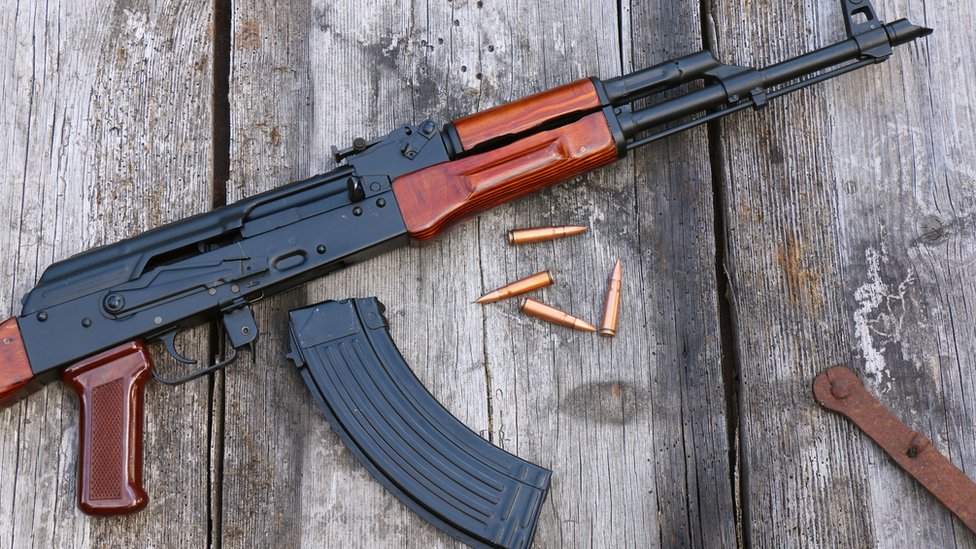
The AK-47, designed by Mikhail Kalashnikov, is one of the most influential weapons in modern history. Kalashnikov, who passed away at the age of 94, left behind a legacy that has permeated battlefields, political movements, and global consciousness. Known for its durability and ease of use, the AK-47 has become the weapon of choice for soldiers, freedom fighters, and mercenaries alike. With its presence spanning across continents and conflicts, the story of the AK-47 is one of power, revolution, and tragedy.
What Does AK-47 Stand For?
The name “AK” represents “Automatic Kalashnikov,” in honor of its creator, and the number “47” marks the year it was invented.
How Widespread is the AK-47?
With an estimated 75 to 100 million units circulating worldwide, there is approximately one AK-47 for every 60 people on Earth.
How Destructive is the AK-47?
Annually, the AK-47 is responsible for around 250,000 deaths globally.
Cost of an AK-47
In conflict-heavy regions, the price of an AK-47 can be as low as $10. In other areas, prices range from $100 to $300, increasing with the intensity of hostilities.
Purchasing AK-47s in the United States
While only semi-automatic versions are legal, prices in the U.S. start around $350 and can reach $1,395 depending on the model.
Where Are AK-47s Manufactured?
Over 20 countries produce the AK-47, with China leading in production. Although Russia no longer manufactures the weapon, it still holds large stockpiles.
Variations of the AK-47
Dozens of variations of the AK-47 exist, though they all feature the signature curved magazine design.
International Demand and Production
Countries like Venezuela have seized on the AK-47’s popularity, with President Hugo Chavez establishing the first AK-47 factory in the Western Hemisphere.
CIA and Global Distribution
The AK-47 spread to conflict zones like Afghanistan during the Soviet invasion, facilitated by covert U.S. operations supplying arms.
AK-47’s Western Debut
The rifle first caught Western attention during the 1956 Hungarian Revolution when Soviet forces used AK-47s to suppress the uprising.
Civilian Mass Shootings Involving AK-47s
The rifle’s reach extends beyond the battlefield. In 2007, a shooter in Omaha, Nebraska used an AK-47 in a tragic mass shooting, killing eight people.
Famous AK-47 Users
Figures such as Osama bin Laden and Saddam Hussein were often seen with AK-47s, reinforcing the weapon’s association with global insurgencies.
Impact on African Conflicts
The AK-47 played a key role in Charles Taylor’s coup in Liberia, arming both adults and children to overthrow the government.
Adoption by State Militaries
The AK-47 remains in use by around 50 national armies, including China, Iran, Iraq, and Syria.
Soldiers’ Preference for the AK-47
Some U.S. soldiers in Iraq and Afghanistan preferred the AK-47 over their standard-issue M-16s due to the AK’s reliability in harsh conditions.
U.S. Military Purchases of AK-47s
The U.S. initially armed the new Iraqi army with AK-47s, but later shifted to M-16s due to concerns about insurgent groups obtaining the rifles.
AK-47s in Iraq’s Black Market
In 2004 and 2005, hundreds of thousands of AK-47s were smuggled from Bosnia and Serbia into Iraq for private contractors.
Unaccounted Weapons in Iraq
The U.S. government lost track of over 110,000 AK-47s given to Iraqi forces during the Iraq War.
Kalashnikov’s Financial Gain
Despite his invention’s global impact, Mikhail Kalashnikov earned only a modest Soviet salary. However, in later years, he capitalized on his fame with branded Kalashnikov vodka and celebrity appearances.
Symbolism of the AK-47
The AK-47’s legacy extends beyond war, as it appears on the flags of Mozambique and Hezbollah, symbolizing revolution and defiance.
The AK-47 remains an enduring symbol of conflict, resistance, and power, shaping not only warfare but also global politics and cultures.