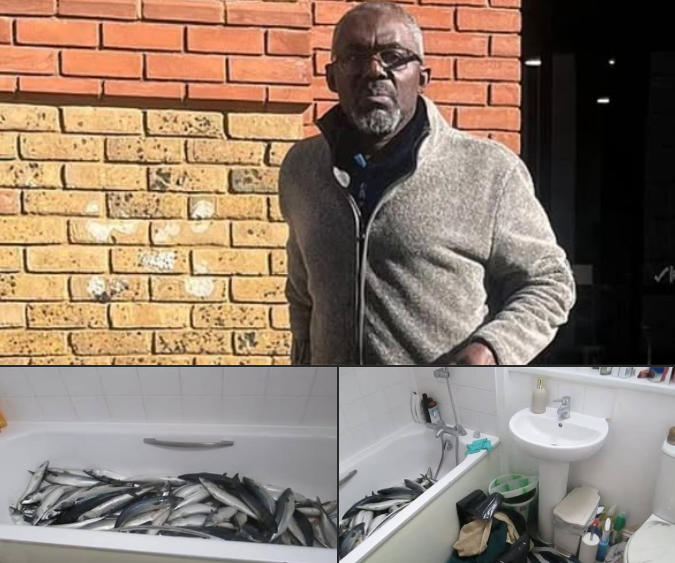
Stephen Akuoko, a businessman supplying ready-made meals to UK supermarkets, was sentenced in a UK court after authorities discovered unsafe food storage conditions at his North London residence. The case emerged after firefighters responding to a domestic fire found fish stored in a bathtub, prompting a police investigation.
The discovery raised immediate concerns about food safety standards and the potential risk to consumers, leading to Akuoko’s arrest and subsequent prosecution.
Stephen Akuoko and Firefighters Discovery
The case began when firefighters were called to Akuoko’s home in North London to extinguish a fire. During their response, they found fish stored in a bathroom bathtub.
According to accounts presented in court, the condition of the storage environment raised concerns about hygiene and contamination. Firefighters reported the matter to the police, triggering further investigation.
Authorities later linked the stored fish to meals being supplied to supermarkets, escalating the seriousness of the case.
Stephen Akuoko and Food Safety Violations
Following investigations, Akuoko was charged with food safety offences. He pleaded guilty to two counts related to unsafe food handling practices.
The court heard that the meals produced under these conditions were deemed unfit for human consumption. The judge criticized the standards maintained in the preparation and storage of the food.
The case highlighted the importance of compliance with food safety regulations, particularly for suppliers operating within the retail food chain.
Court Ruling in Stephen Akuoko Case
The court handed Akuoko a two-year suspended prison sentence. In addition, he received a five-year ban from operating any food business.
The ruling reflected the seriousness of the violations while also considering the defendant’s plea of guilty.
The judge emphasized that food safety breaches pose risks to public health and must be addressed through strict enforcement.
Broader Food Safety Implications
The Stephen Akuoko case underscores the role of regulatory oversight in maintaining food safety standards in the UK. Suppliers are required to adhere to strict guidelines to ensure that products entering the market meet hygiene requirements.
Incidents such as this highlight the potential risks when those standards are not followed.
Outlook on Enforcement
Authorities continue to monitor food supply chains to prevent similar cases. The outcome of the case serves as a reminder of the legal consequences associated with breaches of food safety regulations.